Chapter 10: Vibhuti Yoga
In the tenth chapter, Krishna names his glories in the world, from the sun and the Himalaya to wisdom and silence, and ends by saying he supports the whole universe with a fragment of himself.
Chapter 10 of the Bhagavad Gita, Vibhuti Yoga (“the yoga of divine glories”), has 42 verses. On the field of Kurukshetra, at the start of the war of the Mahabharata, Krishna answers a request from Arjuna: where should one look for the divine, and how should one think of it at all times? Krishna’s answer is a long list of examples, and a short rule behind them. The next chapter, Chapter 11, shows the vision Arjuna asks for here.
Summary of Chapter 10
Krishna promises a deeper teaching
Krishna says he will speak again for Arjuna’s good (10.1). Neither the gods nor the great sages know his origin, since he is the source of them all (10.2). One who knows him as unborn and without beginning is freed from sin (10.3). The many states of living beings, such as knowledge, patience, truth, joy and fear, all come from him (10.4, 10.5), as do the seven sages and the four Manus (10.6). Whoever truly knows this glory and power is joined to him by steady yoga (10.7).
Devotion and grace
The wise who understand that everything arises from Krishna worship him with feeling (10.8). Their minds are set on him, and they find joy in teaching one another and speaking of him (10.9). To these constant and loving devotees he gives the yoga of understanding by which they reach him (10.10), and out of compassion he destroys the darkness born of ignorance with the bright lamp of knowledge (10.11). This is the heart of bhakti in the chapter.
Arjuna’s praise and request
Arjuna calls Krishna the supreme Brahman, the supreme abode, eternal and divine (10.12). He says the sages Narada, Asita, Devala and Vyasa have said the same, and Krishna now says it himself (10.13). He accepts all of it as true (10.14, 10.15) and asks Krishna to describe fully the glories by which he pervades the worlds (10.16). He wants to know how to think of him and in what forms (10.17), and asks for more, since hearing this teaching is like drinking nectar (10.18).
The Self in every being
Krishna agrees to speak of his chief glories, for their number is endless (10.19). He starts with the Self seated in the heart of every being, who is also the beginning, middle and end of all things (10.20). Then he begins to name the best of each kind: Vishnu among the Adityas, the sun among lights, Marichi among the Maruts and the moon among the stars (10.21).
Gods, sages, creatures and nature
The list moves through the Sama Veda, Indra, the mind and consciousness (10.22), then Kubera, Agni and Mount Meru (10.23), and Brihaspati, Skanda and the ocean (10.24). It names Bhrigu, the syllable Om, japa and the Himalaya (10.25), the peepal tree, Narada and Kapila (10.26), and the horse, the elephant and the king (10.27). Next come the thunderbolt, Kamadhenu and Kamadeva (10.28), Ananta, Varuna and Yama (10.29), Prahlada, Time and Garuda (10.30), and the wind, Rama and the Ganga (10.31).
Knowledge, time and qualities
Krishna is the beginning, middle and end of creations, the knowledge of the Self and honest debate (10.32). He is the letter A, imperishable Time and the all-facing Sustainer (10.33), as well as death, the origin of what is to come and the seven qualities counted as feminine (10.34). He is the Gayatri meter and spring (10.35), splendor, victory, resolve and sattva (10.36). He names himself Vasudeva, Arjuna among the Pandavas and Vyasa among sages (10.37), and finishes with punishment, statecraft, silence and wisdom (10.38).
The rule behind the list
Krishna is the seed of all beings, and nothing moving or unmoving can exist without him (10.39). His glories are endless and the list is only a sketch (10.40). Whatever is glorious, prosperous or powerful comes from a fragment of his splendor (10.41). Setting detail aside, he says he supports the whole world with a single fragment of himself (10.42).
Themes
Greatness, beauty and strength wherever they appear are treated as pointers to the source of all.
The list names the finest member of each class, from gods and sages to rivers, months and virtues, so that the mind has something concrete to hold.
Those who think of Krishna constantly and with love are given understanding, and the lamp of knowledge removes their ignorance.
The chapter ends by setting every example aside and saying that the whole world rests on a small part of the Lord.
How the commentators read it
Commentators of the Advaita tradition, such as Shankara, treat the vibhutis as helps for meditation, ways of fixing the mind on one reality that appears in many forms. Devotional commentators, among them Ramanuja, stress that Krishna is the Lord from whom all beings and powers come, and that verses 8 to 11 describe the devotion that leads to him. Both agree that the list is a pointer and is not meant to be complete.
Why Chapter 10 matters
Many readers find it hard to think of the infinite. This chapter gives a way in: look at what is best, brightest or most steady in the world, and see it as a sign of something larger. It is also the bridge to the great vision of Chapter 11, where Arjuna asks to see for himself what he has just heard described.
Verses
- 1Bhagavad Gita 10.1भूय एव महाबाहो शृणु मे परमं वचः।
- 2Bhagavad Gita 10.2न मे विदुः सुरगणाः प्रभवं न महर्षयः।
- 3Bhagavad Gita 10.3यो मामजमनादिं च वेत्ति लोकमहेश्वरम्।
- 4Bhagavad Gita 10.4बुद्धिर्ज्ञानमसंमोहः क्षमा सत्यं दमः शमः।
- 5Bhagavad Gita 10.5अहिंसा समता तुष्टिस्तपो दानं यशोऽयशः।
- 6Bhagavad Gita 10.6महर्षयः सप्त पूर्वे चत्वारो मनवस्तथा।
- 7Bhagavad Gita 10.7एतां विभूतिं योगं च मम यो वेत्ति तत्त्वतः।
- 8Bhagavad Gita 10.8अहं सर्वस्य प्रभवो मत्तः सर्वं प्रवर्तते।
- 9Bhagavad Gita 10.9मच्चित्ता मद्गतप्राणा बोधयन्तः परस्परम्।
- 10Bhagavad Gita 10.10तेषां सततयुक्तानां भजतां प्रीतिपूर्वकम्।
- 11Bhagavad Gita 10.11तेषामेवानुकम्पार्थमहमज्ञानजं तमः।
- 12Bhagavad Gita 10.12परं ब्रह्म परं धाम पवित्रं परमं भवान्।
- 13Bhagavad Gita 10.13आहुस्त्वामृषयः सर्वे देवर्षिर्नारदस्तथा।
- 14Bhagavad Gita 10.14सर्वमेतदृतं मन्ये यन्मां वदसि केशव।
- 15Bhagavad Gita 10.15स्वयमेवात्मनाऽत्मानं वेत्थ त्वं पुरुषोत्तम।
- 16Bhagavad Gita 10.16वक्तुमर्हस्यशेषेण दिव्या ह्यात्मविभूतयः।
- 17Bhagavad Gita 10.17कथं विद्यामहं योगिंस्त्वां सदा परिचिन्तयन्।
- 18Bhagavad Gita 10.18विस्तरेणात्मनो योगं विभूतिं च जनार्दन।
- 19Bhagavad Gita 10.19हन्त ते कथयिष्यामि दिव्या ह्यात्मविभूतयः।
- 20Bhagavad Gita 10.20अहमात्मा गुडाकेश सर्वभूताशयस्थितः।
- 21Bhagavad Gita 10.21आदित्यानामहं विष्णुर्ज्योतिषां रविरंशुमान्।
- 22Bhagavad Gita 10.22वेदानां सामवेदोऽस्मि देवानामस्मि वासवः।
- 23Bhagavad Gita 10.23रुद्राणां शङ्करश्चास्मि वित्तेशो यक्षरक्षसाम्।
- 24Bhagavad Gita 10.24पुरोधसां च मुख्यं मां विद्धि पार्थ बृहस्पतिम्।
- 25Bhagavad Gita 10.25महर्षीणां भृगुरहं गिरामस्म्येकमक्षरम्।
- 26Bhagavad Gita 10.26अश्वत्थः सर्ववृक्षाणां देवर्षीणां च नारदः।
- 27Bhagavad Gita 10.27उच्चैःश्रवसमश्वानां विद्धि माममृतोद्भवम्।
- 28Bhagavad Gita 10.28आयुधानामहं वज्रं धेनूनामस्मि कामधुक्।
- 29Bhagavad Gita 10.29अनन्तश्चास्मि नागानां वरुणो यादसामहम्।
- 30Bhagavad Gita 10.30प्रह्लादश्चास्मि दैत्यानां कालः कलयतामहम्।
- 31Bhagavad Gita 10.31पवनः पवतामस्मि रामः शस्त्रभृतामहम्।
- 32Bhagavad Gita 10.32सर्गाणामादिरन्तश्च मध्यं चैवाहमर्जुन।
- 33Bhagavad Gita 10.33अक्षराणामकारोऽस्मि द्वन्द्वः सामासिकस्य च।
- 34Bhagavad Gita 10.34मृत्युः सर्वहरश्चाहमुद्भवश्च भविष्यताम्।
- 35Bhagavad Gita 10.35बृहत्साम तथा साम्नां गायत्री छन्दसामहम्।
- 36Bhagavad Gita 10.36द्यूतं छलयतामस्मि तेजस्तेजस्विनामहम्।
- 37Bhagavad Gita 10.37वृष्णीनां वासुदेवोऽस्मि पाण्डवानां धनंजयः।
- 38Bhagavad Gita 10.38दण्डो दमयतामस्मि नीतिरस्मि जिगीषताम्।
- 39Bhagavad Gita 10.39यच्चापि सर्वभूतानां बीजं तदहमर्जुन।
- 40Bhagavad Gita 10.40नान्तोऽस्ति मम दिव्यानां विभूतीनां परंतप।
- 41Bhagavad Gita 10.41यद्यद्विभूतिमत्सत्त्वं श्रीमदूर्जितमेव वा।
- 42Bhagavad Gita 10.42अथवा बहुनैतेन किं ज्ञातेन तवार्जुन।
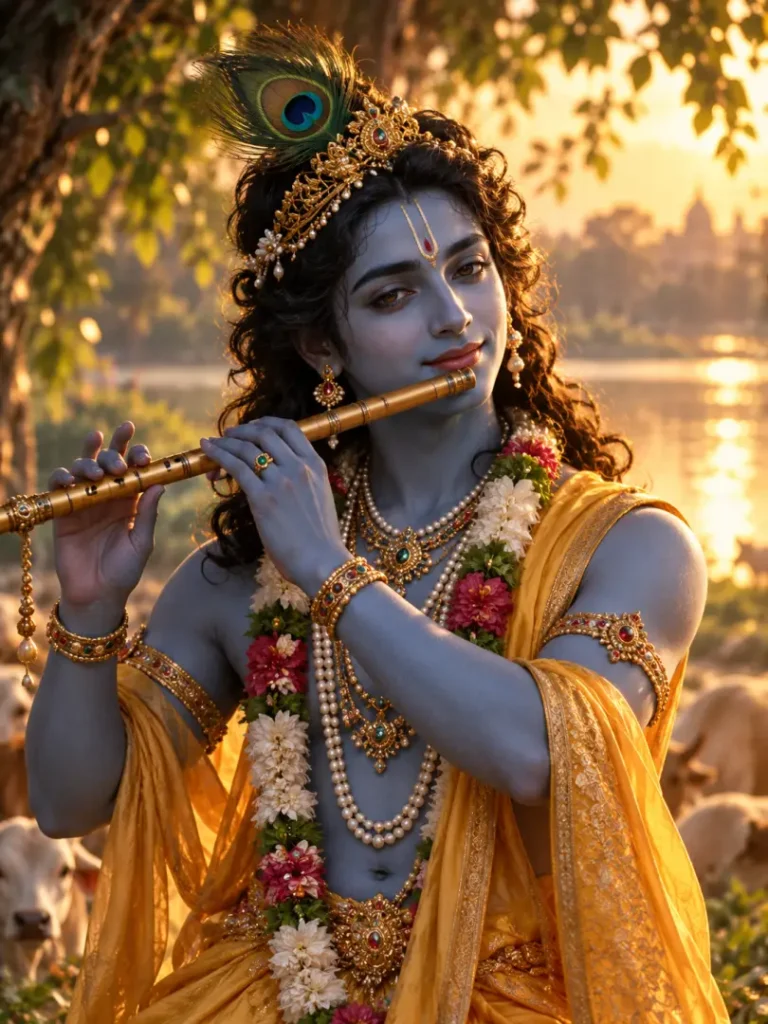
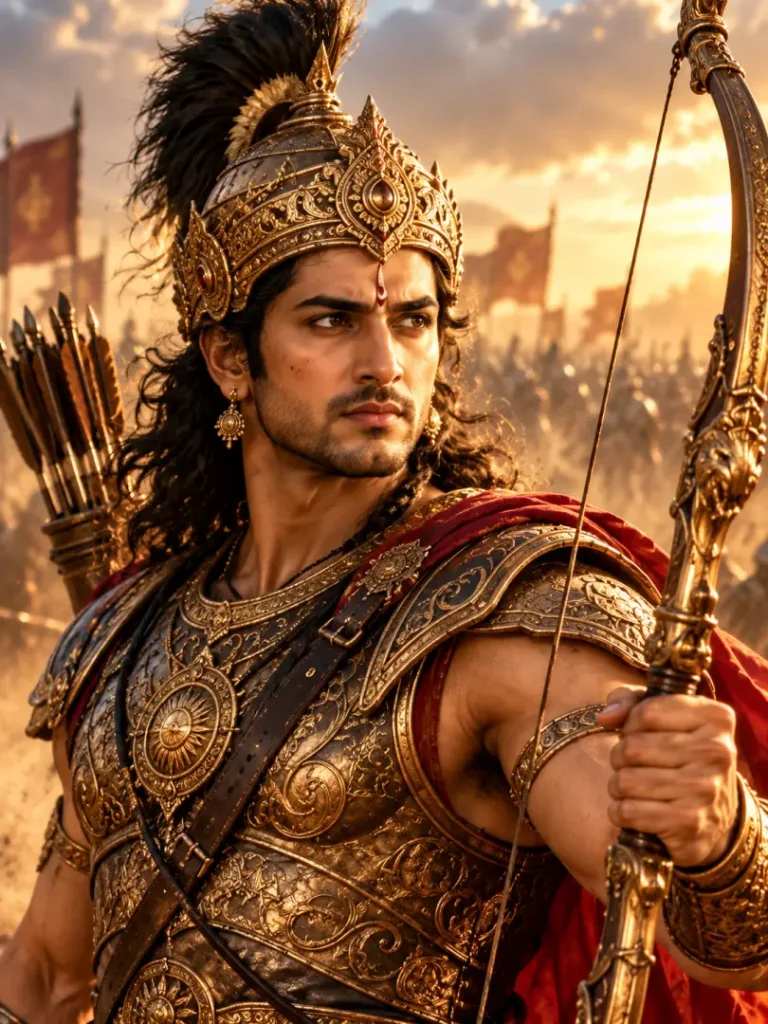
Characters in this chapter
Places in this chapter
Key concepts
Frequently asked questions
What is Chapter 10 of the Bhagavad Gita about?
Why is Chapter 10 called Vibhuti Yoga?
How many verses are in Chapter 10 of the Gita?
Who speaks in Chapter 10?
Which are the key verses of Chapter 10?
What does Krishna say he is among the Vedas and the gods?
What comes after Chapter 10?
Sources and further reading
- Mahabharata, Bhishma Parva, Bhagavad Gita chapter 10
- Sanskrit text from public-domain digital editions; meanings by Vedic Kathas
- Classical commentaries of Shankara and Ramanuja on the Gita
- The Mahabharata, K. M. Ganguli translation (Sacred Texts)
Read our editorial policy on how scripture, Purana and folk tradition are labelled.