Chapter 9: Raja Vidya Raja Guhya Yoga
In the ninth chapter, Krishna calls his teaching the king of knowledge and the king of secrets. He explains that he supports all beings, and that simple, sincere devotion is open to everyone.
Chapter 9 of the Bhagavad Gita, Raja Vidya Raja Guhya Yoga (“the yoga of the royal knowledge and the royal secret”), has 34 verses. On the field of Kurukshetra, at the start of the war of the Mahabharata, Krishna speaks to Arjuna without being interrupted and calls what he is about to say the most hidden and most direct knowledge. It is a chapter about devotion, offered to everyone. The theme of his greatness continues in Chapter 10.
Summary of Chapter 9
The royal secret
Krishna says he will tell Arjuna, who does not find fault, the knowledge joined with realisation that frees one from evil (9.1). He calls it the king of sciences and the king of secrets, easy to practise and lasting (9.2). Those without faith in this path do not reach him and return to the cycle of birth and death (9.3).
He pervades and supports the world
Krishna says the whole world is spread out by him in his unseen form. All beings rest in him, yet he does not rest in them, which he calls his divine mystery (9.4, 9.5). The picture is of the wind that moves everywhere and still stays within the sky (9.6). At the end of a cycle beings return to his nature, and at the next beginning he sends them out again (9.7, 9.8). These acts do not bind him, because he sits unattached, and nature works under his watch (9.9, 9.10).
Who misses him and who finds him
The deluded disregard Krishna when he takes a human form, not knowing his higher nature (9.11, 9.12). The great-souled turn to him with a single mind, praising him always and striving with firm vows (9.13, 9.14). Others worship him through knowledge, as one, as many, or as the whole world (9.15).
He is everything that is offered and received
Krishna names himself as the rite, the offering, the chant and the fire (9.16), the father and mother of the world, and the one thing worth knowing (9.17). He is goal, support, witness, shelter and friend (9.18). He gives heat, holds back and sends the rain, and is both immortality and death (9.19).
Rituals for reward and single-minded devotion
Those who follow ritual for heaven enjoy its pleasures and come back when their merit is spent (9.20, 9.21). To those who think of him with undivided mind, Krishna brings what they lack and keeps what they have (9.22). Even worship given to other gods with faith reaches him, though not in the proper way (9.23), and each worshipper reaches the one he worships (9.25).
A leaf, a flower, a fruit, water
Krishna accepts a leaf, a flower, a fruit or water offered with love (9.26). Whatever one does, eats, gives or practises should be offered to him (9.27), and the one who does so is freed from the bonds of action and good or bad results (9.28). He is the same to all beings, and those who love him are in him and he in them (9.29).
Devotion is open to all
Even a person of bad conduct who worships Krishna with undivided devotion is to be regarded as good, because his resolve is right (9.30), and he soon becomes righteous and finds lasting peace (9.31). Krishna says that people of any birth or station can reach the highest goal by taking refuge in him (9.32), and so can the pure and the royal sages even more easily (9.33). The chapter ends with a simple instruction: fix the mind on him, be devoted, worship and bow to him (9.34).
Themes
The chapter says that no birth, past or station shuts a person out of bhakti.
Krishna is both the support of all beings and untouched by them, a paradox the chapter calls his divine mystery.
A leaf, a flower, a fruit or water given with love is enough, and every act can be turned into an offering.
The closing verses place trust and surrender at the centre, an idea later gathered under sharanagati.
How the commentators read it
Commentators note that the knowledge is called royal because it is the highest and the easiest to approach. Shankara reads the chapter as teaching the Lord who is the self of all, while Ramanuja and the devotional schools read verses such as 9.22, 9.26 and 9.34 as the Gita’s plainest statement of loving surrender. The reading that devotion is open to all is widely taken as the chapter’s central message.
Why Chapter 9 matters
Many people know this chapter through a few lines: the offering of a leaf and a flower, and the promise to carry the needs of those who think only of Krishna. They explain why the Gita has been loved by readers far from the scholar’s study. The chapter lowers the barrier to the highest teaching and asks only for sincerity.
Verses
- 1Bhagavad Gita 9.1इदं तु ते गुह्यतमं प्रवक्ष्याम्यनसूयवे।
- 2Bhagavad Gita 9.2राजविद्या राजगुह्यं पवित्रमिदमुत्तमम्।
- 3Bhagavad Gita 9.3अश्रद्दधानाः पुरुषा धर्मस्यास्य परन्तप।
- 4Bhagavad Gita 9.4मया ततमिदं सर्वं जगदव्यक्तमूर्तिना।
- 5Bhagavad Gita 9.5न च मत्स्थानि भूतानि पश्य मे योगमैश्वरम्।
- 6Bhagavad Gita 9.6यथाऽऽकाशस्थितो नित्यं वायुः सर्वत्रगो महान्।
- 7Bhagavad Gita 9.7सर्वभूतानि कौन्तेय प्रकृतिं यान्ति मामिकाम्।
- 8Bhagavad Gita 9.8प्रकृतिं स्वामवष्टभ्य विसृजामि पुनः पुनः।
- 9Bhagavad Gita 9.9न च मां तानि कर्माणि निबध्नन्ति धनञ्जय।
- 10Bhagavad Gita 9.10मयाऽध्यक्षेण प्रकृतिः सूयते सचराचरम्।
- 11Bhagavad Gita 9.11अवजानन्ति मां मूढा मानुषीं तनुमाश्रितम्।
- 12Bhagavad Gita 9.12मोघाशा मोघकर्माणो मोघज्ञाना विचेतसः।
- 13Bhagavad Gita 9.13महात्मानस्तु मां पार्थ दैवीं प्रकृतिमाश्रिताः।
- 14Bhagavad Gita 9.14सततं कीर्तयन्तो मां यतन्तश्च दृढव्रताः।
- 15Bhagavad Gita 9.15ज्ञानयज्ञेन चाप्यन्ये यजन्तो मामुपासते।
- 16Bhagavad Gita 9.16अहं क्रतुरहं यज्ञः स्वधाऽहमहमौषधम्।
- 17Bhagavad Gita 9.17पिताऽहमस्य जगतो माता धाता पितामहः।
- 18Bhagavad Gita 9.18गतिर्भर्ता प्रभुः साक्षी निवासः शरणं सुहृत्।
- 19Bhagavad Gita 9.19तपाम्यहमहं वर्षं निगृह्णाम्युत्सृजामि च।
- 20Bhagavad Gita 9.20त्रैविद्या मां सोमपाः पूतपापा
- 21Bhagavad Gita 9.21ते तं भुक्त्वा स्वर्गलोकं विशालं
- 22Bhagavad Gita 9.22अनन्याश्चिन्तयन्तो मां ये जनाः पर्युपासते।
- 23Bhagavad Gita 9.23येऽप्यन्यदेवता भक्ता यजन्ते श्रद्धयाऽन्विताः।
- 24Bhagavad Gita 9.24अहं हि सर्वयज्ञानां भोक्ता च प्रभुरेव च।
- 25Bhagavad Gita 9.25यान्ति देवव्रता देवान् पितॄन्यान्ति पितृव्रताः।
- 26Bhagavad Gita 9.26पत्रं पुष्पं फलं तोयं यो मे भक्त्या प्रयच्छति।
- 27Bhagavad Gita 9.27यत्करोषि यदश्नासि यज्जुहोषि ददासि यत्।
- 28Bhagavad Gita 9.28शुभाशुभफलैरेवं मोक्ष्यसे कर्मबन्धनैः।
- 29Bhagavad Gita 9.29समोऽहं सर्वभूतेषु न मे द्वेष्योऽस्ति न प्रियः।
- 30Bhagavad Gita 9.30अपि चेत्सुदुराचारो भजते मामनन्यभाक्।
- 31Bhagavad Gita 9.31क्षिप्रं भवति धर्मात्मा शश्वच्छान्तिं निगच्छति।
- 32Bhagavad Gita 9.32मां हि पार्थ व्यपाश्रित्य येऽपि स्युः पापयोनयः।
- 33Bhagavad Gita 9.33किं पुनर्ब्राह्मणाः पुण्या भक्ता राजर्षयस्तथा।
- 34Bhagavad Gita 9.34मन्मना भव मद्भक्तो मद्याजी मां नमस्कुरु।
Characters in this chapter
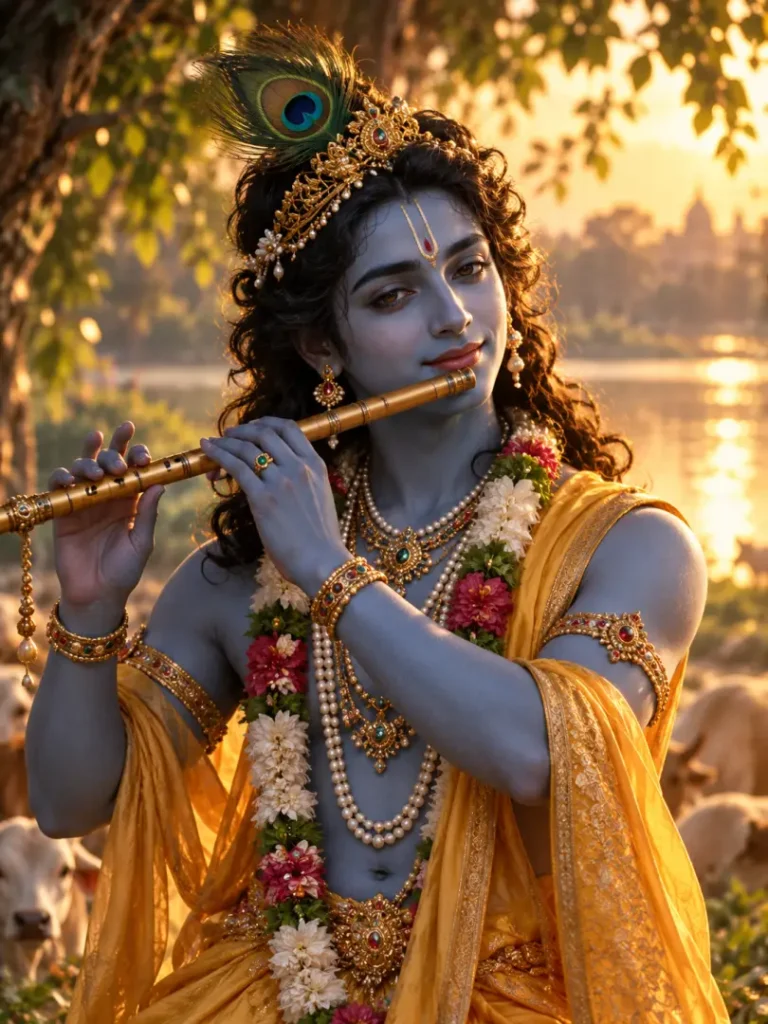
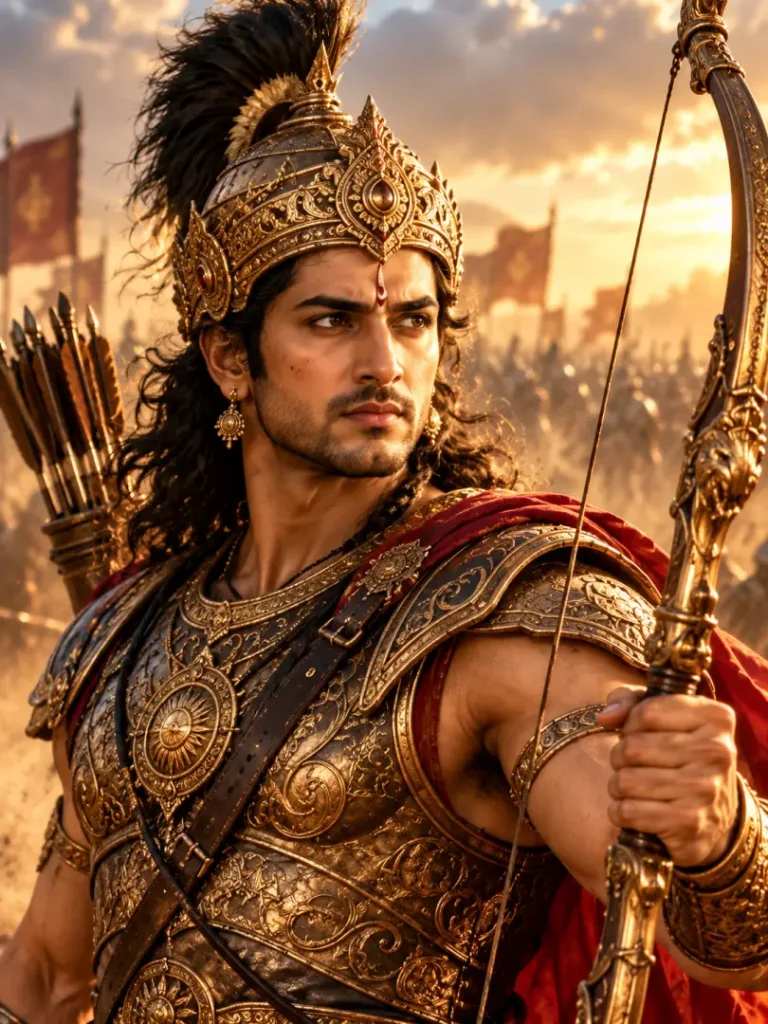
Places in this chapter
Key concepts
Frequently asked questions
What is Chapter 9 of the Bhagavad Gita about?
Why is Chapter 9 called Raja Vidya Raja Guhya Yoga?
How many verses are in Chapter 9 of the Gita?
Who speaks in Chapter 9?
Which verse speaks of offering a leaf, flower, fruit and water?
What does 9.22 promise?
Who can practise the devotion taught in Chapter 9?
Sources and further reading
- Mahabharata, Bhishma Parva, Bhagavad Gita chapter 9
- Sanskrit text from public-domain digital editions; meanings by Vedic Kathas
- Classical commentaries of Shankara and Ramanuja on the Gita
- The Mahabharata, K. M. Ganguli translation (Sacred Texts)
Read our editorial policy on how scripture, Purana and folk tradition are labelled.