Chapter 13: Kshetra Kshetrajna Vibhaga Yoga
In the thirteenth chapter, Krishna separates the field, meaning the body and nature, from its knower, the self, lists the qualities of true knowledge and describes what is to be known.
Chapter 13 of the Bhagavad Gita, Kshetra Kshetrajna Vibhaga Yoga (“the yoga of distinguishing the field and the knower of the field”), has 35 verses in this numbering. On the field of Kurukshetra, at the start of the war of the Mahabharata, Arjuna asks about nature, the person, the field and its knower. Krishna answers by separating the body and its workings from the self that knows them, and by describing the qualities of true knowledge and the one thing that is to be known. The teaching on the forces of nature continues in Chapter 14.
Summary of Chapter 13
Arjuna’s question
Arjuna asks to understand nature and the person, the field and the knower of the field, knowledge and what is to be known (13.1).
The field and its knower
Krishna calls the body the field, and the one who knows it the knower of the field (13.2). He says he is the knower in all fields, and that knowing both is true knowledge (13.3). He promises a brief account (13.4), noting that sages have sung of it in many ways (13.5). The field includes the great elements, ego, intellect, the unmanifest, the senses and their objects, and desire, aversion, pleasure, pain and the sense of being a living whole (13.6, 13.7).
What true knowledge looks like
Knowledge is described through a list of qualities, among them humility, harmlessness, patience, honesty, service of the teacher, purity and steadiness (13.8). The list goes on with detachment from sense objects, no ego and a clear view of the troubles of birth, death, age and illness (13.9). It adds equal-mindedness, unwavering devotion to Krishna, love of quiet places and constant attention to the knowledge of the self (13.10 to 13.12).
What is to be known
Krishna turns to the knowable, the beginningless supreme Brahman, by knowing which one reaches immortality (13.13). It is described as having hands, feet, eyes and faces everywhere, and as hearing and enclosing all (13.14). It shines through all the senses and is yet free of them (13.15). It is within and outside beings, moving and unmoving, too subtle to grasp, near and far (13.16), undivided yet seeming divided (13.17), and the light of lights beyond darkness, dwelling in every heart (13.18).
Nature and the person
Having described the field, knowledge and the knowable, Krishna says his devotee who understands this becomes fit for his state (13.19). Nature and the person are both without beginning, and changes and qualities arise from nature (13.20). Nature is the cause of action, while the person is the one who experiences pleasure and pain (13.21). The person, dwelling in nature, enjoys its gunas, and attachment to them is the cause of birth in good and bad wombs (13.22). Yet the supreme person in this body is the witness, the permitter, the supporter and the great Lord (13.23).
Ways of seeing the self
One who knows the person and nature with its gunas is not born again, however he lives (13.24). Some see the self within through meditation, others through the path of knowledge, others through the yoga of action (13.25). Others who do not know this learn from teachers and worship with faith, and they too cross beyond death (13.26).
Seeing the same Lord in all
Everything that is born, moving or unmoving, arises from the union of the field and its knower (13.27). Whoever sees the supreme Lord present equally in all beings, unperishing when they perish, truly sees (13.28). Seeing the same Lord everywhere, such a person does not harm himself by himself and reaches the highest goal (13.29). One who sees that actions are done by nature alone, and that the self is not the doer, sees rightly (13.30). When the variety of beings is seen as resting in one, and spreading out from it, one becomes Brahman (13.31). Because it is beginningless and without qualities, the supreme self neither acts nor is stained, even though it dwells in the body (13.32).
Space, the sun and the closing promise
Two images illustrate the self’s freedom. As all-pervading space is not stained because of its subtlety, so the self in the body is not stained (13.33), and as one sun lights up the whole world, so the knower of the field lights up the whole field (13.34). Those who see the difference between the field and its knower, and the release of beings from nature, with the eye of knowledge, reach the highest (13.35).
Themes
The body and mind are an object of knowledge, and the self is the one who knows them.
True knowledge is described as a set of qualities in daily living, not as a theory.
Nature does the acting, while the person experiences, and confusing the two causes bondage.
Seeing the same divine presence in every being is called the highest sight.
How the commentators read it
Shankara reads the knower of the field as identical with the supreme in every body, so that knowing the difference between body and self leads to liberation. Ramanuja holds that individual selves remain distinct from the Lord while depending on him. Both treat the chapter as the foundation for the Gita’s third six, which turns toward knowledge of the supreme.
Why Chapter 13 matters
This chapter gives the Gita’s clearest account of the difference between the body and the self, in plain terms of field and knower. Its list of qualities of knowledge reads as a guide to character, and its images of space and the sun are often used to explain how the self stays untouched by what it witnesses. It sets up the next chapter’s detailed account of the three gunas.
Verses
- 1Bhagavad Gita 13.1प्रकृतिं पुरुषं चैव क्षेत्रं क्षेत्रज्ञमेव च।
- 2Bhagavad Gita 13.2इदं शरीरं कौन्तेय क्षेत्रमित्यभिधीयते।
- 3Bhagavad Gita 13.3क्षेत्रज्ञं चापि मां विद्धि सर्वक्षेत्रेषु भारत।
- 4Bhagavad Gita 13.4तत्क्षेत्रं यच्च यादृक् च यद्विकारि यतश्च यत्।
- 5Bhagavad Gita 13.5ऋषिभिर्बहुधा गीतं छन्दोभिर्विविधैः पृथक्।
- 6Bhagavad Gita 13.6महाभूतान्यहङ्कारो बुद्धिरव्यक्तमेव च।
- 7Bhagavad Gita 13.7इच्छा द्वेषः सुखं दुःखं सङ्घातश्चेतनाधृतिः।
- 8Bhagavad Gita 13.8अमानित्वमदम्भित्वमहिंसा क्षान्तिरार्जवम्।
- 9Bhagavad Gita 13.9इन्द्रियार्थेषु वैराग्यमनहङ्कार एव च।
- 10Bhagavad Gita 13.10असक्तिरनभिष्वङ्गः पुत्रदारगृहादिषु।
- 11Bhagavad Gita 13.11मयि चानन्ययोगेन भक्तिरव्यभिचारिणी।
- 12Bhagavad Gita 13.12अध्यात्मज्ञाननित्यत्वं तत्त्वज्ञानार्थदर्शनम्।
- 13Bhagavad Gita 13.13ज्ञेयं यत्तत्प्रवक्ष्यामि यज्ज्ञात्वाऽमृतमश्नुते।
- 14Bhagavad Gita 13.14सर्वतः पाणिपादं तत्सर्वतोऽक्षिशिरोमुखम्।
- 15Bhagavad Gita 13.15सर्वेन्द्रियगुणाभासं सर्वेन्द्रियविवर्जितम्।
- 16Bhagavad Gita 13.16बहिरन्तश्च भूतानामचरं चरमेव च।
- 17Bhagavad Gita 13.17अविभक्तं च भूतेषु विभक्तमिव च स्थितम्।
- 18Bhagavad Gita 13.18ज्योतिषामपि तज्ज्योतिस्तमसः परमुच्यते।
- 19Bhagavad Gita 13.19इति क्षेत्रं तथा ज्ञानं ज्ञेयं चोक्तं समासतः।
- 20Bhagavad Gita 13.20प्रकृतिं पुरुषं चैव विद्ध्यनादी उभावपि।
- 21Bhagavad Gita 13.21कार्यकारणकर्तृत्वे हेतुः प्रकृतिरुच्यते।
- 22Bhagavad Gita 13.22पुरुषः प्रकृतिस्थो हि भुङ्क्ते प्रकृतिजान्गुणान्।
- 23Bhagavad Gita 13.23उपद्रष्टानुमन्ता च भर्ता भोक्ता महेश्वरः।
- 24Bhagavad Gita 13.24य एवं वेत्ति पुरुषं प्रकृतिं च गुणैः सह।
- 25Bhagavad Gita 13.25ध्यानेनात्मनि पश्यन्ति केचिदात्मानमात्मना।
- 26Bhagavad Gita 13.26अन्ये त्वेवमजानन्तः श्रुत्वान्येभ्य उपासते।
- 27Bhagavad Gita 13.27यावत्सञ्जायते किञ्चित्सत्त्वं स्थावरजङ्गमम्।
- 28Bhagavad Gita 13.28समं सर्वेषु भूतेषु तिष्ठन्तं परमेश्वरम्।
- 29Bhagavad Gita 13.29समं पश्यन्हि सर्वत्र समवस्थितमीश्वरम्।
- 30Bhagavad Gita 13.30प्रकृत्यैव च कर्माणि क्रियमाणानि सर्वशः।
- 31Bhagavad Gita 13.31यदा भूतपृथग्भावमेकस्थमनुपश्यति।
- 32Bhagavad Gita 13.32अनादित्वान्निर्गुणत्वात्परमात्मायमव्ययः।
- 33Bhagavad Gita 13.33यथा सर्वगतं सौक्ष्म्यादाकाशं नोपलिप्यते।
- 34Bhagavad Gita 13.34यथा प्रकाशयत्येकः कृत्स्नं लोकमिमं रविः।
- 35Bhagavad Gita 13.35क्षेत्रक्षेत्रज्ञयोरेवमन्तरं ज्ञानचक्षुषा।
Characters in this chapter
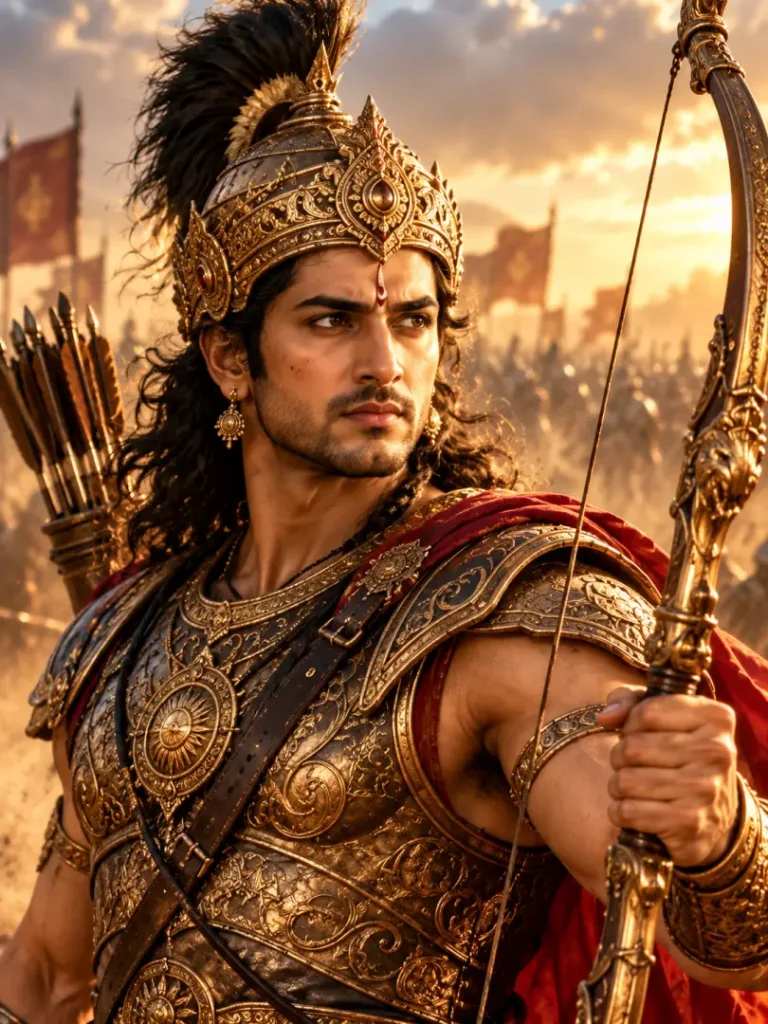
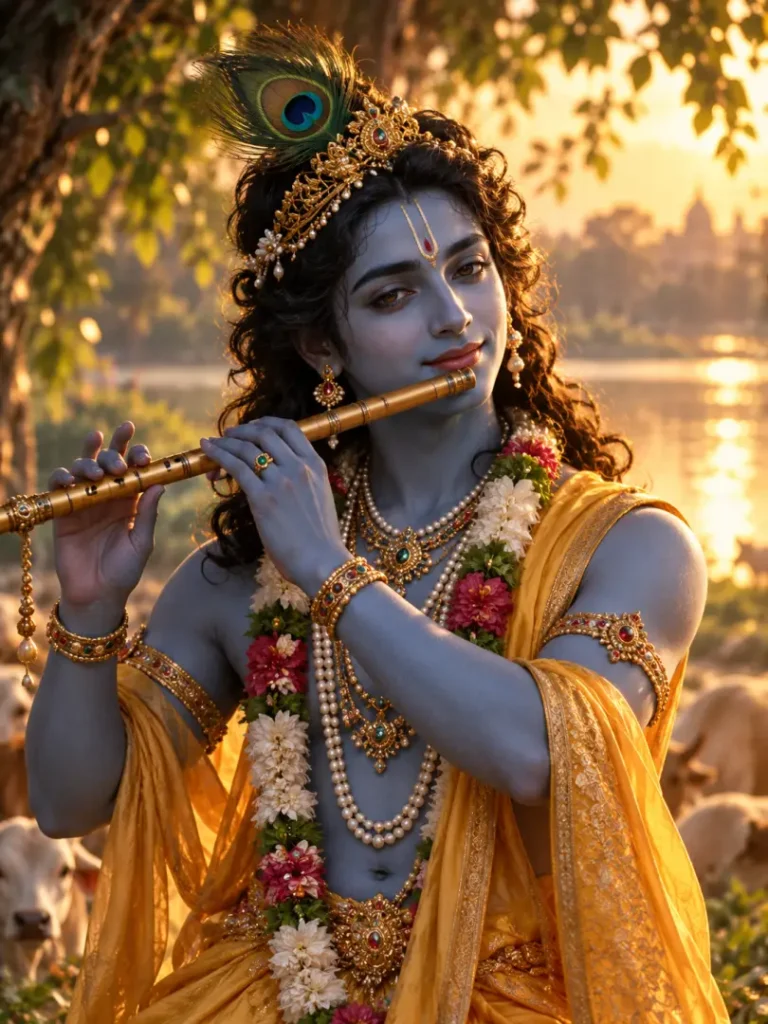
Places in this chapter
Key concepts
Frequently asked questions
What is Chapter 13 of the Bhagavad Gita about?
Why is Chapter 13 called Kshetra Kshetrajna Vibhaga Yoga?
How many verses are in Chapter 13 of the Gita?
What is the field in Chapter 13?
Which verses list the qualities of knowledge?
What images does the chapter use for the self?
Who speaks in Chapter 13?
Sources and further reading
- Mahabharata, Bhishma Parva, Bhagavad Gita chapter 13
- Sanskrit text from public-domain digital editions; meanings by Vedic Kathas
- Classical commentaries of Shankara and Ramanuja on the Gita
- The Mahabharata, K. M. Ganguli translation (Sacred Texts)
Read our editorial policy on how scripture, Purana and folk tradition are labelled.