Chapter 11: Vishvarupa Darshana Yoga
In the eleventh chapter, Arjuna asks to see Krishna's cosmic form and is given a divine eye. He sees the whole universe and Time devouring the warriors, then asks for the gentle form again, and Krishna names devotion as the way to him.
Chapter 11 of the Bhagavad Gita, Vishvarupa Darshana Yoga (“the yoga of seeing the universal form”), has 55 verses. On the field of Kurukshetra, in the middle of the war of the Mahabharata, Arjuna asks his charioteer Krishna to show him the form behind the teaching of the previous chapter. What follows is the most dramatic scene of the Gita. The vision ends in praise, fear and a return to a gentle form, and Chapter 12 continues with devotion.
Summary of Chapter 11
Sanjaya describes the form
Sanjaya tells Dhritarashtra what Arjuna now sees: countless mouths, eyes, weapons and ornaments, a light like a thousand suns (11.9 to 11.13). Arjuna, filled with wonder, bows and folds his hands (11.14).
The terrible aspect
The sight turns frightening. Arjuna sees fearsome mouths and teeth (11.23, 11.25), the warriors of both armies rushing into them (11.26, 11.27) like rivers into the sea and moths into a flame (11.28, 11.29). He sees the worlds being swallowed (11.30) and asks who this fierce being is (11.31).
Arjuna’s hymn and prayer
Trembling, Arjuna speaks in a choked voice (11.35) and praises the Lord as the first god and the home of the universe (11.37, 11.38), bowing from every side (11.39, 11.40). He asks pardon for treating Krishna as a mere friend (11.41, 11.42) and begs to see the familiar four-armed form again (11.45, 11.46).
The way of devotion
Arjuna is calm again (11.51). Krishna says even the gods long for this sight (11.52, 11.53) and that undivided bhakti is how he can be known, seen and reached (11.54). The last verse sums up the devotee: one who works for him, holds him supreme and bears no hatred to any being comes to him (11.55).
Themes
The whole universe, with its gods, beings and armies, is seen standing together in one body.
“I am Time” (11.32) shows that the war’s outcome rests on something larger than any warrior.
The vision brings wonder and terror together, and Arjuna asks to see the gentle form again.
The vision is a gift, and 11.54 names undivided devotion as the way to know the Lord.
How the commentators read it
Traditional commentators, among them Shankara and Ramanuja, stress that Arjuna could not have seen this form with ordinary eyes, which is why Krishna gives him a divine eye in 11.8. They read the terrible aspect as the Lord’s power over time and change, not as cruelty. For devotional traditions the return to the gentle form in 11.50 to 11.51 shows that the Lord is also close and kind. Many modern readers take the vision as an image of how large and unified reality is.
Why Chapter 11 matters
The earlier chapters explain who the Lord is. This chapter lets Arjuna see it, and the sight changes him from a doubting man into a ready one. It is also the Gita’s most quoted scene in art, drama and popular memory, and it ends with a plain lesson: such a vision cannot be earned by effort alone, but devotion that is single-hearted brings a person close to the divine.
Verses
- 1Bhagavad Gita 11.1मदनुग्रहाय परमं गुह्यमध्यात्मसंज्ञितम्।
- 2Bhagavad Gita 11.2भवाप्ययौ हि भूतानां श्रुतौ विस्तरशो मया।
- 3Bhagavad Gita 11.3एवमेतद्यथात्थ त्वमात्मानं परमेश्वर।
- 4Bhagavad Gita 11.4मन्यसे यदि तच्छक्यं मया द्रष्टुमिति प्रभो।
- 5Bhagavad Gita 11.5पश्य मे पार्थ रूपाणि शतशोऽथ सहस्रशः।
- 6Bhagavad Gita 11.6पश्यादित्यान्वसून्रुद्रानश्विनौ मरुतस्तथा।
- 7Bhagavad Gita 11.7इहैकस्थं जगत्कृत्स्नं पश्याद्य सचराचरम्।
- 8Bhagavad Gita 11.8न तु मां शक्यसे द्रष्टुमनेनैव स्वचक्षुषा।
- 9Bhagavad Gita 11.9एवमुक्त्वा ततो राजन्महायोगेश्वरो हरिः।
- 10Bhagavad Gita 11.10अनेकवक्त्रनयनमनेकाद्भुतदर्शनम्।
- 11Bhagavad Gita 11.11दिव्यमाल्याम्बरधरं दिव्यगन्धानुलेपनम्।
- 12Bhagavad Gita 11.12दिवि सूर्यसहस्रस्य भवेद्युगपदुत्थिता।
- 13Bhagavad Gita 11.13तत्रैकस्थं जगत्कृत्स्नं प्रविभक्तमनेकधा।
- 14Bhagavad Gita 11.14ततः स विस्मयाविष्टो हृष्टरोमा धनञ्जयः।
- 15Bhagavad Gita 11.15पश्यामि देवांस्तव देव देहे
- 16Bhagavad Gita 11.16अनेकबाहूदरवक्त्रनेत्रं
- 17Bhagavad Gita 11.17किरीटिनं गदिनं चक्रिणं च
- 18Bhagavad Gita 11.18त्वमक्षरं परमं वेदितव्यं
- 19Bhagavad Gita 11.19अनादिमध्यान्तमनन्तवीर्य
- 20Bhagavad Gita 11.20द्यावापृथिव्योरिदमन्तरं हि
- 21Bhagavad Gita 11.21अमी हि त्वां सुरसङ्घा विशन्ति
- 22Bhagavad Gita 11.22रुद्रादित्या वसवो ये च साध्या
- 23Bhagavad Gita 11.23रूपं महत्ते बहुवक्त्रनेत्रं
- 24Bhagavad Gita 11.24नभःस्पृशं दीप्तमनेकवर्णं
- 25Bhagavad Gita 11.25दंष्ट्राकरालानि च ते मुखानि
- 26Bhagavad Gita 11.26अमी च त्वां धृतराष्ट्रस्य पुत्राः
- 27Bhagavad Gita 11.27वक्त्राणि ते त्वरमाणा विशन्ति
- 28Bhagavad Gita 11.28यथा नदीनां बहवोऽम्बुवेगाः
- 29Bhagavad Gita 11.29यथा प्रदीप्तं ज्वलनं पतङ्गा
- 30Bhagavad Gita 11.30लेलिह्यसे ग्रसमानः समन्ता
- 31Bhagavad Gita 11.31आख्याहि मे को भवानुग्ररूपो
- 32Bhagavad Gita 11.32कालोऽस्मि लोकक्षयकृत्प्रवृद्धो
- 33Bhagavad Gita 11.33तस्मात्त्वमुत्तिष्ठ यशो लभस्व
- 34Bhagavad Gita 11.34द्रोणं च भीष्मं च जयद्रथं च
- 35Bhagavad Gita 11.35एतच्छ्रुत्वा वचनं केशवस्य
- 36Bhagavad Gita 11.36स्थाने हृषीकेश तव प्रकीर्त्या
- 37Bhagavad Gita 11.37कस्माच्च ते न नमेरन्महात्मन्
- 38Bhagavad Gita 11.38त्वमादिदेवः पुरुषः पुराण
- 39Bhagavad Gita 11.39वायुर्यमोऽग्निर्वरुणः शशाङ्कः
- 40Bhagavad Gita 11.40नमः पुरस्तादथ पृष्ठतस्ते
- 41Bhagavad Gita 11.41सखेति मत्वा प्रसभं यदुक्तं
- 42Bhagavad Gita 11.42यच्चावहासार्थमसत्कृतोऽसि
- 43Bhagavad Gita 11.43पितासि लोकस्य चराचरस्य
- 44Bhagavad Gita 11.44तस्मात्प्रणम्य प्रणिधाय कायं
- 45Bhagavad Gita 11.45अदृष्टपूर्वं हृषितोऽस्मि दृष्ट्वा
- 46Bhagavad Gita 11.46किरीटिनं गदिनं चक्रहस्त
- 47Bhagavad Gita 11.47मया प्रसन्नेन तवार्जुनेदं
- 48Bhagavad Gita 11.48न वेदयज्ञाध्ययनैर्न दानै
- 49Bhagavad Gita 11.49मा ते व्यथा मा च विमूढभावो
- 50Bhagavad Gita 11.50इत्यर्जुनं वासुदेवस्तथोक्त्वा
- 51Bhagavad Gita 11.51दृष्ट्वेदं मानुषं रूपं तव सौम्यं जनार्दन।
- 52Bhagavad Gita 11.52सुदुर्दर्शमिदं रूपं दृष्टवानसि यन्मम।
- 53Bhagavad Gita 11.53नाहं वेदैर्न तपसा न दानेन न चेज्यया।
- 54Bhagavad Gita 11.54भक्त्या त्वनन्यया शक्यमहमेवंविधोऽर्जुन।
- 55Bhagavad Gita 11.55मत्कर्मकृन्मत्परमो मद्भक्तः सङ्गवर्जितः।
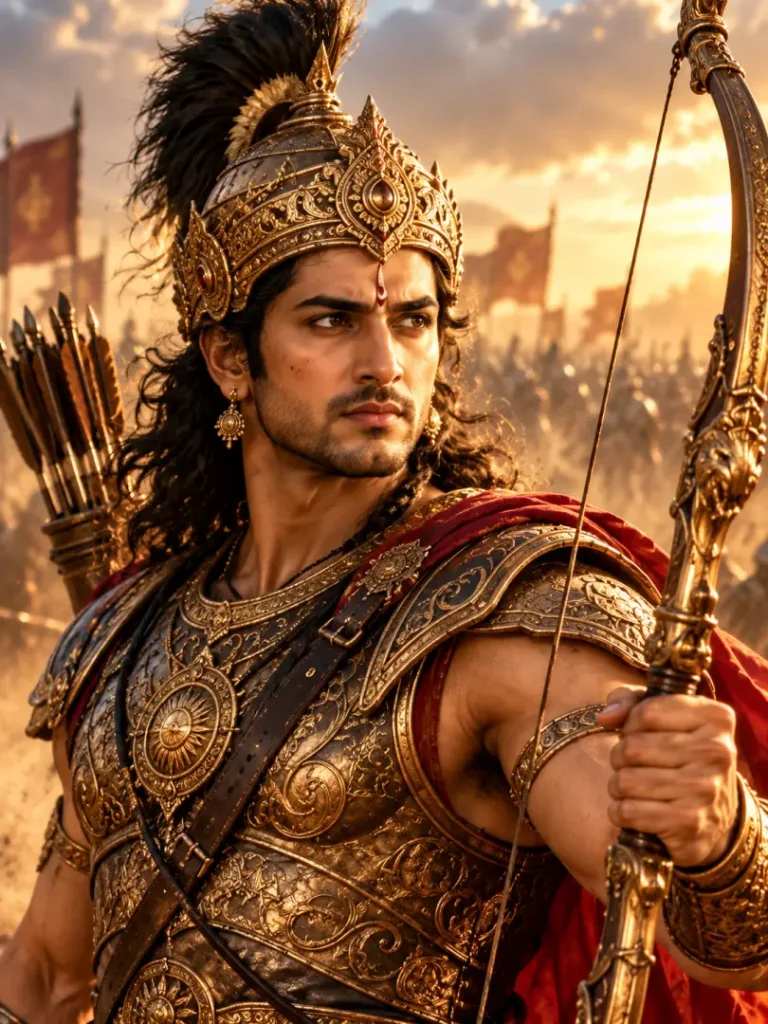
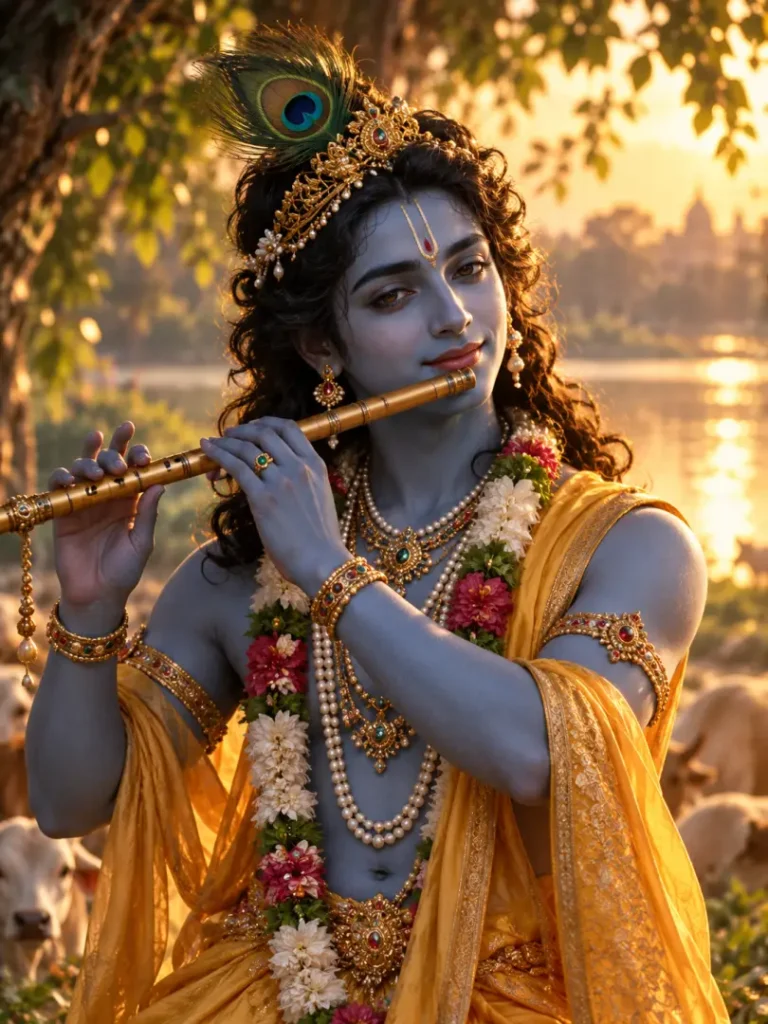
Characters in this chapter
Places in this chapter
Key concepts
Frequently asked questions
What is Chapter 11 of the Bhagavad Gita about?
Why is Chapter 11 called Vishvarupa Darshana Yoga?
How many verses are in Chapter 11 of the Gita?
Who speaks in Chapter 11?
What does Krishna mean by "I am Time"?
How does Arjuna get to see the cosmic form?
Which verses are most quoted in Chapter 11?
Sources and further reading
- Mahabharata, Bhishma Parva, Bhagavad Gita chapter 11
- Sanskrit text from public-domain digital editions; meanings by Vedic Kathas
- Classical commentaries of Shankara and Ramanuja on the Gita
- The Mahabharata, K. M. Ganguli translation (Sacred Texts)
Read our editorial policy on how scripture, Purana and folk tradition are labelled.