Chapter 1: Arjuna Vishada Yoga
In the first chapter, Arjuna looks across the field of Kurukshetra and sees his teachers, uncles, cousins and friends in the opposing army. Overcome with grief, he lays down his bow and refuses to fight.
Chapter 1 of the Bhagavad Gita, Arjuna Vishada Yoga (“the yoga of Arjuna’s despair”), has 47 verses. On the field of Kurukshetra, at the start of the war of the Mahabharata, Arjuna asks his charioteer Krishna to place the chariot between the two armies. What he sees there breaks his resolve. Krishna’s teaching begins in Chapter 2.
Summary of Chapter 1
Duryodhana surveys the armies
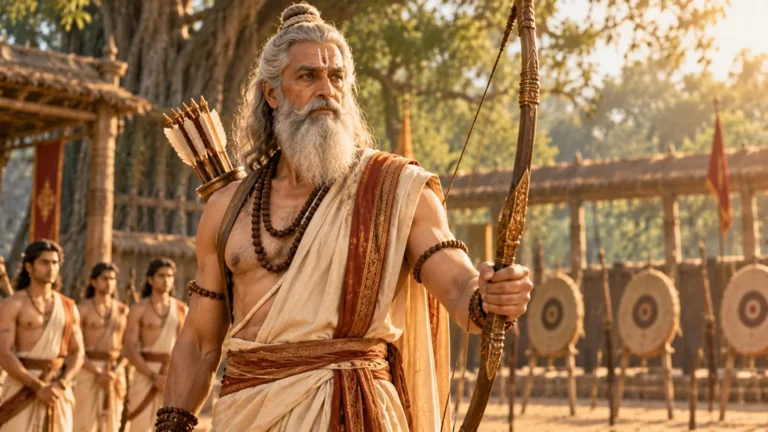
The blind king Dhritarashtra asks Sanjaya what his sons and the sons of Pandu did on the field of Kurukshetra (1.1). Sanjaya, who sees the war from afar by Vyasa’s gift, describes how Duryodhana goes to his teacher Drona (1.2) and names the great warriors on both sides (1.4 to 1.8). He compares the two armies in a verse that commentators read in more than one way (1.10) and asks his generals to guard Bhishma (1.11).
The conches
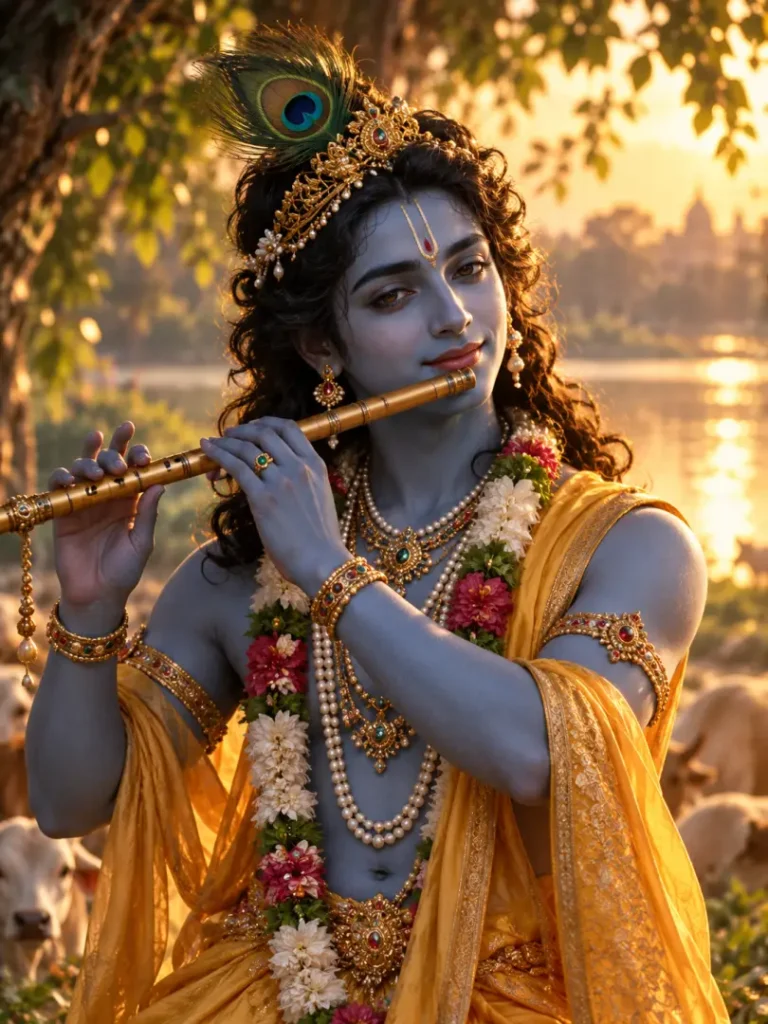
Bhishma, the eldest of the Kurus, sounds his conch first (1.12). Standing on a great chariot drawn by white horses, Krishna and Arjuna blow their divine conches (1.14): Krishna’s Panchajanya and Arjuna’s Devadatta, with Bhima’s Paundra (1.15), Yudhishthira’s Anantavijaya, Nakula’s Sughosha and Sahadeva’s Manipushpaka (1.16). The sound is said to split the hearts of Dhritarashtra’s sons (1.19).
Arjuna asks to see the armies
Arjuna, whose banner bears Hanuman (1.20), asks Krishna to draw the chariot between the armies so that he can see those who have come to fight (1.21 to 1.23). Krishna does so and tells him to look at the assembled Kurus (1.25). Arjuna sees fathers, grandfathers, teachers, uncles, cousins, sons and friends on both sides (1.26, 1.27).
Arjuna’s despair
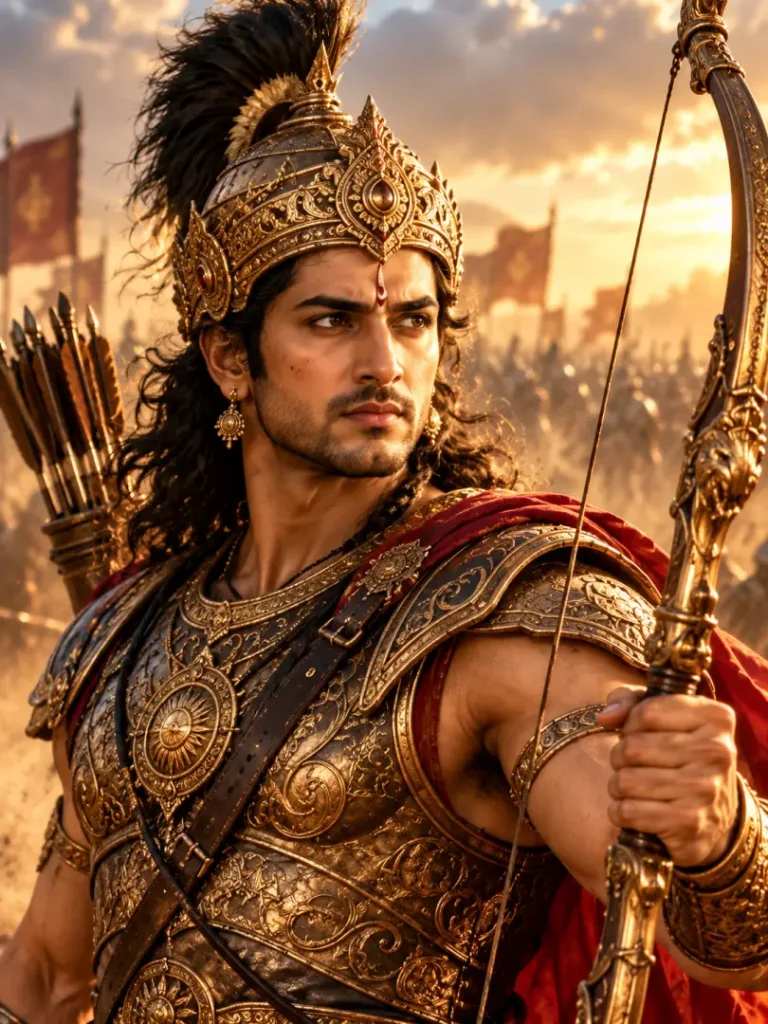
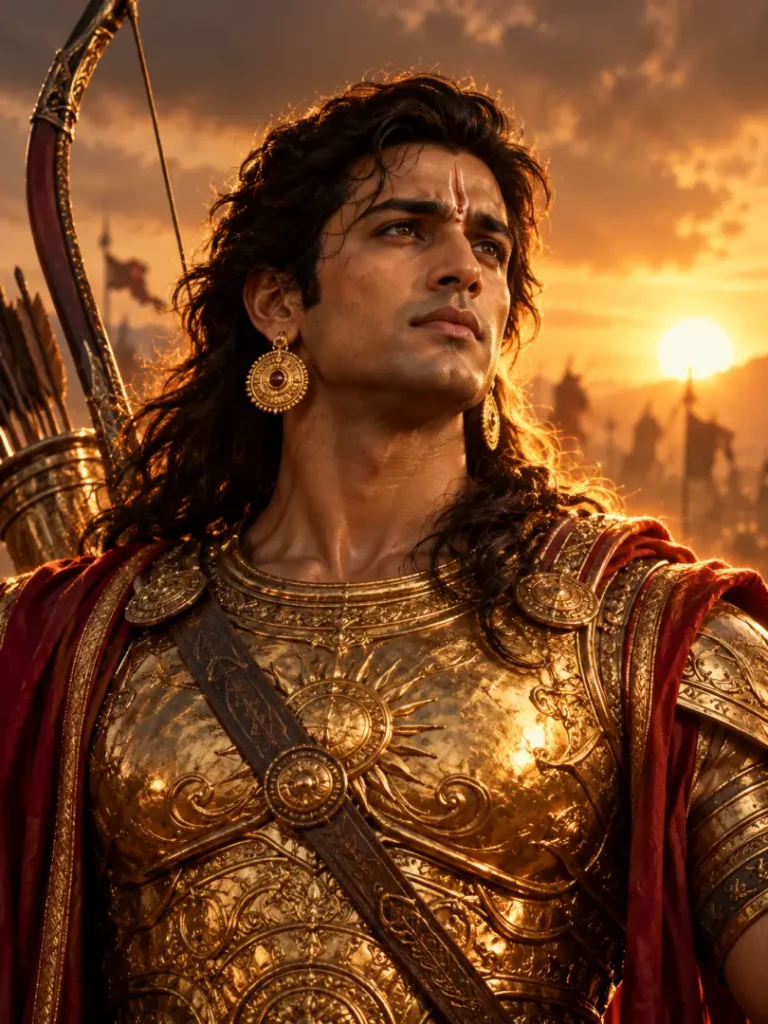
Filled with compassion, Arjuna says his limbs are failing, his mouth is dry, his body trembles and the bow Gandiva slips from his hand (1.28 to 1.30). He sees bad omens and no good in killing his own people (1.31). He wants neither victory nor kingdom nor pleasure (1.32 to 1.35) and fears the sin of killing teachers and kinsmen (1.36 to 1.38). He argues that war destroys the family’s ancient duties, and with them dharma (1.39 to 1.44), and ends by saying they are about to commit a great sin for the greed of a kingdom (1.45).
Arjuna lays down his bow
Having spoken, Arjuna casts aside his bow and arrows and sits down on the seat of the chariot, his mind overwhelmed with grief (1.47).
Themes
The tradition calls the chapter vishada yoga, because the crisis opens the door to the teaching.
Arjuna’s duty as a warrior pulls against his love for his family and teachers.
Dhritarashtra’s first line speaks of “my sons” and “the sons of Pandu”. Commentators see attachment to “mine” as the root of the conflict.
Arjuna’s argument that war destroys family duty and dharma is a real ethical concern, which Krishna answers in the chapters that follow.
How the commentators read it
Traditional commentators, among them Shankara and Ramanuja, read Arjuna’s collapse as grief and confusion born of attachment, the very problem the rest of the Gita sets out to solve. For Gandhi the field of Kurukshetra is the human heart. Others see a real moral crisis of a warrior who has to choose between two duties. The chapter works on all these levels.
Why Chapter 1 matters
The Gita does not begin with a teaching. It begins with a person at the end of his strength. Arjuna’s trembling hands and dry mouth make the dialogue that follows an answer to a human crisis rather than a lecture. For that reason many readers come back to this chapter first when they face a hard choice of their own.
Verses
- 1Bhagavad Gita 1.1धर्मक्षेत्रे कुरुक्षेत्रे समवेता युयुत्सवः।
- 2Bhagavad Gita 1.2दृष्ट्वा तु पाण्डवानीकं व्यूढं दुर्योधनस्तदा।
- 3Bhagavad Gita 1.3पश्यैतां पाण्डुपुत्राणामाचार्य महतीं चमूम्।
- 4Bhagavad Gita 1.4अत्र शूरा महेष्वासा भीमार्जुनसमा युधि।
- 5Bhagavad Gita 1.5धृष्टकेतुश्चेकितानः काशिराजश्च वीर्यवान्।
- 6Bhagavad Gita 1.6युधामन्युश्च विक्रान्त उत्तमौजाश्च वीर्यवान्।
- 7Bhagavad Gita 1.7अस्माकं तु विशिष्टा ये तान्निबोध द्विजोत्तम।
- 8Bhagavad Gita 1.8भवान्भीष्मश्च कर्णश्च कृपश्च समितिञ्जयः।
- 9Bhagavad Gita 1.9अन्ये च बहवः शूरा मदर्थे त्यक्तजीविताः।
- 10Bhagavad Gita 1.10अपर्याप्तं तदस्माकं बलं भीष्माभिरक्षितम्।
- 11Bhagavad Gita 1.11अयनेषु च सर्वेषु यथाभागमवस्थिताः।
- 12Bhagavad Gita 1.12तस्य संजनयन्हर्षं कुरुवृद्धः पितामहः।
- 13Bhagavad Gita 1.13ततः शङ्खाश्च भेर्यश्च पणवानकगोमुखाः।
- 14Bhagavad Gita 1.14ततः श्वेतैर्हयैर्युक्ते महति स्यन्दने स्थितौ।
- 15Bhagavad Gita 1.15पाञ्चजन्यं हृषीकेशो देवदत्तं धनंजयः।
- 16Bhagavad Gita 1.16अनन्तविजयं राजा कुन्तीपुत्रो युधिष्ठिरः।
- 17Bhagavad Gita 1.17काश्यश्च परमेष्वासः शिखण्डी च महारथः।
- 18Bhagavad Gita 1.18द्रुपदो द्रौपदेयाश्च सर्वशः पृथिवीपते।
- 19Bhagavad Gita 1.19स घोषो धार्तराष्ट्राणां हृदयानि व्यदारयत्।
- 20Bhagavad Gita 1.20अथ व्यवस्थितान् दृष्ट्वा धार्तराष्ट्रान्कपिध्वजः।
- 21Bhagavad Gita 1.21हृषीकेशं तदा वाक्यमिदमाह महीपते।
- 22Bhagavad Gita 1.22यावदेतान्निरीक्षेऽहं योद्धुकामानवस्थितान्।
- 23Bhagavad Gita 1.23योत्स्यमानानवेक्षेऽहं य एतेऽत्र समागताः।
- 24Bhagavad Gita 1.24एवमुक्तो हृषीकेशो गुडाकेशेन भारत।
- 25Bhagavad Gita 1.25भीष्मद्रोणप्रमुखतः सर्वेषां च महीक्षिताम्।
- 26Bhagavad Gita 1.26तत्रापश्यत्स्थितान्पार्थः पितॄनथ पितामहान्।
- 27Bhagavad Gita 1.27श्वशुरान्सुहृदश्चैव सेनयोरुभयोरपि।
- 28Bhagavad Gita 1.28कृपया परयाऽऽविष्टो विषीदन्निदमब्रवीत्।
- 29Bhagavad Gita 1.29सीदन्ति मम गात्राणि मुखं च परिशुष्यति।
- 30Bhagavad Gita 1.30गाण्डीवं स्रंसते हस्तात्त्वक्चैव परिदह्यते।
- 31Bhagavad Gita 1.31निमित्तानि च पश्यामि विपरीतानि केशव।
- 32Bhagavad Gita 1.32न काङ्क्षे विजयं कृष्ण न च राज्यं सुखानि च।
- 33Bhagavad Gita 1.33येषामर्थे काङ्क्षितं नो राज्यं भोगाः सुखानि च।
- 34Bhagavad Gita 1.34आचार्याः पितरः पुत्रास्तथैव च पितामहाः।
- 35Bhagavad Gita 1.35एतान्न हन्तुमिच्छामि घ्नतोऽपि मधुसूदन।
- 36Bhagavad Gita 1.36निहत्य धार्तराष्ट्रान्नः का प्रीतिः स्याज्जनार्दन।
- 37Bhagavad Gita 1.37तस्मान्नार्हा वयं हन्तुं धार्तराष्ट्रान्स्वबान्धवान्।
- 38Bhagavad Gita 1.38यद्यप्येते न पश्यन्ति लोभोपहतचेतसः।
- 39Bhagavad Gita 1.39कथं न ज्ञेयमस्माभिः पापादस्मान्निवर्तितुम्।
- 40Bhagavad Gita 1.40कुलक्षये प्रणश्यन्ति कुलधर्माः सनातनाः।
- 41Bhagavad Gita 1.41अधर्माभिभवात्कृष्ण प्रदुष्यन्ति कुलस्त्रियः।
- 42Bhagavad Gita 1.42सङ्करो नरकायैव कुलघ्नानां कुलस्य च।
- 43Bhagavad Gita 1.43दोषैरेतैः कुलघ्नानां वर्णसङ्करकारकैः।
- 44Bhagavad Gita 1.44उत्सन्नकुलधर्माणां मनुष्याणां जनार्दन।
- 45Bhagavad Gita 1.45अहो बत महत्पापं कर्तुं व्यवसिता वयम्।
- 46Bhagavad Gita 1.46यदि मामप्रतीकारमशस्त्रं शस्त्रपाणयः।
- 47Bhagavad Gita 1.47एवमुक्त्वाऽर्जुनः संख्ये रथोपस्थ उपाविशत्।
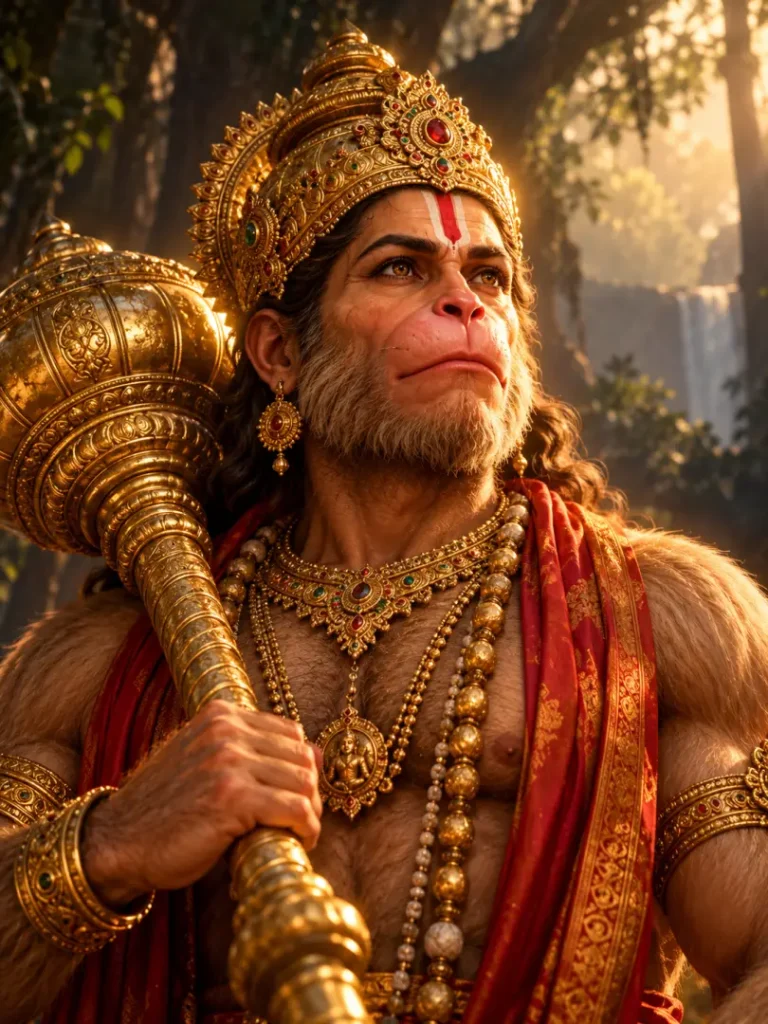
Characters in this chapter
Places in this chapter
Key concepts
Festivals
Frequently asked questions
What is Chapter 1 of the Bhagavad Gita about?
Why is Chapter 1 called Arjuna Vishada Yoga?
How many verses are in Chapter 1 of the Gita?
Who speaks in Chapter 1?
Where does the Gita take place?
What are the conches named in Chapter 1?
Why does Arjuna refuse to fight?
Sources and further reading
- Mahabharata, Bhishma Parva, Bhagavad Gita chapter 1
- Sanskrit text from public-domain digital editions; meanings by Vedic Kathas
- Classical commentaries of Shankara and Ramanuja on the Gita
- The Mahabharata, K. M. Ganguli translation (Sacred Texts)
Read our editorial policy on how scripture, Purana and folk tradition are labelled.