Chapter 15: Purushottama Yoga
In the fifteenth chapter, Krishna describes the world as an upside-down tree, explains the soul's journey and his presence in creation, and names himself Purushottama, the highest Person beyond the perishable and imperishable.
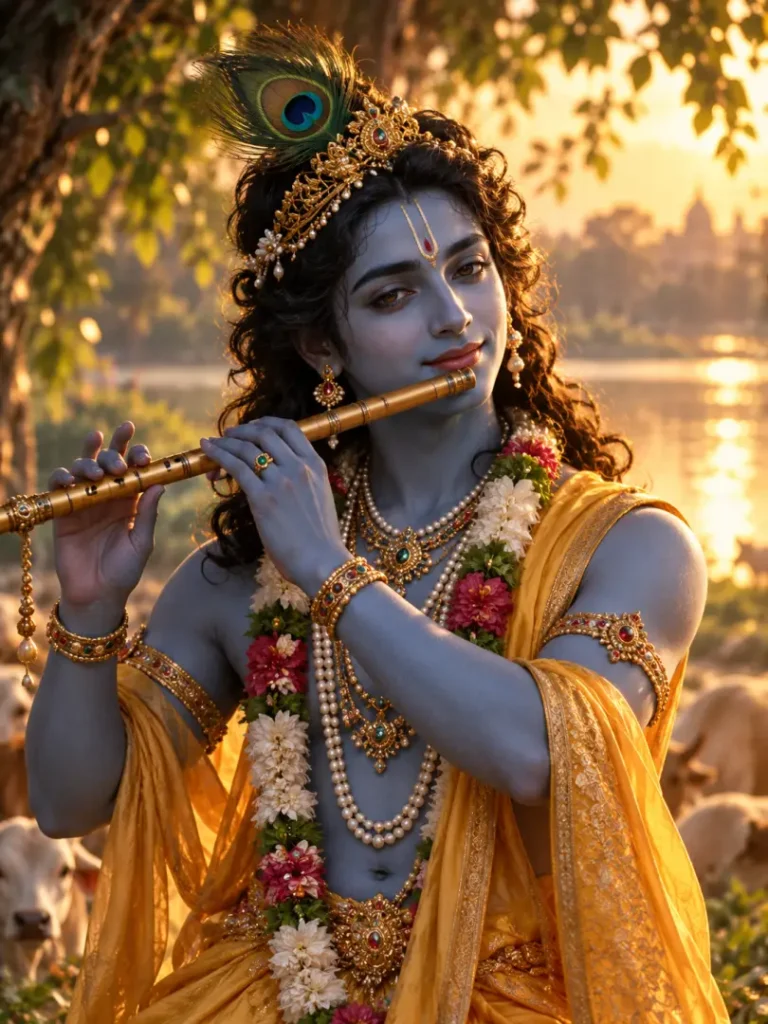
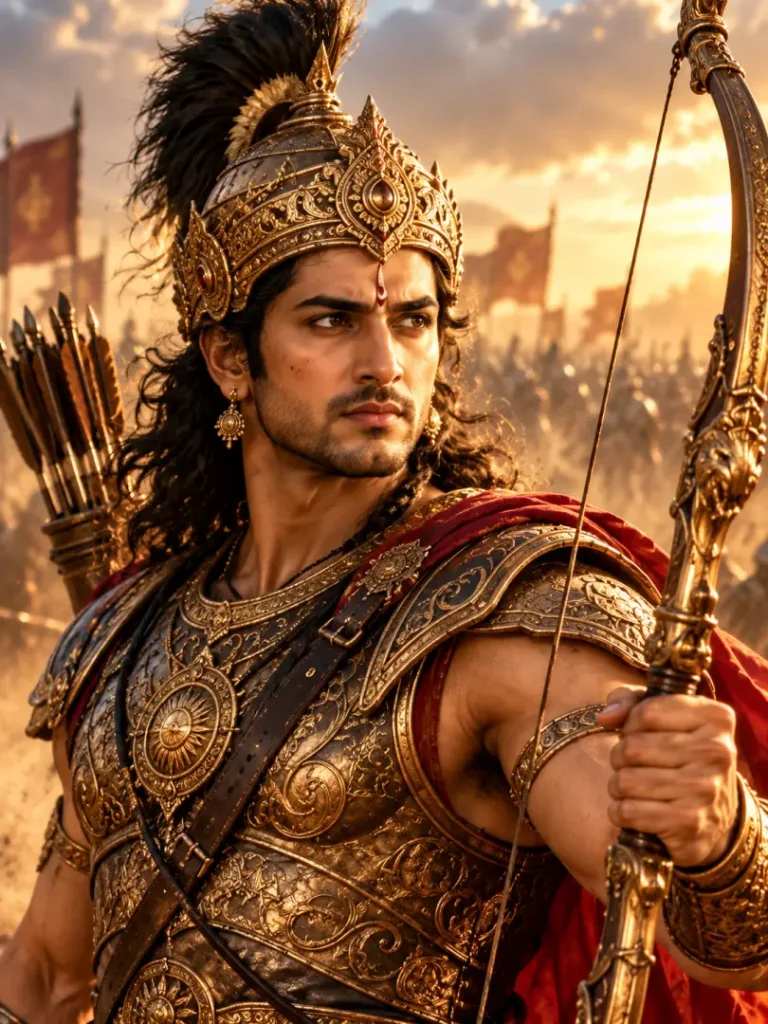
Chapter 15 of the Bhagavad Gita, Purushottama Yoga (“the yoga of the highest Person”), has 20 verses. On the field of Kurukshetra, during the war of the Mahabharata, Krishna speaks to Arjuna through the picture of an upside-down tree, then shows where the soul, the world and the Lord stand in relation to each other. The next chapter, Chapter 16, turns to divine and demonic tendencies.
Summary of Chapter 15
The upside-down tree and the path out
Krishna describes an imperishable ashvattha tree with roots above and branches below, whose leaves are the Vedic hymns (15.1). Its branches are fed by the gunas and its lower roots bind people through action (15.2). Its shape cannot be seen from within, and it is to be cut with the sword of detachment (15.3). One then seeks the state of no return and takes refuge in the original Person (15.4). Those free of pride, delusion and craving reach it (15.5), a place no sun, moon or fire lights, which is the Lord’s supreme abode (15.6).
The soul and its journey
The individual soul is an eternal part of the Lord that draws the five senses and the mind around itself (15.7). It carries them into each new body as the wind carries scent (15.8) and enjoys the world through them (15.9). The deluded do not see it, but those with the eye of knowledge do (15.10), and disciplined yogis find it within (15.11).
The Lord within creation
The light of the sun, moon and fire is his (15.12). He upholds beings through the earth and feeds plants as the moon (15.13) and he is the fire of digestion in every body (15.14). Seated in every heart, he is the source of memory, knowledge and forgetting, and the real goal of the Vedas (15.15).
Purushottama, the highest Person
There are two persons in the world, the perishable, which is all beings, and the unchanging imperishable (15.16). Beyond them stands the highest Person, the Supreme Self who sustains the three worlds (15.17). Because Krishna is beyond both, he is known as Purushottama (15.18). One who knows him so worships him with the whole being (15.19), and Krishna ends by calling this the most secret teaching (15.20).
Themes
Samsara is drawn as a living tree with roots in the Supreme, which can be cut by detachment but not by argument.
The perishable, the imperishable and the highest Person give the chapter its map of what exists.
Light, earth, plants and digestion are all shown as his presence, so daily life becomes a place to see the divine.
Verse 15.19 joins jnana and bhakti: to know the Purushottama is to worship him with all one’s being.
How the commentators read it
Shankara reads the tree as the world of rebirth and the chapter as a teaching on cutting it through knowledge and detachment, with the Self as the one reality. Ramanuja and Madhva stress verses 15.16 to 15.19, where the Purushottama stands above both the perishable and the imperishable, and take them as the plainest statement of the Lord’s supremacy and the call to devotion. The two readings differ in emphasis but both treat the chapter as the summary of the Gita’s teaching on the Supreme.
Why Chapter 15 matters
This short chapter gathers what the earlier ones taught about the world, the soul and the Lord into one map, and gives the Supreme a name that devotees still use. It is also read daily in many households, because verses 15.14 and 15.15 are often recalled at mealtime and in prayer.
Verses
- 1Bhagavad Gita 15.1ऊर्ध्वमूलमधःशाखमश्वत्थं प्राहुरव्ययम्।
- 2Bhagavad Gita 15.2अधश्चोर्ध्वं प्रसृतास्तस्य शाखा गुणप्रवृद्धा विषयप्रवालाः।
- 3Bhagavad Gita 15.3न रूपमस्येह तथोपलभ्यते नान्तो न चादिर्न च संप्रतिष्ठा।
- 4Bhagavad Gita 15.4ततः पदं तत्परिमार्गितव्यं यस्मिन्गता न निवर्तन्ति भूयः।
- 5Bhagavad Gita 15.5निर्मानमोहा जितसङ्गदोषा अध्यात्मनित्या विनिवृत्तकामाः।
- 6Bhagavad Gita 15.6न तद्भासयते सूर्यो न शशाङ्को न पावकः।
- 7Bhagavad Gita 15.7ममैवांशो जीवलोके जीवभूतः सनातनः।
- 8Bhagavad Gita 15.8शरीरं यदवाप्नोति यच्चाप्युत्क्रामतीश्वरः।
- 9Bhagavad Gita 15.9श्रोत्रं चक्षुः स्पर्शनं च रसनं घ्राणमेव च।
- 10Bhagavad Gita 15.10उत्क्रामन्तं स्थितं वापि भुञ्जानं वा गुणान्वितम्।
- 11Bhagavad Gita 15.11यतन्तो योगिनश्चैनं पश्यन्त्यात्मन्यवस्थितम्।
- 12Bhagavad Gita 15.12यदादित्यगतं तेजो जगद्भासयतेऽखिलम्।
- 13Bhagavad Gita 15.13गामाविश्य च भूतानि धारयाम्यहमोजसा।
- 14Bhagavad Gita 15.14अहं वैश्वानरो भूत्वा प्राणिनां देहमाश्रितः।
- 15Bhagavad Gita 15.15सर्वस्य चाहं हृदि सन्निविष्टो मत्तः स्मृतिर्ज्ञानमपोहनं च।
- 16Bhagavad Gita 15.16द्वाविमौ पुरुषौ लोके क्षरश्चाक्षर एव च।
- 17Bhagavad Gita 15.17उत्तमः पुरुषस्त्वन्यः परमात्मेत्युदाहृतः।
- 18Bhagavad Gita 15.18यस्मात्क्षरमतीतोऽहमक्षरादपि चोत्तमः।
- 19Bhagavad Gita 15.19यो मामेवमसम्मूढो जानाति पुरुषोत्तमम्।
- 20Bhagavad Gita 15.20इति गुह्यतमं शास्त्रमिदमुक्तं मयाऽनघ।
Characters in this chapter
Places in this chapter
Key concepts
Frequently asked questions
What is Chapter 15 of the Bhagavad Gita about?
Why is Chapter 15 called Purushottama Yoga?
How many verses are in Chapter 15 of the Gita?
Who speaks in Chapter 15?
What is the ashvattha tree in the Gita?
What are the two persons in 15.16?
Which verse says the Lord is the fire of digestion?
Sources and further reading
- Mahabharata, Bhishma Parva, Bhagavad Gita chapter 15
- Sanskrit text from public-domain digital editions; meanings by Vedic Kathas
- Classical commentaries of Shankara, Ramanuja and Madhva on the Gita
- The Mahabharata, K. M. Ganguli translation (Sacred Texts)
Read our editorial policy on how scripture, Purana and folk tradition are labelled.