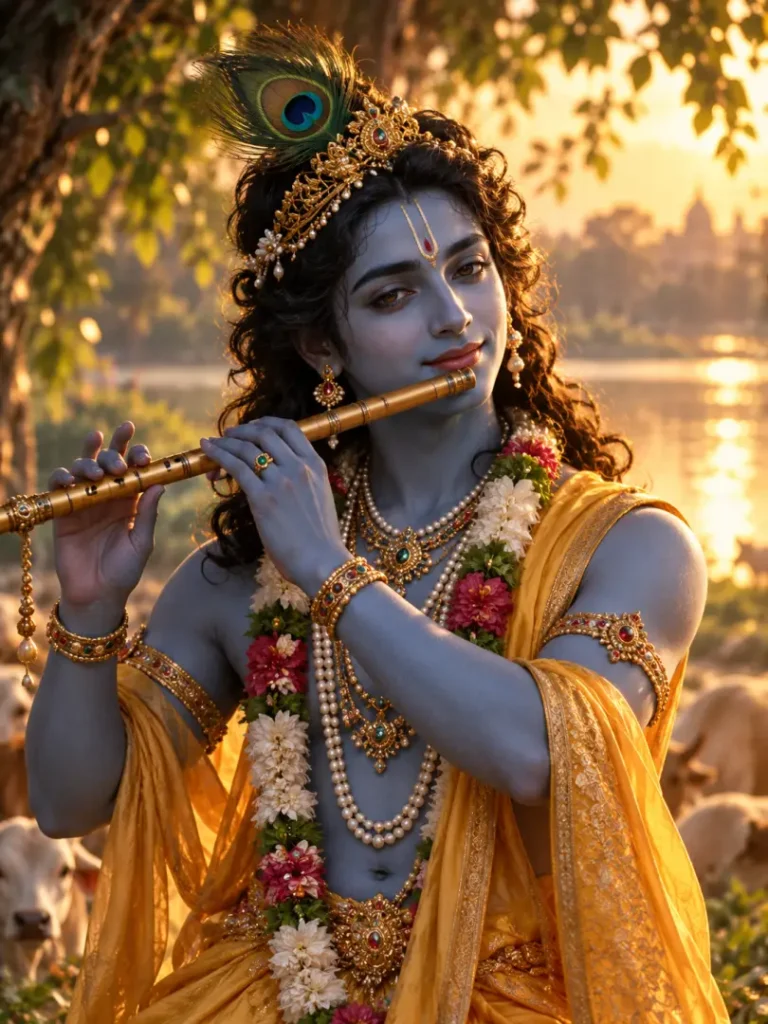
Bhagavad Gita 12.17
The devotee does not rejoice, hate, grieve or crave, and lets go of good and bad outcomes.
यो न हृष्यति न द्वेष्टि न शोचति न काङ्क्षति।
शुभाशुभपरित्यागी भक्तिमान्यः स मे प्रियः॥
yo na hṛṣyati na dveṣṭi na śocati na kāṅkṣati
śubhāśubhaparityāgī bhaktimānyaḥ sa me priyaḥ
Translation
One who neither rejoices nor hates, neither grieves nor craves, and lets go of both good and bad fortune, and is full of devotion, is dear to me.
Hindi
जो न हर्षित होता है, न द्वेष करता है, न शोक करता है, न कामना करता है, जो शुभ और अशुभ दोनों को छोड़ चुका है और भक्ति से भरा है, वह मुझे प्रिय है।
Word by word
- यः
- yaḥ
- who
- न
- na
- neither
- हृष्यति
- hṛṣyati
- rejoices
- न
- na
- nor
- द्वेष्टि
- dveṣṭi
- hates
- न
- na
- nor
- शोचति
- śocati
- grieves
- न
- na
- nor
- काङ्क्षति
- kāṅkṣati
- craves
- शुभाशुभपरित्यागी
- śubhāśubhaparityāgī
- giving up good and bad alike
- भक्तिमान्
- bhaktimān
- full of devotion
- यः
- yaḥ
- who
- सः
- saḥ
- he
- मे
- me
- to me
- प्रियः
- priyaḥ
- dear
Commentary
Four reactions are named and set aside: delight, hatred, grief and craving. The devotee is not numb, only no longer ruled by gain and loss, and so lets go of both the pleasant and the unpleasant outcome. This evenness leads straight into the paired opposites of 12.18.