Quick answer
Parashurama story: Vishnu's sixth avatar, the Brahmin warrior with Shiva's axe, his war on corrupt kings, his meeting with Rama, his students Bhishma, Drona and Karna, and his place among the immortals.
Who is in this story
The story
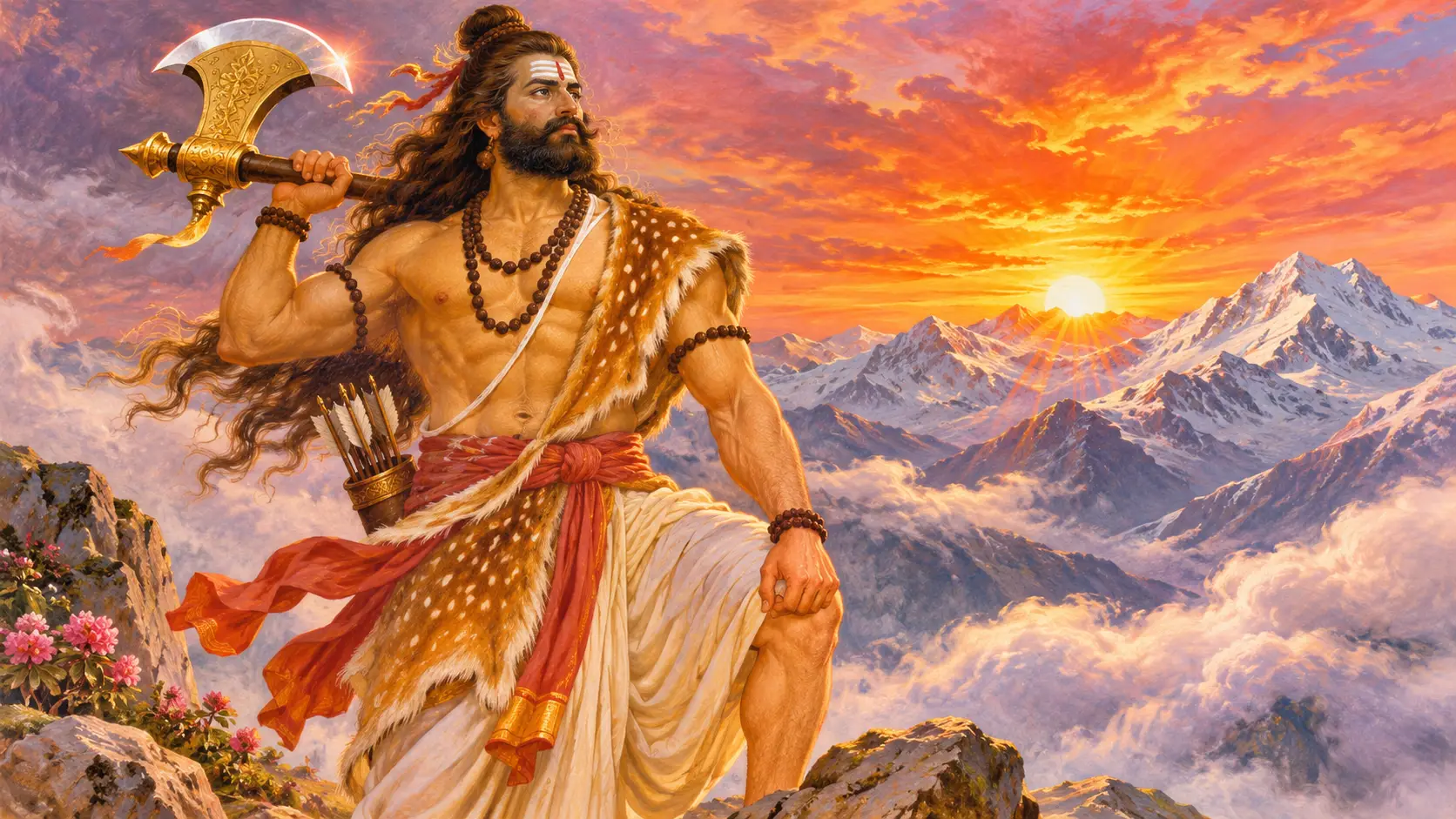
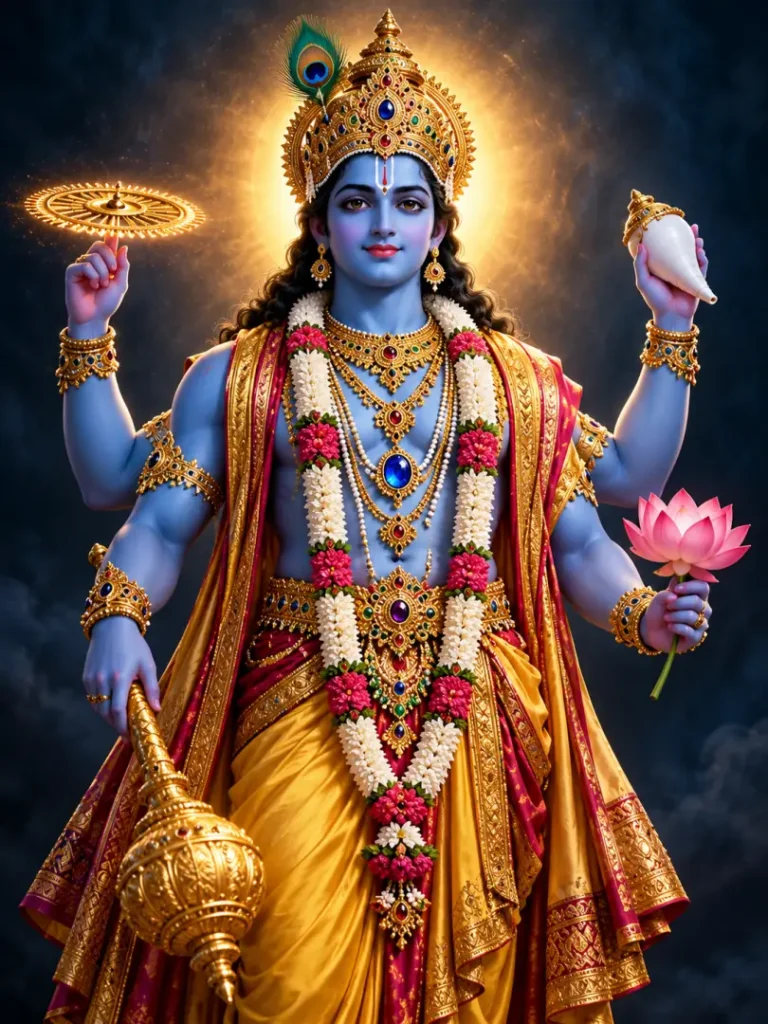
Parashurama, “Rama with the axe”, is the sixth of Vishnu’s ten avatars: a Brahmin sage who took up arms against kings who had abused their power. He appears across the epics, as a fierce avenger in the Puranas, a challenger of Rama in the Ramayana and a teacher of Bhishma, Drona and Karna in the Mahabharata, and tradition counts him among the immortals still living. This guide tells the Parashurama story, its hard episodes and its lasting place in Hindu tradition.
Parashurama story: birth and the axe
Parashurama was born to the sage Jamadagni and his wife Renuka, in the line of the sage Bhrigu. Though born a Brahmin, he had the temperament of a warrior. Through intense penance he pleased Shiva, who gave him the divine axe, the parashu, from which he took his name.
Obedience and Renuka
The Mahabharata tells a difficult episode. When Renuka’s mind once wavered, Jamadagni ordered his sons to kill her. The elder sons refused, but Parashurama obeyed. Pleased, Jamadagni offered him a boon, and Parashurama asked that his mother be restored to life with no memory of what had happened, and that his brothers be forgiven. Both were granted. Tradition reads the story as a lesson about a father’s authority and a son’s devotion, and many modern readers find it troubling.
Kartavirya Arjuna and the war on corrupt kings
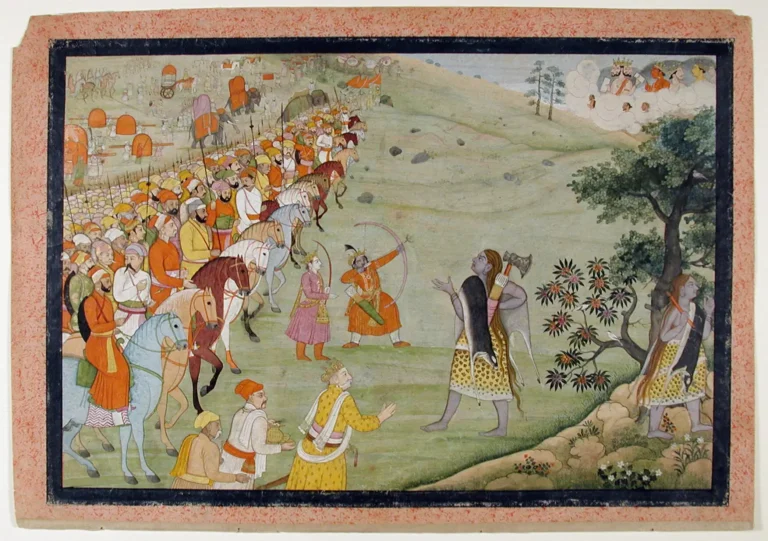
The thousand-armed king Kartavirya Arjuna of the Haihaya dynasty visited Jamadagni’s hermitage and seized the sage’s sacred cow by force. Parashurama pursued him and killed him. In revenge, Kartavirya’s sons killed Jamadagni while Parashurama was away. Grief-stricken, Parashurama vowed to rid the earth of tyrannical kshatriyas and, the Puranas say, did so twenty-one times. He then gave the whole earth to the sage Kashyapa and withdrew to the mountains to do penance.
Parashurama meets Rama
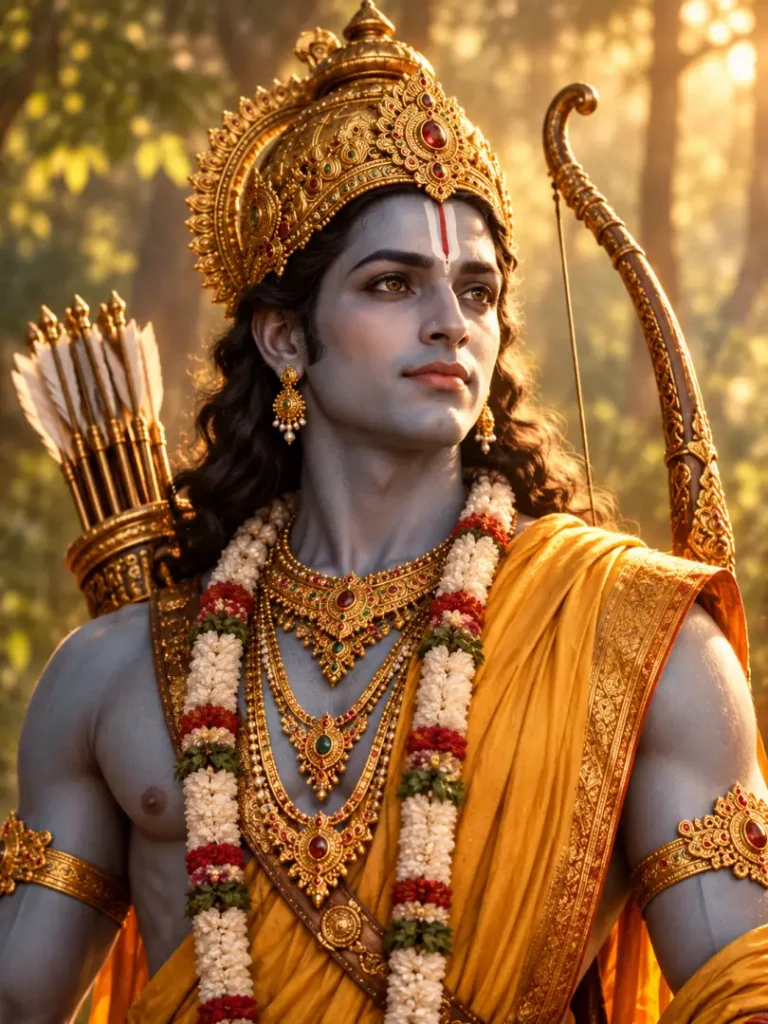
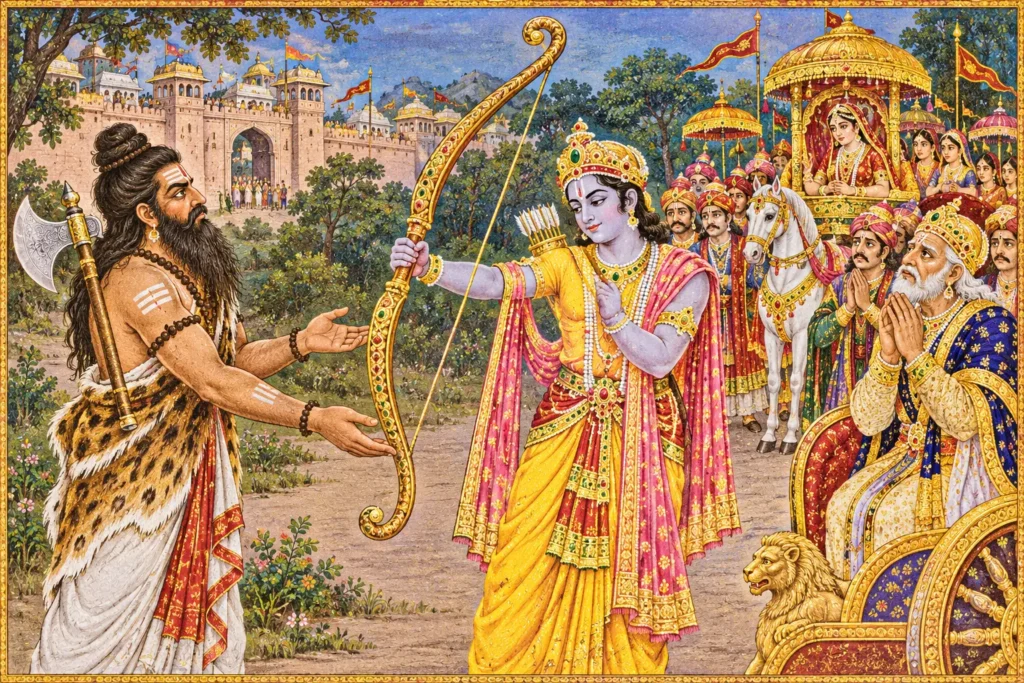
In the Bala Kanda of the Ramayana, after Rama breaks Shiva’s bow to win Sita, Parashurama confronts him in anger and challenges him to string Vishnu’s bow. Rama strings it easily, and Parashurama recognises that Vishnu’s power now lives in Rama. He gives way and returns to his penance. The meeting of two avatars marks the passing of an age.
Teacher in the Mahabharata
- Bhishma: learned warfare from Parashurama and later fought him to a standstill over Amba.
- Drona: received celestial weapons from him.
- Karna: studied under him by claiming to be a Brahmin. When Parashurama discovered the truth, he cursed Karna to forget his knowledge when he needed it most.
An immortal teacher
Parashurama is one of the Chiranjivis, the long-lived ones believed to remain on earth. Tradition says he will teach Kalki, the final avatar. Kerala and the Konkan coast tell that he threw his axe into the sea and reclaimed the land where it fell. His birthday, Parashurama Jayanti, falls on Vaishakha Shukla Tritiya, the same tithi as Akshaya Tritiya. Some years the two are kept on the same day and some years a day apart: in 2027 Parashurama Jayanti is on 8 May and Akshaya Tritiya on 9 May.
What Parashurama teaches
Parashurama stands at the border between sage and warrior. His story shows the force of righteous anger against tyranny, and also its limits: when Rama appears, he lays down his challenge and returns to penance.
Frequently asked questions
Who is Parashurama?
Parashurama is the sixth avatar of Vishnu, a Brahmin sage and warrior, son of Jamadagni and Renuka, who carried an axe given by Shiva.
Why did Parashurama curse Karna?
Karna studied under him by claiming to be a Brahmin. When Parashurama learned the truth, he cursed Karna to forget his knowledge when he needed it most.
Is Parashurama still alive?
Yes. Tradition counts him among the Chiranjivis, the long-lived ones, and says he will teach Kalki.
Sources and further reading
- Valmiki Ramayana (valmikiramayan.net)
- Mahabharata, Vana and Shanti Parvas; Valmiki Ramayana, Bala Kanda; Bhagavata Purana 9.15-16
- The Mahabharata, K. M. Ganguli translation (Sacred Texts)
Read our editorial policy on how scripture, Purana and folk tradition are labelled.