Quick answer
The Pushpaka Vimana in the Valmiki Ramayana: who built it, how Ravana took it from Kubera, what it carried, and why Rama sent it back. Plus a myth check on ancient aircraft.
Who is in this story
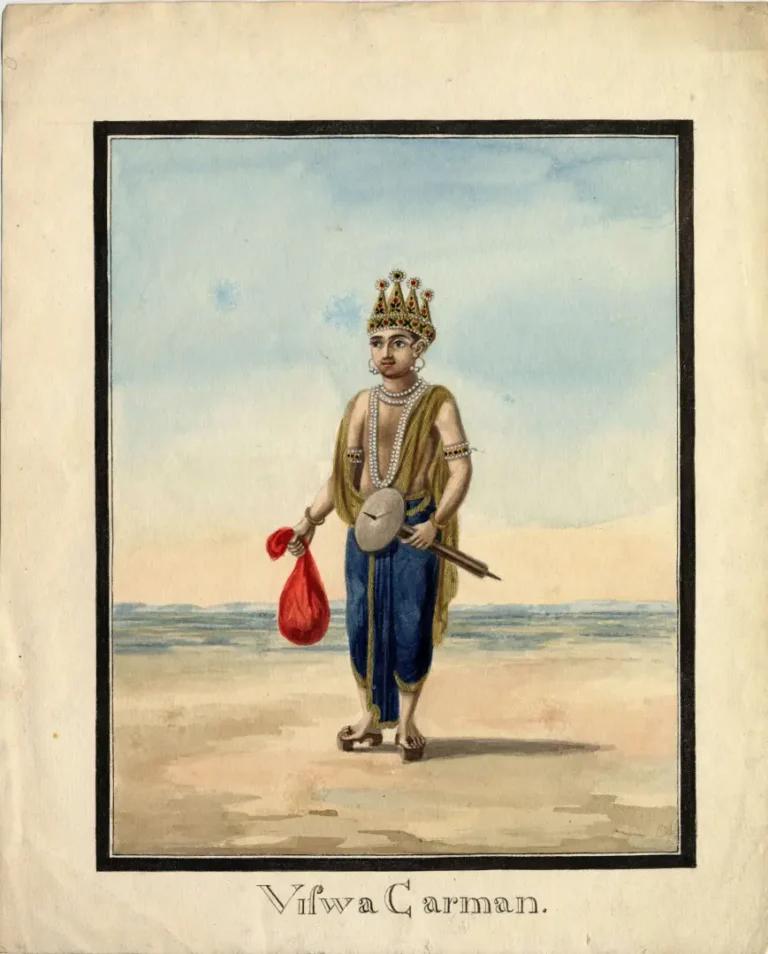
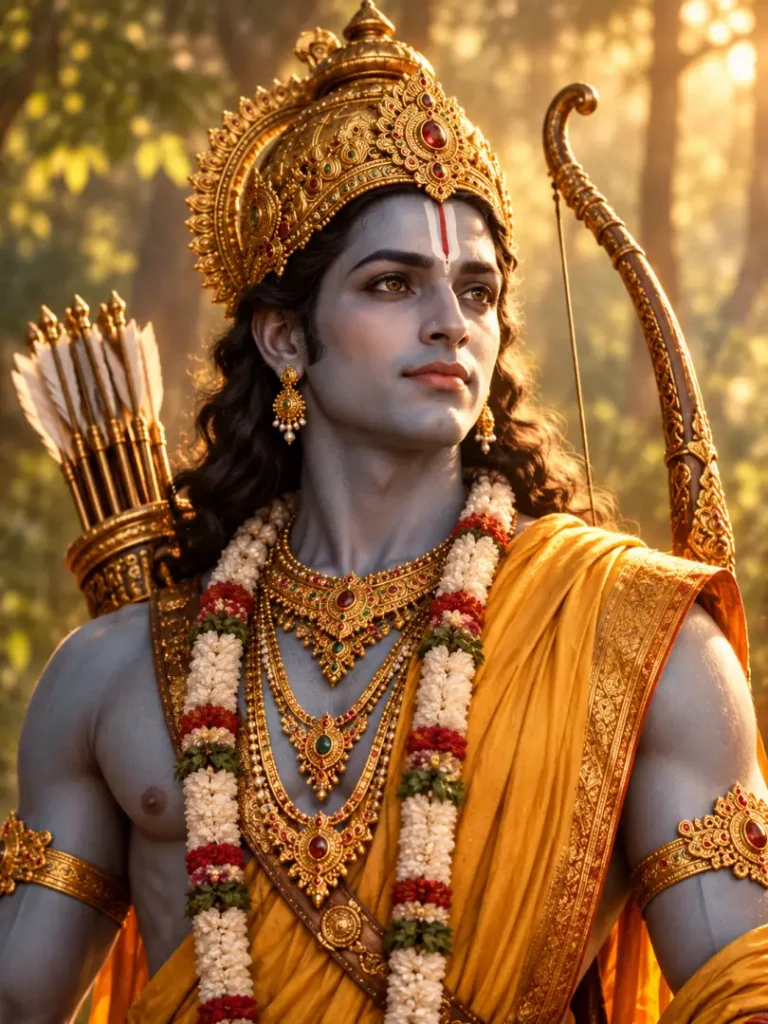
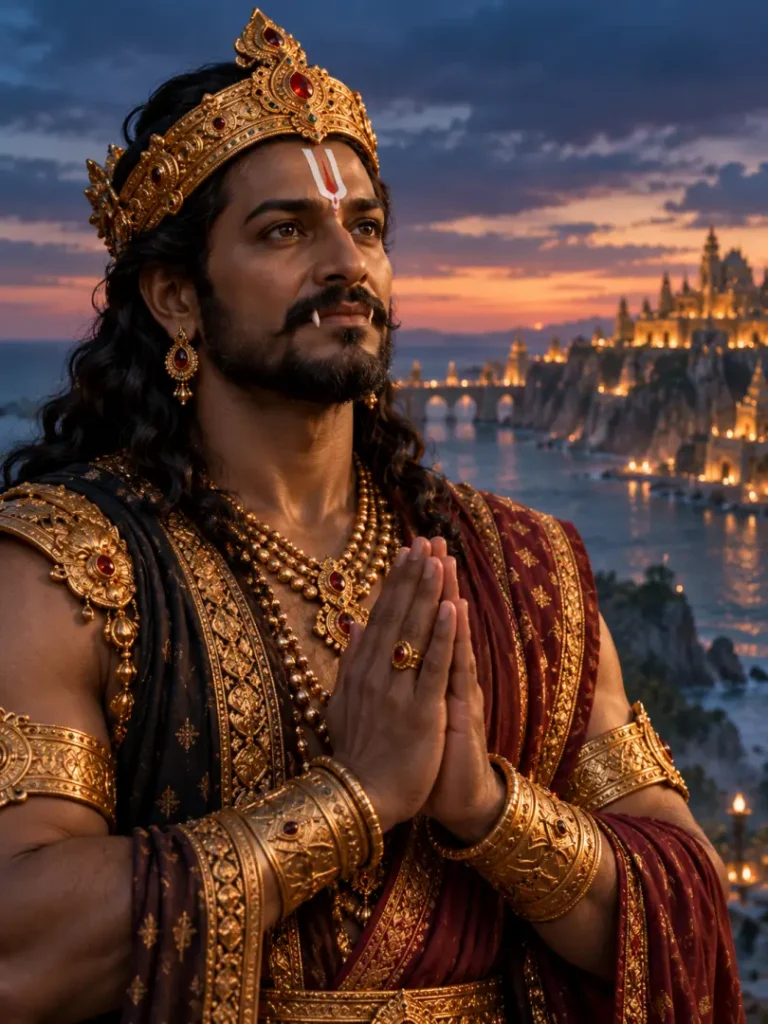
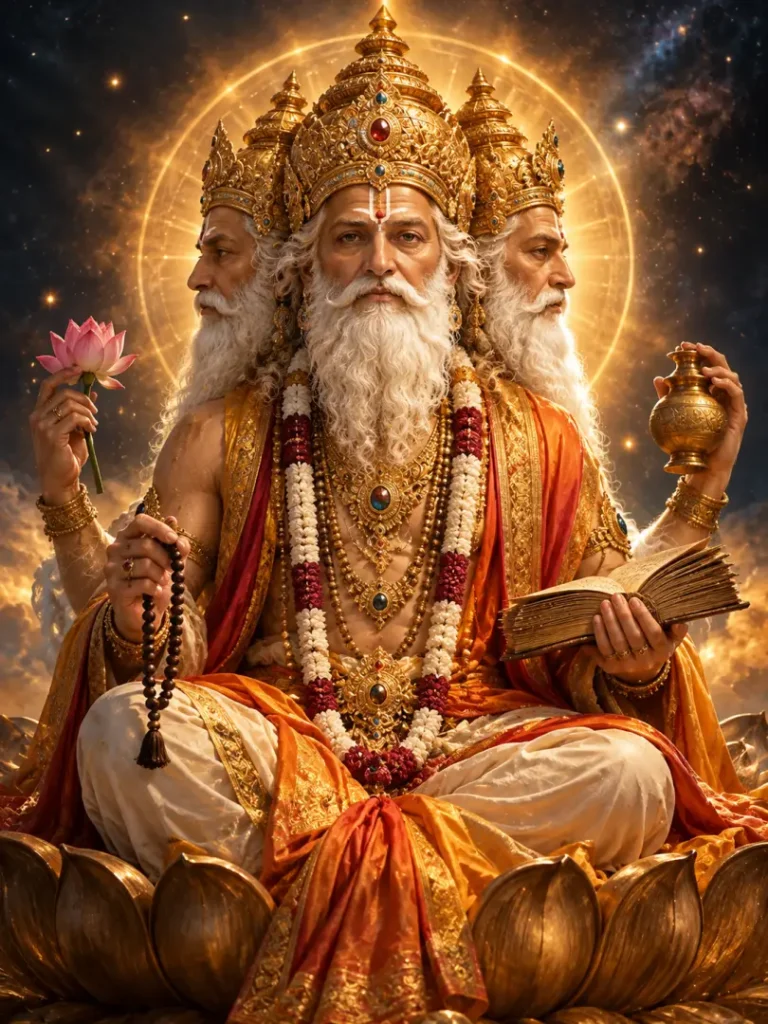
The story
The Pushpaka Vimana is the flying chariot of the Ramayana, and it appears at two famous moments: in Ravana’s Lanka and in Rama’s journey home to Ayodhya, the return that Diwali is linked with. Many people think of it as the vehicle that carried Sita away, but the Valmiki Ramayana tells a more careful story. This guide covers who built the Pushpaka, who owned it, what it could do, and what the epic says about each journey.
What is the Pushpaka Vimana?
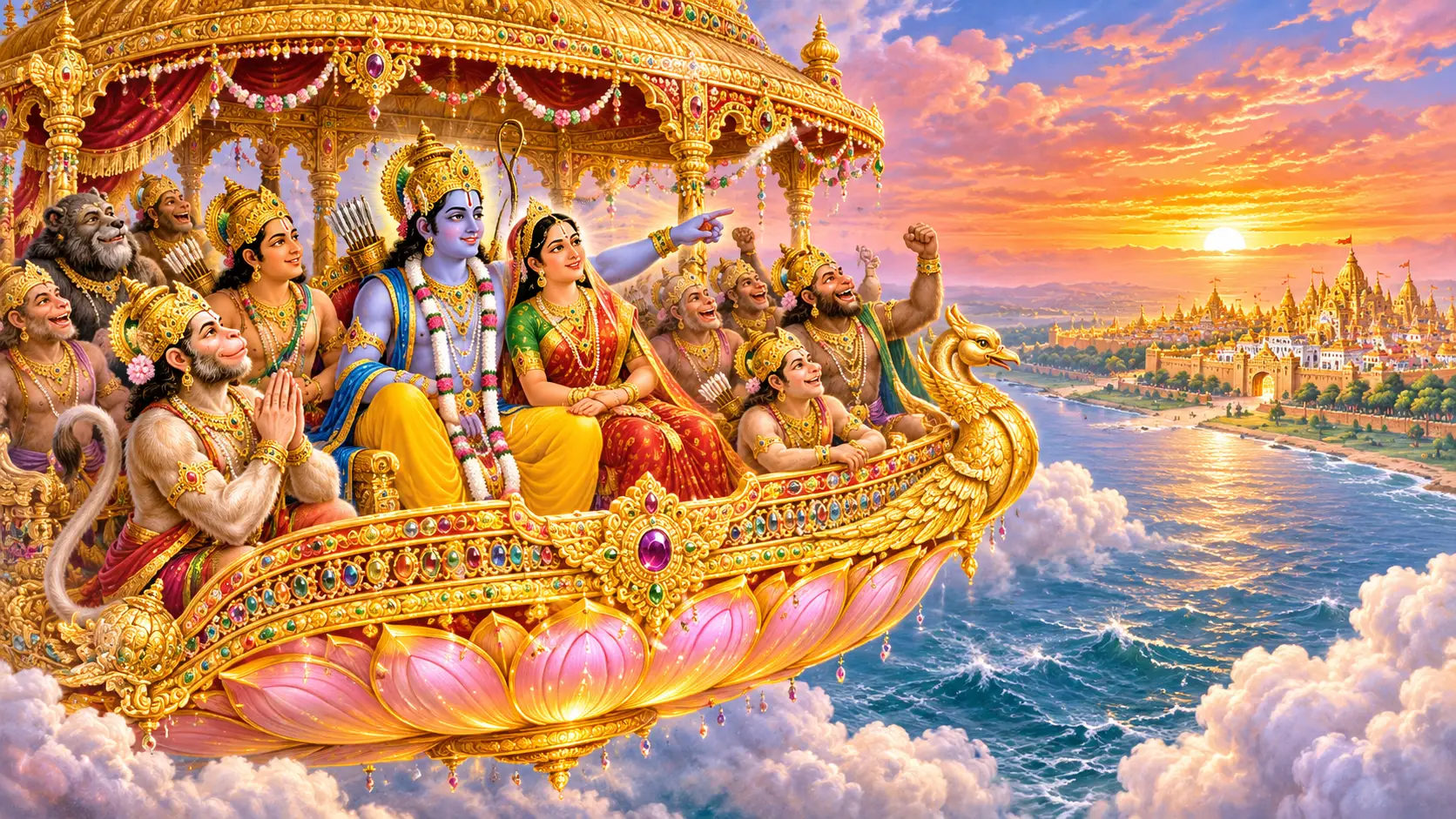
Pushpaka is a vimana, a celestial aerial chariot, named for its flower-like beauty. The Sundara Kanda describes it when Hanuman finds it standing in Ravana’s palace in Lanka: a vast, jewelled car decorated with gold, seemingly alive with ornament. According to the epic, it goes wherever its rider wishes, as swift as thought, and it can expand to carry any number of people.
Who built it and who owned it
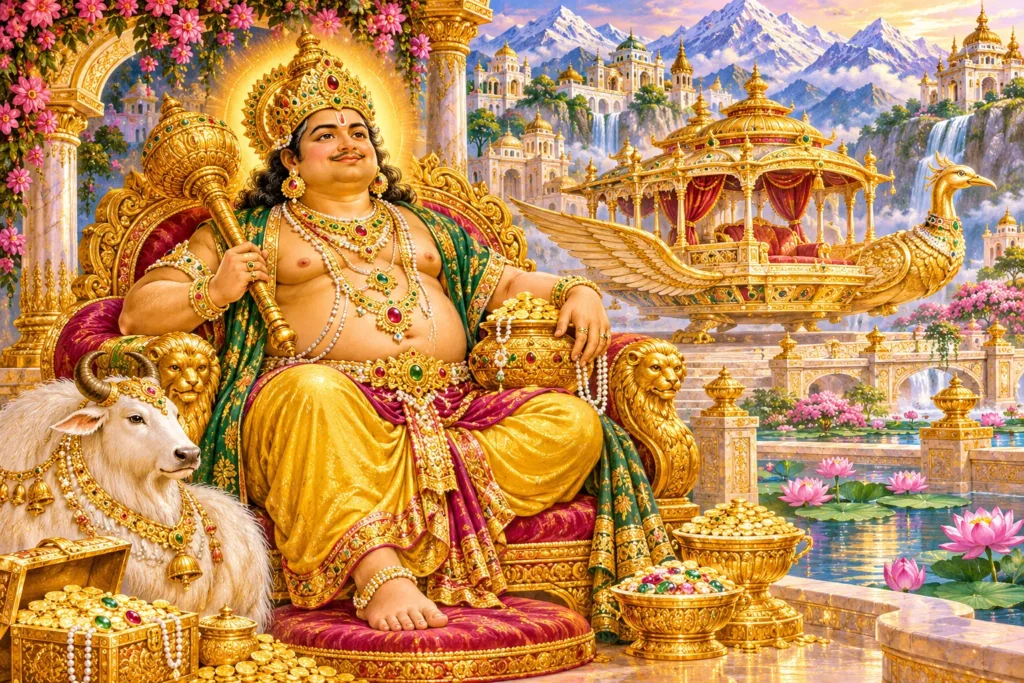
Valmiki says the Pushpaka was built by Vishwakarma, the divine architect, for Brahma. Brahma gave it to Kubera, the lord of wealth, as a mark of favour. The Uttara Kanda tells that Ravana, Kubera’s half-brother, conquered Lanka and took the Pushpaka from him by force. It remained Ravana’s until his death. So the Pushpaka changed hands three times before Rama.
Did Ravana carry Sita away in the Pushpaka?
This is the most common mix-up. In the abduction scene of the Aranya Kanda, Ravana seizes Sita and takes her up into the sky in a golden chariot drawn by donkeys. The text names this chariot differently from the Pushpaka. The Pushpaka is the vehicle of the Yuddha Kanda’s return, and later retellings and television serials have often merged the two. When you compare versions, the Valmiki text is the best check.
Rama’s return on the Pushpaka
After Ravana’s fall, Vibhishana, now king of Lanka, presented the Pushpaka to Rama. Rama, Sita, Lakshmana, Sugriva, Hanuman and the other vanara leaders boarded together, and the chariot grew to hold them all. As they flew north, Rama pointed out the landmarks of their journey to Sita from the air: the battlefield, the bridge across the sea, Kishkindha and the forest where she had been taken. They stopped at the hermitage of the sage Bharadvaja, where the fourteen years of exile ended, before reaching Ayodhya.
The Pushpaka goes back to Kubera
When they arrived, Rama did not keep the Pushpaka. He sent it back to Kubera, its rightful owner, and told it to return whenever he called. The detail shows Rama’s respect for property and for the order of things, even when he had every claim to the prize of war.
Is the Pushpaka proof of ancient aircraft?
Popular claims often cite the text Vaimanika Shastra as proof that ancient India built aircraft. Scholars date this book to the early twentieth century, not antiquity, and a 1974 study by engineers at the Indian Institute of Science concluded that its designs could not fly. The Pushpaka belongs to the epic’s world of divine weapons and chariots, and it is best read as part of the literature of wonder, as the Ramayana presents it.
Why the Pushpaka matters in the story
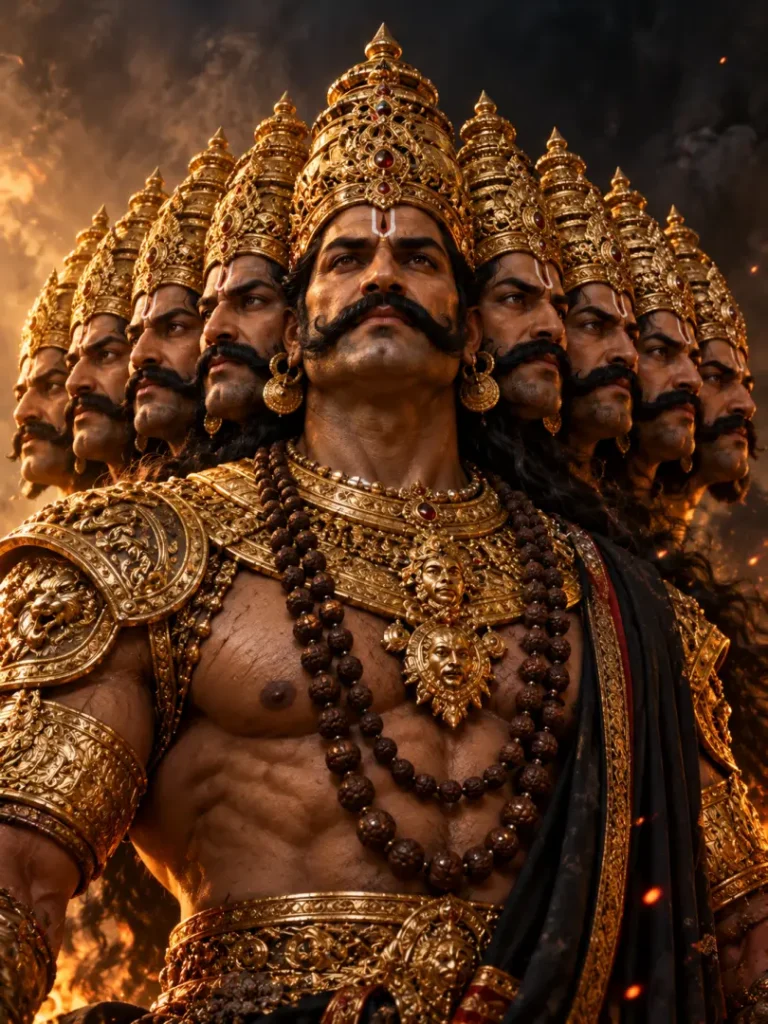
The Pushpaka marks both Ravana’s arrogance, since he took what was not his, and Rama’s restraint, since he returned it. It links the war in Lanka to the celebration in Ayodhya that shapes Diwali. For more on the epic’s figures, see why Ravana had ten heads and the Ramayana characters explained.
Frequently asked questions
Who built the Pushpaka Vimana?
Valmiki says Vishwakarma built the Pushpaka for Brahma, who gave it to Kubera. Ravana later took it from Kubera.
Did Ravana use the Pushpaka to abduct Sita?
In the Aranya Kanda, Ravana carries Sita away in a golden chariot drawn by donkeys. The Pushpaka appears later, in Lanka and on Rama’s return.
What happened to the Pushpaka after Rama reached Ayodhya?
Rama returned it to Kubera, its original owner, and told it to come back whenever he called.
Sources and further reading
Read our editorial policy on how scripture, Purana and folk tradition are labelled.