Ravana
रावणRakshasa king of Lanka. Also called Dashanana, Dashagriva, Lankesh, Lankeshvara, Ravanasura.
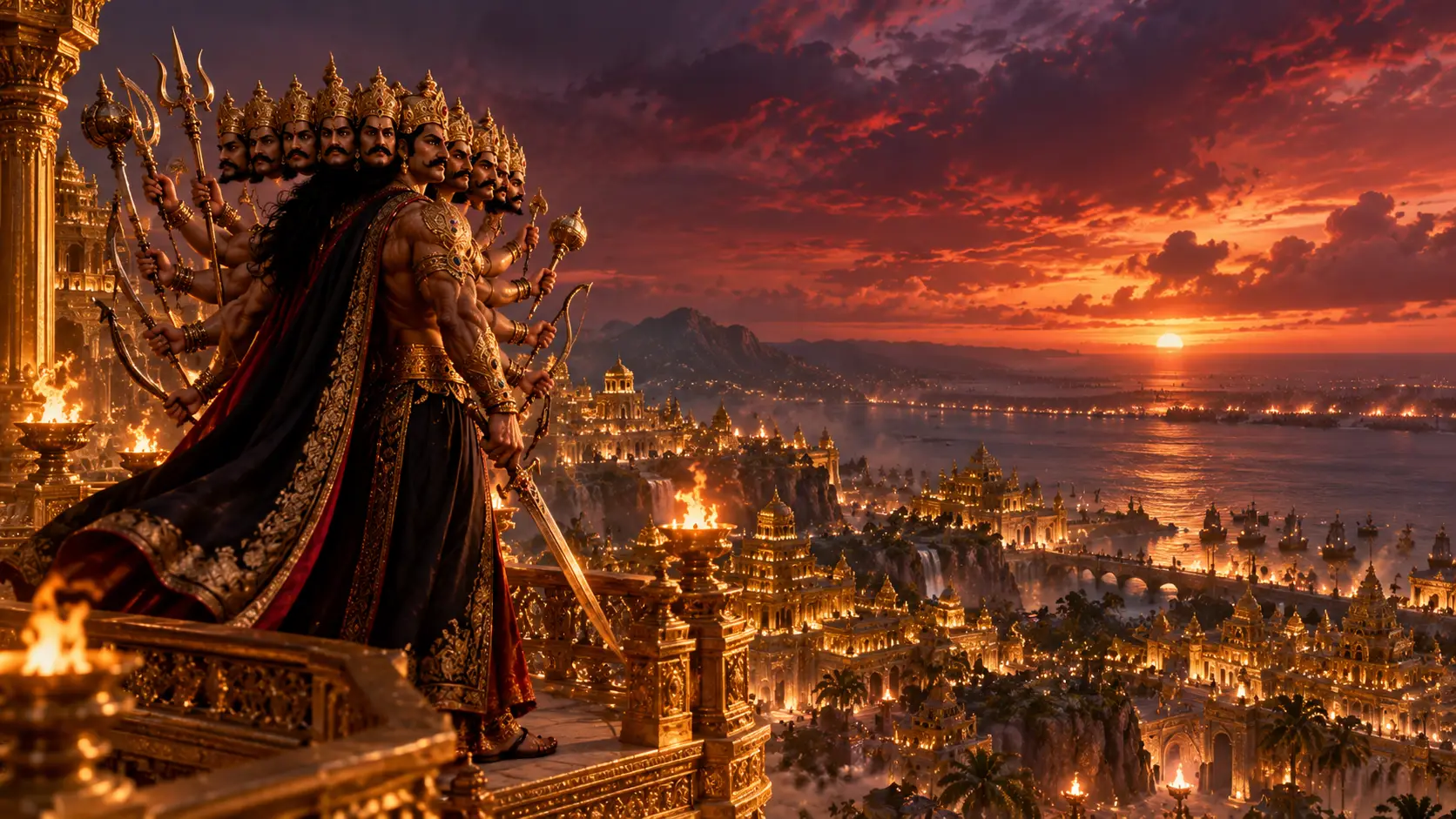
Ravana, the ten-headed king of Lanka, is the antagonist of the Ramayana. A great scholar and devotee of Shiva, he won near-invulnerability from Brahma, carried off Sita and was killed by Rama in the war of Lanka. His defeat is celebrated on Dussehra.
Who was Ravana?
Ravana (रावण), the ten-headed king of Lanka, is the great antagonist of the Ramayana. He carried off Sita, the wife of Rama, and was killed by Rama in the war of Lanka. Yet tradition remembers him not only as a villain but as a mighty king, a great scholar of the Vedas and music, and a devoted worshipper of Shiva, which makes him one of the most complex figures in Indian story.
Birth and family
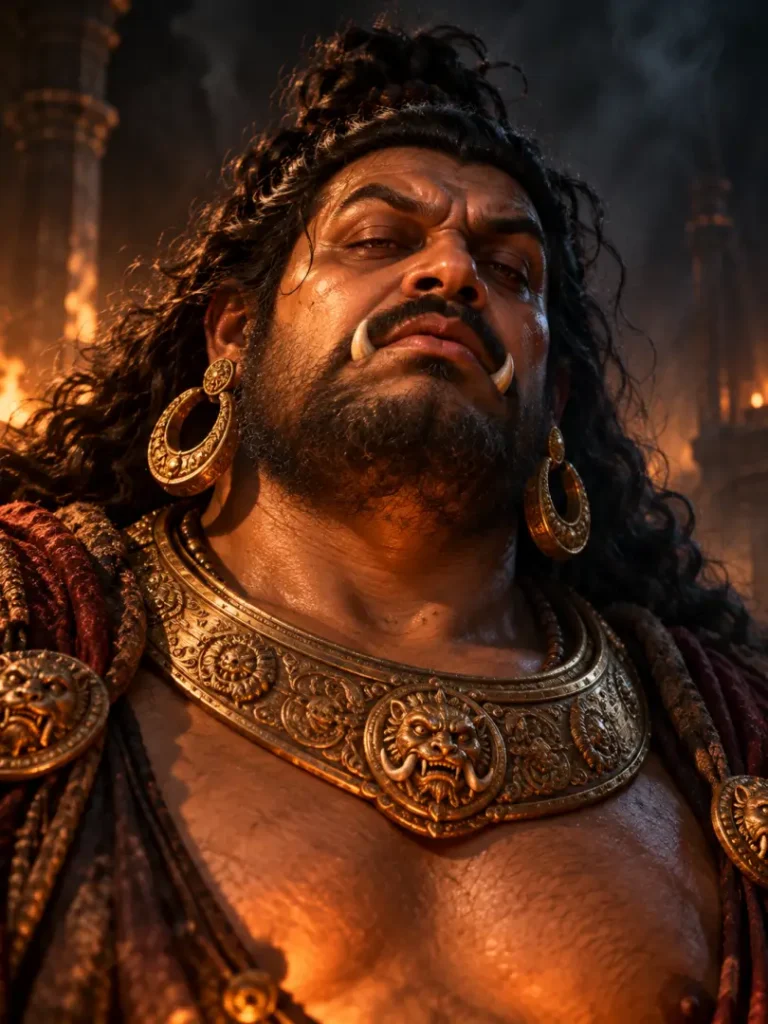
Ravana was the son of the sage Vishrava, a grandson of Brahma‘s mind-born son Pulastya, and the rakshasi Kaikesi. His brothers were Kumbhakarna and Vibhishana, and his sister Shurpanakha. Kubera, the god of wealth, was his half-brother, and Ravana took from him both the golden city of Lanka and the flying chariot Pushpaka. His chief queen was Mandodari, and his sons included the great warrior Indrajit (Meghanada).
The ten heads and the boon
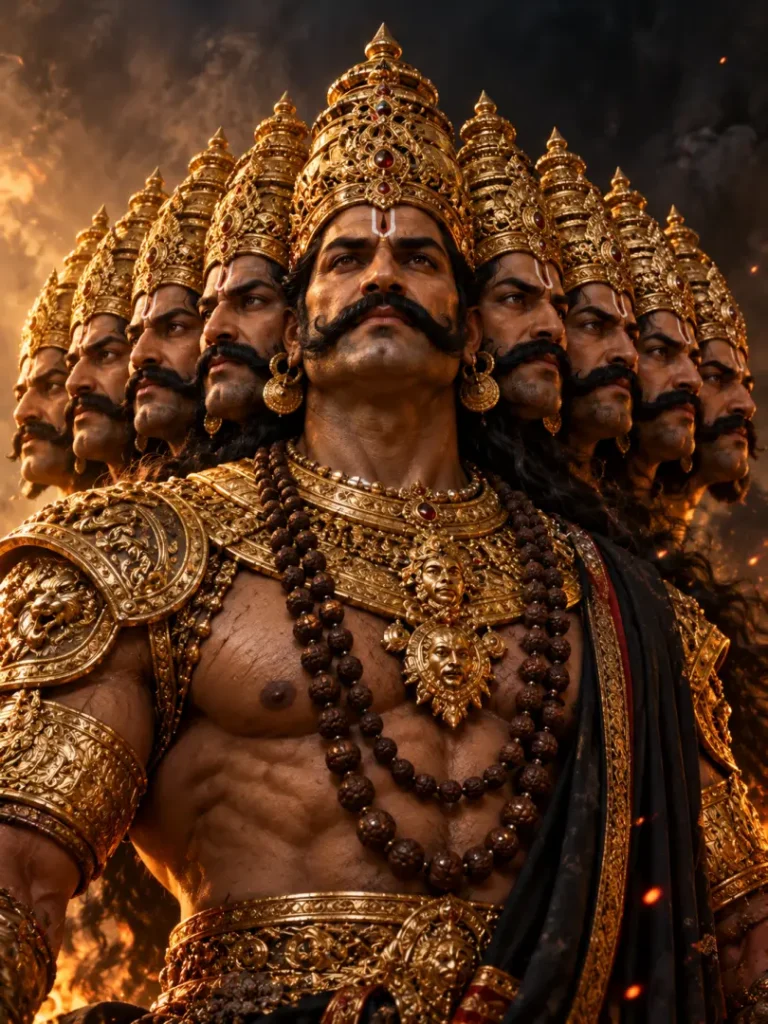
Ravana performed fierce penance to Brahma for thousands of years, offering one of his heads into the fire at each stage; nine heads he sacrificed, and as he was about to offer the tenth, Brahma appeared. Ravana asked to be invulnerable to gods, demons, nagas, yakshas and every other powerful being, but thought men and animals beneath his notice. That omission is why Vishnu came as a man, Rama, with an army of vanaras. His ten heads, Dashanana, are often read as the ten senses, or his great learning, or his pride.
Ravana and Shiva
When Ravana’s chariot could not pass over Kailash, he tried to lift the mountain. Shiva pressed it down with his toe, trapping his arms, and Ravana sang Shiva’s praise until he was released and given the sword Chandrahasa. The stirring Shiva Tandava Stotram is attributed to him, and the bowed instrument ravanahatha is named after him.
The curses
Ravana’s downfall was foretold by several curses. Vedavati, a woman he assaulted, threw herself into fire, vowing to be reborn to destroy him; many traditions see Sita as her rebirth. Nalakuvara, Kubera’s son, cursed that Ravana’s heads would split if he ever forced himself on a woman, which is why he never touched Sita against her will. Nandi cursed that monkeys would destroy his kingdom.
The abduction and the war
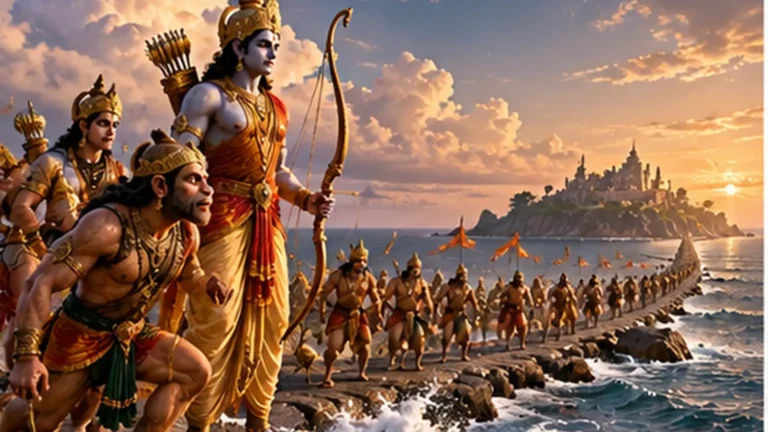
After Lakshmana maimed Shurpanakha, Ravana sent the demon Maricha as a golden deer to lure Rama away and carried Sita off to Lanka. He refused every counsel to return her, from Vibhishana, Kumbhakarna, Mandodari and even his grandfather. In the final battle Rama cut off his heads again and again, and they grew back, until on Vibhishana’s advice Rama struck him in the chest with a Brahmastra. His defeat is celebrated on Dussehra, when great effigies of Ravana are burned across North India.
Other views
The Bhagavata Purana says Ravana and Kumbhakarna were Jaya and Vijaya, the gatekeepers of Vaikuntha, in their second birth as Vishnu’s enemies. Jain tradition casts him as a learned prativasudeva who will one day become a tirthankara. Some communities in India, and many in Sri Lanka, honour him as a scholar-king, and there are temples to him at places such as Bisrakh in Uttar Pradesh and Mandsaur in Madhya Pradesh.
Connected to Ravana
 Appears inRamayanaरामायण
 SiblingsKumbhakarnaकुंभकर्ण
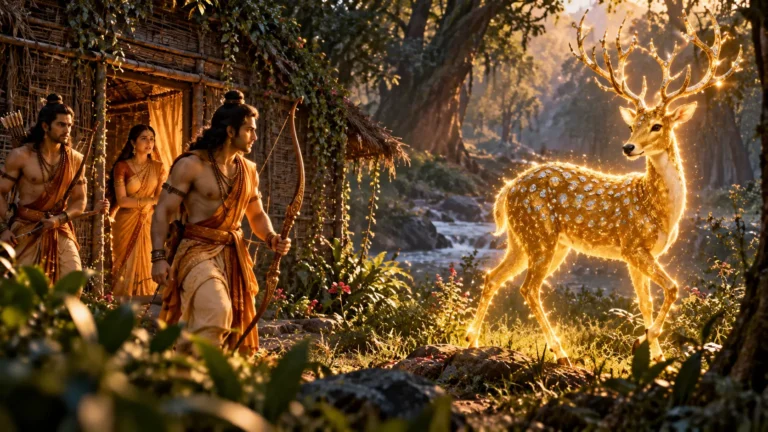 Stories & mythsThe Golden Deer and the Abduction of Sitaस्वर्ण मृग और सीता हरण
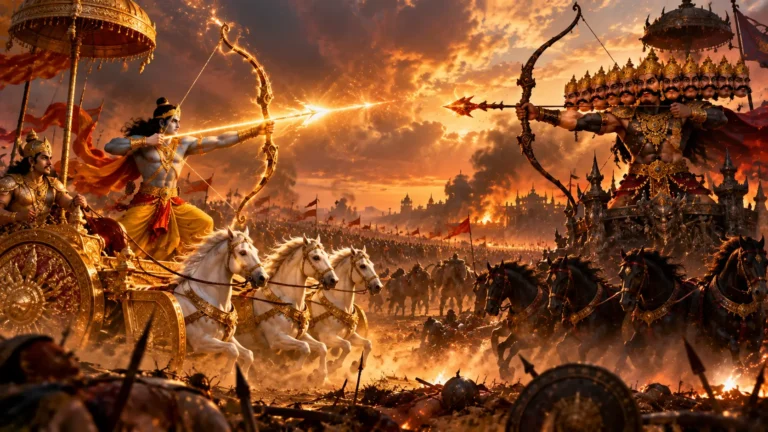 Stories & mythsThe Fall of Ravanaरावण वध
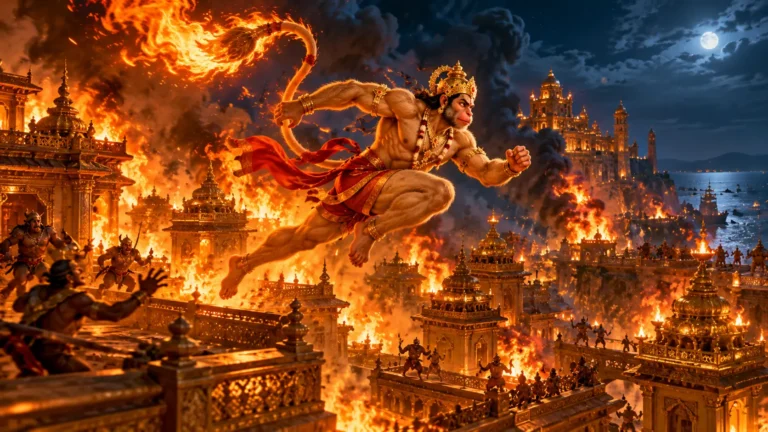 Stories & mythsLanka Dahan: Hanuman Burns Lankaलंका दहन: हनुमान ने लंका जलाई
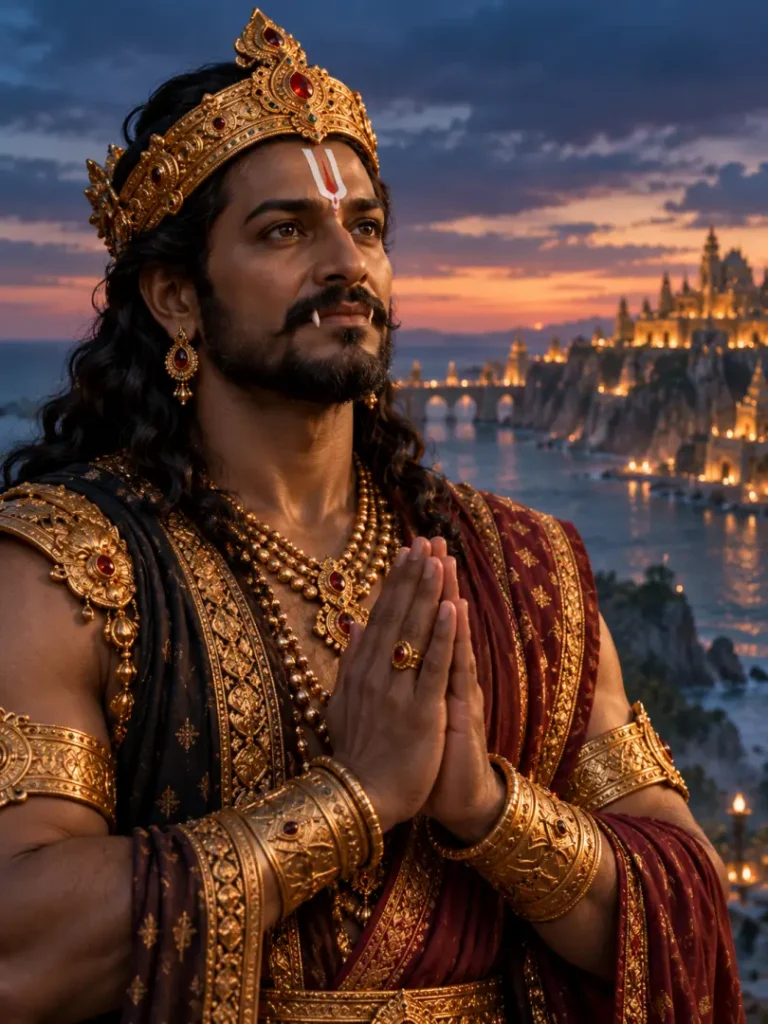 SiblingsVibhishanaविभीषण
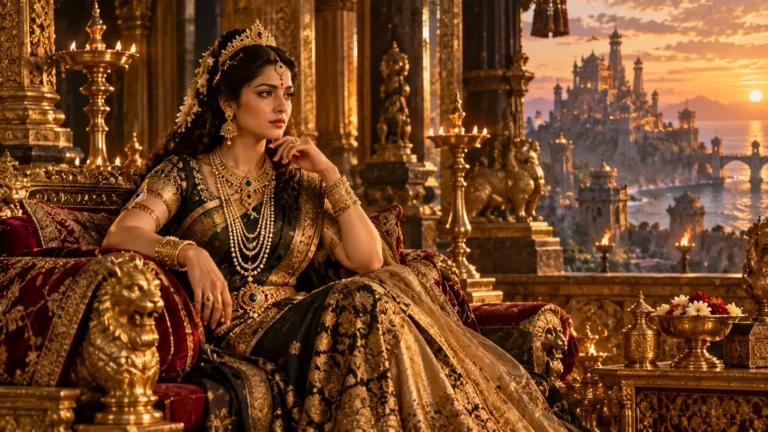 Related figuresMandodariमंदोदरी
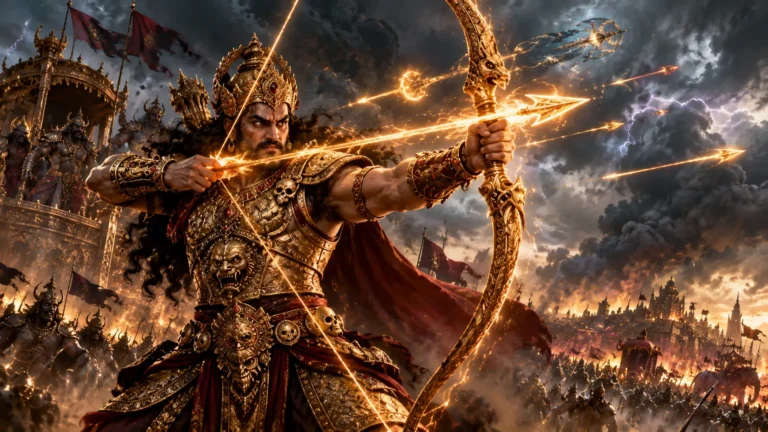 Related figuresIndrajitइंद्रजीत (मेघनाद)
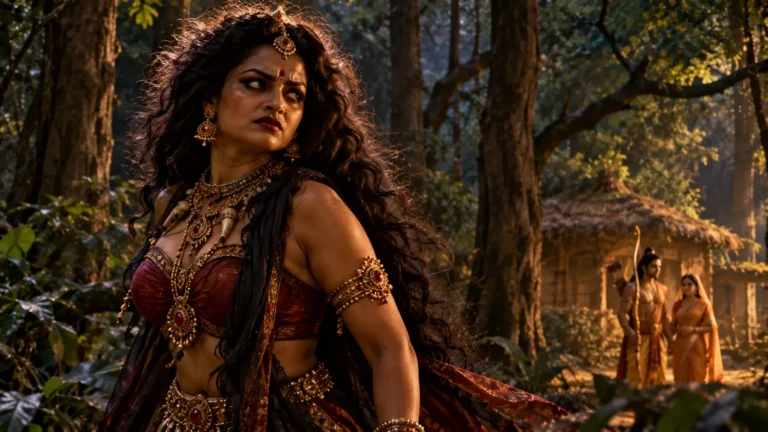 Related figuresShurpanakhaशूर्पणखा