Lakshmana
लक्ष्मणPrince of Ayodhya; Rama's younger brother and companion in exile. Also called Saumitri, Ramanuja, Lakhan.
Lakshmana, son of Dasharatha and Sumitra, is Rama's devoted younger brother who followed him into exile and guarded Sita. He was saved by Hanuman's Sanjeevani herb in the war and killed Ravana's son Indrajit. Tradition holds him to be an incarnation of Shesha.
Who was Lakshmana?
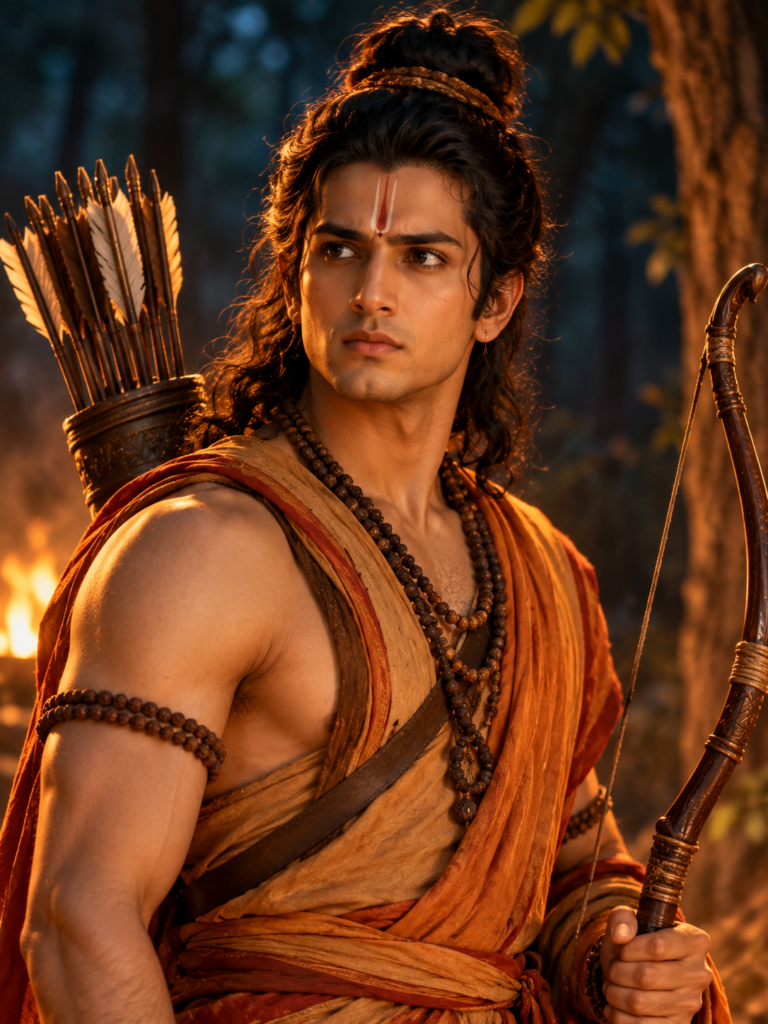
Lakshmana (लक्ष्मण) is the younger brother of Rama, son of King Dasharatha and Queen Sumitra, and the twin of Shatrughna. He is the very image of brotherly devotion: from boyhood he was Rama’s shadow, and when Rama was exiled he left his palace, his wife and his mother to serve him in the forest for fourteen years. Tradition holds him to be an incarnation of Shesha, the serpent on whom Vishnu rests.
In the forest
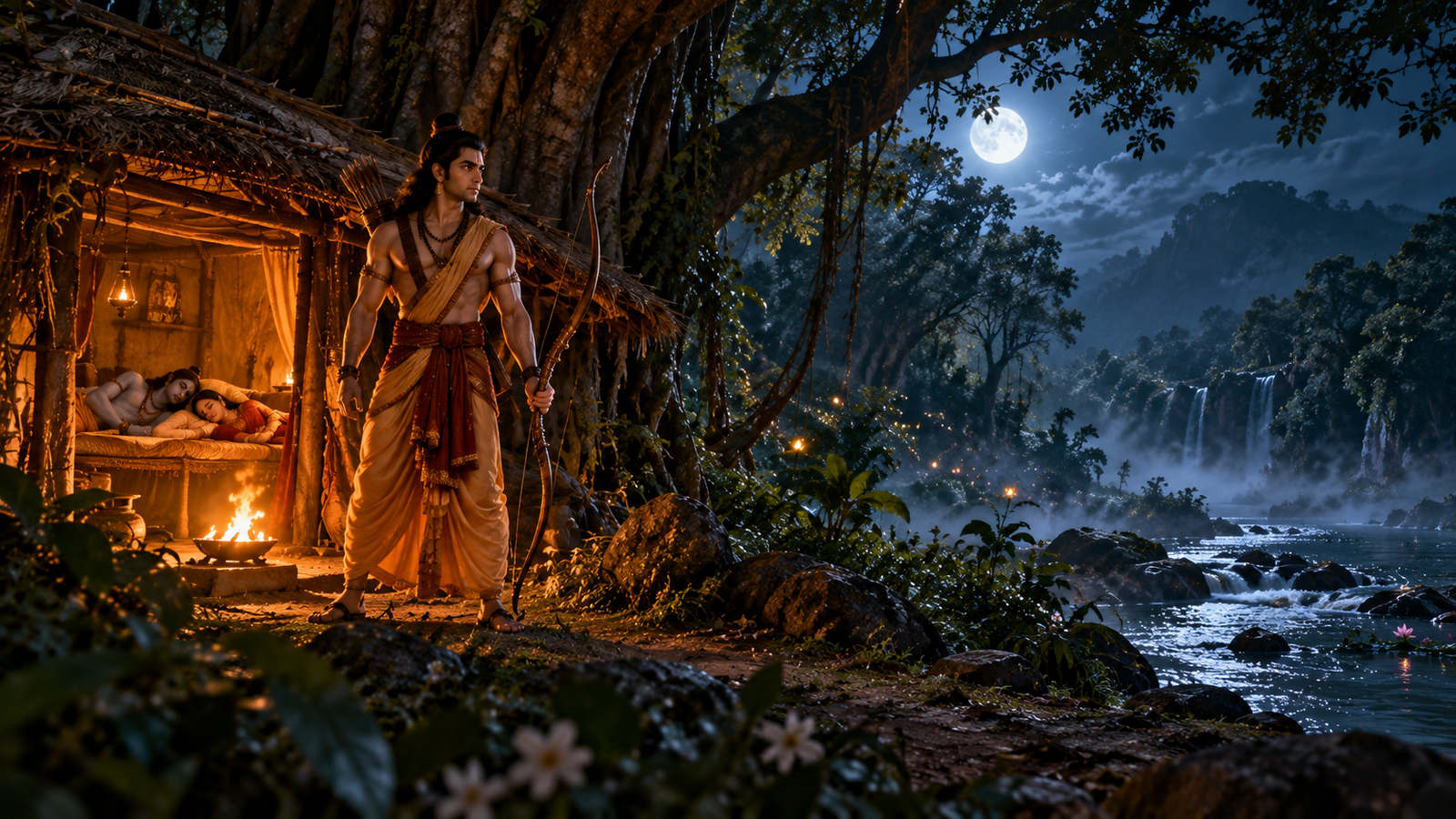
Lakshmana built the huts, kept the night watch and guarded Sita. At Panchavati it was he who cut off the nose and ears of the rakshasi Shurpanakha when she attacked Sita, the act that set the war in motion. When Sita, hearing a cry in Rama’s voice, sent him after Rama, he went unwillingly; Ravana then carried her away. Later retellings add that he drew a line, the Lakshman Rekha, around the hut for her protection; Valmiki’s text does not include it, but the image has entered everyday speech.
In the war
In Lanka, Lakshmana fought at Rama’s side. Struck down by a weapon of Ravana’s son Indrajit, he lay near death until Hanuman flew to the Himalaya and carried back the mountain bearing the sanjivani herb (see Hanuman and the Sanjeevani Mountain). With Vibhishana‘s help he found Indrajit at his secret sacrifice in the Nikumbhila grove and killed him.
Urmila and the end of his life
Lakshmana’s wife Urmila, Sita’s sister, remained in Ayodhya. Folk tradition says that Lakshmana asked Nidra, the goddess of sleep, to let him stay awake all fourteen years, and Urmila slept in his place. In the Uttara Kanda, when Lakshmana broke Rama’s order by interrupting his meeting with Time itself, he chose to leave Rama rather than see him break his word, and walked into the river Sarayu.
Where is he remembered?
The Lakshman Jhula bridge at Rishikesh marks the place where he is said to have crossed the Ganga on a rope, and he stands beside Rama and Sita in every Ram Darbar.


