
Ayodhya
अयोध्याAyodhya, on the Sarayu in Uttar Pradesh, is the capital of the Ikshvaku kings in the Ramayana and the revered birthplace of Rama. It is the first of the seven Moksha-puris, home to the Ram Janmabhoomi Mandir and Hanuman Garhi, and the city of the first Diwali.
Why is Ayodhya sacred?
Ayodhya is an ancient city on the right bank of the Sarayu river in Uttar Pradesh. In the Ramayana it is the capital of the kingdom of Kosala and the city of the Ikshvaku kings, the Sun dynasty, and it is revered as the birthplace of Rama. It is counted first among the seven Moksha-puris, the cities said to grant liberation, along with Mathura, Haridwar, Varanasi, Kanchipuram, Ujjain and Dwarka.
Ayodhya in the Ramayana
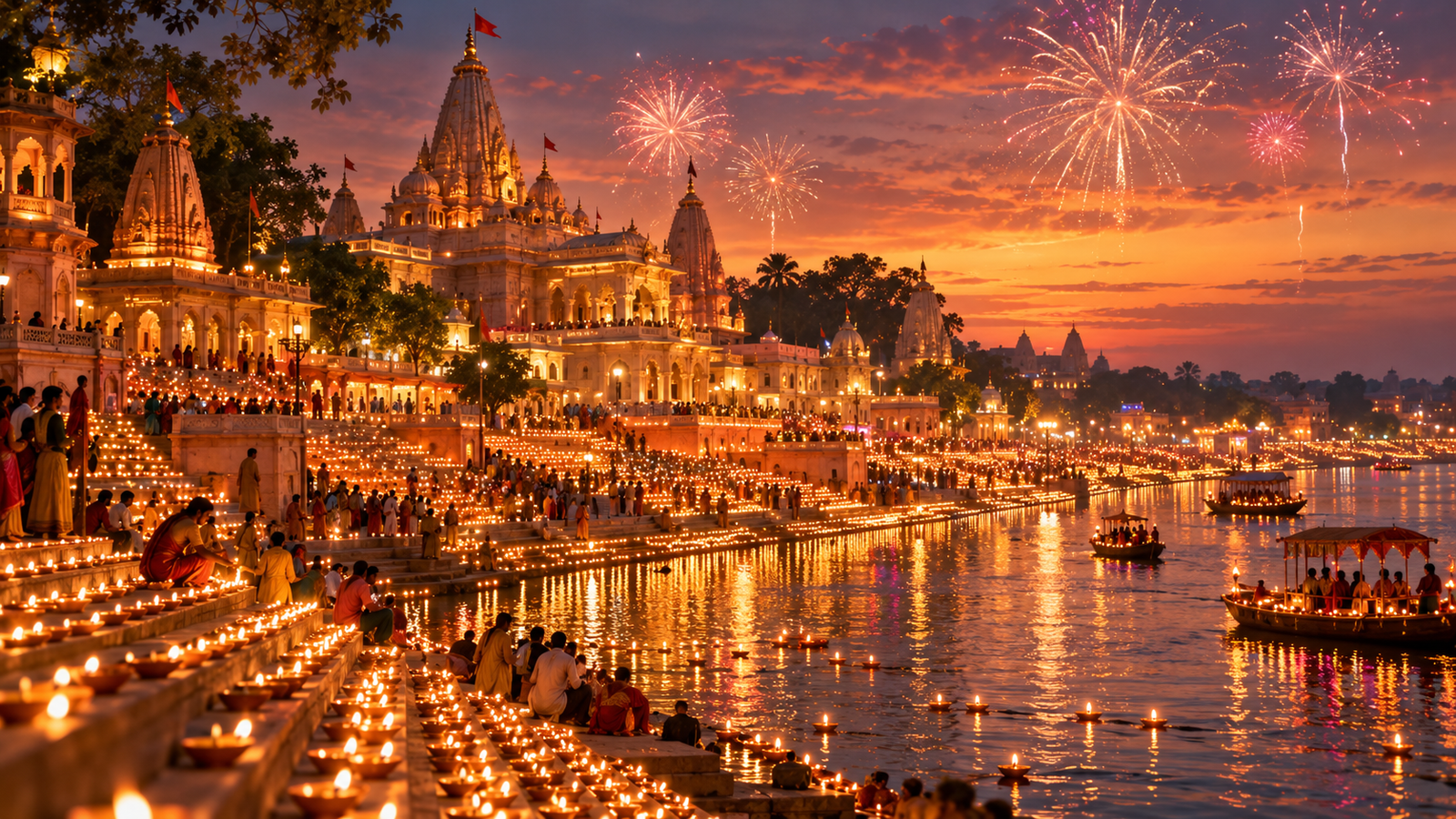
Valmiki opens the Bala Kanda with a description of Ayodhya: twelve yojanas long, laid out with broad royal roads, walled and moated, full of markets, palaces and gardens, and so strong that its very name means “the city that cannot be fought”. Here King Dasharatha performed the putrakameshti sacrifice and his queens gave birth to Rama, Bharata, Lakshmana and Shatrughna. From here Rama left for fourteen years of exile, and Bharata ruled in his name from nearby Nandigram with Rama’s sandals on the throne. And here Rama returned after the war, and the city, according to tradition, lit rows of lamps to welcome him: the story behind Diwali.
Places of pilgrimage
- Shri Ram Janmabhoomi Mandir – the great temple at the site revered as Rama’s birthplace, consecrated in January 2024, where the image of Rama as a five-year-old child, Ram Lalla, is worshipped.
- Hanuman Garhi – a hilltop fort-temple of Hanuman reached by about seventy-six steps; tradition says pilgrims should visit Hanuman here before Rama.
- Kanak Bhawan – a temple said to be the palace Kaikeyi gave to Sita after her marriage, with images of Rama and Sita in gold crowns.
- Ram ki Paidi and the Sarayu ghats – the riverside steps where pilgrims bathe and where the evening Sarayu aarti is performed.
- Guptar Ghat – where tradition says Rama entered the waters of the Sarayu at the end of his reign and returned to his divine form.
- Nageshwarnath Temple – an old Shiva temple said to have been founded by Rama’s son Kusha.
Festivals in Ayodhya
Rama Navami, Rama’s birthday in Chaitra, draws enormous crowds to the Sarayu and the temples. At Deepotsav on the eve of Diwali, the ghats are lit with millions of lamps. The Chaudah Kosi and Panchkosi parikrama walks around the city are made in Kartika, and the Sawan Jhula festival swings the images of Rama and Sita in the monsoon.
How to reach Ayodhya
Ayodhya Dham Junction and Ayodhya Cantt (formerly Faizabad) railway stations connect the city to Lucknow, Varanasi and Delhi. Maharishi Valmiki International Airport lies just outside the city. Lucknow is about 135 km away by road.
Significance and legend
Ayodhya is sacred as the birthplace and kingdom of Rama, the model of the righteous ruler; Rama Rajya, the rule of Rama, is still the Indian ideal of just government. The Garuda Purana names it first among the seven cities that grant moksha.