Quick answer
The 10 avatars of Vishnu in order, from Matsya to Kalki: what each came to do, where their stories are told, and why the Dashavatara lists differ between texts.
Who is in this story
The story
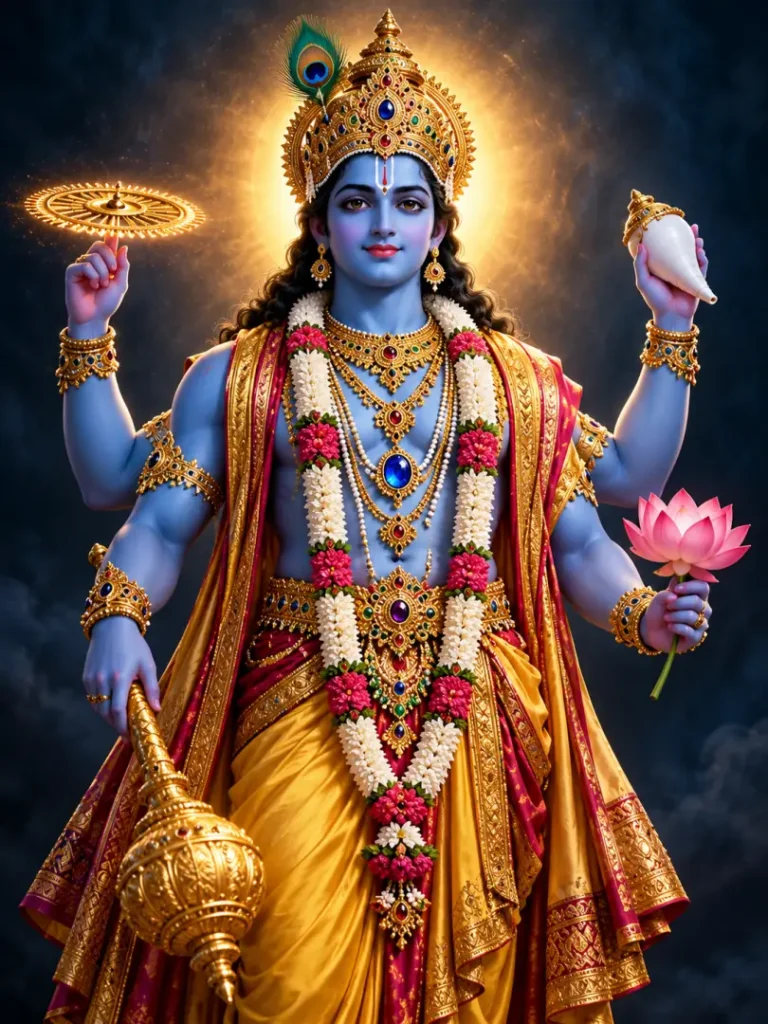
Vishnu, the preserver in the Hindu trinity, is believed to descend to earth whenever dharma declines. The most famous list of his descents is the Dashavatara, the ten avatars, from the fish who saved the Vedas to Kalki, who is yet to come. This guide gives the 10 avatars of Vishnu in order, what each came to do, where their stories are told and why the lists differ between texts.
Why Vishnu takes avatars
In the Bhagavad Gita, Krishna says that whenever righteousness declines and unrighteousness rises, he manifests himself to protect the good, destroy evil and re-establish dharma. An avatar, literally “descent”, is Vishnu taking form in the world for that purpose.
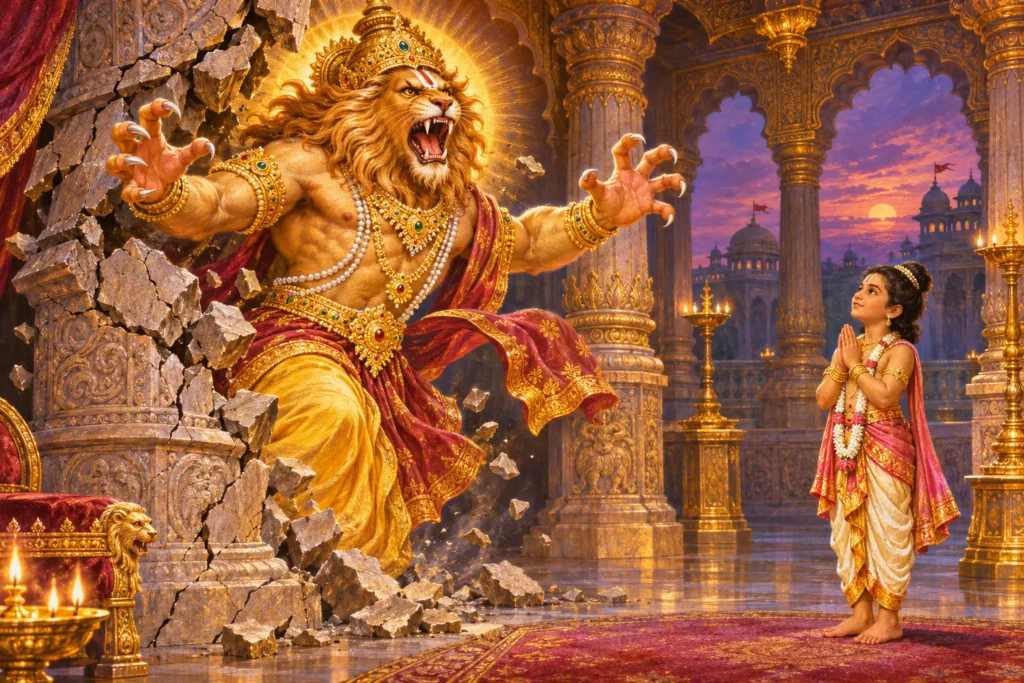
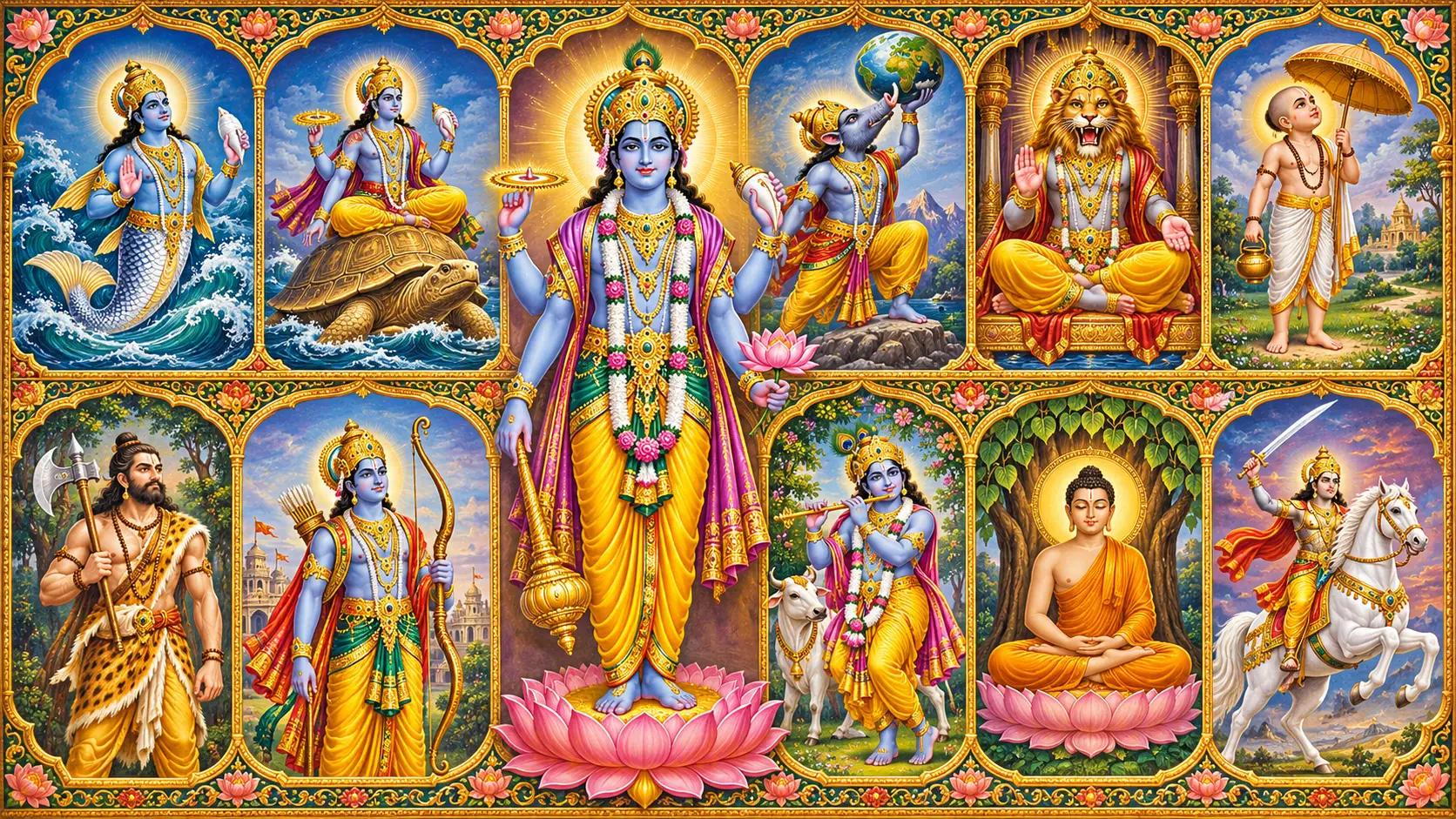
10 avatars of Vishnu in order
- Matsya, the fish. Warned Manu of a great flood, carried his boat to safety and recovered the Vedas.
- Kurma, the tortoise. Bore Mount Mandara on his back so that the gods and asuras could churn the ocean of milk for amrita.
- Varaha, the boar. Killed the asura Hiranyaksha and lifted the earth, Bhudevi, from the depths of the cosmic ocean on his tusks.
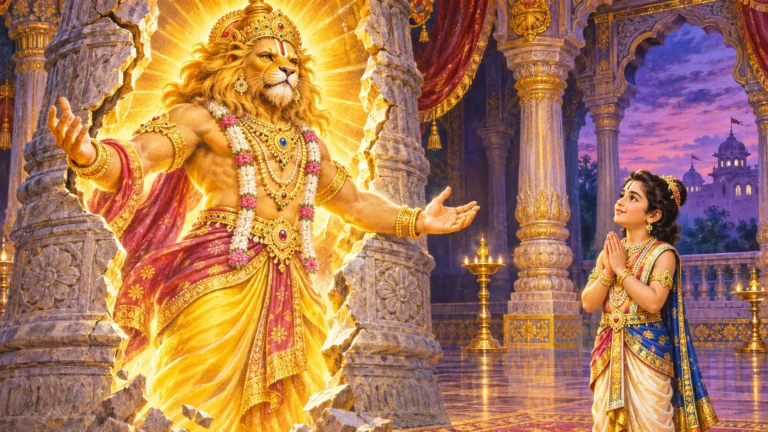
- Narasimha, the man-lion. Emerged from a pillar at dusk to kill Hiranyakashipu and protect his devotee Prahlada, satisfying every condition of the demon’s boon. His day is Narasimha Jayanti.
- Vamana, the dwarf. Asked King Bali for three steps of land, then grew to cover the earth and heavens, sending Bali to the netherworld.
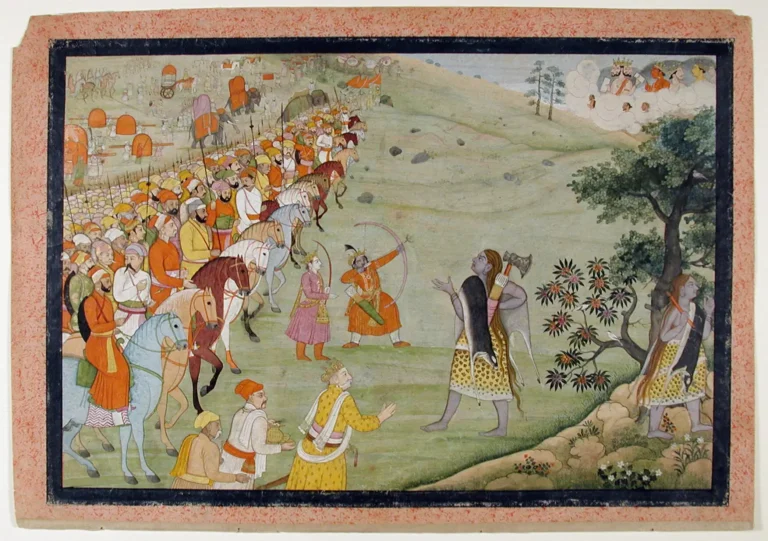
- Parashurama, the warrior sage. The son of Jamadagni, who took up the axe against kings who had abused their power. See Parashurama.
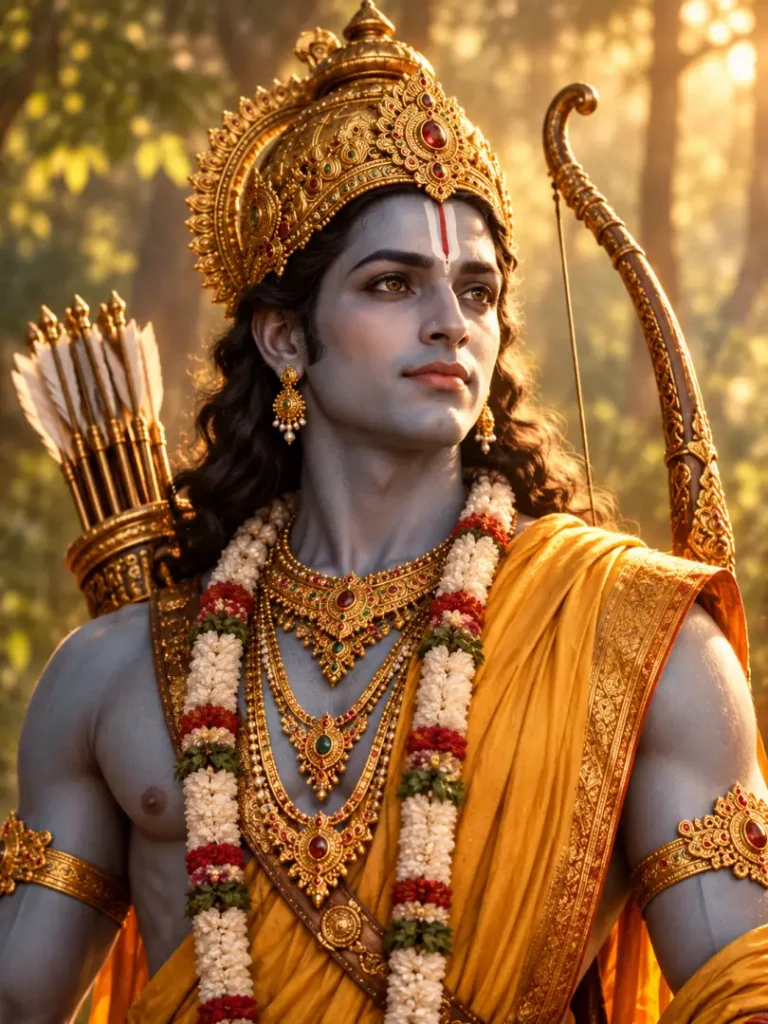
- Rama, the ideal king. The hero of the Ramayana, who defeated Ravana and ruled with justice. See Rama and Rama Navami.
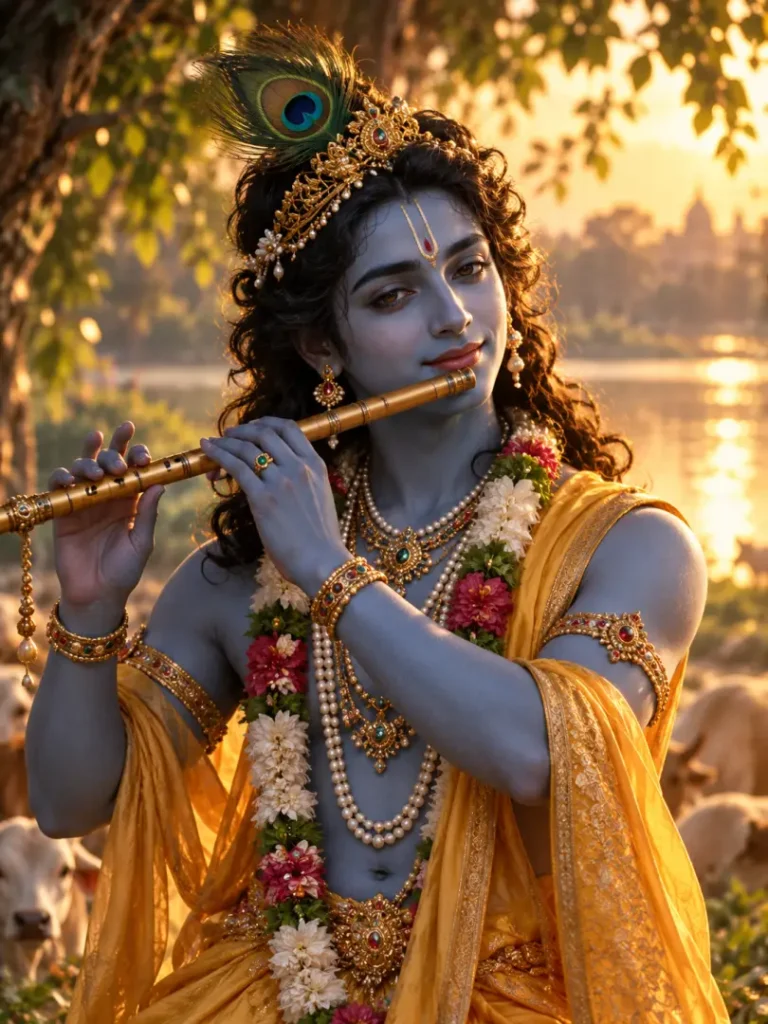
- Krishna, the divine guide. Central to the Bhagavata Purana and the Mahabharata, the teacher of the Bhagavad Gita. His birth is celebrated at Krishna Janmashtami.
- Buddha. Included in many Puranic lists and in Jayadeva’s Gita Govinda. Some regional lists, especially in South India, place Balarama here instead.
- Kalki, the one to come. Expected at the end of the Kali Yuga, riding a white horse with a sword to end the age of darkness and begin a new cycle.
Why the lists differ
The ten-avatar list is the most popular, but it is not the only one. The Bhagavata Purana gives a longer list of twenty-two avatars, including figures such as Kapila, Dattatreya, Rishabha and Dhanvantari, and says Vishnu’s descents are countless. Some lists count Balarama and treat Krishna as the source of all avatars, and others include Buddha. These are differences of tradition rather than errors, and each reflects the community that preserved it.
The four yugas and the avatars
Tradition places the first four avatars in the Satya Yuga, Vamana, Parashurama and Rama in the Treta Yuga, Krishna (and Balarama) in the Dvapara Yuga, and Buddha and Kalki in the Kali Yuga. Some modern readers have also seen in the sequence a parallel to the evolution of life, from water creature to amphibian to mammal to human. That reading is a modern interpretation and not part of the scriptures themselves.
What the Dashavatara teaches
Across all ten, the message is the same: the divine responds to the needs of each age in the form that age requires, as a fish, a beast, a sage, a king or a guide. The avatars also show many ways of upholding dharma, through rescue, sacrifice, kingship, teaching and renewal.
Frequently asked questions
What are the 10 avatars of Vishnu?
Matsya, Kurma, Varaha, Narasimha, Vamana, Parashurama, Rama, Krishna, Buddha (or Balarama in some lists) and Kalki.
Which avatar of Vishnu is yet to come?
Kalki, expected at the end of the Kali Yuga, is the avatar yet to come.
Is Buddha an avatar of Vishnu?
Many Puranic lists include Buddha as the ninth avatar, while some regional lists place Balarama there instead.
Sources and further reading
- Hindu texts index, Sacred Texts (Bhagavata Purana)
- Bhagavata Purana 1.3 (list of avatars); Bhagavad Gita 4.7-8; Gita Govinda
- Bhagavad Gita, Gita Supersite (IIT Kanpur)
- The Mahabharata, K. M. Ganguli translation (Sacred Texts)
Read our editorial policy on how scripture, Purana and folk tradition are labelled.