Krishna Janmashtami
श्रीकृष्ण जन्माष्टमीKrishna Janmashtami celebrates the birth of Krishna, the eighth avatar of Vishnu, at midnight on the eighth day of the dark fortnight of Bhadrapada (August or September). Devotees fast, sing kirtan, and at midnight bathe and rock the infant Krishna in a cradle. Dahi Handi follows the next day.
Next: Wednesday, 25 August 2027
What is it?
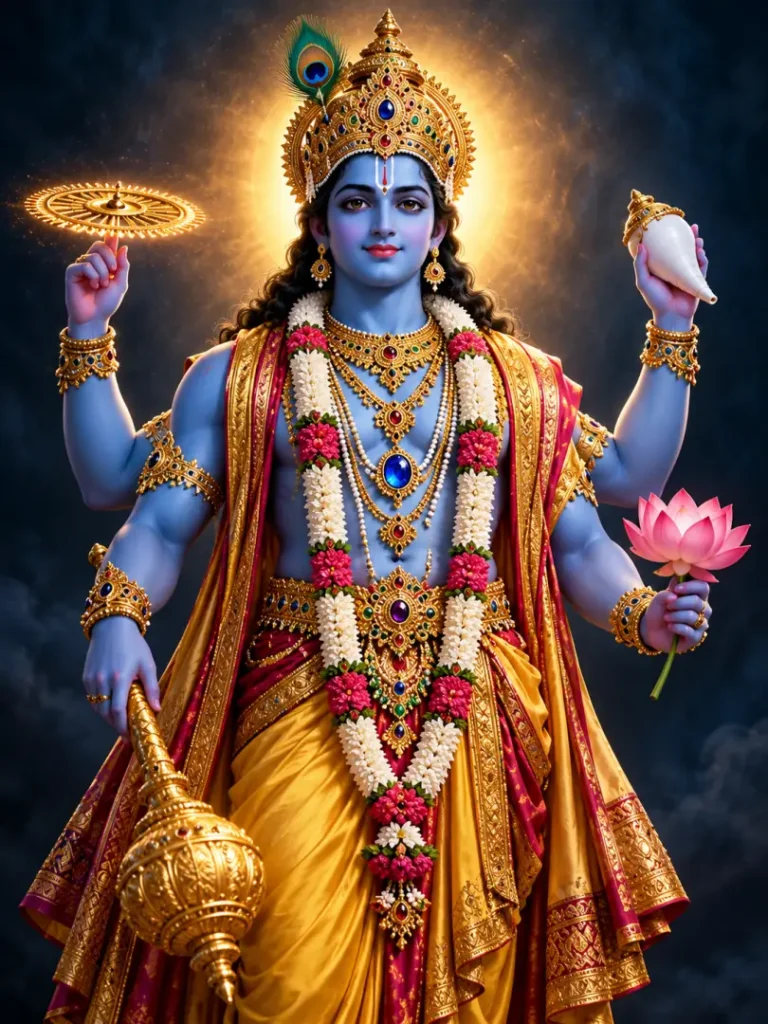
Krishna Janmashtami, also called Gokulashtami, Shri Jayanti or simply Janmashtami, is the birthday of Krishna, the eighth avatar of Vishnu. It falls on Ashtami, the eighth day of the dark fortnight (Krishna Paksha) of Bhadrapada in the northern purnimanta calendar (Shravana in the southern amanta calendar), in August or September, ideally when the Rohini nakshatra is rising.
It is one of the most joyful Hindu festivals, kept with a day-long fast, midnight worship, songs and dramas of Krishna's childhood, and the breaking of curd pots.
Why is it celebrated?
The Bhagavata Purana tells that the tyrant Kamsa, king of Mathura, heard a voice from the sky at his sister Devaki's wedding: her eighth son would kill him. He threw Devaki and her husband Vasudeva into prison and killed each of their children as soon as they were born. The seventh child, Balarama, was secretly transferred to the womb of Rohini in Gokul.
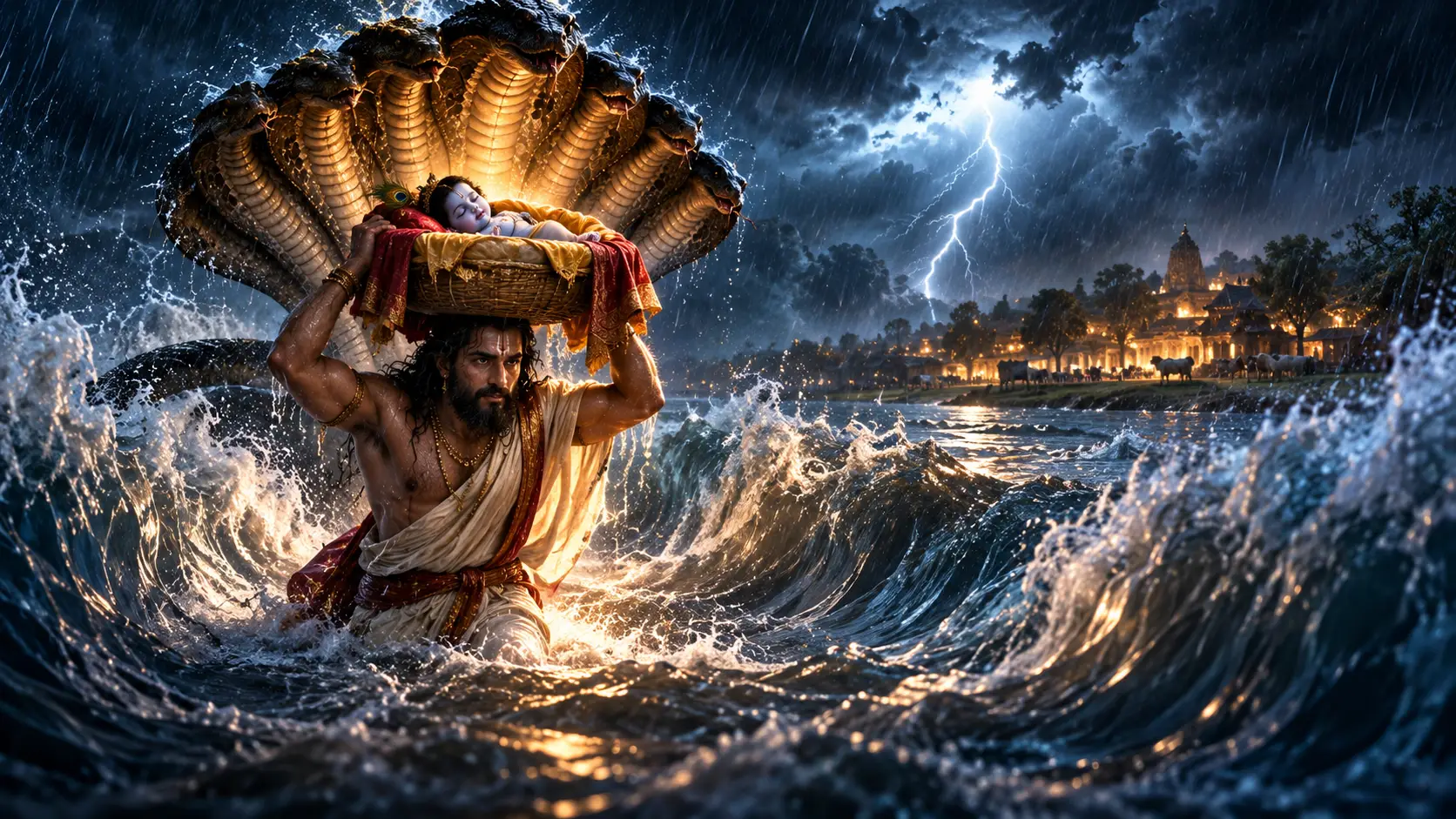
At midnight on the eighth day of the dark fortnight of Bhadrapada, as rain poured down, the eighth child was born: Krishna, dark as a rain cloud, appearing first in his four-armed form as Vishnu. The prison doors opened, the guards fell asleep and Vasudeva's chains fell away. He placed the baby in a basket on his head and carried him across the flooded Yamuna, which parted for him, while the serpent Shesha spread his hoods over the child to keep off the rain. In Gokul he exchanged Krishna for the newborn daughter of Nanda and Yashoda and returned to the prison. When Kamsa tried to kill the girl, she slipped from his hands and rose into the sky as the goddess Yogamaya, warning him that his killer was already born.
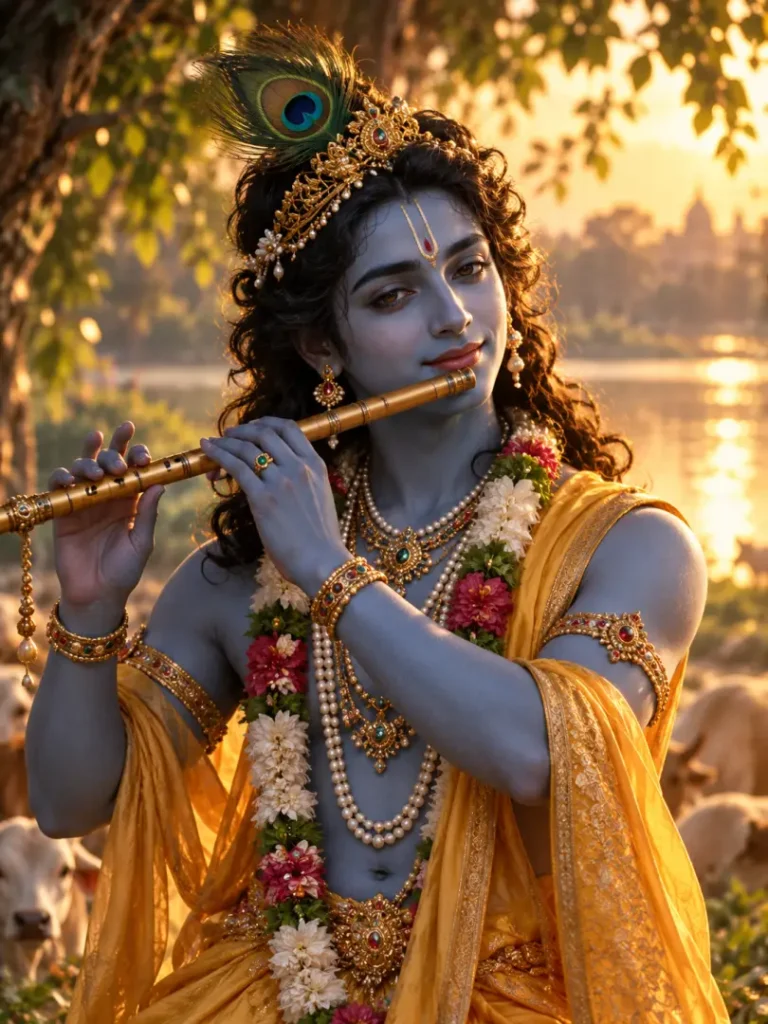
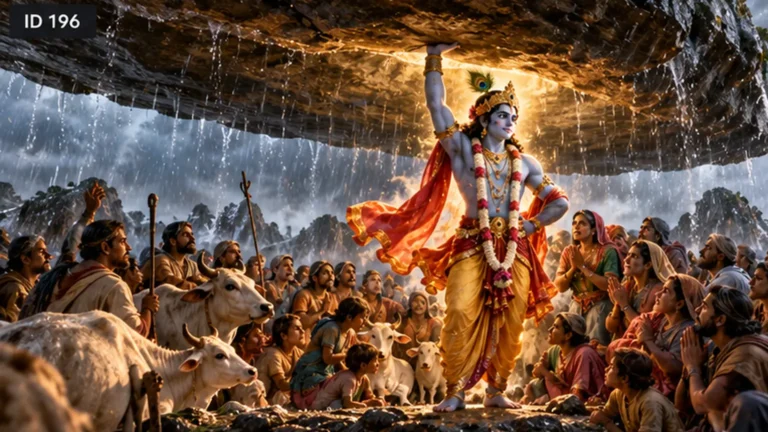
Krishna grew up in Gokul and Vrindavan as a cowherd boy, stealing butter, playing his flute and protecting his people, and at last returned to Mathura to kill Kamsa. Janmashtami celebrates the coming of God into the world in the darkest hour, to protect the good and restore dharma, as Krishna himself says in the Bhagavad Gita (4.7-8).
How is it observed?
- 1Clean and decorate the home shrine with flowers, peacock feathers and a cradle, and set up a jhanki of Krishna's life.
- 2Keep a fast through the day, with water, fruit and milk or nirjala, avoiding grains.
- 3In the evening, sing bhajans and kirtan, and read the tenth book of the Bhagavata Purana or the Bhagavad Gita.
- 4At midnight, bathe Laddu Gopal with panchamrita and water, dress him in new clothes and place him in the cradle.
- 5Offer tulsi, butter and mishri, panjiri, makhana and sweets, rock the cradle and sing the Kunj Bihari aarti.
- 6Break the fast with prasad after midnight or after sunrise the next day.
- 7The next day, celebrate Nandotsav and Dahi Handi.
The midnight celebration
Janmashtami is a festival of the night. Devotees fast all day and gather in homes and temples in the evening to sing bhajans and kirtan, especially Hare Krishna Hare Krishna, Krishna Krishna Hare Hare, Hare Rama Hare Rama, Rama Rama Hare Hare. At midnight, the moment of Krishna’s birth (Nishita Kaal), the curtains of the shrine are drawn back, conches blow, bells ring, and a small image of the infant Krishna, Laddu Gopal or Bal Gopal, is bathed in a great abhisheka of milk, curd, ghee, honey and sugar and then in water. He is dressed in new clothes and jewellery, placed in a decorated cradle (jhula), and the devotees rock him while singing “Nand ke anand bhayo, jai Kanhaiya lal ki“. The fast is then broken with prasad.
How to celebrate Janmashtami at home
- Clean and decorate the home shrine with flowers, leaves, peacock feathers and a cradle; many families also build a small tableau (jhanki) of Krishna’s life.
- Fast through the day, either nirjala or with fruit and milk; grains are avoided.
- In the evening, sing bhajans, read the tenth book of the Bhagavata Purana, or recite the Vishnu Sahasranama or the Bhagavad Gita.
- At midnight, bathe Laddu Gopal in panchamrita, dress him, apply sandalwood, and offer tulsi leaves, butter, mishri (crystal sugar), panjiri, makhana and the chhappan bhog, fifty-six dishes, if you can.
- Rock him in the cradle, sing the Aarti Kunj Bihari Ki, and blow the conch.
- Break the fast with prasad after midnight, or the next morning after sunrise (parana), following family custom.
Dahi Handi
The day after Janmashtami, Gopalkala or Dahi Handi, celebrates the child Krishna’s love of stealing butter. In Maharashtra and Gujarat, earthen pots filled with curd, butter and coins are hung high above the street. Teams of young men called Govindas form human pyramids several tiers high to reach and break them, while crowds sing and throw water. The biggest events in Mumbai and Thane offer large prizes.
Janmashtami in Krishna’s land
- Mathura: the Shri Krishna Janmabhoomi temple, built around the site revered as the prison cell where Krishna was born, holds the great midnight celebration.
- Vrindavan: the Banke Bihari temple holds its annual mangala aarti only on this night; ISKCON’s Krishna Balaram Mandir and hundreds of temples hold kirtan through the night.
- Gokul and Nandgaon: Nandotsav, the festival of Nanda’s joy, the next day, with gifts and turmeric-water play.
- Dwarka: the Dwarkadhish temple, Krishna’s kingdom, celebrates with great splendour.
- Puri and Odisha: the festival is linked with Jagannath, and dramas of Krishna’s life are staged.
- Manipur: Krishna Janma is celebrated with Raas Leela dance at the Shri Govindajee temple in Imphal.
- South India: it is called Gokulashtami or Sri Jayanti; tiny footprints of the child Krishna are drawn in rice flour from the door to the shrine, and seedai, murukku and appam are offered.
The story behind it
Aartis for the day
Frequently asked questions
When is Janmashtami in 2027?
Why is Janmashtami celebrated at midnight?
Why are there two dates for Janmashtami?
What is Dahi Handi?
What can I eat during the Janmashtami fast?
What is Laddu Gopal?
What is chhappan bhog?
Sources
- Bhagavata Purana, Book 10, chapters 1-5
- Vishnu Purana, Book 5
- Harivamsa
- Wikipedia: Krishna Janmashtami
- hindu-blog.com, Hindu Festivals 2027 Calendar
Read our editorial policy on how scripture, Purana and folk tradition are labelled.