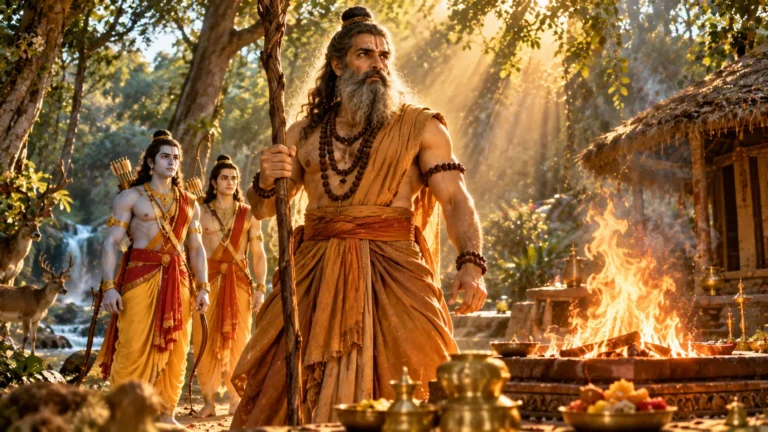
जनकस्य वचश्श्रुत्वा विश्वामित्रो महामुनिः ।
धनुर्दर्शय रामाय इति होवाच पार्थिवम् ॥
janakasya vacaśśrutvā viśvāmitro mahāmuniḥ |
dhanurdarśaya rāmāya iti hovāca pārthivam ||
हिंदी अर्थजनक के वचन सुनकर महामुनि विश्वामित्र ने राजा से कहा: राम को धनुष दिखाइए।
English meaningHearing Janaka's words, the great sage Vishvamitra said to the king: Show the bow to Rama.
ततस्स राजा जनकः सामन्तान्व्यादिदेश ह ।
धनुरानीयतां दिव्यं गन्धमाल्यविभूषितम् ॥
tatassa rājā janakaḥ sāmantānvyādideśa ha |
dhanurānīyatāṃ divyaṃ gandhamālyavibhūṣitam ||
हिंदी अर्थतब राजा जनक ने अपने अधिकारियों को आदेश दिया: सुगंध और मालाओं से सजा वह दिव्य धनुष लाया जाए।
English meaningThen King Janaka ordered his officers: Bring the divine bow, adorned with perfumes and garlands.
जनकेन समादिष्टाः सचिवा प्राविशन् पुरीम् ।
तद्धनुः पुरतः कृत्वा निर्जग्मुः पार्थिवाज्ञया ॥
janakena samādiṣṭāḥ sacivā prāviśan purīm |
taddhanuḥ purataḥ kṛtvā nirjagmuḥ pārthivājñayā ||
हिंदी अर्थजनक की आज्ञा से मंत्री नगर में गए, और राजा के आदेश से धनुष को आगे करके बाहर आए।
English meaningCommanded by Janaka, the ministers went into the city, and at the king's order came out with the bow before them.
नृणां शतानि पञ्चाशद्व्यायतानां महात्मनाम् ।
मञ्जूषामष्टचक्रां तां समूहुस्ते कथञ्चन ॥
nṛṇāṃ śatāni pañcāśadvyāyatānāṃ mahātmanām |
mañjūṣāmaṣṭacakrāṃ tāṃ samūhuste kathañcana ||
हिंदी अर्थपाँच हजार लंबे और बलवान पुरुषों ने किसी प्रकार आठ पहियों वाली उस पेटी को खींचा।
English meaningFive thousand tall and strong men somehow pulled the eight wheeled chest that held it.
तामादाय तु मञ्जूषामायसीं यत्र तद्धनुः ।
सुरोपमं ते जनकमूचुर्नृपतिमन्त्रिणः ॥
tāmādāya tu mañjūṣāmāyasīṃ yatra taddhanuḥ |
suropamaṃ te janakamūcurnṛpatimantriṇaḥ ||
हिंदी अर्थजिसमें धनुष रखा था वह लोहे की पेटी लाकर राजा के मंत्रियों ने देवता जैसे जनक से कहा:
English meaningBringing the iron chest in which the bow lay, the king's ministers said to Janaka, who was like a god:
इदं धनुर्वरं राजन् पूजितं सर्वराजभिः ।
मिथिलाधिप राजेन्द्र दर्शनीयं यदिच्छसि ॥
idaṃ dhanurvaraṃ rājan pūjitaṃ sarvarājabhiḥ |
mithilādhipa rājendra darśanīyaṃ yadicchasi ||
हिंदी अर्थहे राजन, मिथिलाधिपति, यह सब राजाओं से पूजित श्रेष्ठ धनुष है, यदि आप चाहें तो दिखाने के लिए।
English meaningKing, lord of Mithila, here is the finest of bows, honoured by all kings, to be shown if you wish.
तेषां नृपो वचः श्रुत्वा कृताञ्जलिरभाषत ।
विश्वामित्रं महात्मानं तौ चोभौ रामलक्ष्मणौ ॥
teṣāṃ nṛpo vacaḥ śrutvā kṛtāñjalirabhāṣata |
viśvāmitraṃ mahātmānaṃ tau cobhau rāmalakṣmaṇau ||
हिंदी अर्थउनके वचन सुनकर राजा ने हाथ जोड़कर महात्मा विश्वामित्र और राम तथा लक्ष्मण दोनों से कहा:
English meaningHearing their words, the king joined his palms and said to the great souled Vishvamitra and to both Rama and Lakshmana:
इदं धनुर्वरं ब्रह्मन् जनकैरभिपूजितम् ।
राजभिश्च महावीर्यैः अशक्तैः पूरितुं पुरा ॥
idaṃ dhanurvaraṃ brahman janakairabhipūjitam |
rājabhiśca mahāvīryaiḥ aśaktaiḥ pūrituṃ purā ||
हिंदी अर्थहे ब्रह्मन, यह जनकवंशियों से पूजित श्रेष्ठ धनुष है, और उन महाबली राजाओं से भी जो पहले इसे खींच नहीं सके।
English meaningBrahmin, this is the finest of bows, worshipped by the Janakas, and by mighty kings who could not draw it before.
नैतत्सुरगणास्सर्वे नासुरा न च राक्षसाः ।
गन्धर्वयक्षप्रवराः सकिन्नरमहोरगाः ॥
naitatsuragaṇāssarve nāsurā na ca rākṣasāḥ |
gandharvayakṣapravarāḥ sakinnaramahoragāḥ ||
हिंदी अर्थन सब देवगण, न असुर, न राक्षस, न किन्नरों और महानागों सहित श्रेष्ठ गंधर्व और यक्ष इसे कर सके।
English meaningNot all the hosts of gods, nor asuras, nor rakshasas, nor the best of gandharvas and yakshas with the kinnaras and great serpents could do it.
क्व गतिर्मानुषाणां च धनुषोऽस्य प्रपूरणे ।
आरोपणे समायोगे वेपने तोलनेऽपि वा ॥
kva gatirmānuṣāṇāṃ ca dhanuṣo'sya prapūraṇe |
āropaṇe samāyoge vepane tolane'pi vā ||
हिंदी अर्थफिर मनुष्यों की क्या बात कि वे इस धनुष को खींचें, इस पर प्रत्यंचा चढ़ाएँ, बाण लगाएँ, हिलाएँ या उठा भी सकें?
English meaningWhat chance have men of drawing this bow, stringing it, fitting an arrow, shaking it or even lifting it?
तदेतद्धनुषां श्रेष्ठमानीतं मुनिपुङ्गव ।
दर्शयैतन्महाभाग अनयोः राजपुत्रयोः ॥
tadetaddhanuṣāṃ śreṣṭhamānītaṃ munipuṅgava |
darśayaitanmahābhāga anayoḥ rājaputrayoḥ ||
हिंदी अर्थहे मुनिश्रेष्ठ, यह श्रेष्ठ धनुष लाया गया है। हे महाभाग, इसे इन दोनों राजकुमारों को दिखाइए।
English meaningBest of sages, this best of bows has been brought. Fortunate one, show it to these two princes.
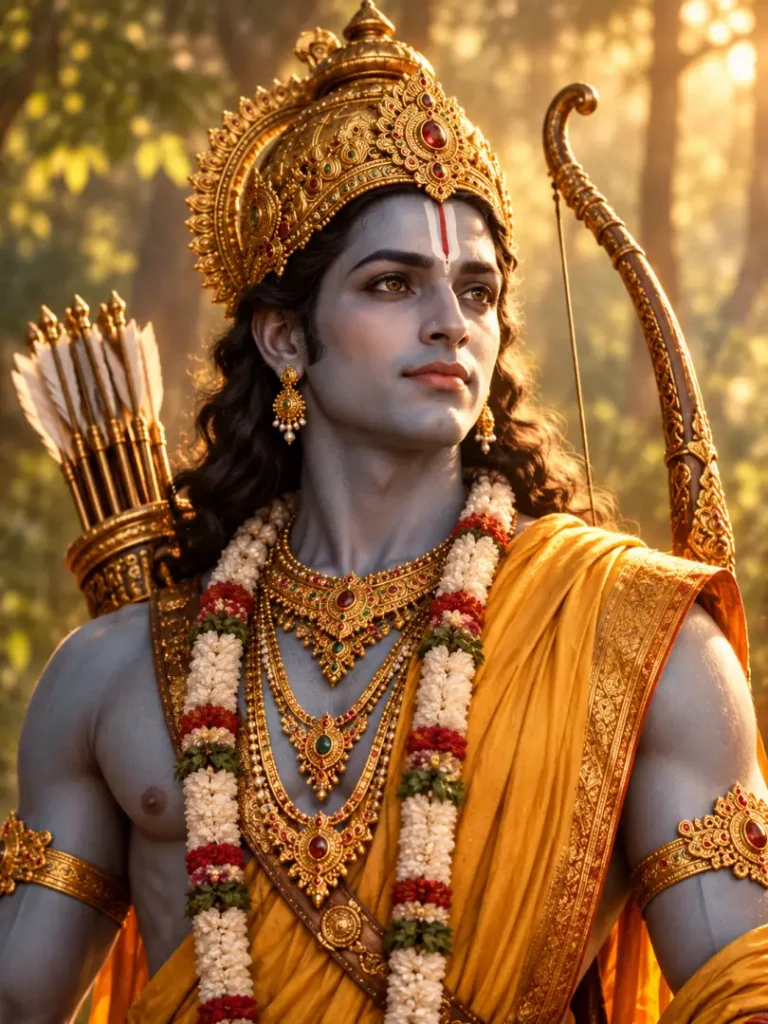
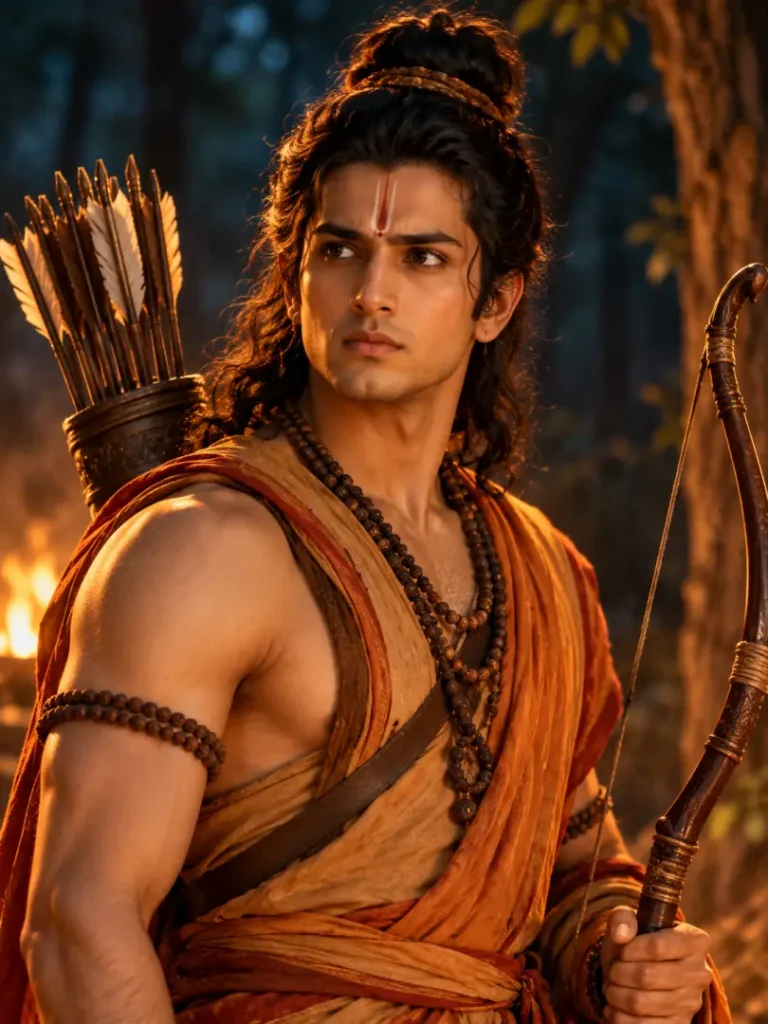
विश्वामित्रस्तु धर्मात्मा श्रुत्वा जनकभाषितम् ।
वत्स राम धनुः पश्य इति राघवमब्रवीत् ॥
viśvāmitrastu dharmātmā śrutvā janakabhāṣitam |
vatsa rāma dhanuḥ paśya iti rāghavamabravīt ||
हिंदी अर्थजनक की बात सुनकर धर्मात्मा विश्वामित्र ने राघव से कहा: वत्स राम, धनुष देखो।
English meaningHearing what Janaka said, the righteous Vishvamitra said to Raghava: Rama, my child, look at the bow.
ब्रह्मर्षेर्वचनाद्रामो यत्र तिष्ठति तद्धनुः ।
मञ्जूषां तामपावृत्य दृष्ट्वा धनुरथाब्रवीत् ॥
brahmarṣervacanādrāmo yatra tiṣṭhati taddhanuḥ |
mañjūṣāṃ tāmapāvṛtya dṛṣṭvā dhanurathābravīt ||
हिंदी अर्थब्रह्मर्षि के कहने पर राम ने वह पेटी खोली जिसमें धनुष रखा था, धनुष को देखा और कहा:
English meaningAt the brahmarshi's word, Rama opened the chest in which the bow lay, looked at the bow and said:
इदं धनुर्वरं ब्रह्मन् संस्पृशामीह पाणिना ।
यत्नवांश्च भविष्यामि तोलने पूरणेऽपि वा ॥
idaṃ dhanurvaraṃ brahman saṃspṛśāmīha pāṇinā |
yatnavāṃśca bhaviṣyāmi tolane pūraṇe'pi vā ||
हिंदी अर्थहे ब्रह्मन, मैं इस श्रेष्ठ धनुष को हाथ से छूता हूँ। मैं इसे उठाने और खींचने का प्रयत्न करूँगा।
English meaningBrahmin, I shall touch this finest of bows with my hand. I shall try to lift it and to draw it.
बाढमित्येव तं राजा मुनिश्च समभाषत ।
लीलया स धनुर्मध्ये जग्राह वचनान्मुनेः ॥
bāḍhamityeva taṃ rājā muniśca samabhāṣata |
līlayā sa dhanurmadhye jagrāha vacanānmuneḥ ||
हिंदी अर्थराजा और मुनि दोनों ने कहा: ठीक है। मुनि के कहने पर उन्होंने सहज ही धनुष को बीच से पकड़ लिया।
English meaningThe king and the sage both said: Very well. At the sage's word he grasped the bow at the middle with ease.
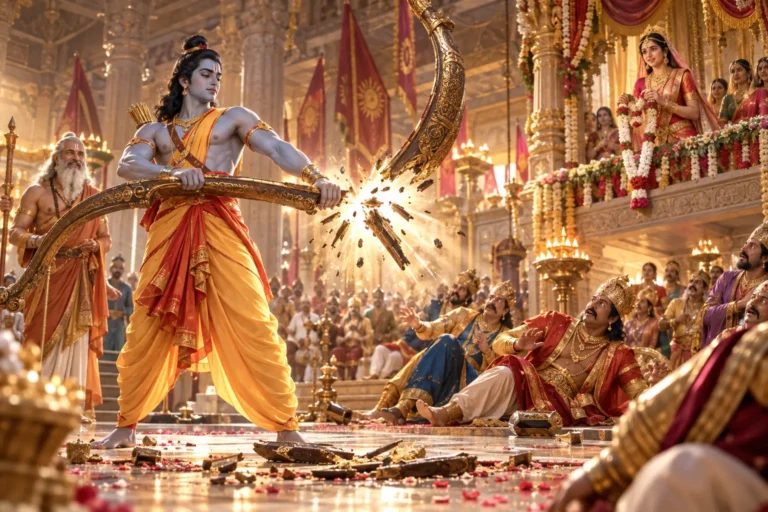
पश्यतां नृपसहस्राणां बहूनां रघुनन्दनः ।
आरोपयत्स धर्मात्मा सलीलमिव तद्धनुः ॥
paśyatāṃ nṛpasahasrāṇāṃ bahūnāṃ raghunandanaḥ |
āropayatsa dharmātmā salīlamiva taddhanuḥ ||
हिंदी अर्थहजारों राजाओं के देखते देखते धर्मात्मा रघुनंदन ने मानो खेल खेल में धनुष पर प्रत्यंचा चढ़ा दी।
English meaningAs many thousands of kings watched, the righteous joy of the Raghus strung the bow as if in play.
आरोपयित्वा धर्मात्मा पूरयामास तद्धनुः ।
तद्बभञ्ज धनुर्मध्ये नरश्रेष्ठो महायशाः ॥
āropayitvā dharmātmā pūrayāmāsa taddhanuḥ |
tadbabhañja dhanurmadhye naraśreṣṭho mahāyaśāḥ ||
हिंदी अर्थप्रत्यंचा चढ़ाकर धर्मात्मा, महायशस्वी नरश्रेष्ठ ने धनुष खींचा, और वह बीच से टूट गया।
English meaningHaving strung it, the righteous and renowned best of men drew the bow, and it broke in the middle.
तस्य शब्दो महानासीत् निर्घातसमनिस्वनः ।
भूमिकम्पश्च सुमहान् पर्वतस्येव दीर्यतः ॥
tasya śabdo mahānāsīt nirghātasamanisvanaḥ |
bhūmikampaśca sumahān parvatasyeva dīryataḥ ||
हिंदी अर्थवज्रपात जैसा भयंकर शब्द हुआ, और पृथ्वी ऐसे काँपी मानो कोई पर्वत फट रहा हो।
English meaningThere was a great sound like a thunderclap, and a mighty trembling of the earth as if a mountain were splitting.
निपेतुश्च नरा स्सर्वे तेन शब्देन मोहिताः ।
वर्जयित्वा मुनिवरं राजानं तौ च राघवौ ॥
nipetuśca narā ssarve tena śabdena mohitāḥ |
varjayitvā munivaraṃ rājānaṃ tau ca rāghavau ||
हिंदी अर्थउस शब्द से मोहित होकर सब लोग गिर पड़े, केवल मुनिश्रेष्ठ, राजा और दोनों राघवों को छोड़कर।
English meaningStunned by that sound, all the people fell down, except the best of sages, the king and the two Raghavas.
प्रत्याश्वस्ते जने तस्मिन्राजा विगतसाध्वसः ।
उवाच प्राञ्जलिर्वाक्यं वाक्यज्ञो मुनिपुङ्गवम् ॥
pratyāśvaste jane tasminrājā vigatasādhvasaḥ |
uvāca prāñjalirvākyaṃ vākyajño munipuṅgavam ||
हिंदी अर्थलोगों के सँभलने पर भयमुक्त, वाक्पटु राजा ने हाथ जोड़कर मुनिश्रेष्ठ से कहा:
English meaningWhen the people had recovered, the king, his fear gone, joined his palms and said to the best of sages, skilled in speech as he was:
भगवन् दृष्टवीर्यो मे रामो दशरथात्मजः ।
अत्यद्भुतमचिन्त्यं च न तर्कितमिदं मया ॥
bhagavan dṛṣṭavīryo me rāmo daśarathātmajaḥ |
atyadbhutamacintyaṃ ca na tarkitamidaṃ mayā ||
हिंदी अर्थहे भगवन, मैंने दशरथपुत्र राम का पराक्रम देख लिया। यह अत्यंत अद्भुत और अचिंत्य है; मैंने इसकी कल्पना भी नहीं की थी।
English meaningHoly one, I have seen the valour of Rama, son of Dasharatha. It is most wonderful and beyond thought; I never imagined it.
जनकानां कुले कीर्तिमाहरिष्यति मे सुता ।
सीता भर्तारमासाद्य रामं दशरथात्मजम् ॥
janakānāṃ kule kīrtimāhariṣyati me sutā |
sītā bhartāramāsādya rāmaṃ daśarathātmajam ||
हिंदी अर्थमेरी पुत्री सीता दशरथपुत्र राम को पति के रूप में पाकर जनकवंश की कीर्ति बढ़ाएगी।
English meaningMy daughter Sita, gaining Rama, son of Dasharatha, as her husband, will bring fame to the line of the Janakas.
मम सत्या प्रतिज्ञा च वीर्यशुल्केति कौशिक ।
सीता प्राणैर्बहुमता देया रामाय मे सुता ॥
mama satyā pratijñā ca vīryaśulketi kauśika |
sītā prāṇairbahumatā deyā rāmāya me sutā ||
हिंदी अर्थहे कौशिक, पराक्रम ही शुल्क होने की मेरी प्रतिज्ञा सत्य हुई। प्राणों से भी प्रिय मेरी पुत्री सीता राम को दी जाएगी।
English meaningKaushika, my promise that her price is valour is made true. My daughter Sita, dearer to me than life, shall be given to Rama.
भवतोऽनुमते ब्रह्मन् शीघ्रं गच्छन्तु मन्त्रिणः ।
मम कौशिक भद्रं ते अयोध्यां त्वरिता रथैः ॥
bhavato'numate brahman śīghraṃ gacchantu mantriṇaḥ |
mama kauśika bhadraṃ te ayodhyāṃ tvaritā rathaiḥ ||
हिंदी अर्थहे ब्रह्मन कौशिक, आपका कल्याण हो, आपकी अनुमति से मेरे मंत्री तेज रथों से शीघ्र अयोध्या जाएँ।
English meaningWith your leave, brahmin Kaushika, blessings on you, let my ministers go quickly to Ayodhya in swift chariots.
राजानं प्रश्रितैर्वाक्यैरानयन्तु पुरं मम ।
प्रदानं वीर्यशुल्कायाः कथयन्तु च सर्वशः ॥
rājānaṃ praśritairvākyairānayantu puraṃ mama |
pradānaṃ vīryaśulkāyāḥ kathayantu ca sarvaśaḥ ||
हिंदी अर्थवे विनम्र वचनों से राजा को मेरे नगर ले आएँ, और पराक्रम से जीती गई मेरी पुत्री के दान का सब वृत्तांत उन्हें बताएँ।
English meaningLet them bring the king to my city with courteous words, and tell him all about the giving of my daughter, won by valour.
मुनिगुप्तौ च काकुत्स्थौ कथयन्तु नृपाय वै ।
प्रीयमाणं तु राजानमानयन्तु सुशीघ्रगाः ॥
muniguptau ca kākutsthau kathayantu nṛpāya vai |
prīyamāṇaṃ tu rājānamānayantu suśīghragāḥ ||
हिंदी अर्थवे राजा को बताएँ कि दोनों काकुत्स्थ मुनि से रक्षित हैं, और शीघ्रगामी दूत प्रसन्न राजा को यहाँ ले आएँ।
English meaningLet them tell the king that the two Kakutsthas are protected by the sage, and let the swift messengers bring the delighted king here.
कौशिकश्च तथेत्याह राजा चाभाष्य मन्त्रिणः ।
अयोध्यां प्रेषयामास धर्मात्मा कृतशासनान् ।
यथावृत्तं समाख्यातुमानेतुं च नृपं तदा ॥
kauśikaśca tathetyāha rājā cābhāṣya mantriṇaḥ |
ayodhyāṃ preṣayāmāsa dharmātmā kṛtaśāsanān |
yathāvṛttaṃ samākhyātumānetuṃ ca nṛpaṃ tadā ||
हिंदी अर्थकौशिक ने कहा: ऐसा ही हो। धर्मात्मा राजा ने मंत्रियों को आदेश देकर सब वृत्तांत बताने और राजा को लाने के लिए अयोध्या भेजा।
English meaningKaushika said: So be it. The righteous king instructed his ministers and sent them to Ayodhya to tell all that had happened and to bring the king.