Janaka
जनकKing of Mithila (Videha); father of Sita; philosopher-king. Also called Seeradhwaja, Videha, Rajarshi, Maithila.
Janaka, king of Mithila and father of Sita, found her as a baby in a furrow while ploughing. A rajarshi famed for wisdom and Upanishadic dialogues, he gave Sita in marriage to Rama when Rama broke the bow of Shiva, joining Mithila to Ayodhya. He is the ideal of the liberated king.
Who was Janaka?
Janaka (जनक) is the celebrated king of Mithila in the Ramayana, the father of Sita and the ideal of the rajarshi, the royal sage who rules a kingdom yet remains inwardly free. He is remembered both for the miraculous way he found his daughter and for the wisdom that made his court a byword for learning.
The king of Mithila
“Janaka” is at once a name and the hereditary title of the kings of Videha, whose capital was Mithila. This Janaka, often called Seeradhwaja, was known less for conquest than for justice and self-knowledge. His court drew the greatest thinkers of the age, and in the Upanishads he appears in famous dialogues with sages such as Yajnavalkya, questioning and being questioned about the nature of the Self.
How Sita was found
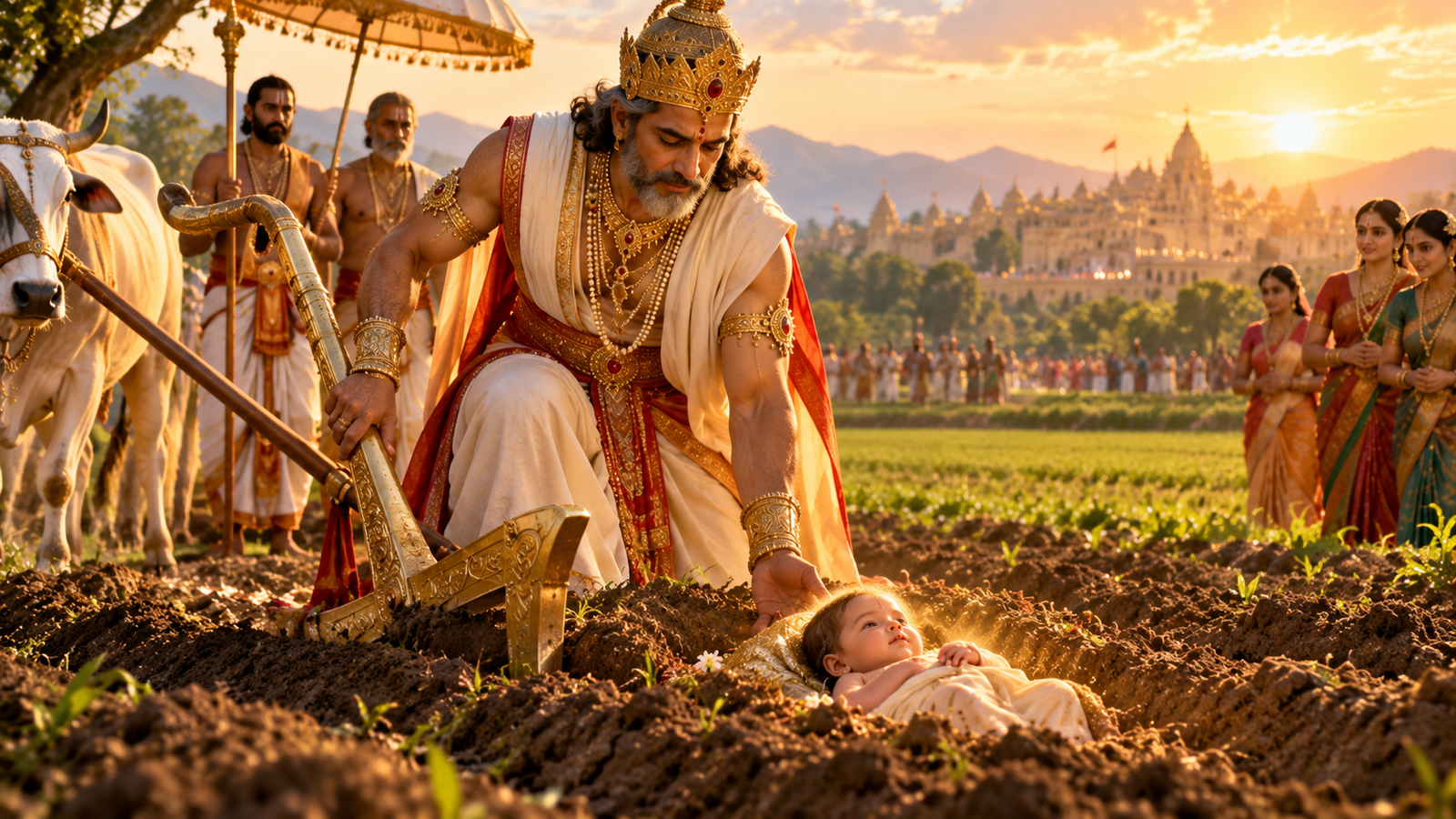
The most beloved story of Janaka is the finding of Sita. While ploughing a field to prepare the ground for a sacrifice, his plough turned up an infant girl lying in the furrow. He took her as his own and named her Sita, “the furrow,” and she is therefore also called Janaki and Maithili, the daughter of Janaka and of Mithila. In her he raised not an ordinary princess but, as the Ramayana reveals, the earth-born form of the goddess Lakshmi.
The bow and the wedding
Janaka possessed the great bow of Shiva, kept in his house and worshipped, which no king had been able to lift. He vowed to give Sita only to the one who could string it, and so held a swayamvara. When the young Rama, brought by the sage Vishwamitra, not only lifted but broke the bow, the event told in the breaking of Shiva’s bow, Janaka joyfully gave Sita to him. At the same time he gave his second daughter Urmila to Lakshmana, and his brother’s daughters to Bharata and Shatrughna, binding Mithila and Ayodhya together.
The ideal of the free king
In later tradition Janaka becomes the very image of the person who acts in the world without being bound by it, a householder and ruler who is nevertheless a liberated soul. The Bhagavad Gita holds him up by name as one who attained perfection through action, and his name still stands for wisdom wearing a crown.