Quick answer
How Rama returned to Ayodhya on the Pushpaka, how Bharata gave back the kingdom, and how Vasishtha crowned him: the Rama Rajyabhishek as Valmiki tells it.
Who is in this story

The story
Diwali is remembered across north India as the night Ayodhya lit lamps to welcome Rama home after fourteen years of exile and the war in Lanka. But what does the oldest text, the Valmiki Ramayana, actually say about the homecoming and the coronation that followed? The closing chapters of the Yuddha Kanda tell it in rich detail, and the Rama Rajyabhishek remains one of the most beloved scenes in Hindu art.
The journey home on the Pushpaka
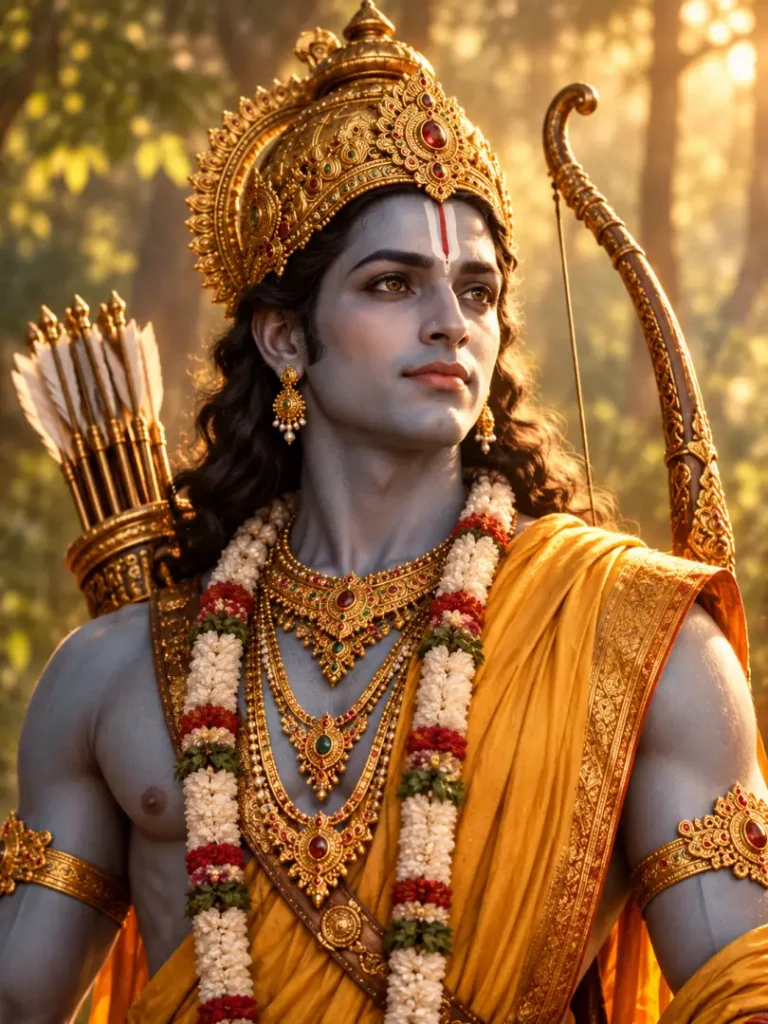
After Ravana’s fall, Vibhishana was crowned king of Lanka and offered Rama the Pushpaka, the flying chariot Ravana had taken from Kubera. Rama, Sita, Lakshmana, Sugriva, Hanuman and the vanara leaders flew north together. On the way Rama pointed out to Sita the places of their story: the battlefield, the bridge Nala built, Kishkindha and the forest where she had been taken.
Hanuman goes ahead to Bharata
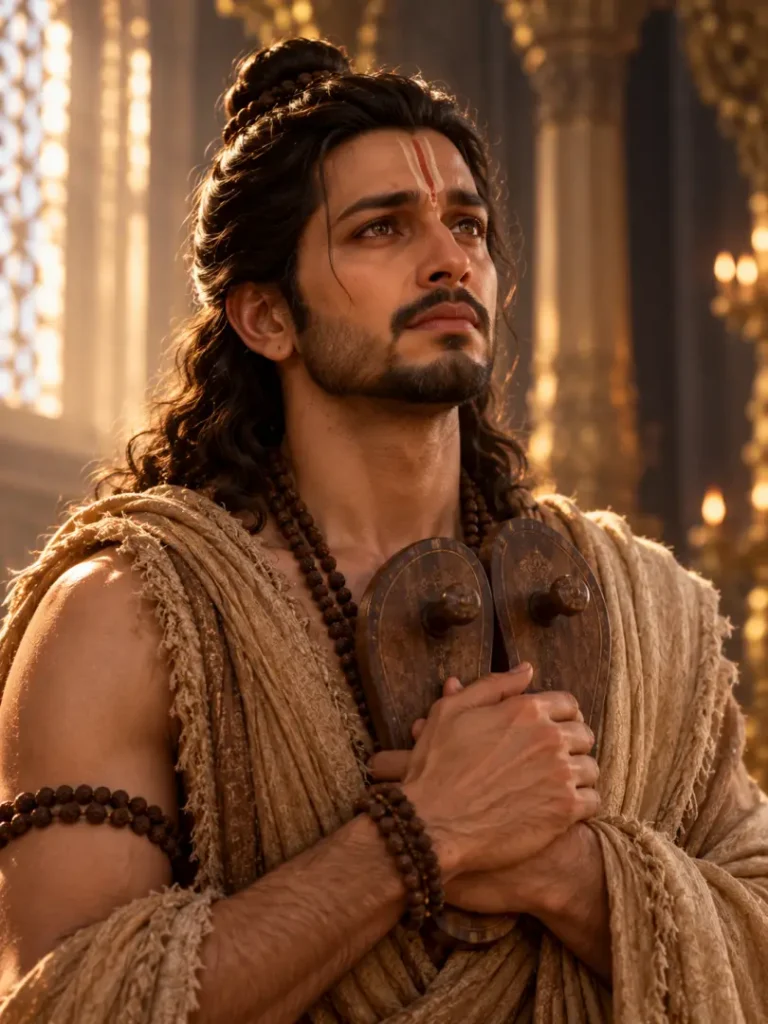
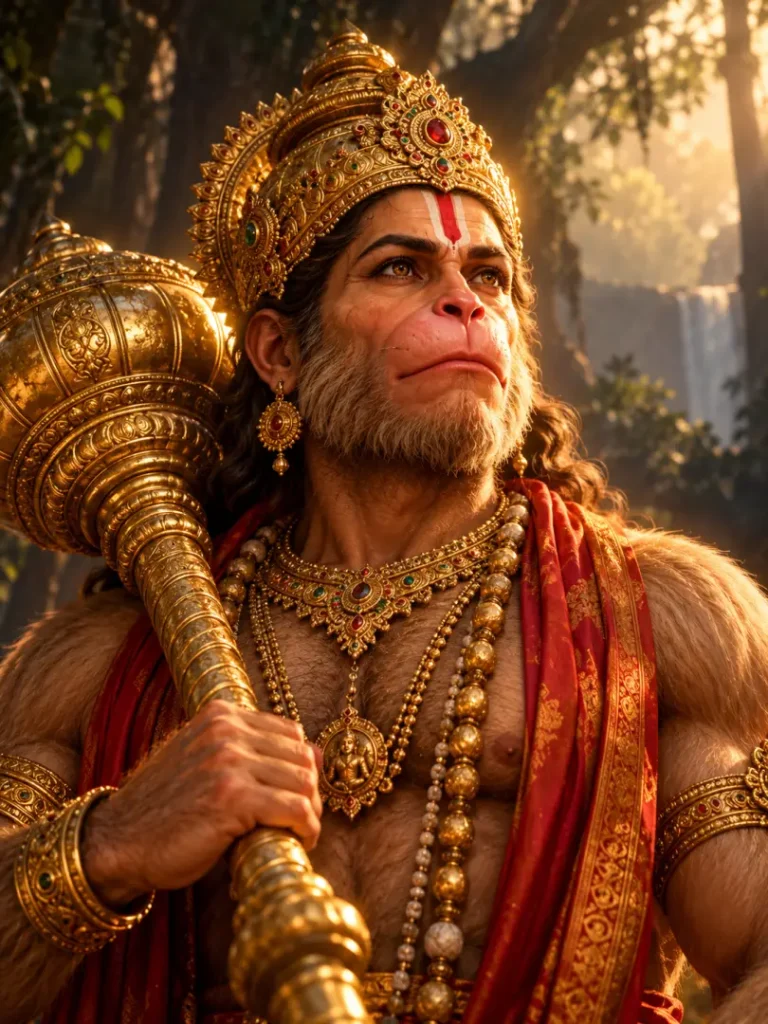
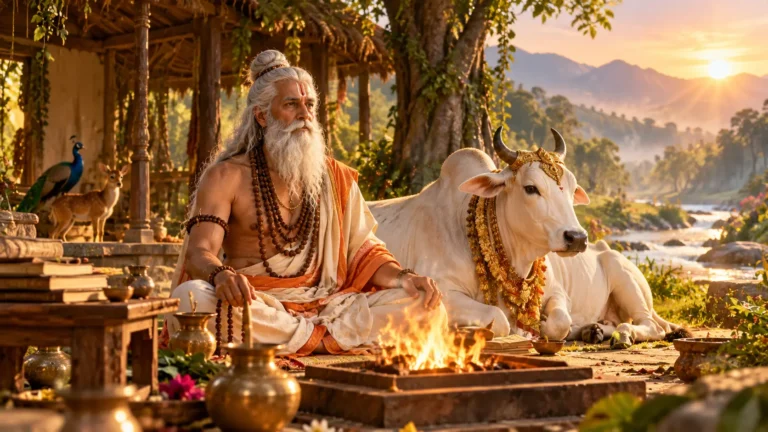
Rama stopped at the ashram of the sage Bharadvaja near Prayag, where the fourteen years came to an end. Worried that Bharata might have grown used to ruling, he sent Hanuman ahead to Nandigram to watch his brother’s face as he heard the news. Hanuman found Bharata living as an ascetic, dressed in bark, ruling only in Rama’s name with Rama’s sandals (padukas) on the throne. Overjoyed, Bharata prepared Ayodhya to receive its king.
The welcome at Nandigram and Ayodhya
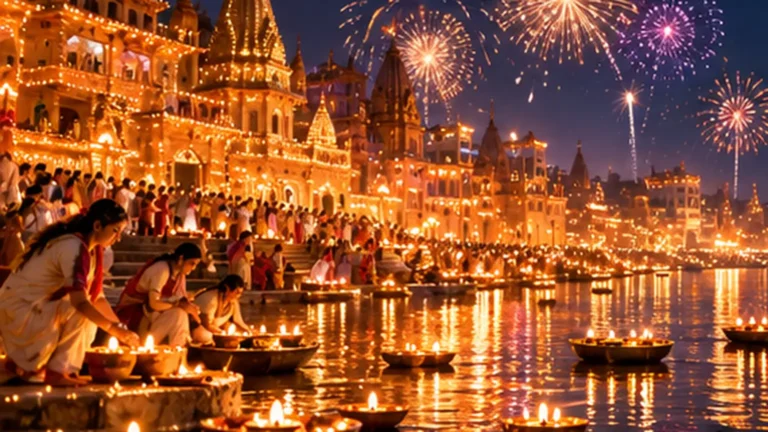
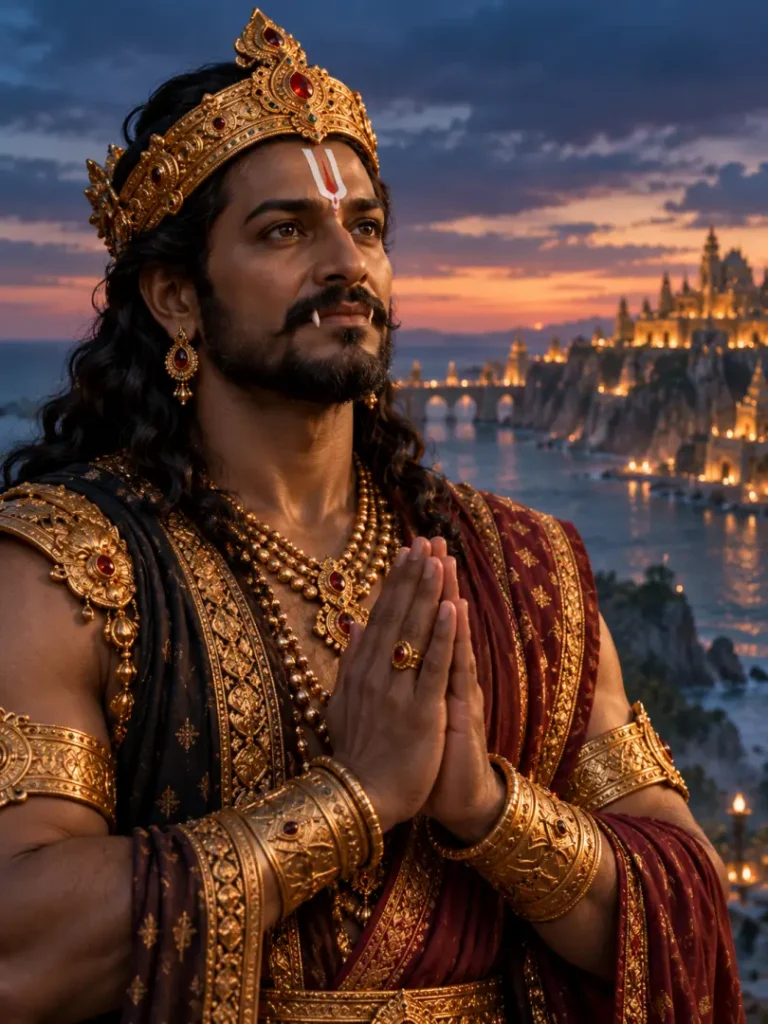
Bharata walked out with the people, the ministers and the queen mothers, carrying the sandals on his head. He placed them at Rama’s feet and returned the kingdom he had held in trust. The brothers embraced, and Rama, Lakshmana and Sita put aside their forest clothes. Valmiki describes the city decorated with flags, flowers and music as the procession entered Ayodhya. The later tradition that the whole city lit rows of lamps, the origin story many families tell for Diwali, grew from this joyful welcome.
The coronation (Rajyabhishek)
The family priest Vasishtha led the coronation. Waters were brought from the four seas and the sacred rivers, and Rama was seated with Sita on a jewelled throne. Vasishtha and the sages anointed him, while Shatrughna held the royal umbrella, Lakshmana and Vibhishana held the whisks, and the vanara leaders stood among the citizens. The image of this court, the Rama Darbar, with Hanuman kneeling at Rama’s feet, is the scene most homes and temples worship today.
Sita’s necklace and Hanuman’s devotion
Rama gave Sita a radiant pearl necklace. She looked from it to Hanuman and, with Rama’s approval, placed it around his neck, honouring the one whose courage had found her in Lanka. Valmiki’s account ends this gift simply. The well-known folk story that Hanuman broke the pearls looking for Rama inside them, and later tore open his chest to show Rama and Sita in his heart, comes from later devotional tradition.
What Ram Rajya meant
Valmiki closes the Yuddha Kanda with a picture of Rama’s reign: no widows mourned, there was no fear of disease or wild animals, rain came on time, and people lived by dharma. “Ram Rajya” became shorthand for just and caring rule. The Uttara Kanda continues the story, including the painful later episodes of Sita’s exile, but many scholars treat it as a later addition.
Why the Rama Rajyabhishek still matters
The coronation is a story about returning what was held in trust, honouring loyalty and ruling for the people. Explore more in the Ramayana characters explained.
Frequently asked questions
Who performed Rama's coronation?
The sage Vasishtha, the family priest of the Ikshvaku dynasty, led the coronation with other sages.
To whom did Sita give her pearl necklace?
She gave it to Hanuman, with Rama’s approval, to honour his service in finding her.
Is Diwali linked to Rama's return in the Valmiki Ramayana?
Valmiki describes a joyful, decorated city; the tradition that Ayodhya lit rows of lamps, linked to Diwali, grew from this welcome in later tradition.
Sources and further reading
Read our editorial policy on how scripture, Purana and folk tradition are labelled.