Quick answer
Meghnad story from the Valmiki Ramayana: how Ravana's son became Indrajit, his sorcery at Nikumbhila, his three battles with Rama and Lakshmana, and his death.
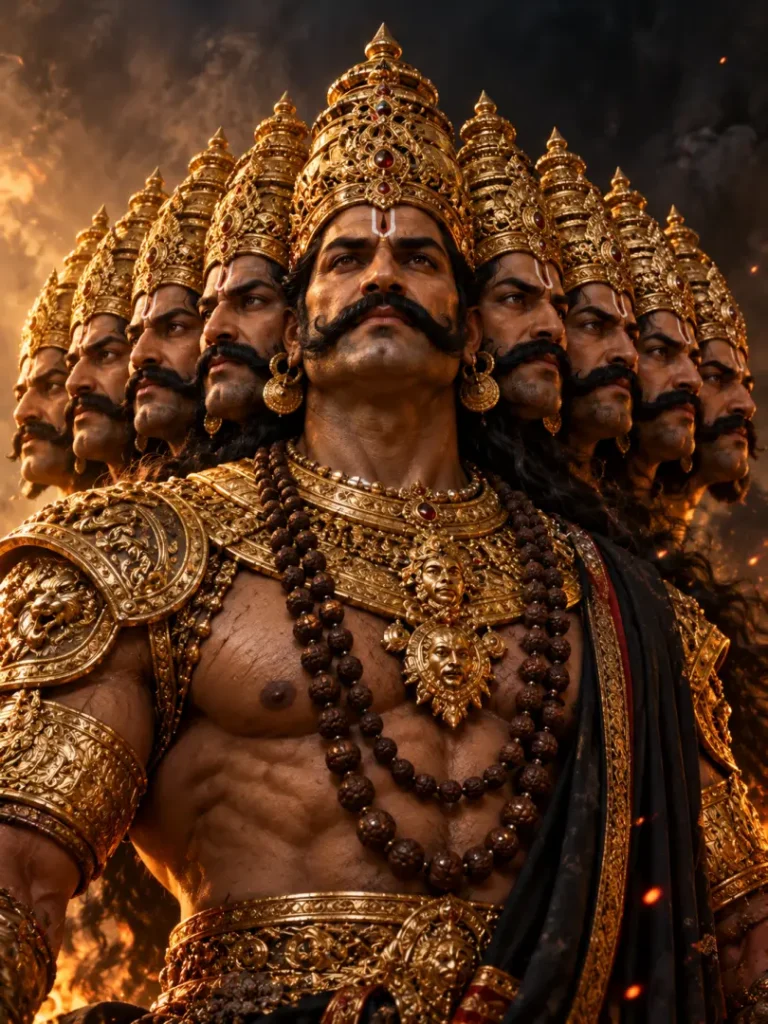
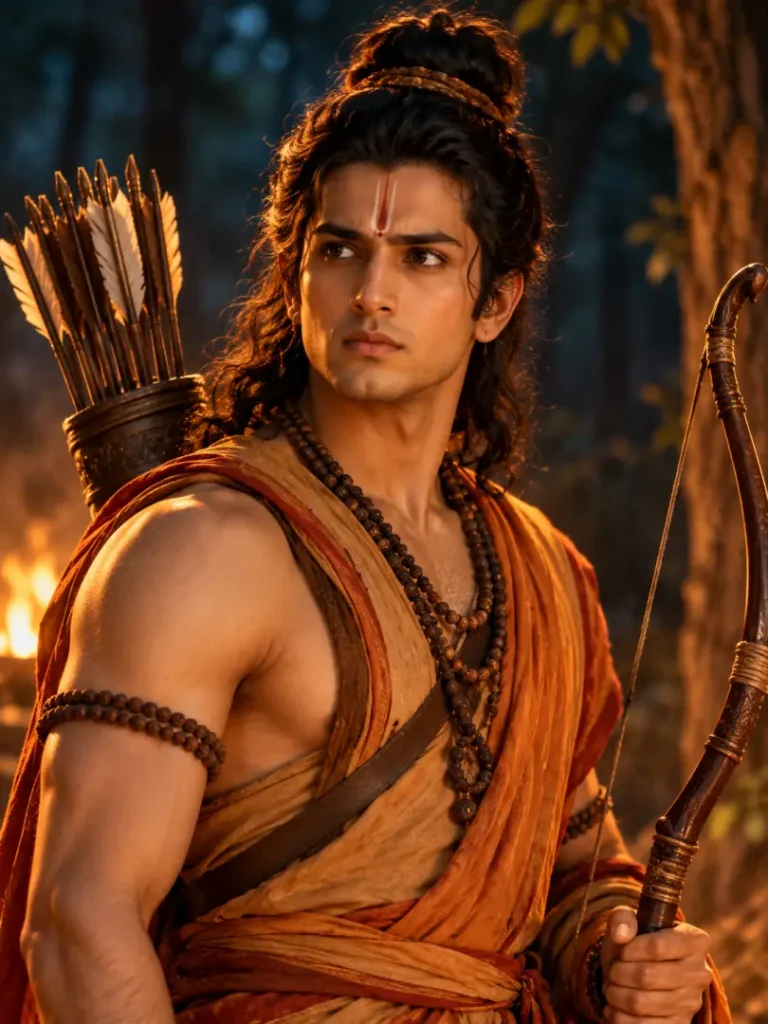
Who is in this story

The story
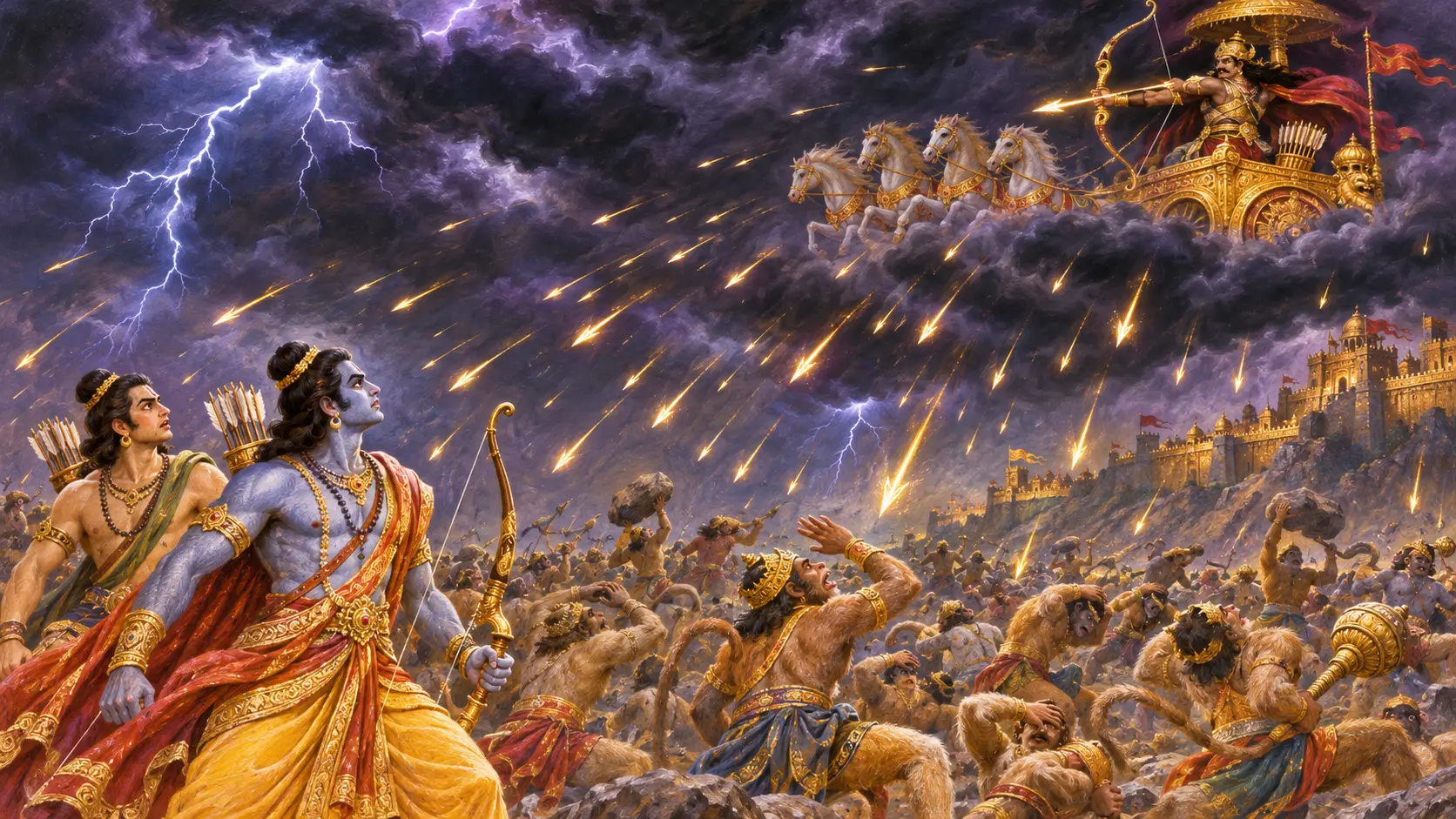
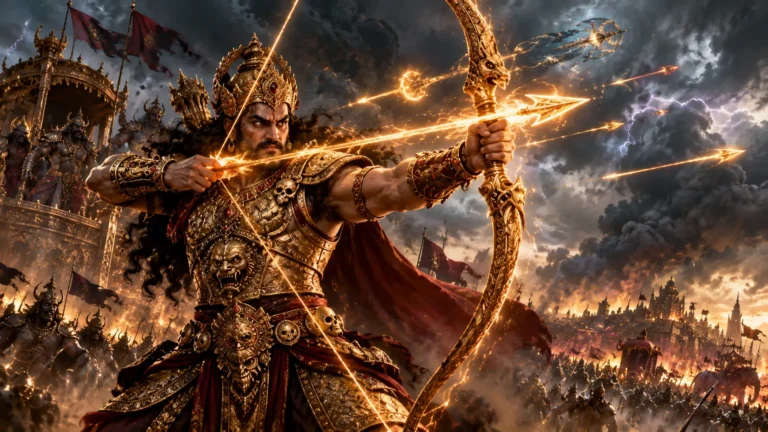
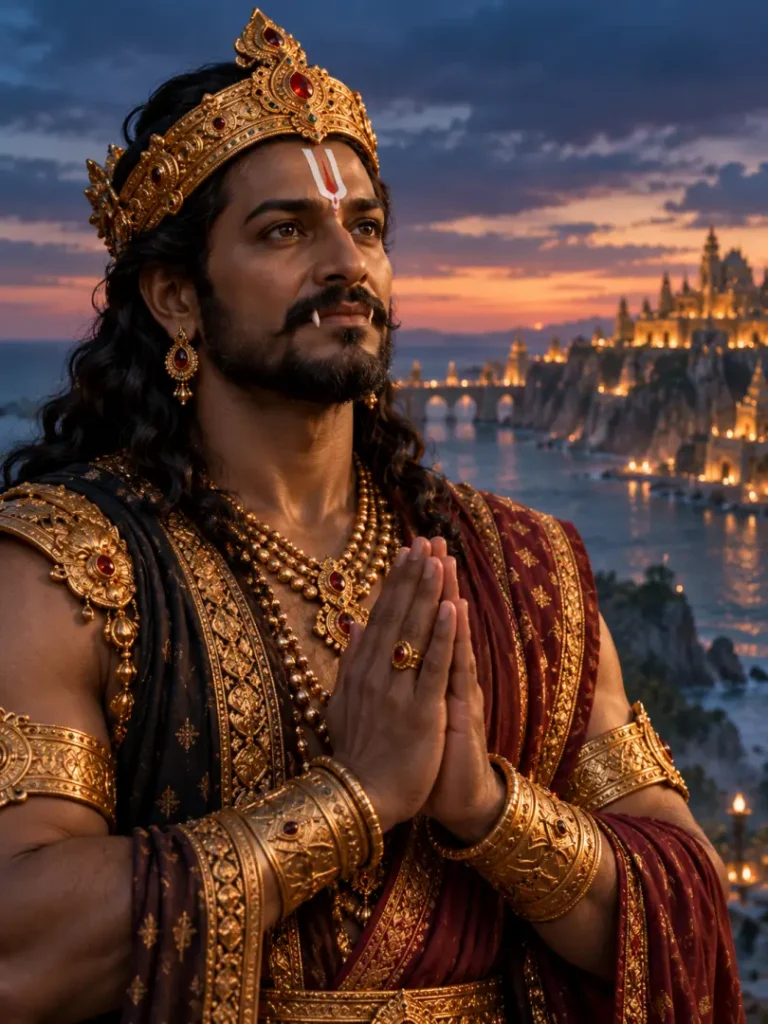
Indrajit, also called Meghnad, was Ravana’s eldest son and the most dangerous warrior Rama’s army faced at Lanka. He fought from the clouds, used illusion and sorcery, and twice brought Rama and Lakshmana down. This guide tells the Meghnad story from the Valmiki Ramayana: how he won the name Indrajit, his three great battles, and how Lakshmana finally defeated him.
Meghnad story: birth and the name Indrajit
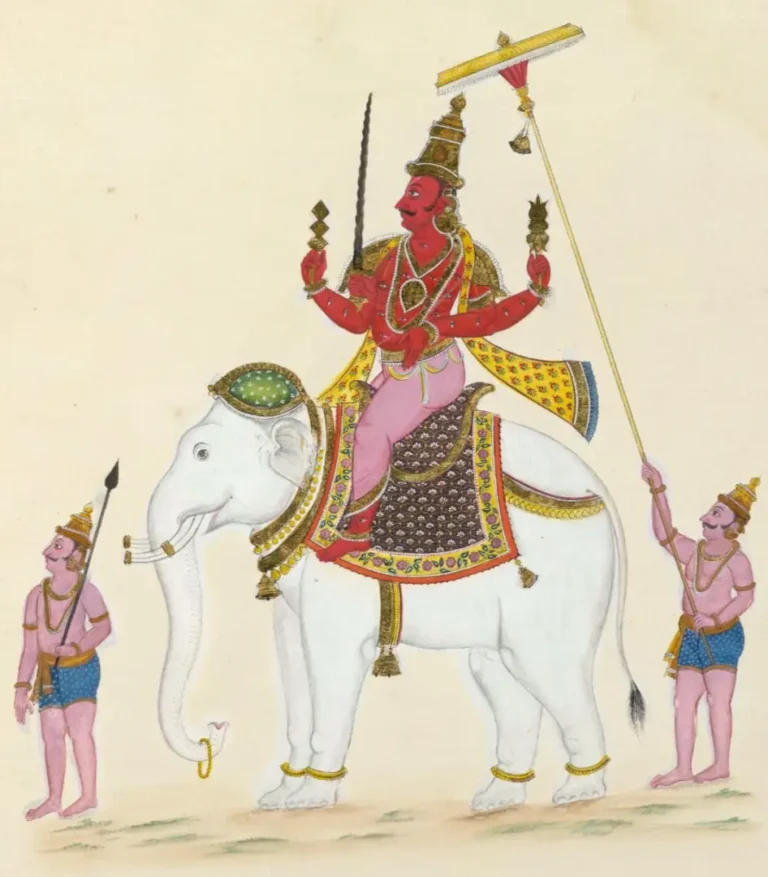
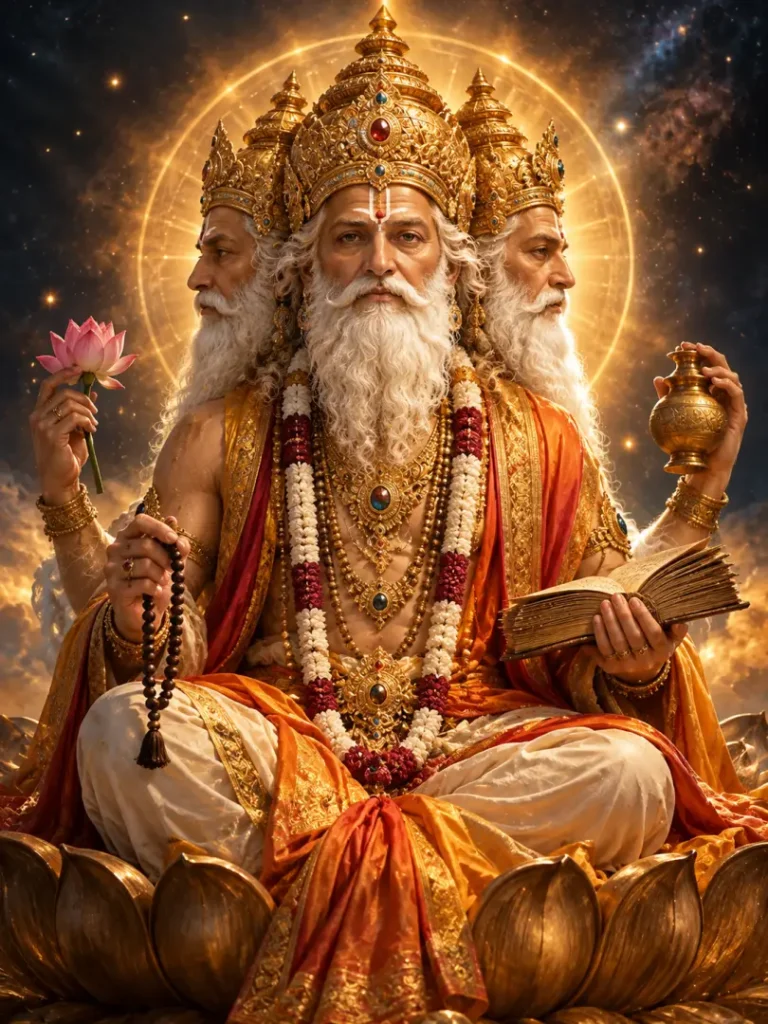
Indrajit was the son of Ravana and his chief queen Mandodari. The Uttara Kanda says that at birth he roared like thunder, so he was named Meghanada, “the one who sounds like clouds”. As a young warrior he went with Ravana to attack the gods, fought Indra, the king of heaven, with illusion and carried him captive to Lanka. Brahma came to free Indra and gave the young prince the name Indrajit, “conqueror of Indra”, along with a boon.
Master of sacrifice and illusion
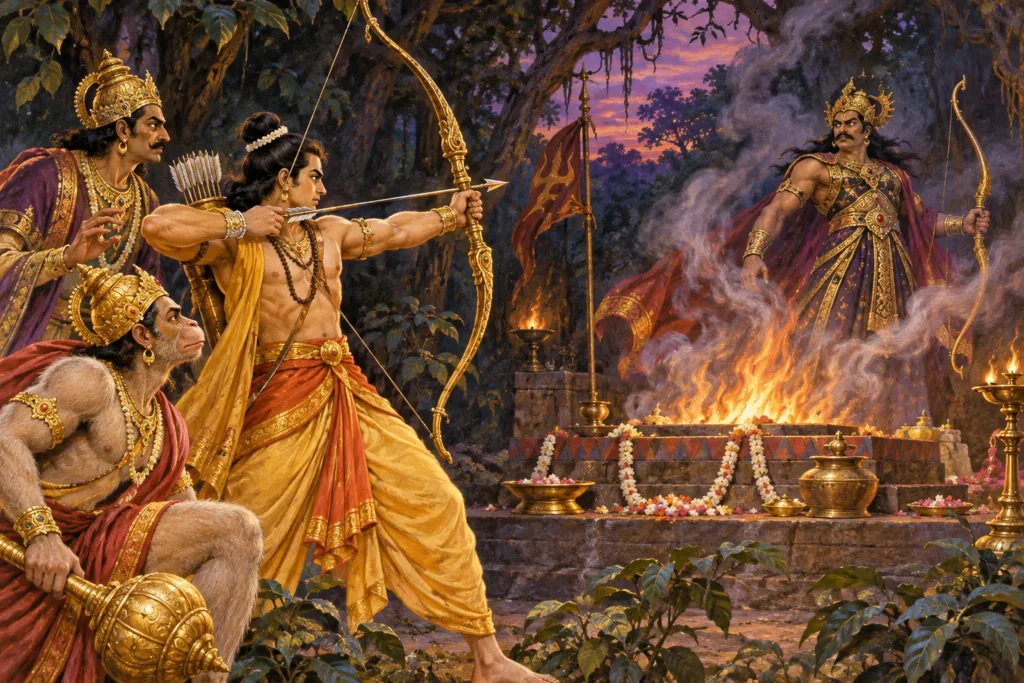
Indrajit drew his power from fire rituals. Before major battles he performed sacrifices at a hidden grove called Nikumbhila, which, according to the Yuddha Kanda, would make him invincible if he completed them. He could also become invisible in battle and attack from the sky, which made him almost impossible to fight.
Binding Hanuman
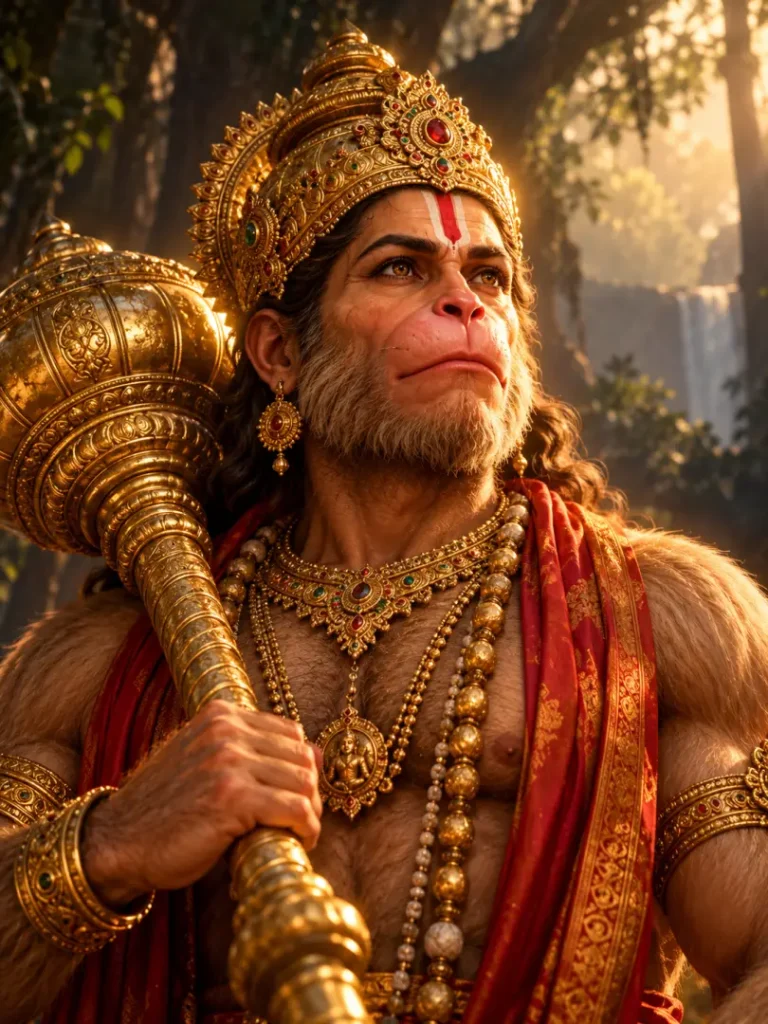
In the Sundara Kanda, after Hanuman destroyed the Ashoka grove and killed Ravana’s son Aksha, Ravana sent Indrajit. Indrajit bound Hanuman with the Brahmastra. Hanuman, out of respect for Brahma’s weapon, allowed himself to be taken before Ravana, where he delivered Rama’s warning and later set Lanka on fire.
Three battles with Rama and Lakshmana
- The serpent arrows: invisible in the sky, Indrajit struck Rama and Lakshmana with arrows that bound them like serpents. Garuda arrived and freed them.
- The Brahmastra: in a second attack he used the Brahmastra and brought down the brothers and much of the vanara army. Hanuman flew to the Himalayas for healing herbs and carried back a whole peak.
- The illusory Sita: to break the army’s spirit, Indrajit created an illusion of Sita and killed her before Hanuman’s eyes. Rama was shattered until Vibhishana revealed it was maya.
The death of Indrajit
Vibhishana warned that Indrajit was going to Nikumbhila to complete his sacrifice, and that if he finished it no one could defeat him. Lakshmana went with Vibhishana and Hanuman, disrupted the ritual and fought Indrajit in a long duel. Lakshmana finally killed him with a divine arrow empowered by Indra’s weapon. His death broke Ravana, who now had to fight himself.
Sulochana and later retellings
Popular retellings add Indrajit’s wife Sulochana, who is said to have followed him in death. She does not appear in the Valmiki Ramayana, and her story comes from later regional traditions and dramas.
Why Meghnad matters
Indrajit was Ravana’s greatest strength and, in a sense, the measure of Rama’s army. His defeat came through Vibhishana’s knowledge and Lakshmana’s courage, not through strength alone. For the full cast of the epic, see Ramayana characters explained, and read the battles in the Valmiki Ramayana.
Frequently asked questions
Why is Meghnad called Indrajit?
He defeated and captured Indra, king of the gods. Brahma freed Indra and gave Meghnad the name Indrajit, conqueror of Indra.
Who killed Indrajit in the Ramayana?
Lakshmana killed Indrajit after disrupting his sacrifice at Nikumbhila, guided by Vibhishana, as told in the Yuddha Kanda.
Is Sulochana in the Valmiki Ramayana?
No. Sulochana comes from later regional retellings and dramas, not from the Valmiki Ramayana.
Sources and further reading
Read our editorial policy on how scripture, Purana and folk tradition are labelled.