Quick answer
Ghatotkacha story from the Mahabharata: son of Bhima and Hidimbi, his help in the exile, the night battle and how Karna's Shakti weapon killed him.
Who is in this story
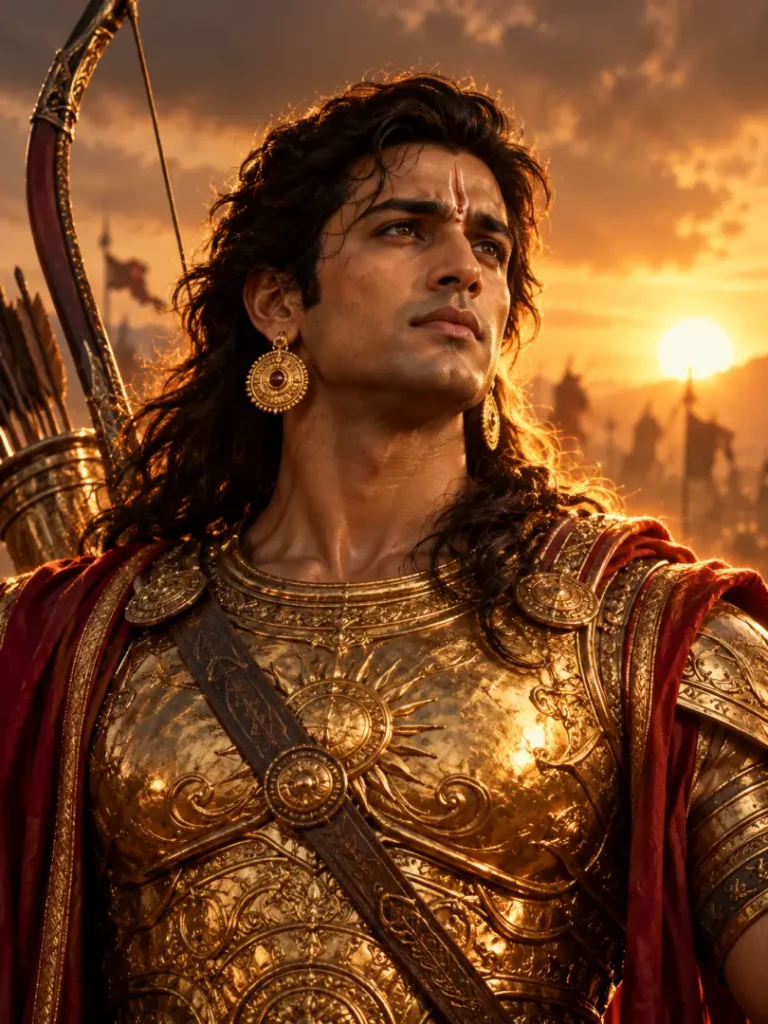
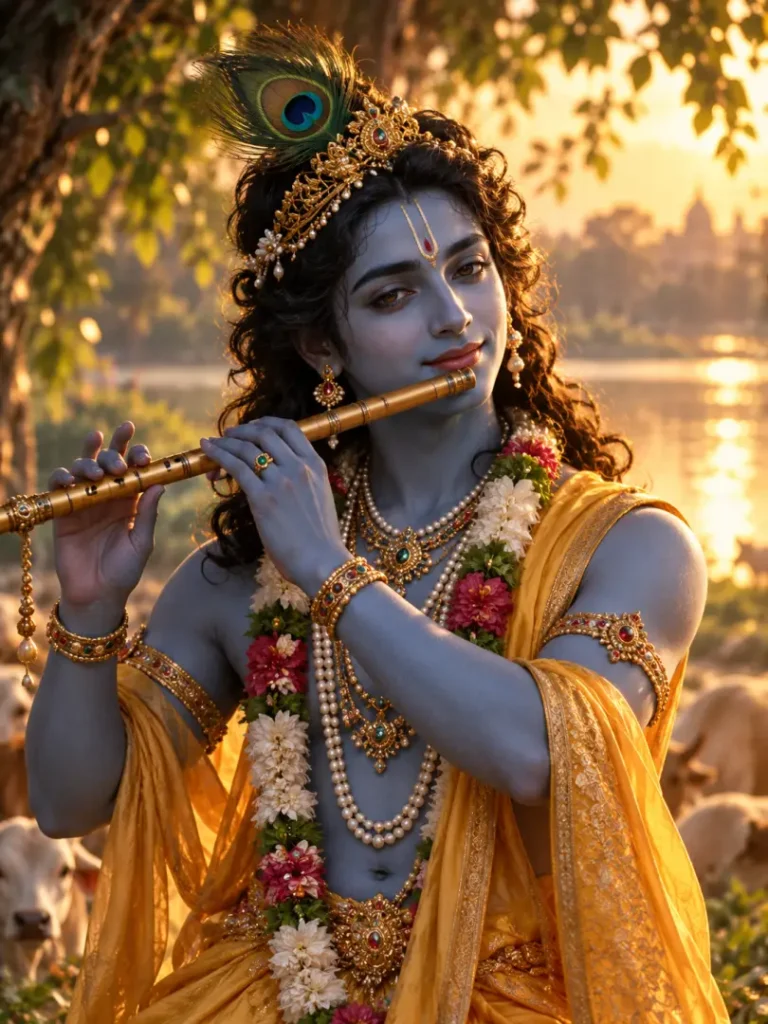
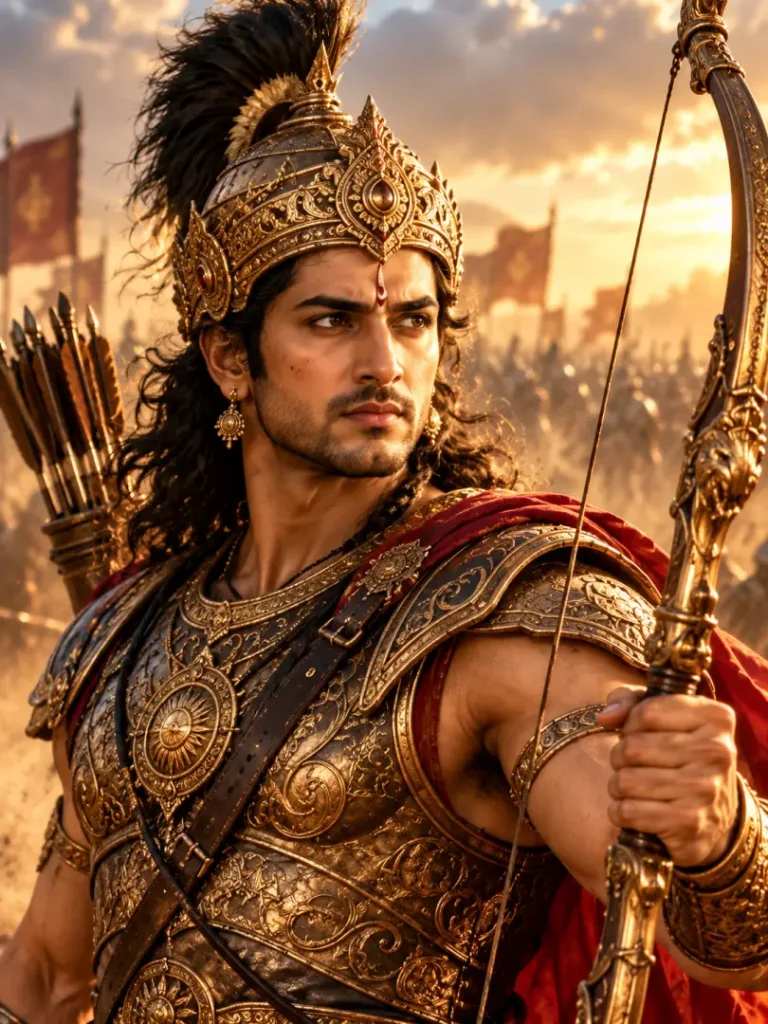
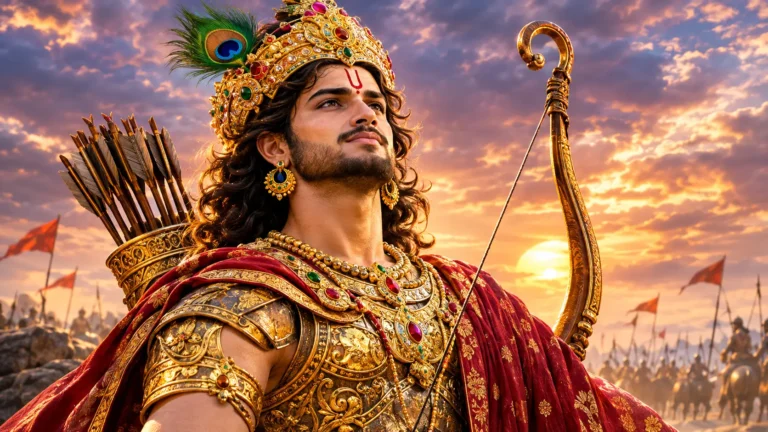
The story
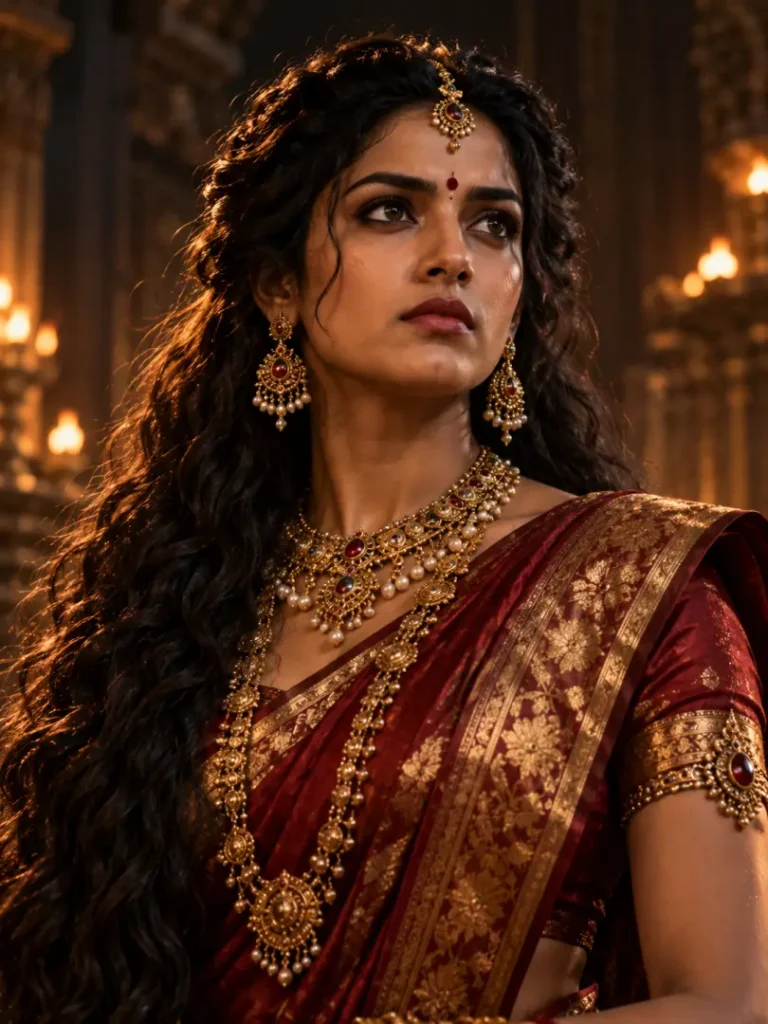
Ghatotkacha, the son of Bhima and the rakshasi Hidimbi, is one of the most loved heroes of the Mahabharata. Half human and half rakshasa, he could fly, change size and fight with illusion, and his death on the fourteenth night of the war changed its course. This guide tells the Ghatotkacha story from his birth to his sacrifice, and explains why Krishna rejoiced when he fell.
Ghatotkacha story: birth in the forest
After the Pandavas escaped the house of lac, they hid in a forest ruled by the rakshasa Hidimba. His sister Hidimbi was sent to lure them but fell in love with Bhima instead and warned him. Bhima killed Hidimba, and with Kunti’s consent he married Hidimbi on the condition that he would return to his family once a child was born. Their son was born bald with a head shaped like a pot, “ghata”, which gave him his name. Rakshasa children grow fast, and Ghatotkacha was soon a young warrior who promised his father he would come whenever he was remembered.
Help during the exile
During the Pandavas’ forest exile, Bhima called on Ghatotkacha when the path to the Himalayas became too hard for Draupadi. Ghatotkacha and his rakshasa companions carried the Pandavas and Draupadi across the mountains towards the sacred hermitage of Badari. He returned whenever needed, a loyal son to his father’s family.
Ghatotkacha in the Kurukshetra war
Ghatotkacha fought for the Pandavas from the first days of the war. He battled the Kaurava rakshasa Alambusha, the elephant-riding King Bhagadatta and Drona’s son Ashwatthama, and his roar and illusions often sent the Kaurava army into retreat. His power grew at night, when rakshasas are said to be strongest.
The night battle of the fourteenth day
On the fourteenth day, after Arjuna killed Jayadratha, the fighting continued into the night, against the usual rules. Ghatotkacha rose above the field, raining weapons and illusions on the Kauravas. He killed the rakshasas Alambusha and Alayudha, who fought for Duryodhana, and his assault was so fierce that Duryodhana begged Karna to stop him at any cost. Read about those two rivals in Alambusha and Alayudha.
Karna’s Shakti and Ghatotkacha’s death
Karna held a single-use divine weapon, the Vasavi Shakti, given to him by Indra in exchange for his natural armour and earrings. Karna had saved it for Arjuna. Pressed by Duryodhana, he used it on Ghatotkacha instead. As he fell, Ghatotkacha grew to an enormous size so that his body crushed a large part of the Kaurava army, serving the Pandavas even in death.
Why Krishna rejoiced
The Pandavas wept for Ghatotkacha, but Krishna rejoiced. He explained that as long as Karna held the Shakti, Arjuna was in mortal danger, and now that the weapon was spent, Arjuna was safe. Ghatotkacha’s death, though tragic, saved Arjuna and helped decide the war. It is one of the clearest examples of the epic’s hard choices, where victory carries a personal cost. For more on such choices, read who the real hero of the Mahabharata is.
Ghatotkacha’s legacy
A shrine to Ghatotkacha stands near the Hidimba Devi temple in Manali, Himachal Pradesh. In later tradition, including the Skanda Purana and Rajasthani folk belief, his son Barbarika is worshipped as Khatu Shyam. To explore the epic itself, start with the Mahabharata library, and see how Dronacharya fell the day after Ghatotkacha’s death.
Frequently asked questions
Who were Ghatotkacha's parents?
Ghatotkacha was the son of the Pandava Bhima and the rakshasi Hidimbi.
How did Ghatotkacha die?
Karna killed him on the fourteenth night of the war with the Vasavi Shakti, a weapon he had saved for Arjuna.
Why did Krishna rejoice at Ghatotkacha's death?
Because Karna had used his one-use Shakti weapon on Ghatotkacha, Arjuna was no longer in danger from it.
Sources and further reading
- Mahabharata, Drona Parva, translated by K. M. Ganguli (Section CVIII)
- Mahabharata, Adi Parva (Hidimba), Vana Parva and Drona Parva (night battle)
Read our editorial policy on how scripture, Purana and folk tradition are labelled.