Barbarika: The Warrior Who Became Khatu Shyam
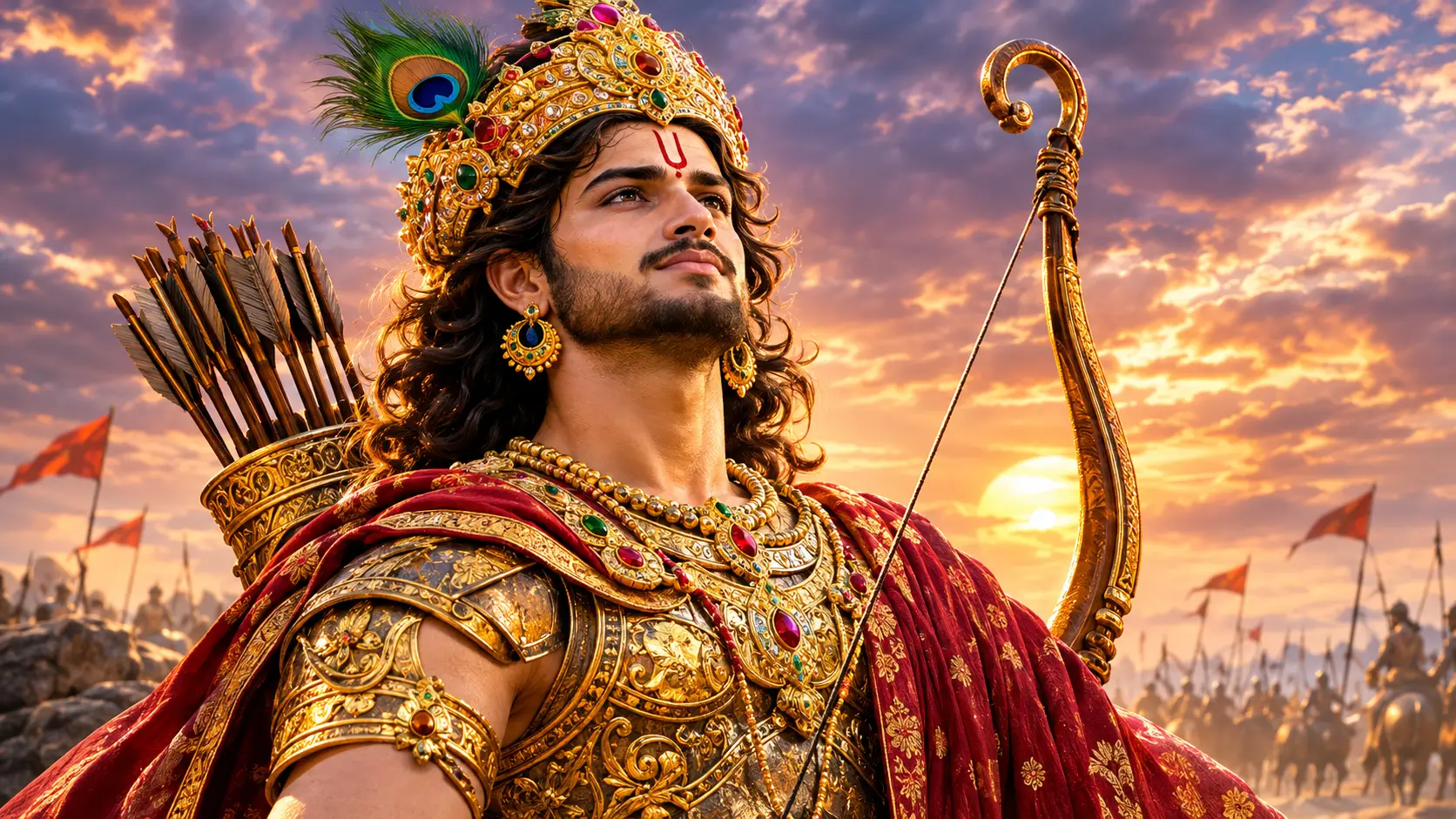
बर्बरीकBarbarika, grandson of Bhima and bearer of three infallible arrows, who gave his head to Krishna and is worshipped as Khatu Shyam Ji of Khatu, Rajasthan.
Who was Barbarika: The Warrior Who Became Khatu Shyam?
Barbarika (also spelled Barbarik) is a warrior of extraordinary power best known from the devotional and regional traditions connected to the Mahabharata. He is remembered as the grandson of Bhima through his son Ghatotkacha, and he is worshipped across North India today as Khatu Shyam Ji, enshrined at Khatu in Rajasthan’s Sikar district. His story — of three unfailing arrows, a vow to fight for the losing side, and the sacrifice of his own head — is one of the most beloved legends of the Mahabharata tradition, though it appears chiefly in later regional retellings rather than in the critical text of the epic.
Who was Barbarika?
Barbarika was the son of Ghatotkacha, the warrior-prince born to Bhima and the rakshasi Hidimba, which makes him a grandson of the second Pandava. From childhood he was devoted to the Goddess and to Lord Shiva, and through severe penance he earned boons that made him one of the mightiest archers of his age. In devotional tradition he is honoured with titles such as Teen Baandhari (bearer of three arrows), Sheesh ke Daani (the giver of his head) and Haare ka Sahara (the refuge of the defeated).
The three infallible arrows
According to the tradition, Barbarika received three infallible arrows from Lord Shiva — the reason he is called the bearer of three arrows. The first arrow would mark every target he intended to destroy, the second would mark everything he wished to spare, and the third would destroy all the marked targets and then return to his quiver. With these three arrows alone, it was said, he could end any war in a single moment. Before the Kurukshetra war he vowed to his mother that he would always fight on behalf of whichever side was losing.
Krishna’s test and the gift of his head
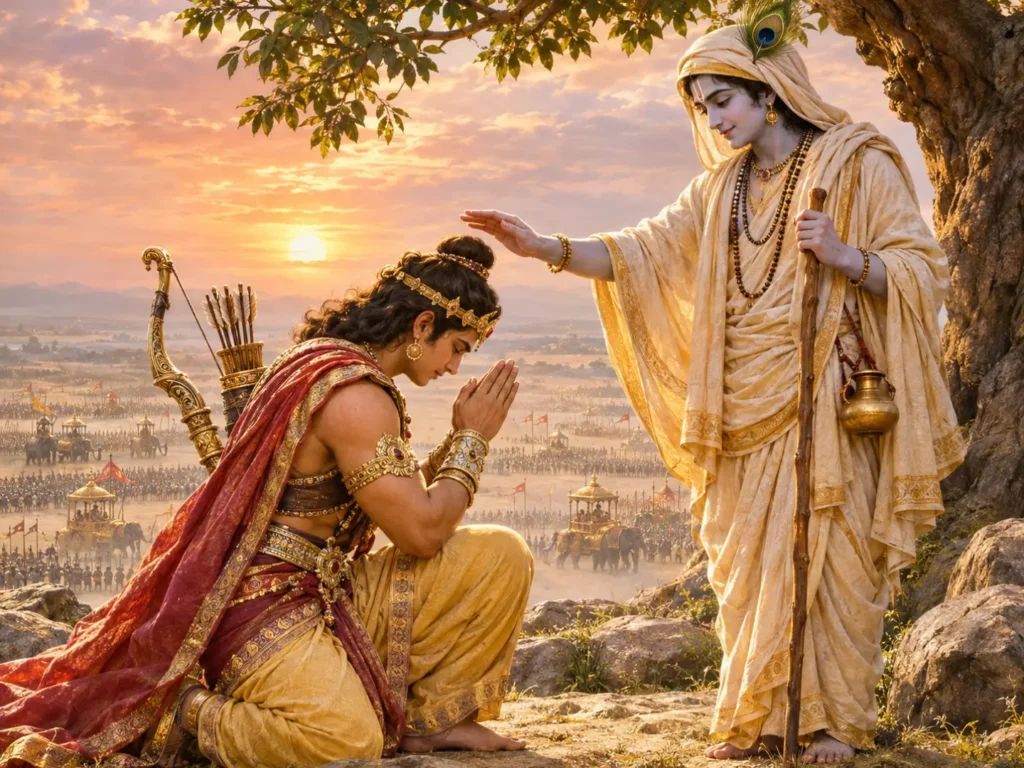
Foreseeing the danger in that vow, Krishna — the same divine guide who delivered the Bhagavad Gita to Arjuna on that battlefield — came to Barbarika disguised as a Brahmin and asked how long the great war would take him. When Barbarika replied that his three arrows needed only a moment, Krishna challenged him to pierce every leaf of a nearby peepal tree with a single arrow. The arrow marked every leaf and then hovered over Krishna’s foot, for the Lord had quietly hidden one leaf beneath it. Krishna understood that a warrior sworn to the losing side would, in effect, destroy both armies, since whichever side he joined would at once begin to lose. Still in the guise of a Brahmin, he asked for Barbarika’s head in charity (daan). Barbarika recognised the Lord and gave his head willingly, asking only to witness the war he would not fight in. Krishna placed his living head on a hill overlooking Kurukshetra.
Barbarika as Khatu Shyam
After the war, when the victorious Pandavas disputed who had truly brought about their victory, Barbarika’s head is said to have answered that it had seen only Krishna’s discus at work and the Goddess receiving the offerings of battle. Pleased by his devotion and sacrifice, Krishna blessed him to be worshipped in the age of Kali under Krishna’s own name, Shyam. He is enshrined today at the Khatu Shyam temple in Khatu, Rajasthan, where the great Phalguna (Falgun) fair draws millions of devotees each year. This account belongs chiefly to regional devotional tradition and Puranic retellings, rather than to the main narrative of Vyasa’s Mahabharata, and sources differ on its details.