Who is in this story
The story
Five days, one festival of lights
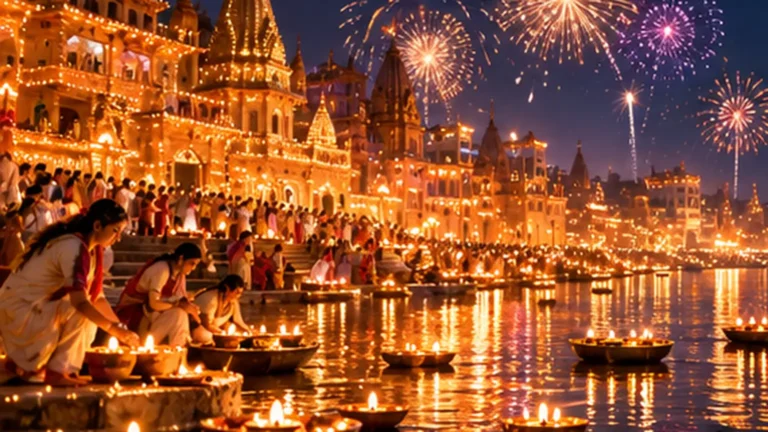
Diwali is celebrated over five days in most of India, each with its own name, story and ritual. Together they move from the gathering of wealth, through the victory of light over darkness, to the worship of fortune, the care of nature, and the bond between brother and sister. Here is a short guide to each day.
Day 1 — Dhanteras
The festival opens with Dhanteras (Dhan-trayodashi), sacred to Dhanvantari, the physician of the gods who rose from the churning of the ocean bearing the pot of amrita. People clean and decorate the home, buy metal — gold, silver or at least a steel vessel — and light the first lamps, inviting health and wealth. Lakshmi and Kubera are worshipped in the evening.
Day 2 — Naraka Chaturdashi (Chhoti Diwali)
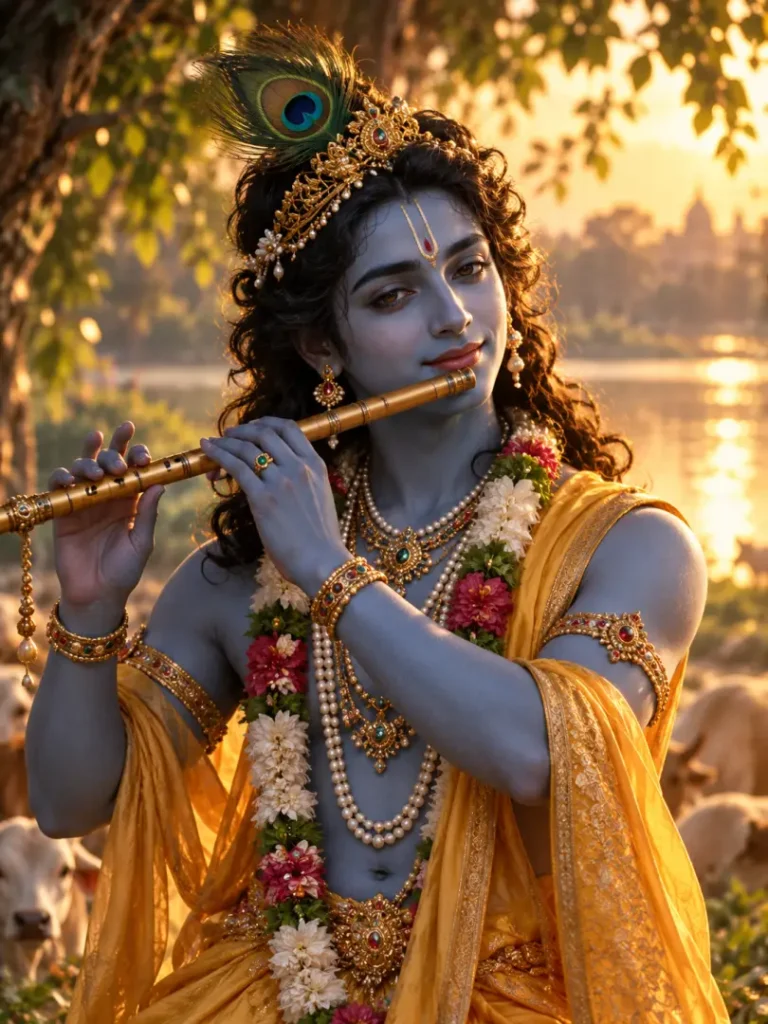
The second day, Naraka Chaturdashi or Chhoti Diwali, recalls how Krishna and Satyabhama slew the demon Narakasura and freed the sixteen thousand captives he held. Many bathe before dawn (the abhyanga snan) as a symbolic cleansing, and light lamps to mark the end of the demon’s darkness.
Day 3 — Lakshmi Puja (main Diwali)
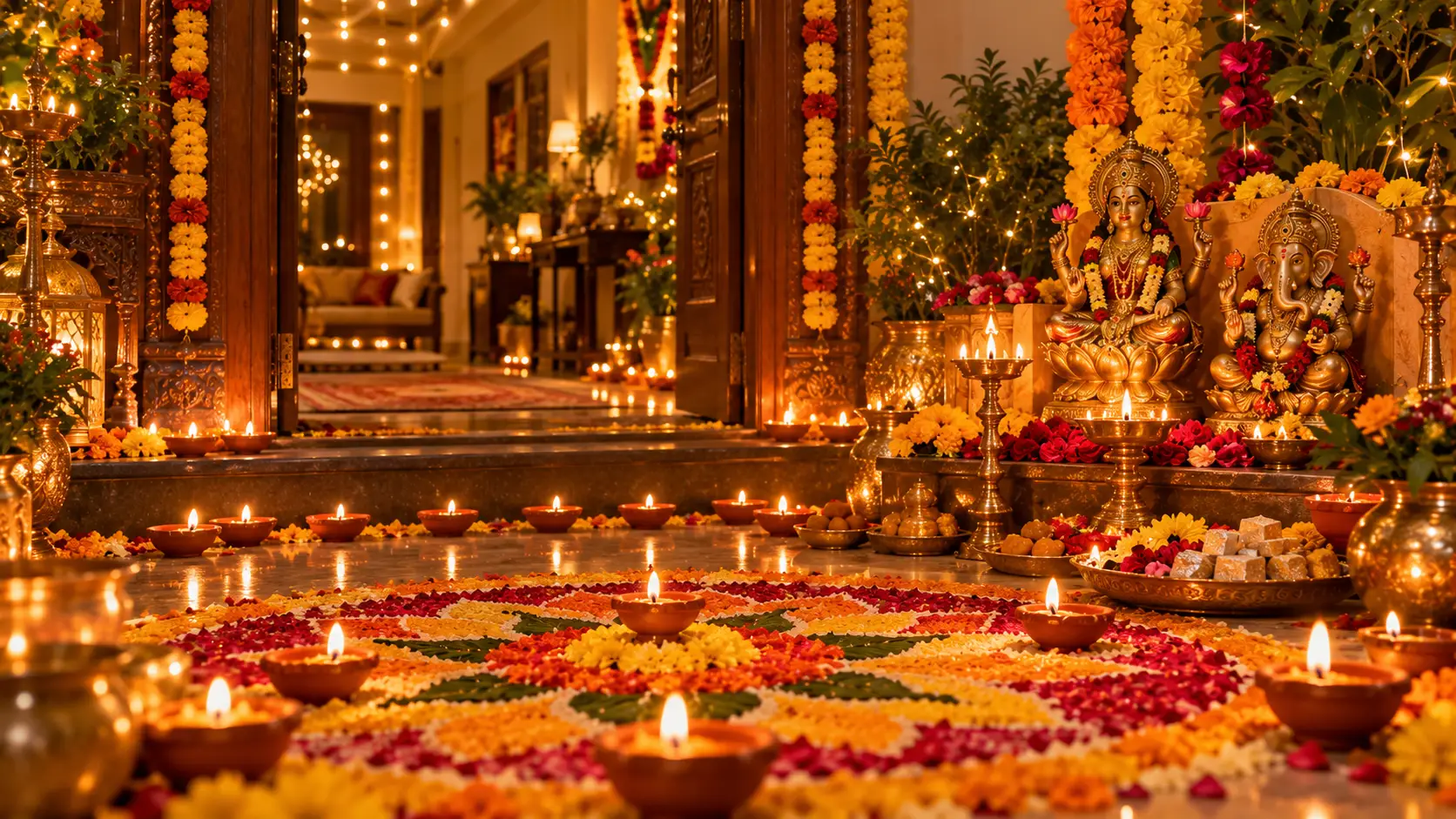
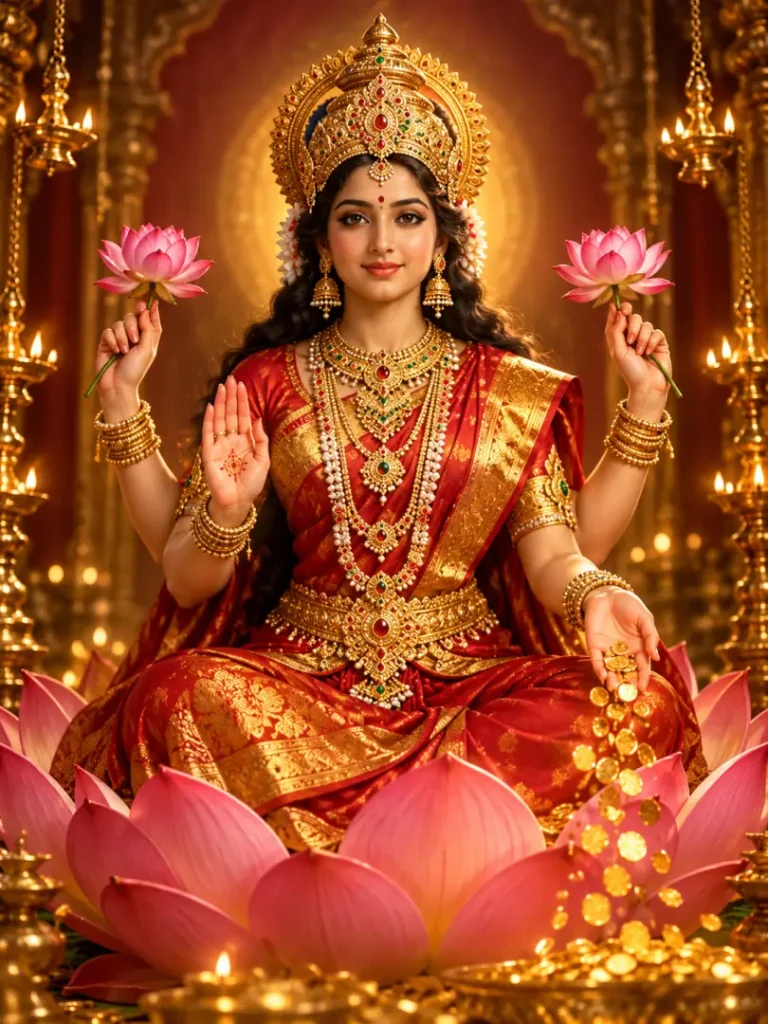
The darkest night, the new moon of Kartik, is the heart of the festival: Lakshmi Puja. Homes are lit end to end with diyas; Lakshmi, goddess of fortune, is worshipped alongside Ganesha for an auspicious start. This is also the night of Rama’s return to Ayodhya.
Day 4 — Govardhan Puja / Annakut
Govardhan Puja remembers how Krishna lifted Mount Govardhan on one finger to shelter the people of Vraj from Indra’s storm, teaching them to honour nature over empty ritual. Devotees build small hills of food (annakut, “mountain of grain”) and offer them to the Lord.
Day 5 — Bhai Dooj
The festival closes with Bhai Dooj, honouring the bond of brother and sister, from the story of Yama and his sister Yamuna. Sisters apply a tilak to their brothers’ foreheads and pray for their long life; brothers give gifts and a promise of protection.
Meaning and lessons
Diwali's five days together tell a complete story: gather well-being (Dhanteras), let light defeat darkness (Naraka Chaturdashi), welcome fortune with gratitude (Lakshmi Puja), honour nature over pride (Govardhan Puja), and cherish the bonds of family (Bhai Dooj).
Frequently asked questions
How many days is Diwali celebrated?
Which day is the main Diwali?
What is Dhanteras?
What is Bhai Dooj?
Why is Govardhan Puja part of Diwali?
Sources
- Bhagavata Purana (Narakasura, Govardhan)
- Popular Diwali tradition across India
Read our editorial policy on how scripture, Purana and folk tradition are labelled.