Who is in this story
The story
The second day of Diwali
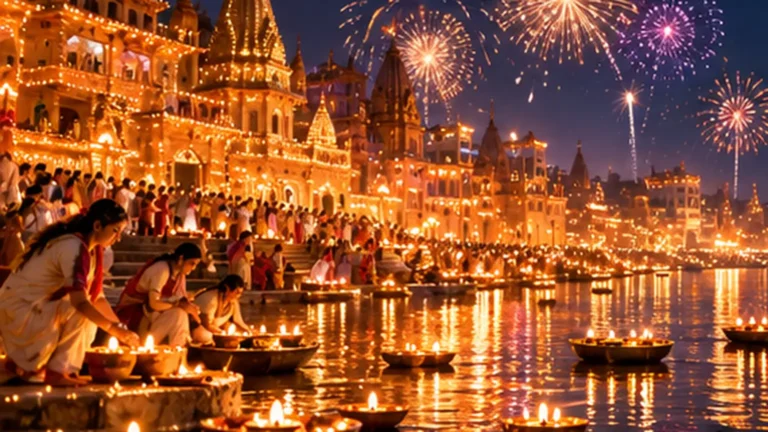
Naraka Chaturdashi, also called Chhoti Diwali or Kali Chaudas, falls on the fourteenth lunar day, just before the main night of Diwali. It celebrates one of the great victories of light over darkness: the slaying of the demon Narakasura by Krishna.
The tyranny of Narakasura
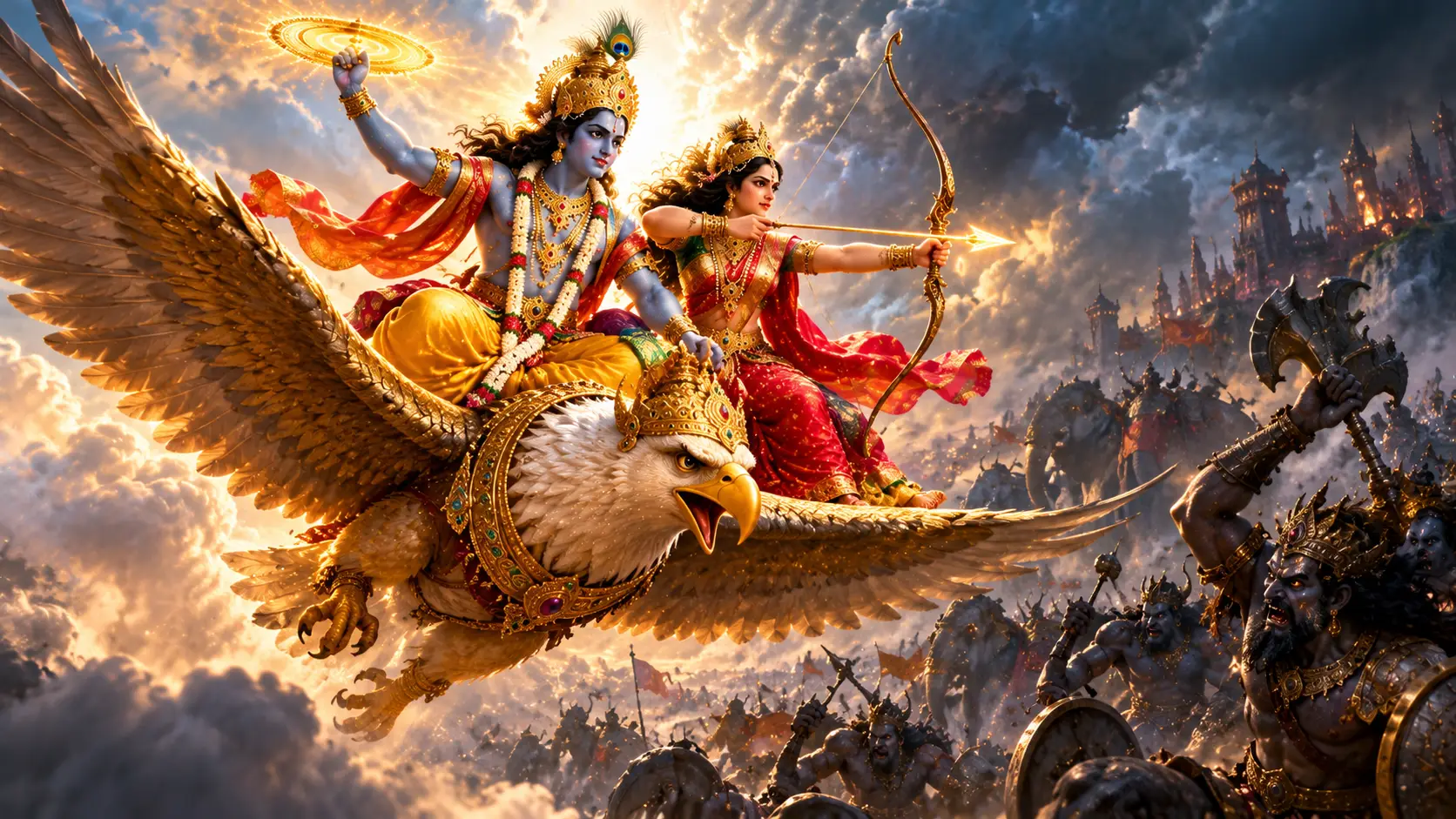
Narakasura, a demon king of immense power, had conquered heaven and earth, stolen the earrings of Aditi, mother of the gods, seized the parasol of Varuna, and imprisoned sixteen thousand women in his fortress. Granted a boon that he could be killed only by his own mother, he believed himself immortal. The gods, unable to bear his cruelty, appealed to Krishna.
The battle and the boon
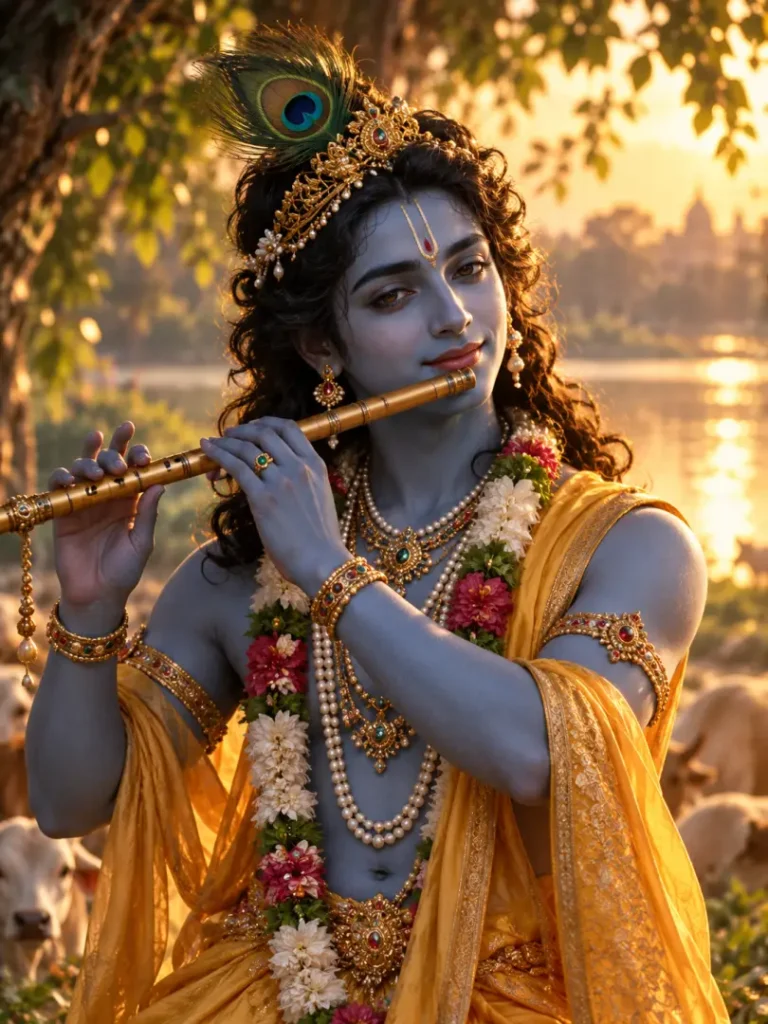
Krishna rode out on Garuda with his queen Satyabhama, who was none other than an incarnation of Bhudevi, the earth goddess — Narakasura’s own mother. When Krishna was momentarily struck down, Satyabhama took up the bow and dealt the fatal blow, so that the demon met death at his mother’s hand exactly as the boon allowed. As he died, Narakasura repented and asked that his death be remembered not with grief but with lights and celebration — and so it is.
Freedom and the dawn bath
Krishna freed the sixteen thousand captives and restored what Narakasura had stolen. On this day many people take a ceremonial oil bath (abhyanga snan) before sunrise, washing away impurity as the world was washed of the demon’s tyranny, and light lamps at dawn. In the south, this day is itself the main Diwali.
The meaning
Naraka Chaturdashi is a victory of freedom over fear. The light is lit not in triumph alone but in mercy — even the defeated demon’s last wish, that his fall bring joy rather than mourning, is honoured. It is a reminder that the point of destroying darkness is to set the captive free.
Meaning and lessons
Naraka Chaturdashi is a victory of freedom over fear. The light is lit not in triumph alone but in mercy — even the defeated demon's wish, that his fall bring joy rather than grief, is honoured. The point of destroying darkness is to set the captive free.
Frequently asked questions
What is Naraka Chaturdashi?
Who killed Narakasura?
Why is it called Chhoti Diwali?
Why do people bathe before dawn on this day?
How many captives did Krishna free?
Sources
- Bhagavata Purana, Canto 10 (Narakasura-vadha)
- Harivamsha
- Popular Chhoti Diwali tradition
Read our editorial policy on how scripture, Purana and folk tradition are labelled.