The story
The fifth and final day
Bhai Dooj (also Bhau Beej or Yama Dwitiya) closes the five days of Diwali on the second lunar day after the new moon. Where Raksha Bandhan celebrates the bond of brother and sister in the monsoon, Bhai Dooj celebrates it at the close of the festival of lights.
The story of Yama and Yamuna
The twin children of Surya, the sun, were Yama, lord of death and dharma, and Yamuna, the river goddess. Long separated by Yama’s grim duties, Yamuna longed to see her brother. When at last he came to her home on this day, she welcomed him with joy — a bath, a tilak on his forehead, a lamp, sweets and a lovingly cooked meal. Moved, Yama granted her a boon: that any brother who receives a tilak and a meal from his sister on this day, and any sister who honours her brother so, would be blessed with long life and freed from the fear of untimely death. And so the day is kept.
How it is observed
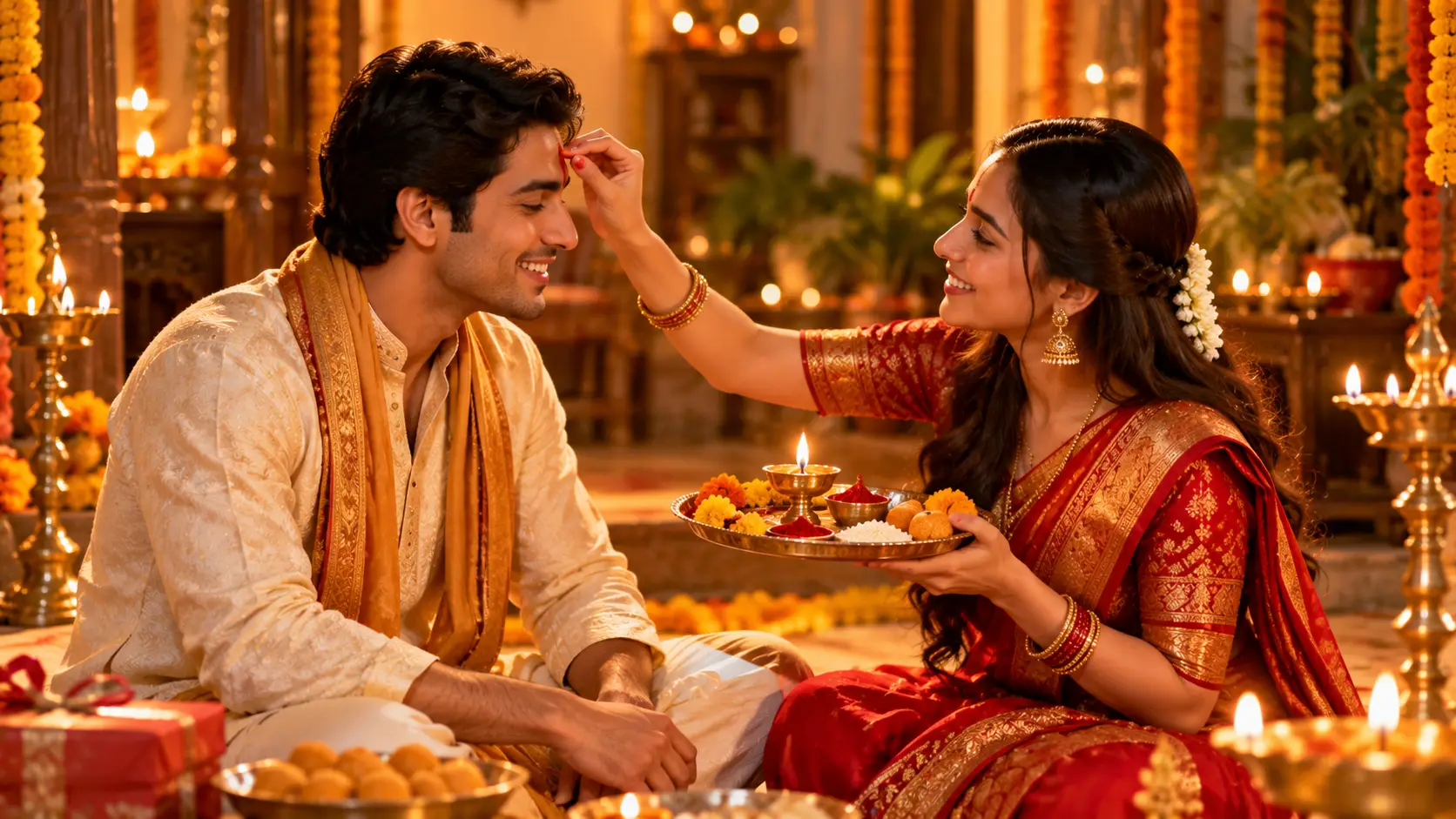
Sisters invite their brothers home, apply a tilak of kumkum and rice to their foreheads, perform a small aarti, and feed them their favourite dishes, praying for their long life and wellbeing. Brothers give gifts and renew their promise to protect and support their sisters. Those whose sisters live far away traditionally visit the Yamuna, or remember her, on this day.
The meaning
Bhai Dooj ends Diwali not with gods and demons but with family. After the lamps, the wealth and the victories, the festival turns to the quiet, lifelong bond between a brother and a sister — a reminder that the light we most need to keep is the love within a home.
Meaning and lessons
Bhai Dooj ends Diwali not with gods and demons but with family. After the lamps, the wealth and the victories, the festival turns to the quiet, lifelong bond between brother and sister — the light most worth keeping is the love within a home.
Frequently asked questions
What is Bhai Dooj?
What is the story behind Bhai Dooj?
How is Bhai Dooj celebrated?
When is Bhai Dooj?
How is Bhai Dooj different from Raksha Bandhan?
Sources
- Puranic tradition of Yama and Yamuna
- Popular Bhai Dooj custom across India
Read our editorial policy on how scripture, Purana and folk tradition are labelled.