Deity
Brahma: FAQ & Sources
ब्रह्माThe creator of the worlds. Also called Svayambhu, Prajapati, Pitamaha, Hiranyagarbha, Chaturmukha, Kamalasana, Vidhata, Vedanatha.
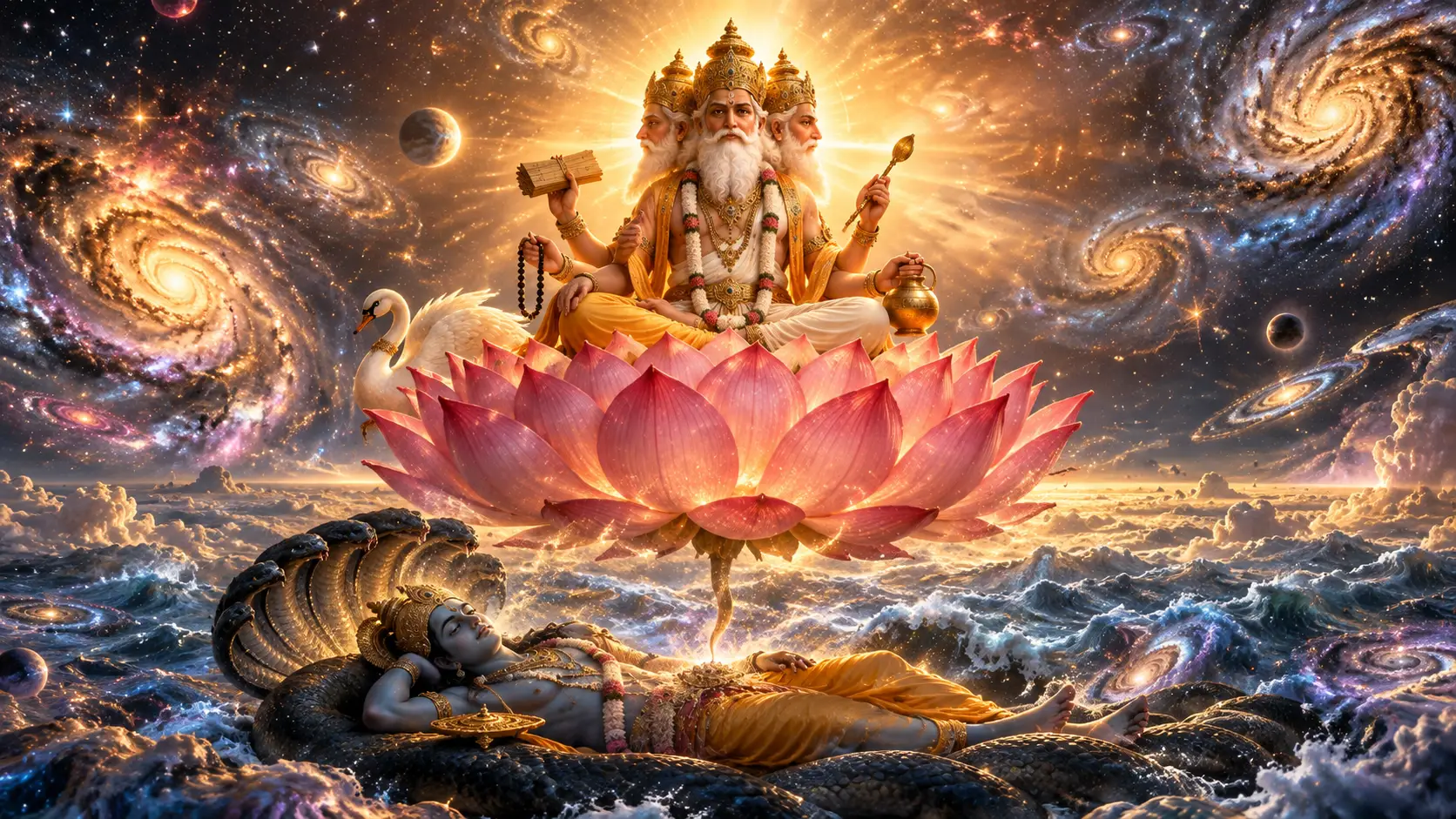
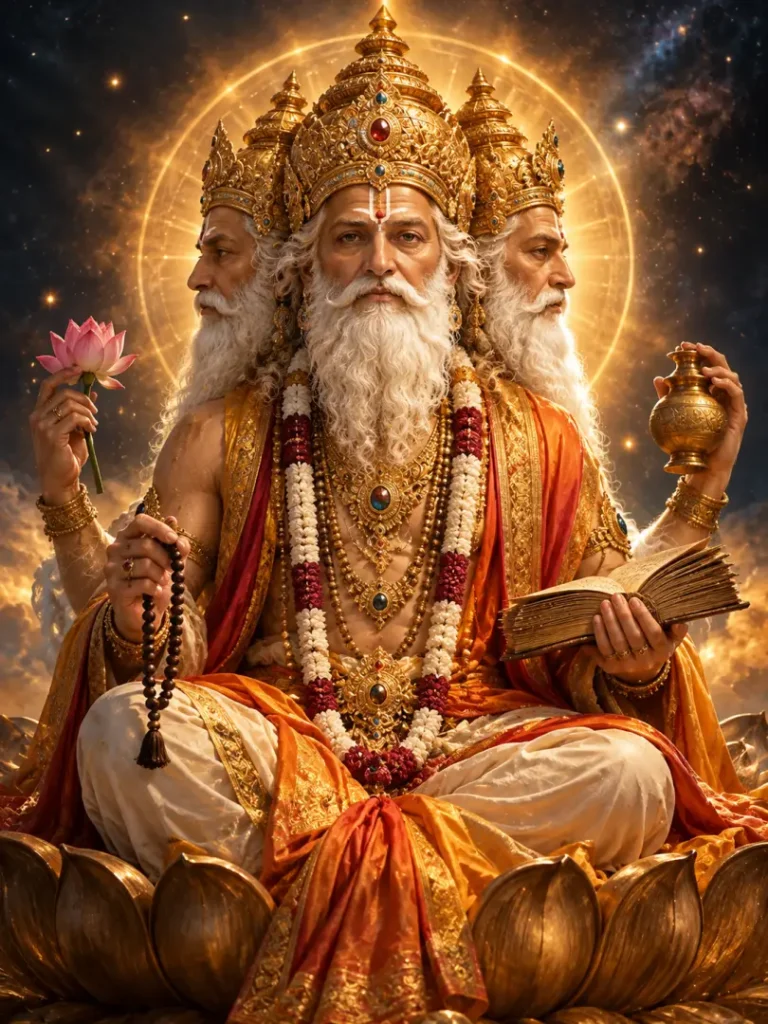
Brahma is the creator god of Hinduism and the first of the Trimurti. Four-faced and seated on a lotus that grows from Vishnu's navel, he gave the world its forms and the four Vedas, with Saraswati as his consort and the swan Hamsa as his mount. His most famous temple is at Pushkar.
Frequently asked questions
Who is Brahma?
Brahma is the creator god of Hinduism and the first of the Trimurti, with Vishnu and Shiva. He shapes the worlds and beings at the start of each cycle of time.
Who is Brahma's wife?
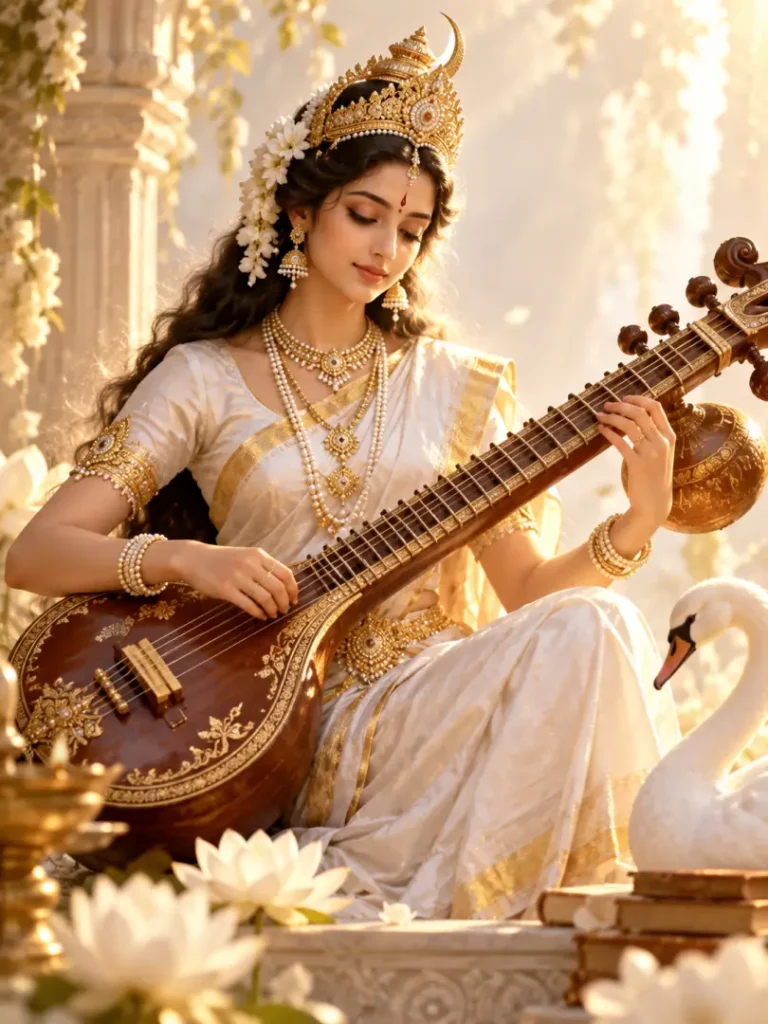
Saraswati, the goddess of knowledge, also called Savitri; some accounts add Gayatri.
What is Brahma's vehicle?
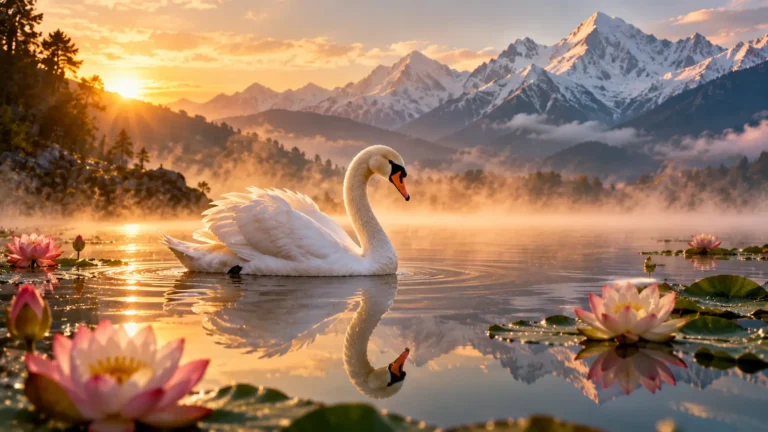
The hamsa, a divine swan or goose.
Why does Brahma have four heads?
Tradition says the four Vedas came from his four mouths and his faces watch the four directions. A fifth head was cut off by Shiva as Bhairava.
Why is Brahma not worshipped much?
Stories say he was cursed: by Shiva for lying about the pillar of light, by his wife Savitri at Pushkar, and by the sage Bhrigu.
Where is the Brahma temple?
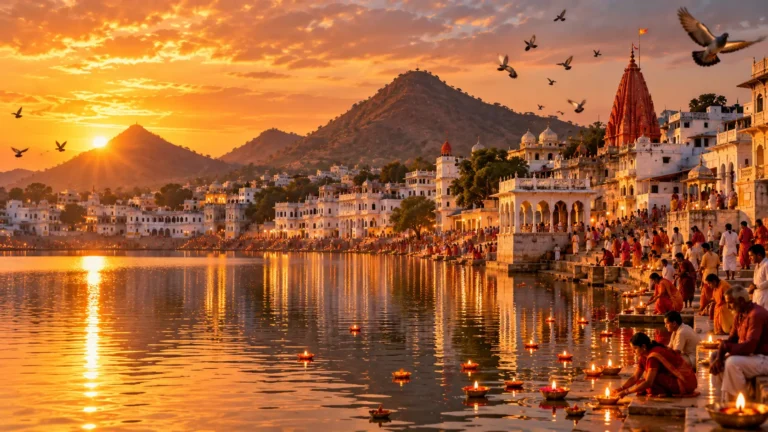
The most famous is the Jagatpita Brahma Mandir at Pushkar in Rajasthan.
What is the difference between Brahma and Brahman?
Brahman is the formless ultimate reality of the Upanishads; Brahma is the personal creator god.
How long is a day of Brahma?
One kalpa, about 4.32 billion years. Brahma lives for a hundred years of such days.
Who are Brahma's children?
The Kumaras, the mind-born sages such as Marichi, Atri, Vasishtha, Bhrigu, Daksha and Narada, and Svayambhuva Manu, the first man.
Sources
- Rigveda 10.121 (Hiranyagarbha Sukta)
- Maitri Upanishad, Fifth Prapathaka
- Bhagavata Purana, Book 3 (chs. 8-12) and 10.13
- Brahmanda Purana; Matsya Purana
- Shiva Purana, Vidyeshvara Samhita (Lingodbhava)
- Padma Purana, Srishti Khanda (Pushkar)
- Valmiki Ramayana, Bala Kanda 2
- Wikipedia, "Brahma" (accessed Oct 2026)
Read our editorial policy on how scripture, Purana and folk tradition are labelled.
Continue exploring
Open the explorer