The story
A festival made of light
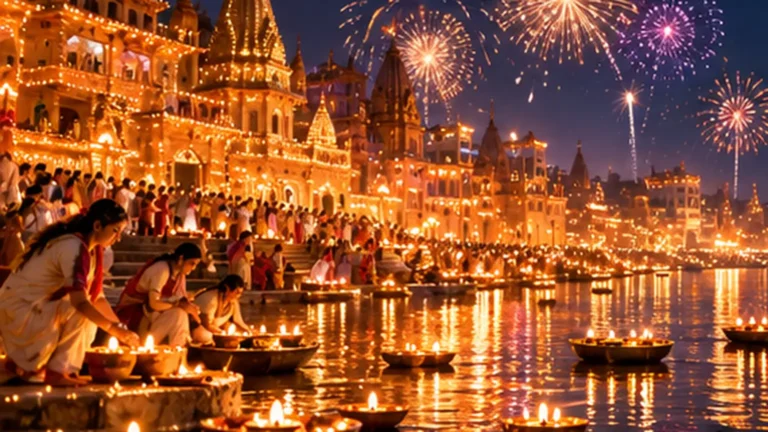
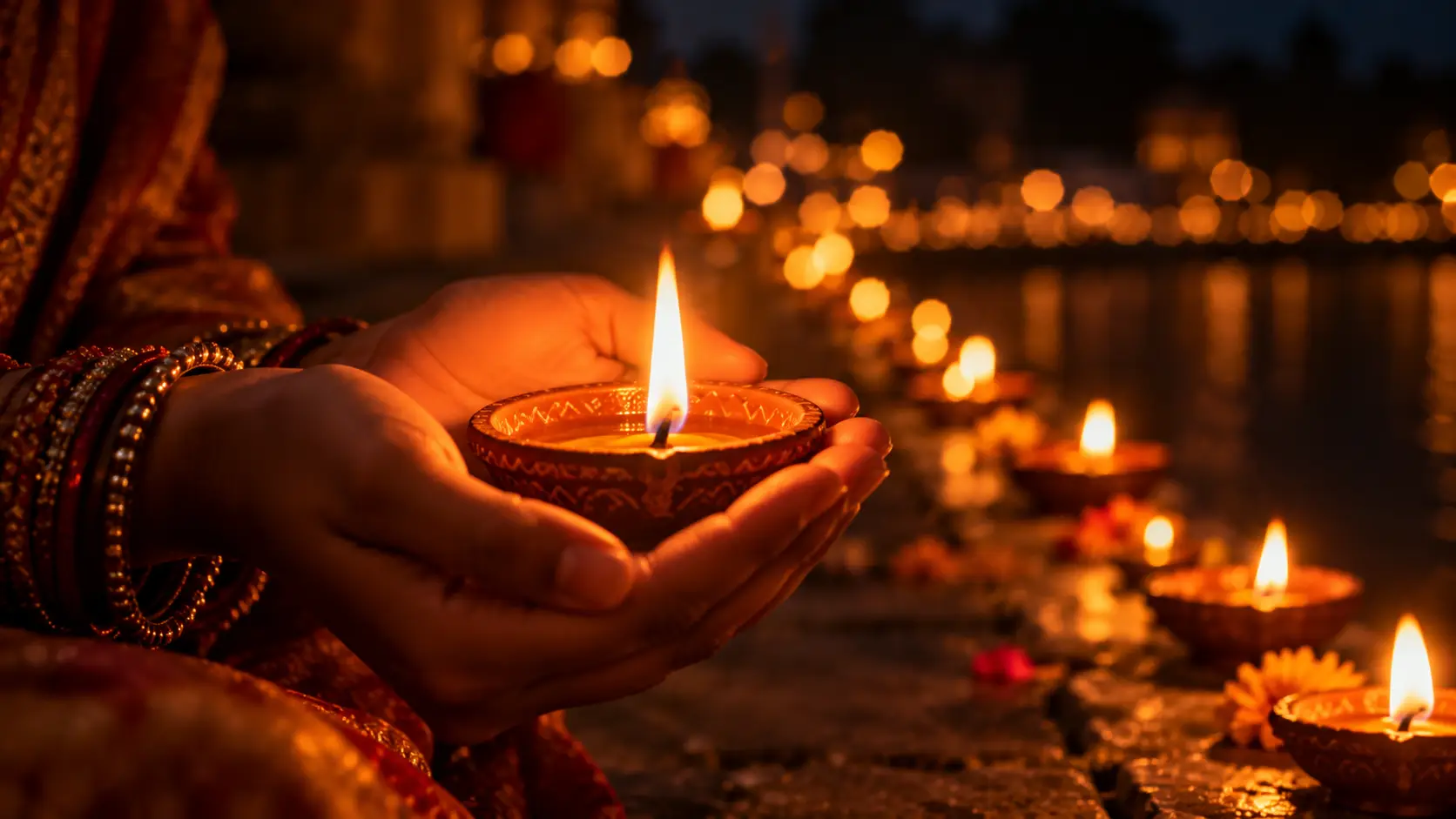
No image says Diwali like a row of small clay lamps glowing in the dark. The very name — deepavali — means “a row of lamps”. But why do we light so many, and what does the diya really mean? The answer runs from history and myth to the quiet philosophy at the heart of the festival.
To welcome what is good
In the best-known story, the people of Ayodhya lit lamps to guide Rama home from exile. Lighting a diya is, in that sense, an act of welcome — to a returning king, to Lakshmi who enters a bright and clean home, to good fortune and to guests. A lit threshold says: you are awaited here.
The victory of light over darkness
At a deeper level, every Diwali story is the same story — Rama over Ravana, Krishna over Narakasura, the gods over the demons, knowledge over ignorance. The Sanskrit prayer tamaso ma jyotir gamaya, “lead me from darkness to light”, is Diwali in five words. The lamp is the small, daily victory of light that each of us can light with our own hands.
The inner lamp
The oil lamp is also a picture of the self: the clay body, the oil of our tendencies, the wick of the ego, and the flame of awareness that burns them clean. To light a diya is to resolve to light the lamp within — of knowledge, of goodness, of a steady mind. This is why a single lamp is often left burning through the night, so the light is never wholly gone.
Light that is meant to be shared
One lamp loses nothing by lighting another. That is the final meaning of the festival of lights: joy, knowledge and fortune grow by being shared. When a whole street, a whole city, fills with diyas, it is a picture of what a society looks like when each person simply refuses to let their corner stay dark.
Meaning and lessons
One lamp loses nothing by lighting another. The festival of lights teaches that joy, knowledge and fortune grow by being shared — a street full of diyas is a picture of a society where no one lets their corner stay dark.
Frequently asked questions
Why do we light diyas on Diwali?
What does the word Diwali mean?
What does the diya symbolise?
Why is a lamp left burning all night on Diwali?
What is the prayer associated with Diwali's meaning?
Sources
- Brihadaranyaka Upanishad (tamaso ma jyotir gamaya)
- Popular Diwali tradition and philosophy
Read our editorial policy on how scripture, Purana and folk tradition are labelled.