Quick answer
Mandodari story from the Valmiki Ramayana: daughter of Maya, Ravana's chief queen and Indrajit's mother, her warnings, her lament over Ravana, and her place among the Panchakanya.
Who is in this story
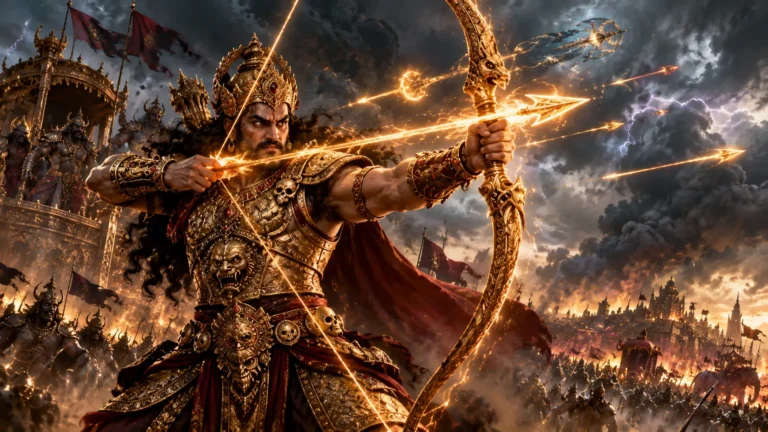
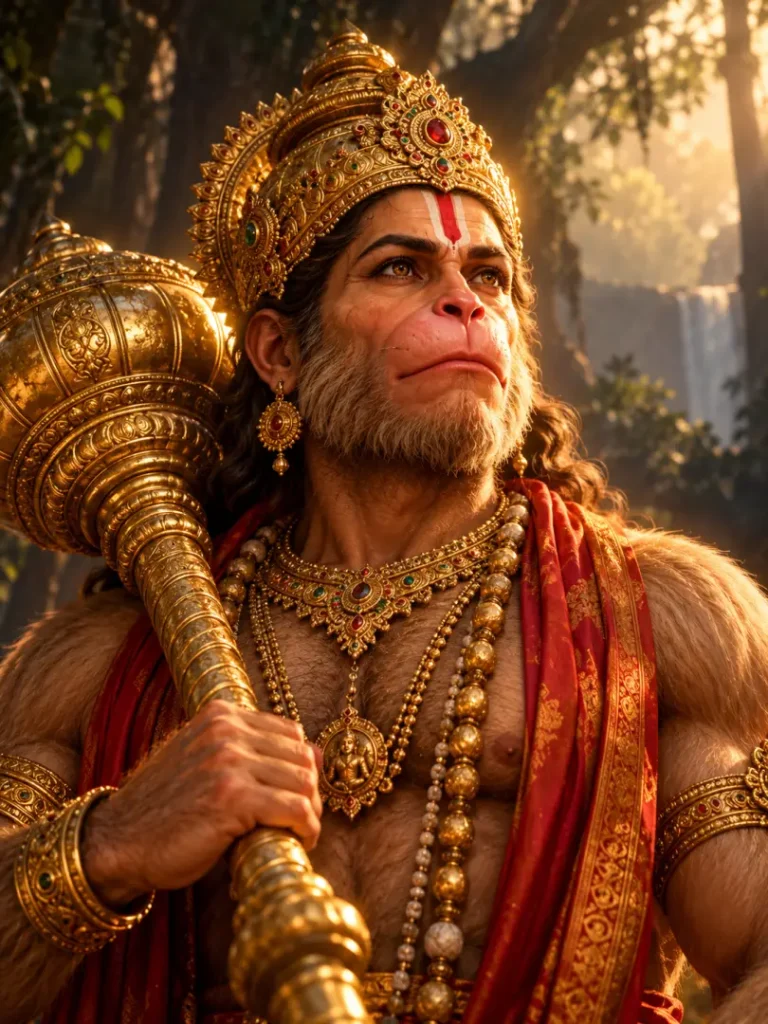
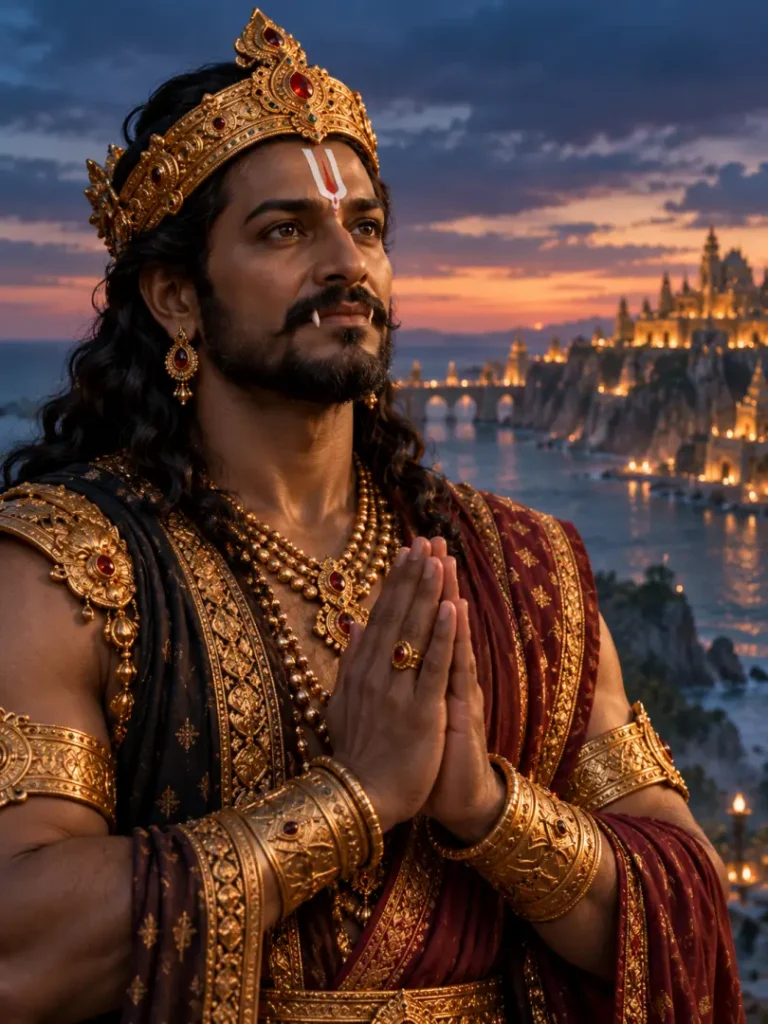
The story
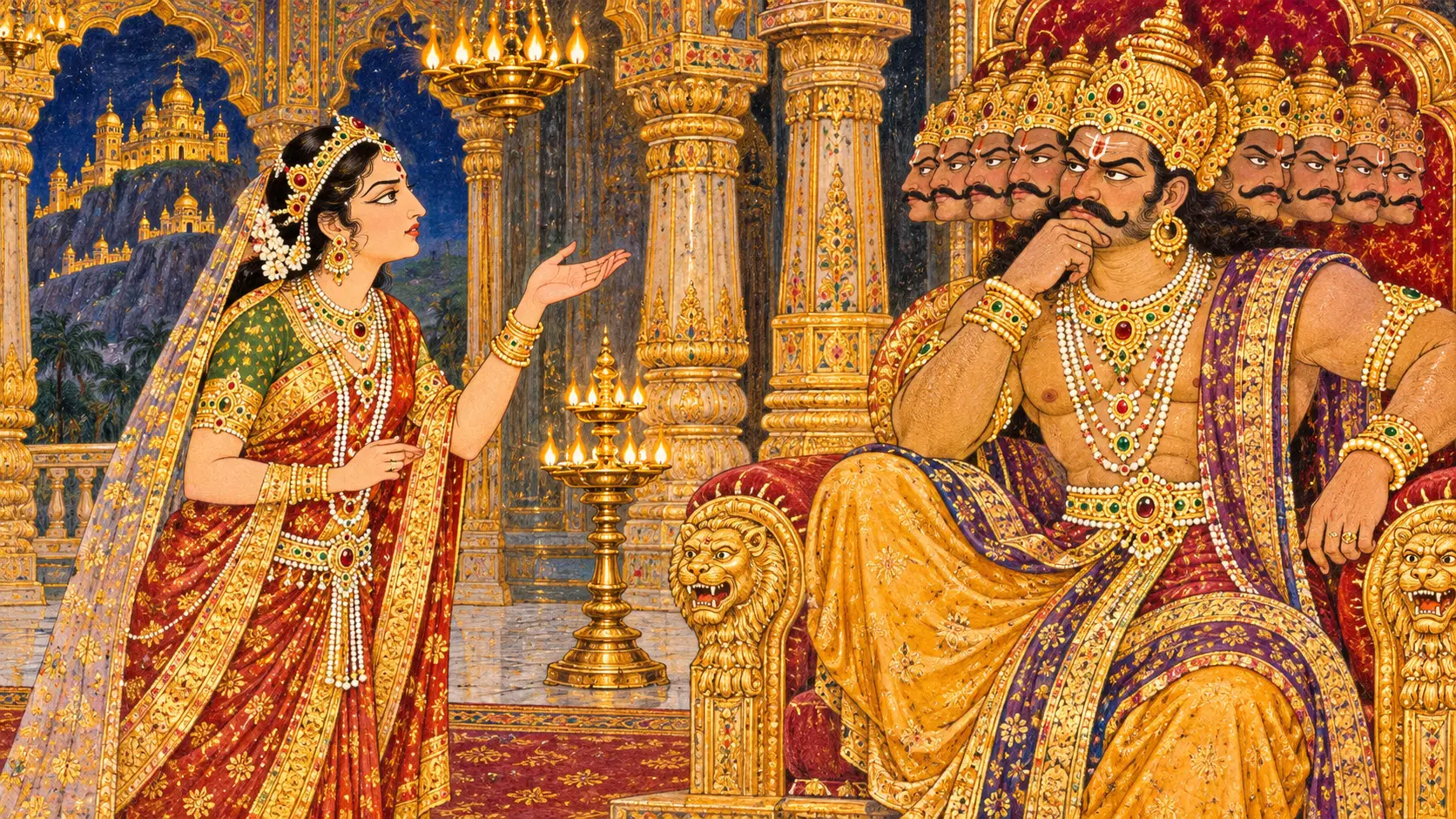
Mandodari was Ravana’s chief queen, the mother of Indrajit, and one of the wisest voices in Lanka. She warned her husband again and again to return Sita, and her lament over his body is among the most moving passages of the Valmiki Ramayana. Tradition counts her among the Panchakanya, five women honoured at dawn. This guide tells the Mandodari story and separates the epic’s account from later retellings.
Mandodari story: birth and marriage
The Uttara Kanda says Mandodari was the daughter of Maya, the great architect of the asuras, and the apsara Hema. Maya met Ravana while wandering with his daughter and gave her to him in marriage. She became the chief queen of Lanka and the mother of Meghanada, later called Indrajit.
Hanuman mistakes her for Sita
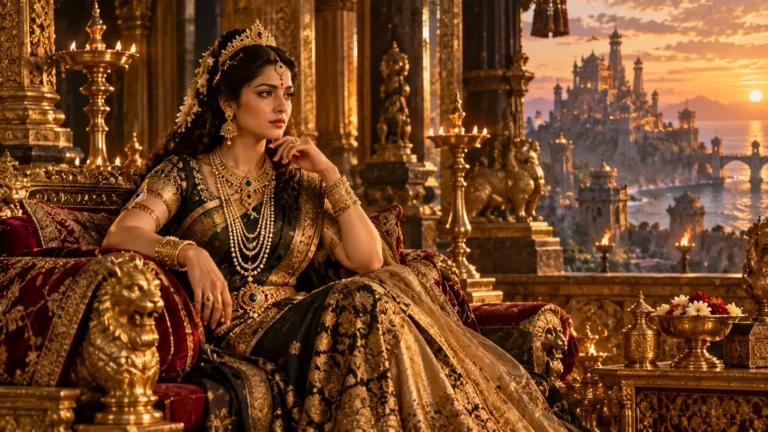
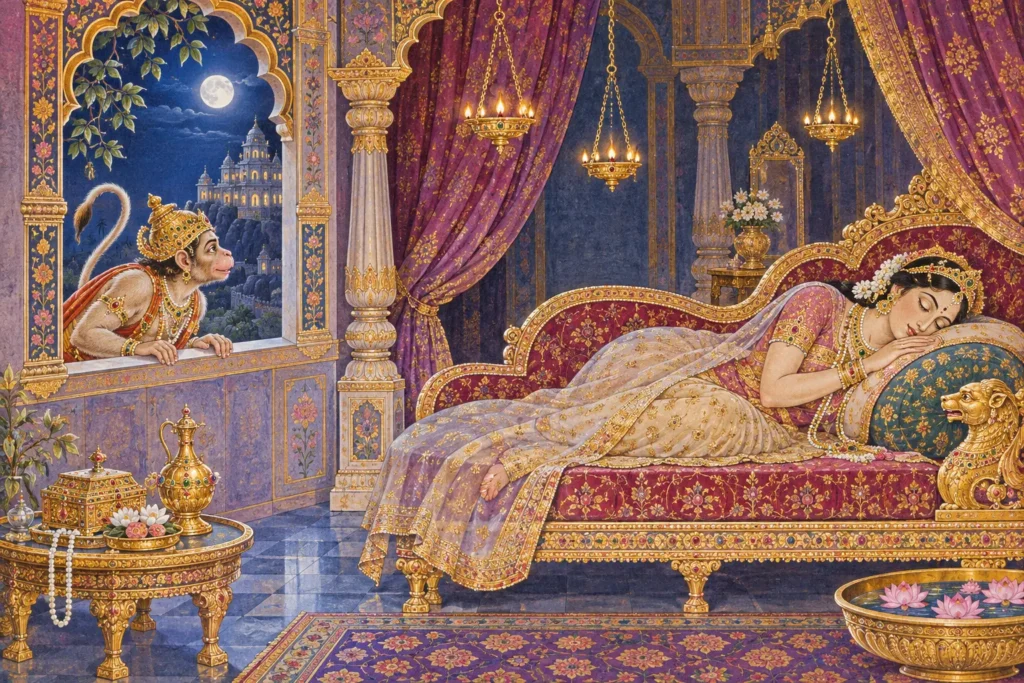
In the Sundara Kanda, Hanuman searches Ravana’s palace at night and sees a beautiful woman asleep on a magnificent couch. For a moment he believes he has found Sita and leaps with joy. Then he reasons that Sita, separated from Rama, would never sleep in luxury in another man’s palace, and realises the woman is Mandodari. The scene shows both Mandodari’s grace and Hanuman’s judgement.
Her warnings to Ravana
Mandodari counselled Ravana to return Sita and make peace with Rama. She recognised Rama’s power and saw where her husband’s desire was leading. Like Vibhishana and Kumbhakarna, she spoke honestly, and like them she was not heard.
The lament over Ravana
When Ravana fell in battle, Mandodari came to the field and mourned him in a long lament in the Yuddha Kanda. She recalled his strength, his conquests and his learning, and named the cause of his fall: his desire for another man’s wife and his refusal to listen. The passage is both grief and judgement, and it gives the clearest moral reading of Ravana’s life from someone who loved him.
Mandodari among the Panchakanya
A well-known verse recited at dawn names five women to be remembered: Ahalya, Draupadi, Sita or Kunti in different versions, Tara and Mandodari. They are honoured for their strength, wisdom and endurance in difficult lives. The verse comes from later devotional tradition, not from the Valmiki Ramayana itself.
What happened after Ravana’s death?
Valmiki does not describe Mandodari’s later life in detail. Some later regional retellings say she married Vibhishana when he became king of Lanka, a custom attributed to the rakshasa court. This is not found in Valmiki, and versions differ, so it is best read as later tradition.
Why Mandodari matters
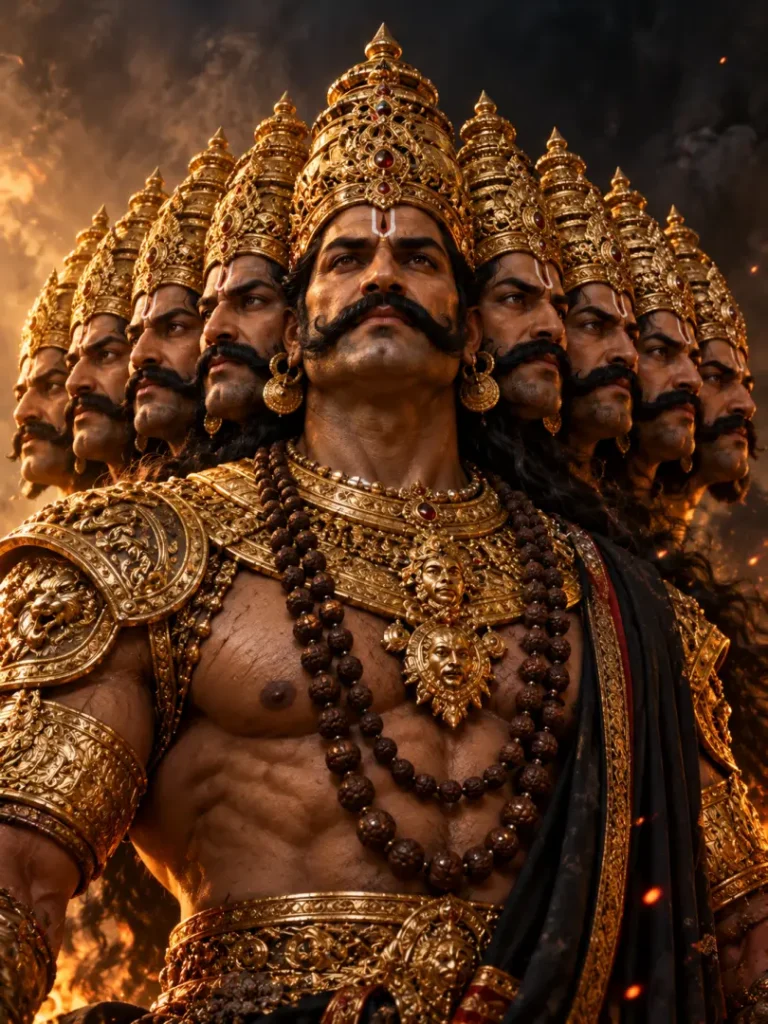
Mandodari shows that Lanka was not without conscience. Her wisdom, her loyalty and her grief make Ravana’s story a tragedy rather than a simple tale of evil. Read more in why Ravana had ten heads, see her page, Mandodari, and read the epic in the Valmiki Ramayana.
Frequently asked questions
Who was Mandodari?
Mandodari was Ravana’s chief queen, the daughter of the asura architect Maya and the apsara Hema, and the mother of Indrajit.
Why did Hanuman mistake Mandodari for Sita?
In the Sundara Kanda, Hanuman first thought the sleeping Mandodari was Sita, then realised Sita would never rest in luxury in Ravana’s palace.
Did Mandodari marry Vibhishana?
Valmiki does not say so. Some later regional retellings claim she married Vibhishana, but versions differ.
Sources and further reading
Read our editorial policy on how scripture, Purana and folk tradition are labelled.