Quick answer
Mahabharata UNESCO recognition explained: the manuscript added to the Memory of the World Asia-Pacific Regional Register, where it is kept, and what the listing means.
Who is in this story


The story
Three major Indian classics, the Mahabharata, Kautilya’s Arthashastra and Kalhana’s Rajatarangini, have been inscribed on UNESCO’s Memory of the World Regional Register for Asia and the Pacific. The decision was announced on 5 November 2026, after the 11th session of the register’s committee in Jakarta, Indonesia. This guide explains what exactly was recognised, how the regional register differs from the international one, and what the listing does and does not mean for the Mahabharata.
What was recognised?
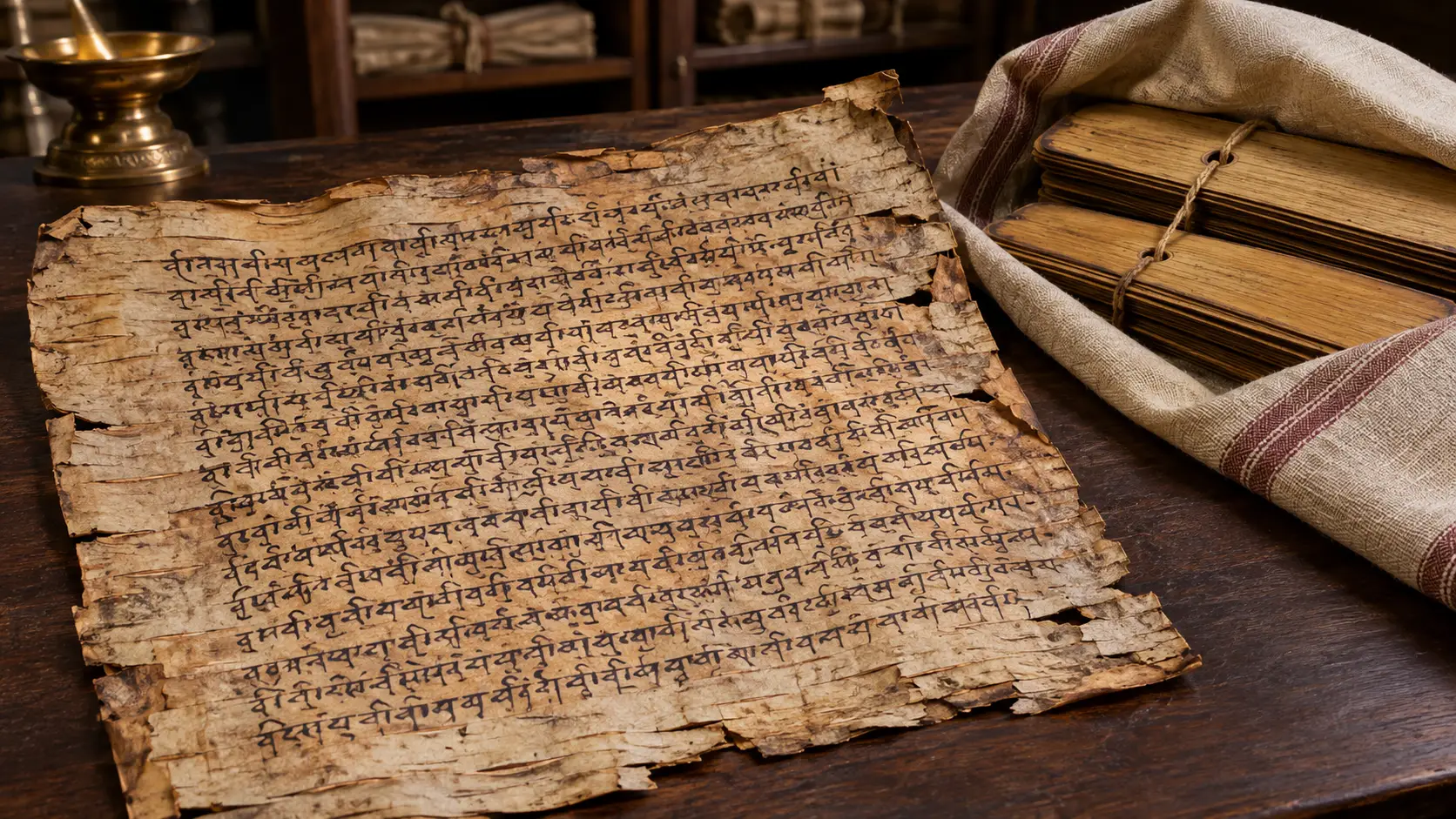
The listing recognises specific manuscripts held in Indian institutions, not the epics in the abstract. According to the nomination details reported by the Tribune, the Mahabharata entry is a birch-bark manuscript about 400 years old, written in the Sharada script and kept at the Bhandarkar Oriental Research Institute in Pune. The Arthashastra entry is a 16th-century palm-leaf manuscript in the Grantha script at the Oriental Research Institute in Mysuru. The Rajatarangini manuscript is preserved at the Oriental Research Library in Srinagar. The Indira Gandhi National Centre for the Arts helped prepare the nomination dossiers.
Regional register or world register?
Several headlines say the texts joined UNESCO’s “Memory of the World Register”. The register in question is the regional one for Asia and the Pacific, run by the Memory of the World Committee for Asia and the Pacific (MOWCAP) under the programme UNESCO launched in 1992 to protect documentary heritage. It is separate from the international register. India now has six inscriptions on the regional register. The earlier three, added in 2024, were the Ramcharitmanas, the Panchatantra and the Sahridayaloka-Locana.
What is the Mahabharata?
The Mahabharata is one of the two great Sanskrit epics of India, traditionally attributed to the sage Veda Vyasa. It tells of the rivalry between the Pandavas and the Kauravas and the war at Kurukshetra, and it holds the Bhagavad Gita within it. Tradition counts about 100,000 verses in 18 parvas, which makes it among the longest poems in the world. Its themes are dharma, duty, justice, power and the choices people make under pressure. Read more in our Mahabharata library.
What the recognition means
- Preservation: inscription draws attention and support to the care of fragile manuscripts like birch bark and palm leaf.
- Access: the programme encourages digitisation and wider public access to documentary heritage.
- Recognition of the document: the listing honours the manuscript as heritage. It does not decide when the epic was composed or which version is oldest, since the Mahabharata survives in many regional recensions.
Why it matters to readers
Most people meet the Mahabharata through retellings, serials and films, but its authority rests on manuscripts like these, copied by hand over centuries. Seeing one recognised is a reminder of how the text travelled. To explore the epic’s people and turning points, read who the real hero of the Mahabharata is and how Dronacharya fell.
Frequently asked questions
What did UNESCO recognise about the Mahabharata?
The Mahabharata, Arthashastra and Rajatarangini were inscribed on UNESCO’s Memory of the World Regional Register for Asia and the Pacific, announced on 5 November 2026.
Which Mahabharata manuscript was listed?
A birch-bark manuscript about 400 years old, in the Sharada script, held at the Bhandarkar Oriental Research Institute in Pune.
Is this the international Memory of the World Register?
It is the regional Asia-Pacific register (MOWCAP), which is separate from UNESCO’s international register. India now has six regional inscriptions.
Sources and further reading
- From Mahabharata to Arthashastra, 3 Indian classics earn UNESCO recognition, The Tribune
- Rajatarangini, Mahabharata and Arthashastra enter Memory of the World Register, WION
- The Tribune, WION and Press Information Bureau reports on the MOWCAP inscription, 5 November 2026
- Bhagavad Gita, Gita Supersite (IIT Kanpur)
- The Mahabharata, K. M. Ganguli translation (Sacred Texts)
Read our editorial policy on how scripture, Purana and folk tradition are labelled.