Quick answer
Kali Puja 2026 is on 8 November. The story of Kali and Raktabija from the Devi Mahatmya, why Bengal worships Kali on Diwali night, and how the midnight puja is done.
Who is in this story
The story
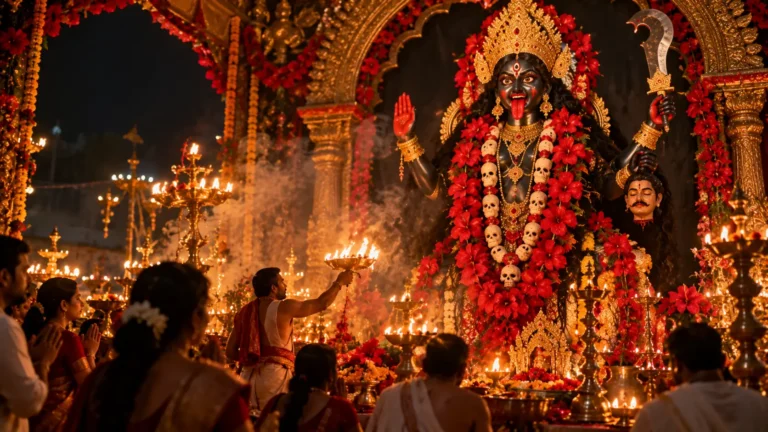
Kali Puja is the Bengali way of marking the darkest night of Diwali. On the Amavasya of Kartik, while much of India worships Lakshmi, Bengal, Odisha and Assam worship the fierce Mother Kali at midnight. In 2026 the puja falls on Sunday, 8 November, the same night as Diwali. This guide explains the story behind the festival, why Kali stands on Shiva in her images, how the tradition grew in Bengal, and how the puja is performed.
What is Kali Puja?
Kali Puja, also called Shyama Puja, is the worship of the goddess Kali on the new moon night of the month of Kartik. Devotees see her as the Divine Mother in her form that destroys fear, ignorance and evil, and also as the protector of her children. The main worship happens after midnight, in the hour called nishitha, and the night is spent in prayer, music and lamps. You can read the festival overview on the Kali Puja page.
Kali Puja 2026 date
Kali Puja 2026 is on Sunday, 8 November 2026, on Kartik Amavasya, the same night as Diwali. The nishitha puja is done around midnight, and the exact time differs from city to city, so check a local panchang for your muhurat.
The story of Kali and Raktabija
Kali appears in the Devi Mahatmya, the Sanskrit hymn to the goddess that forms part of the Markandeya Purana. When the demon generals Chanda and Munda attack the goddess Ambika, Kali springs from her furrowed brow, dark and terrible, and destroys them. She is then known as Chamunda.
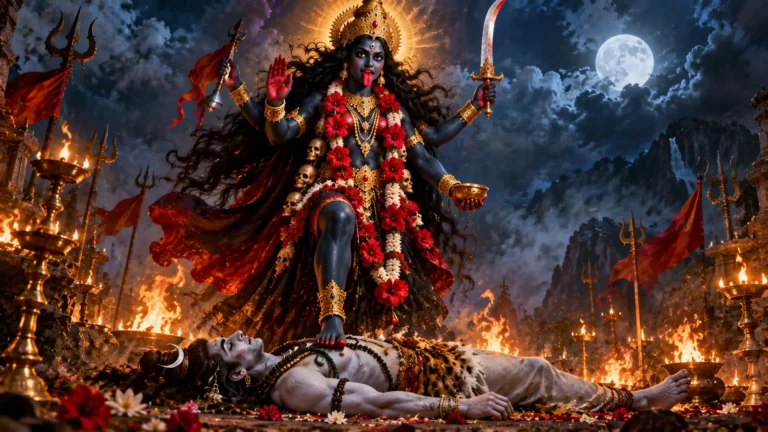
The next challenge is Raktabija, a demon with a boon that every drop of his blood that touched the ground would create another Raktabija. As the goddess struck him, thousands of new demons rose. Kali spread her tongue across the battlefield and drank his blood before it could fall, until no more copies could rise and the original Raktabija was slain. The text presents this as the victory of the goddess over a threat that grows with every attack.
Why does Kali stand on Shiva?
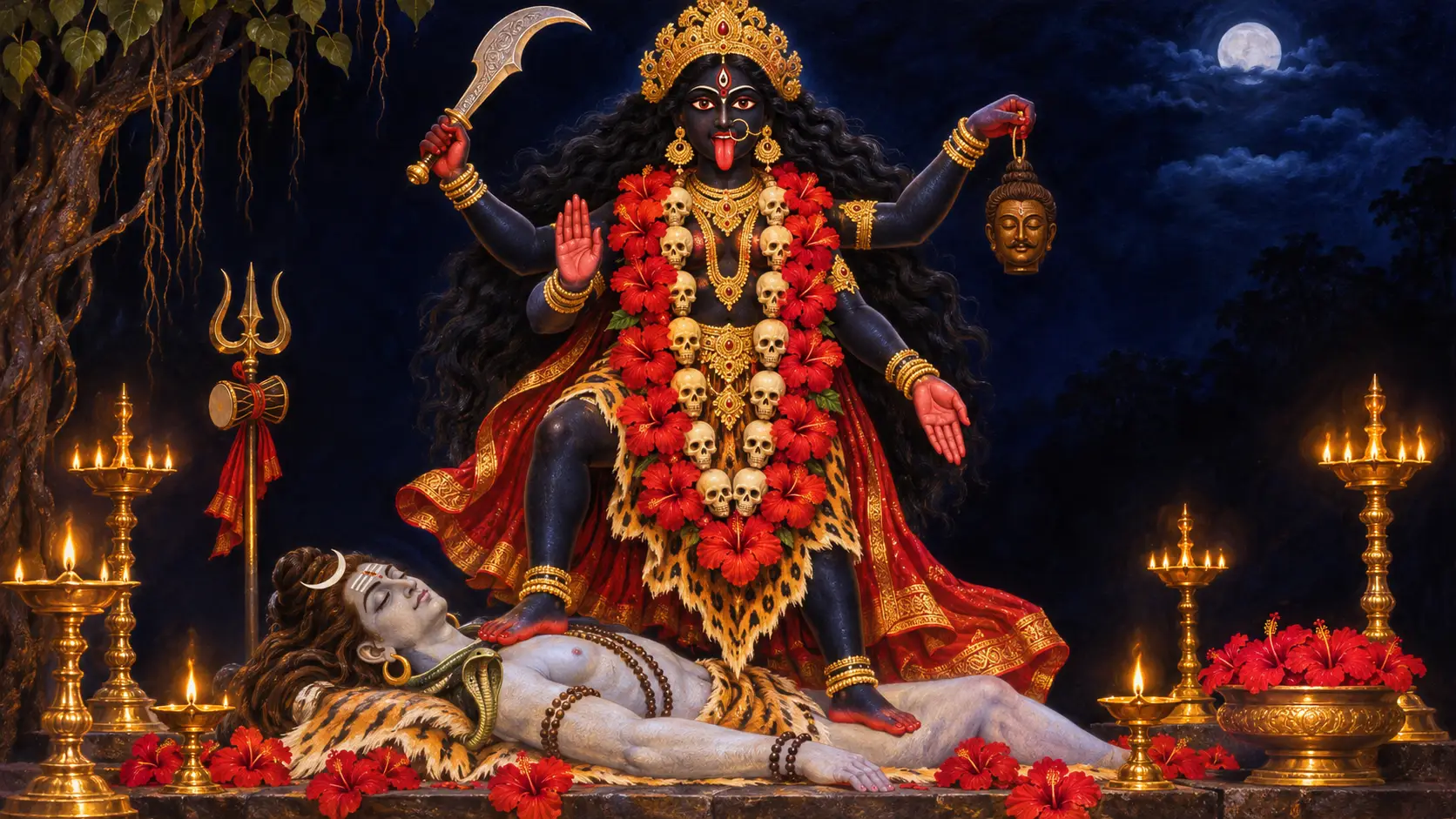
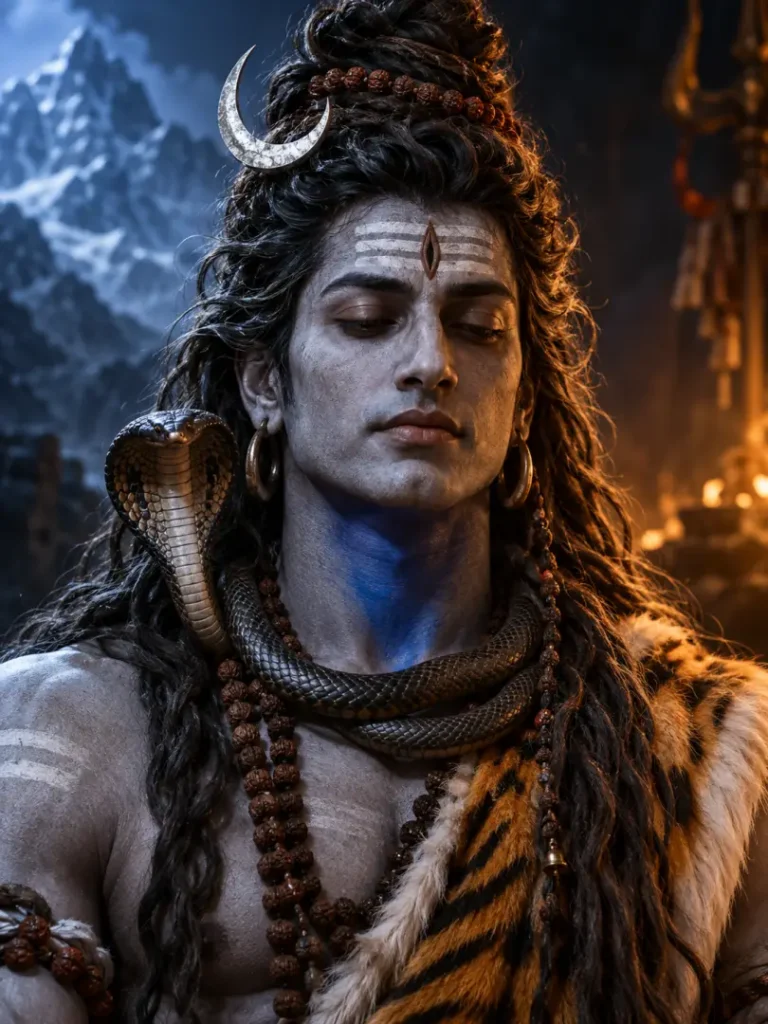
In the well-known image of Dakshina Kali, she stands with one foot on the chest of Shiva, with her tongue out. A popular tradition explains that after the war, Kali’s dance of victory grew so wild that the world began to shake, and Shiva lay down among the bodies to calm her. When she realised she was stepping on her husband, she put out her tongue in shame and stopped. Other readings see Shiva as pure consciousness and Kali as energy (shakti) in motion. This story is a later tradition, not a passage of the Devi Mahatmya.
How Kali Puja became a Bengal tradition
Tradition credits the 17th-century tantric scholar Krishnananda Agamavagisha of Navadwip with establishing the form of Kali most families worship today. The Nadia king Krishnachandra is remembered for encouraging the public festival in the 18th century. The best-known Kali temples of Bengal are Kalighat in Kolkata, one of the Shakti Peethas, and Dakshineswar, built by Rani Rashmoni in 1855, where the saint Ramakrishna served as priest. Tarapith in Birbhum is another major centre.
How Kali Puja is performed
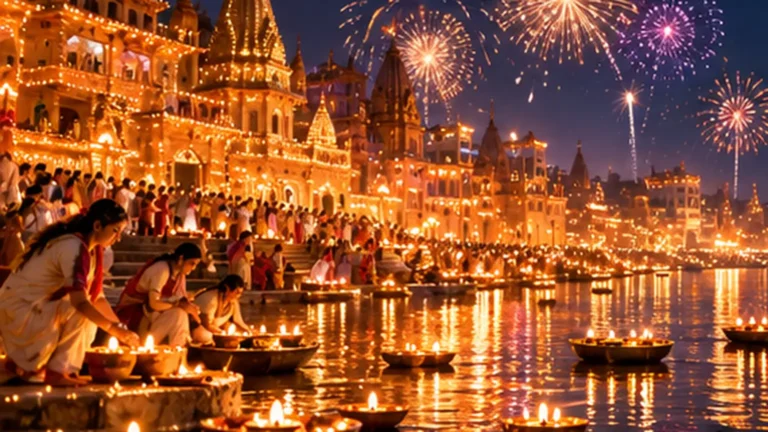
- Cleaning and lamps: homes are cleaned and lit with rows of diyas, candles and lamps.
- The image: a clay image of Kali is set up in homes and community pandals, often a few days before.
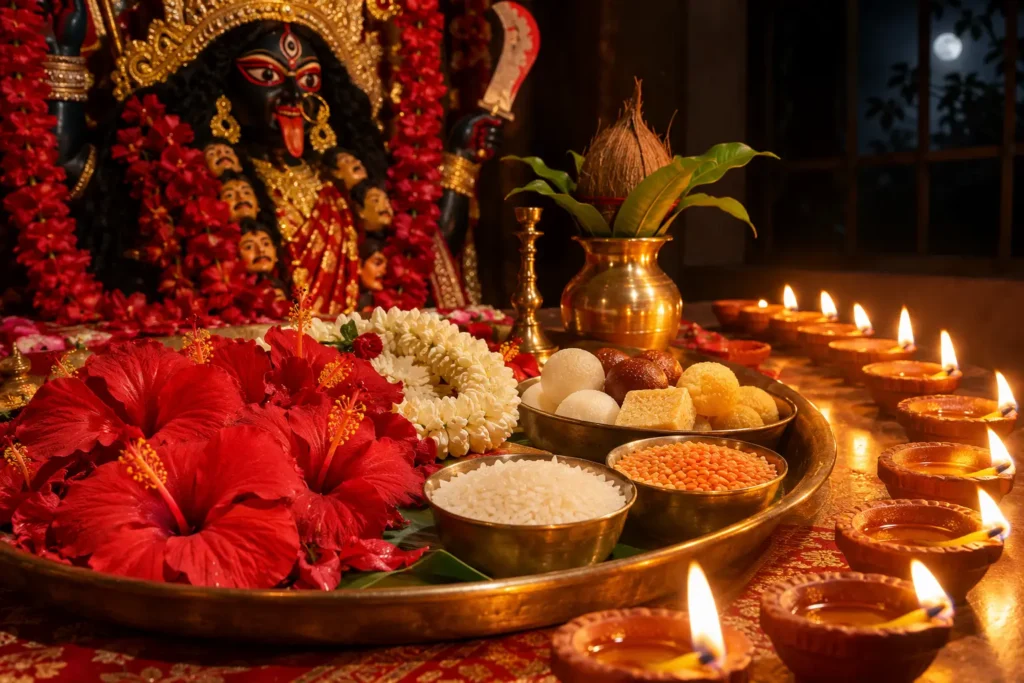
- Offerings: red hibiscus flowers, a hibiscus garland, rice, lentils, fruit and sweets are offered. Practices differ by family and temple, and many households keep an entirely vegetarian puja.
- Midnight worship: the main puja is performed in nishitha, with mantras, a homa fire in some traditions, and aarti.
- Prasad and vigil: the night ends with prasad and, for many, a night of devotional songs called Shyama Sangeet.
Kali Puja and Diwali
In most of north India the Amavasya of Kartik belongs to Lakshmi. In Bengal, Lakshmi is worshipped earlier, on the full moon after Durga Puja, as described on the Sharad Purnima page. That leaves Diwali night for Kali. Both traditions share the same idea: a dark night lit with lamps, and a prayer for light, courage and protection. For the five-day cycle around it, see Dhanteras and Naraka Chaturdashi, which Bengal also observes as Bhoot Chaturdashi.
Frequently asked questions
When is Kali Puja in 2026?
Kali Puja 2026 is on Sunday, 8 November, on Kartik Amavasya. The main puja is done around midnight, so check your local panchang for the nishitha time.
Why is Kali worshipped on Diwali night?
On this Amavasya, Bengal, Odisha and Assam worship Kali instead of Lakshmi. Bengal worships Lakshmi earlier, on the full moon after Durga Puja.
What is Kali Puja also called?
Kali Puja is also called Shyama Puja, and the devotional songs of the night are called Shyama Sangeet.
Sources and further reading
- Devi Mahatmya (Markandeya Purana), Sacred Texts
- Devi Mahatmya (Markandeya Purana), chapters 7 and 8
Read our editorial policy on how scripture, Purana and folk tradition are labelled.