The story
The goddess the night is for
If Diwali has a presiding deity, it is Lakshmi. The whole night of lamps is arranged around a single hope: that the goddess of fortune will cross the threshold and choose to stay.
Born from the ocean
Lakshmi is said to have risen from the churning of the ocean on this new moon, radiant upon a lotus, and to have chosen Vishnu as her lord. She walks beside him in every age, as Sita with Rama and Rukmini with Krishna.
What her image means
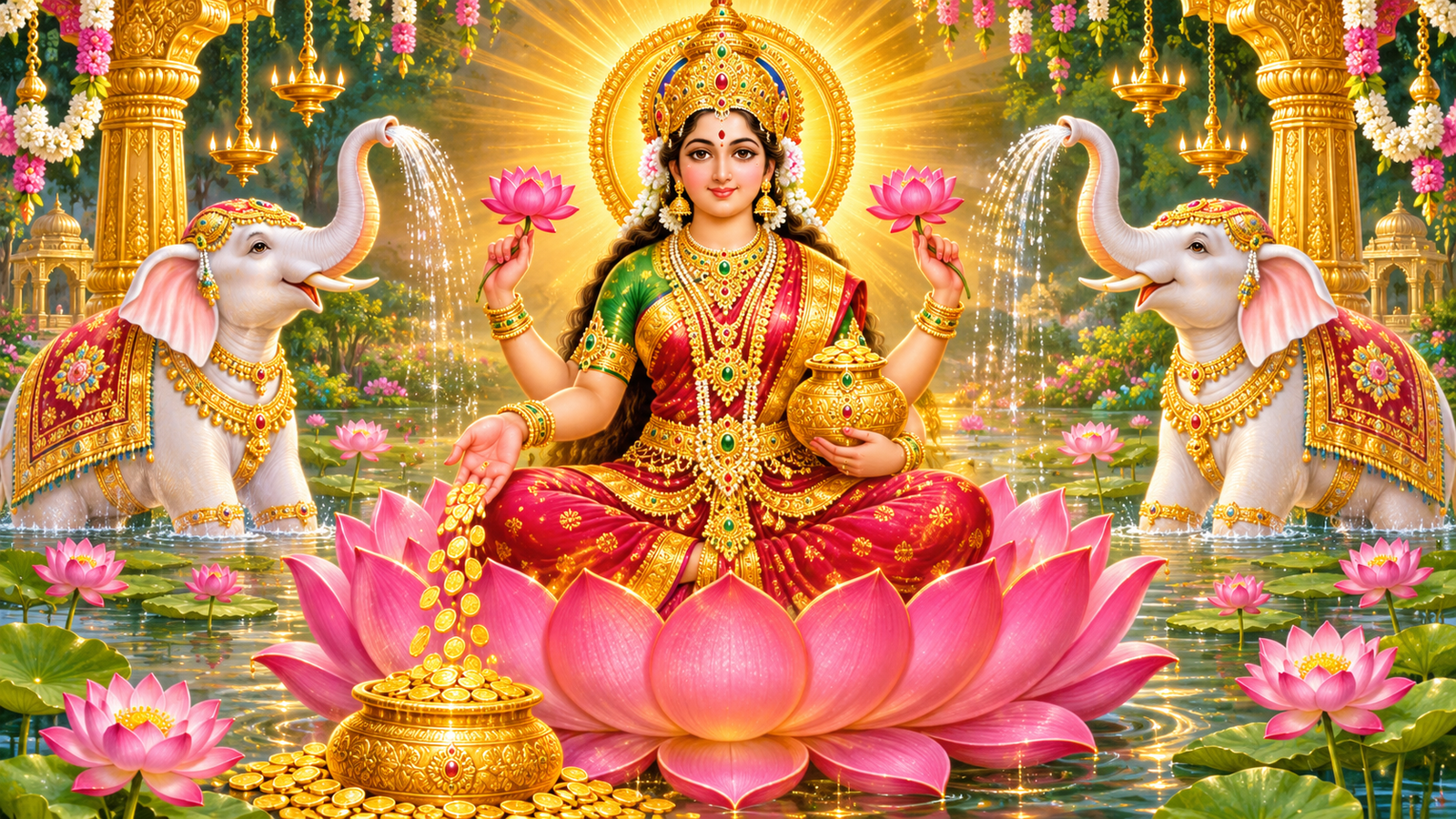
She sits on a lotus, purity rising from muddy water; her four hands hold the four aims of life; coins fall from one palm, for wealth is meant to flow and be shared; and elephants attend her, the rains and strength that bring plenty.
The Ashta Lakshmi
She is worshipped in eight forms, the Ashta Lakshmi, of money, grain, courage, victory, knowledge and progeny among them. Together they say a quiet thing: that true wealth is far wider than coin.
How to welcome her
Lakshmi enters a home that is clean, lit and glad. Sweep every corner, draw a rangoli at the door, keep it open and lit, perform her puja and sing the Lakshmi aarti. Most of all, she is said to stay where there is gratitude and generosity. For why the lamps matter, see why we light diyas on Diwali.
Meaning and lessons
Lakshmi's coins fall from an open hand, never a closed one. The deepest teaching of her worship is that fortune is not hoarded but kept moving, and that she stays where there is gratitude.
Frequently asked questions
Why is Lakshmi worshipped on Diwali?
Who is Goddess Lakshmi?
What are the Ashta Lakshmi?
Why is Lakshmi worshipped with Ganesha?
Sources
- Bhagavata Purana and Vishnu Purana (Lakshmi and Samudra Manthan)
- Shri Suktam (Rigvedic appendix)
Read our editorial policy on how scripture, Purana and folk tradition are labelled.