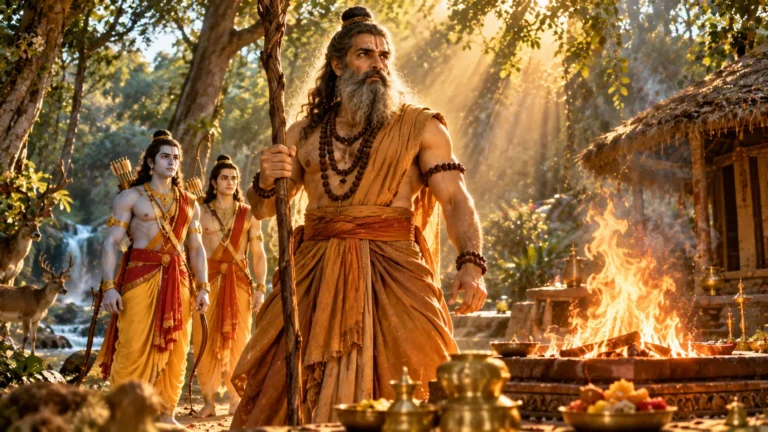
अथ तां रजनीं तत्र कृतार्थौ रामलक्ष्मणौ ।
ऊषतुर्मुदितौ वीरौ प्रहृष्टेनान्तरात्मना ॥
atha tāṃ rajanīṃ tatra kṛtārthau rāmalakṣmaṇau |
ūṣaturmuditau vīrau prahṛṣṭenāntarātmanā ||
हिंदी अर्थअपना कार्य पूरा करके वीर राम और लक्ष्मण ने वह रात वहीं प्रसन्न और आनंदित मन से बिताई।
English meaningHaving achieved their purpose, the heroes Rama and Lakshmana spent that night there, happy and glad at heart.
प्रभातायां तु शर्वर्यां कृतपौर्वाह्णिकक्रियौ ।
विश्वामित्रमृषींश्चान्यान् सहितावभिजग्मतुः ॥
prabhātāyāṃ tu śarvaryāṃ kṛtapaurvāhṇikakriyau |
viśvāmitramṛṣīṃścānyān sahitāvabhijagmatuḥ ||
हिंदी अर्थरात बीतने पर उन्होंने प्रातःकाल के कर्म किए और साथ मिलकर विश्वामित्र तथा अन्य ऋषियों के पास गए।
English meaningWhen the night turned to dawn, they performed their morning rites and together went to Vishvamitra and the other sages.
अभिवाद्य मुनिश्रेष्ठं ज्वलन्तमिव पावकम् ।
ऊचतुर्मधुरोदारं वाक्यं मधुरभाषिणौ ॥
abhivādya muniśreṣṭhaṃ jvalantamiva pāvakam |
ūcaturmadhurodāraṃ vākyaṃ madhurabhāṣiṇau ||
हिंदी अर्थअग्नि के समान दमकते मुनिश्रेष्ठ को प्रणाम करके मधुरभाषी दोनों भाइयों ने मधुर और उदार वचन कहे:
English meaningSaluting the best of sages, who blazed like fire, the two sweet spoken brothers said in sweet and noble words:
इमौ स्म मुनिशार्दूल किङ्करौ समुपस्थितौ ।
आज्ञापय यथेष्टं वै शासनं करवाव किम् ॥
imau sma muniśārdūla kiṅkarau samupasthitau |
ājñāpaya yatheṣṭaṃ vai śāsanaṃ karavāva kim ||
हिंदी अर्थहे मुनिशार्दूल, हम आपके सेवक उपस्थित हैं। जो चाहें आज्ञा दीजिए; हम क्या करें?
English meaningTiger among sages, here we stand, your servants. Command us as you wish; what shall we do?
एवमुक्ता स्ततस्ताभ्यां सर्व एव महर्षयः ।
विश्वामित्रं पुरस्कृत्य रामं वचनमब्रुवन् ॥
evamuktā statastābhyāṃ sarva eva maharṣayaḥ |
viśvāmitraṃ puraskṛtya rāmaṃ vacanamabruvan ||
हिंदी अर्थउनके ऐसा कहने पर विश्वामित्र को आगे करके सब महर्षियों ने राम से कहा:
English meaningSpoken to by them, all the great sages, with Vishvamitra at their head, said to Rama:
मैथिलस्य नरश्रेष्ठ जनकस्य भविष्यति ।
यज्ञः परमधर्मिष्ठस्तस्य यास्यामहे वयम् ॥
maithilasya naraśreṣṭha janakasya bhaviṣyati |
yajñaḥ paramadharmiṣṭhastasya yāsyāmahe vayam ||
हिंदी अर्थहे नरश्रेष्ठ, मिथिला के राजा जनक एक परम धार्मिक यज्ञ करने वाले हैं, और हम वहाँ जाएँगे।
English meaningBest of men, Janaka of Mithila is to hold a most righteous sacrifice, and we shall go to it.
त्वं चैव नरशार्दूल सहास्माभिर्गमिष्यसि ।
अद्भुतं धनुरत्नं च तत्र तद्रष्टुमर्हसि ॥
tvaṃ caiva naraśārdūla sahāsmābhirgamiṣyasi |
adbhutaṃ dhanuratnaṃ ca tatra tadraṣṭumarhasi ||
हिंदी अर्थहे नरशार्दूल, तुम भी हमारे साथ चलोगे। वहाँ जो अद्भुत रत्न जैसा धनुष है, उसे तुम्हें देखना चाहिए।
English meaningTiger among men, you too will come with us. You should see the wonderful jewel of a bow that is there.
तद्धि पूर्वं नरश्रेष्ठ दत्तं सदसि दैवतैः ।
अप्रमेयबलं घोरं मखे परमभास्वरम् ॥
taddhi pūrvaṃ naraśreṣṭha dattaṃ sadasi daivataiḥ |
aprameyabalaṃ ghoraṃ makhe paramabhāsvaram ||
हिंदी अर्थहे नरश्रेष्ठ, बहुत पहले देवताओं ने एक सभा में उसे दिया था। वह अपार बल वाला, भयानक और यज्ञ में अत्यंत तेजस्वी है।
English meaningBest of men, long ago the gods gave it at an assembly. It is of boundless strength, fearsome and most brilliant at a sacrifice.
नास्य देवा न गन्धर्वा नासुरा न च राक्षसाः ।
कर्तुमारोपणं शक्ता न कथञ्चन मानुषाः ॥
nāsya devā na gandharvā nāsurā na ca rākṣasāḥ |
kartumāropaṇaṃ śaktā na kathañcana mānuṣāḥ ||
हिंदी अर्थन देवता, न गंधर्व, न असुर, न राक्षस उस पर प्रत्यंचा चढ़ा सकते हैं, फिर मनुष्यों की तो बात ही क्या।
English meaningNeither gods nor gandharvas, nor asuras nor rakshasas, can string it, and still less any man.
धनुषस्तस्य वीर्यं तु जिज्ञासन्तो महीक्षितः ।
न शेकुरारोपयितुं राजपुत्रा महाबलाः ॥
dhanuṣastasya vīryaṃ tu jijñāsanto mahīkṣitaḥ |
na śekurāropayituṃ rājaputrā mahābalāḥ ||
हिंदी अर्थउस धनुष का बल परखने की इच्छा से आए राजा और महाबली राजकुमार उस पर प्रत्यंचा नहीं चढ़ा सके।
English meaningKings and mighty princes wishing to test the power of that bow could not string it.
तद्धनुर्नरशार्दूल मैथिलस्य महात्मनः ।
तत्र द्रक्ष्यसि काकुत्स्थ यज्ञं चाद्भुतदर्शनम् ॥
taddhanurnaraśārdūla maithilasya mahātmanaḥ |
tatra drakṣyasi kākutstha yajñaṃ cādbhutadarśanam ||
हिंदी अर्थहे नरशार्दूल काकुत्स्थ, वहाँ तुम मिथिला के महात्मा राजा का वह धनुष और देखने में अद्भुत यज्ञ देखोगे।
English meaningTiger among men, Kakutstha, there you will see that bow of the great souled king of Mithila, and the sacrifice, wonderful to behold.
तद्धि यज्ञफलं तेन मैथिलेनोत्तमं धनुः ।
याचितं नरशार्दूल सुनाभं सर्वदैवतैः ॥
taddhi yajñaphalaṃ tena maithilenottamaṃ dhanuḥ |
yācitaṃ naraśārdūla sunābhaṃ sarvadaivataiḥ ||
हिंदी अर्थहे नरशार्दूल, मिथिला के उस राजा ने सुंदर मध्य भाग वाला वह श्रेष्ठ धनुष यज्ञ के फल के रूप में सब देवताओं से माँगा था।
English meaningTiger among men, that king of Mithila asked all the gods for that finest of bows, with its fine grip, as the fruit of a sacrifice.
आयागभूतं नृपतेस्तस्य वेश्मनि राघव ।
अर्चितं विविधैर्गन्धैर्धूपैश्चागरुगन्धिभिः ॥
āyāgabhūtaṃ nṛpatestasya veśmani rāghava |
arcitaṃ vividhairgandhairdhūpaiścāgarugandhibhiḥ ||
हिंदी अर्थहे राघव, वह उस राजा के महल में पूजा की वस्तु के रूप में रखा है और अनेक सुगंधों तथा अगरु की धूप से पूजित है।
English meaningRaghava, it is kept in that king's palace as an object of worship, honoured with many perfumes and with incense fragrant with aloe.
एवमुक्त्वा मुनिवरः प्रस्थानमकरोत्तदा ।
सर्षिसङ्घ स्सकाकुत्स्थः आमन्त्र्य वनदेवताः ॥
evamuktvā munivaraḥ prasthānamakarottadā |
sarṣisaṅgha ssakākutsthaḥ āmantrya vanadevatāḥ ||
हिंदी अर्थयह कहकर मुनिश्रेष्ठ ने वन देवताओं से विदा लेकर ऋषियों के समूह और काकुत्स्थ के साथ प्रस्थान किया।
English meaningSaying this, the best of sages set out with the hosts of sages and with Kakutstha, after bidding farewell to the deities of the forest.
स्वस्ति वोऽस्तु गमिष्यामि सिद्वस्सिद्धाश्रमादहम् ।
उत्तरे जाह्नवीतीरे हिमवन्तं शिलोच्चयम् ॥
svasti vo'stu gamiṣyāmi sidvassiddhāśramādaham |
uttare jāhnavītīre himavantaṃ śiloccayam ||
हिंदी अर्थतुम्हारा कल्याण हो। सिद्धि पाकर मैं सिद्धाश्रम से जाह्नवी के उत्तरी तट पर स्थित पर्वतराज हिमालय की ओर जा रहा हूँ।
English meaningBlessings on you. Having attained my goal, I go from Siddhashrama to the Himalaya, the mountain on the northern bank of the Jahnavi.
प्रदक्षिणं ततः कृत्वा सिद्धाश्रममनुत्तमम् ।
उत्तरां दिशमुद्दिश्य प्रस्थातुमुपचक्रमे ॥
pradakṣiṇaṃ tataḥ kṛtvā siddhāśramamanuttamam |
uttarāṃ diśamuddiśya prasthātumupacakrame ||
हिंदी अर्थफिर उस अनुपम सिद्धाश्रम की प्रदक्षिणा करके वे उत्तर दिशा की ओर चल पड़े।
English meaningThen, walking around the matchless Siddhashrama in reverence, he set out towards the north.
तं प्रयान्तं मुनिवरमन्वयादनुसारिणम् ।
शकटीशतमात्रं तु प्रायेण ब्रह्मवादिनाम् ॥
taṃ prayāntaṃ munivaramanvayādanusāriṇam |
śakaṭīśatamātraṃ tu prāyeṇa brahmavādinām ||
हिंदी अर्थमुनिश्रेष्ठ के जाते समय उनके अनुयायी वेदवादी ब्राह्मण लगभग सौ गाड़ियों में उनके पीछे चले।
English meaningAs the best of sages went, his followers, expounders of the Vedas, went after him in about a hundred carts.
मृगपक्षिगणाश्चैव सिद्धाश्रमनिवासिनः ।
अनुजग्मुर्महात्मानं विश्वामित्रं महामुनिम् ।
निवर्तयामास ततः पक्षिसङ्घान् मृगानपि ॥
mṛgapakṣigaṇāścaiva siddhāśramanivāsinaḥ |
anujagmurmahātmānaṃ viśvāmitraṃ mahāmunim |
nivartayāmāsa tataḥ pakṣisaṅghān mṛgānapi ||
हिंदी अर्थसिद्धाश्रम में रहने वाले पक्षियों और हिरणों के झुंड भी महात्मा महामुनि विश्वामित्र के पीछे चले, फिर उन्होंने पक्षियों और पशुओं को लौटा दिया।
English meaningThe flocks of birds and herds of deer living in Siddhashrama also followed the great souled sage Vishvamitra, and then he sent the birds and beasts back.
ते गत्वा दूरमध्वानं लम्बमाने दिवाकरे ।
वासं चक्रुर्मुनिगणाः शोणाकूले समाहिताः ॥
te gatvā dūramadhvānaṃ lambamāne divākare |
vāsaṃ cakrurmunigaṇāḥ śoṇākūle samāhitāḥ ||
हिंदी अर्थलंबा मार्ग तय करने के बाद, सूर्य ढलने पर, मुनियों के समूहों ने शांत चित्त होकर शोण नदी के तट पर पड़ाव डाला।
English meaningHaving gone a long way, as the sun was sinking, the hosts of sages made camp on the bank of the Shona, composed in mind.
तेऽस्तं गते दिनकरे स्नात्वा हुतहुताशनाः ।
विश्वामित्रं पुरस्कृत्य निषेदुरमितौजसः ॥
te'staṃ gate dinakare snātvā hutahutāśanāḥ |
viśvāmitraṃ puraskṛtya niṣeduramitaujasaḥ ||
हिंदी अर्थसूर्यास्त होने पर उन अपार तेजस्वी मुनियों ने स्नान किया, अग्निहोत्र किया और विश्वामित्र को आगे करके बैठ गए।
English meaningWhen the sun had set, those sages of boundless power bathed, made their fire offerings and sat down with Vishvamitra before them.
रामोऽपि सहसौमित्रिर्मुनीं स्तानभिपूज्य च ।
अग्रतो निषसादाथ विश्वामित्रस्य धीमतः ॥
rāmo'pi sahasaumitrirmunīṃ stānabhipūjya ca |
agrato niṣasādātha viśvāmitrasya dhīmataḥ ||
हिंदी अर्थराम भी लक्ष्मण के साथ उन मुनियों का सम्मान करके बुद्धिमान विश्वामित्र के सामने बैठ गए।
English meaningRama too, with Lakshmana, honoured those sages and then sat in front of the wise Vishvamitra.
अथ रामो महातेजाः विश्वामित्रं महामुनिम् ।
पप्रच्छ नरशार्दूलः कौतूहलसमन्वितः ॥
atha rāmo mahātejāḥ viśvāmitraṃ mahāmunim |
papraccha naraśārdūlaḥ kautūhalasamanvitaḥ ||
हिंदी अर्थफिर जिज्ञासा से भरे महातेजस्वी नरशार्दूल राम ने महामुनि विश्वामित्र से पूछा:
English meaningThen the radiant Rama, tiger among men, full of curiosity, asked the great sage Vishvamitra:
भगवन् कोऽन्वयं देशस्समृद्धवनशोभितः ।
श्रोतुमिच्छामि भद्रं ते वक्तुमर्हसि तत्त्वतः ॥
bhagavan ko'nvayaṃ deśassamṛddhavanaśobhitaḥ |
śrotumicchāmi bhadraṃ te vaktumarhasi tattvataḥ ||
हिंदी अर्थहे भगवन, समृद्ध वनों से सुशोभित यह कौन सा देश है? मैं सुनना चाहता हूँ; आपका कल्याण हो। कृपया ठीक ठीक बताइए।
English meaningHoly one, what is this land, adorned with rich forests? I wish to hear; blessings on you. Please tell me truly.
चोदितो रामवाक्येन कथयामास सुव्रतः ।
तस्य देशस्य निखिलमृषिमध्ये महातपाः ॥
codito rāmavākyena kathayāmāsa suvrataḥ |
tasya deśasya nikhilamṛṣimadhye mahātapāḥ ||
हिंदी अर्थराम के वचन से प्रेरित होकर उन सुव्रत महातपस्वी ने ऋषियों के बीच उस देश का पूरा वृत्तांत सुनाया।
English meaningUrged by Rama's words, the great ascetic of good vows told the whole story of that land in the midst of the sages.