अथ तस्याप्रमेयस्य तद्वनं परिपृच्छतः ।
atha tasyāprameyasya tadvanaṃ paripṛcchataḥ |
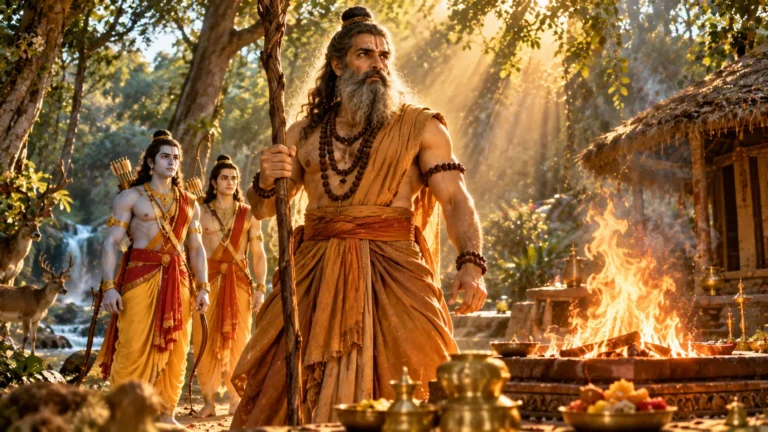
हिंदी अर्थ जब अपार तेजस्वी राम ने उस वन के विषय में पूछा, तो महातेजस्वी विश्वामित्र ने बताना आरंभ किया:
English meaning When the boundless Rama asked about that forest, the radiant Vishvamitra began to explain:
इह राम महाबाहो विष्णुर्देववरः प्रभुः ।
iha rāma mahābāho viṣṇurdevavaraḥ prabhuḥ |
हिंदी अर्थ हे महाबाहु राम, यहाँ देवश्रेष्ठ, महातपस्वी प्रभु विष्णु ने तप और योग के लिए बहुत वर्षों और सैकड़ों युगों तक निवास किया।
English meaning Here, mighty armed Rama, the lord Vishnu, best of gods, of great penance, lived for very many years and hundreds of ages to practise penance and yoga.
एष पूर्वाश्रमो राम वामनस्य महात्मनः ।
eṣa pūrvāśramo rāma vāmanasya mahātmanaḥ |
हिंदी अर्थ हे राम, यह महात्मा वामन का पुराना आश्रम है। यह सिद्धाश्रम नाम से प्रसिद्ध है, क्योंकि उन महातपस्वी को यहाँ सिद्धि मिली थी।
English meaning Rama, this was the former hermitage of the great souled Vamana. It is known as Siddhashrama, for the great ascetic attained perfection here.
एतस्मिन्नेव काले तु राजा वैरोचनिर्बलिः ।
etasminneva kāle tu rājā vairocanirbaliḥ |
हिंदी अर्थ उसी समय तीनों लोकों में प्रसिद्ध विरोचनपुत्र राजा बलि ने इंद्र और मरुद्गणों सहित देवताओं को जीतकर उनका राज्य किया।
English meaning At that very time King Bali, son of Virochana, famed in the three worlds, conquered the hosts of gods with Indra and the Maruts, and ruled their kingdom.
बलेस्तु यजमानस्य देवास्साग्निपुरोगमाः ।
balestu yajamānasya devāssāgnipurogamāḥ |
हिंदी अर्थ जब बलि यज्ञ कर रहे थे, तब अग्नि आदि देवता एकत्र होकर इसी आश्रम में स्वयं विष्णु से बोले:
English meaning While Bali was performing a sacrifice, the gods led by Agni gathered and spoke to Vishnu himself here in this hermitage:
बलिर्वैरोचनिर्विष्णो यजते यज्ञमुत्तमम् ।
balirvairocanirviṣṇo yajate yajñamuttamam |
हिंदी अर्थ हे विष्णु, विरोचनपुत्र बलि एक उत्तम यज्ञ कर रहे हैं। वह यज्ञ समाप्त होने से पहले हमारा कार्य सिद्ध हो जाए।
English meaning Vishnu, Bali son of Virochana is performing a great sacrifice. Before that rite is finished, let our purpose be achieved.
ये चैनमभिवर्तन्ते याचितार इतस्ततः ।
ye cainamabhivartante yācitāra itastataḥ |
हिंदी अर्थ जो भी याचक जहाँ कहीं से उनके पास आते हैं, वे उन्हें जो जैसा माँगता है वह सब दे देते हैं।
English meaning Whoever comes to him from anywhere to ask, he gives them all whatever they ask for, just as it is asked.
स त्वं सुरहितार्थाय मायायोगमुपागतः ।
sa tvaṃ surahitārthāya māyāyogamupāgataḥ |
हिंदी अर्थ इसलिए हे विष्णु, देवताओं के हित के लिए अपनी योगमाया का सहारा लेकर वामन बनिए और परम कल्याण कीजिए।
English meaning So, Vishnu, for the good of the gods, use your power of illusion, become a dwarf, and bring about the highest good.
10-11
1.29.10-11
Copy link
एतस्मिन्नन्तरे राम कश्यपोऽग्निसमप्रभः ।
etasminnantare rāma kaśyapo'gnisamaprabhaḥ |
हिंदी अर्थ इसी बीच, हे राम, अग्नि के समान तेजस्वी, अपने ओज से दमकते कश्यप ने अदिति के साथ, पत्नी सहित एक हजार दिव्य वर्षों का व्रत पूरा करके वरदाता मधुसूदन की स्तुति की:
English meaning Meanwhile, Rama, Kashyapa, bright as fire and glowing with power, together with Aditi, having completed a vow of a thousand divine years with his wife, praised Madhusudana, the giver of boons:
तपोमयं तपोराशिं तपोमूर्तिं तपात्मकम् ।
tapomayaṃ taporāśiṃ tapomūrtiṃ tapātmakam |
हिंदी अर्थ आप तपोमय हैं, तप की राशि हैं, तप की मूर्ति हैं, तपस्वरूप हैं। भलीभाँति किए तप से मैं आप पुरुषोत्तम का दर्शन कर रहा हूँ।
English meaning You are made of penance, the mass of penance, penance embodied, penance itself. Through well practised penance I see you, the Supreme Person.
शरीरे तव पश्यामि जगत्सर्वमिदं प्रभो ।
śarīre tava paśyāmi jagatsarvamidaṃ prabho |
हिंदी अर्थ हे प्रभु, मैं यह सारा जगत आपके शरीर में देखता हूँ। आप अनादि और अनिर्वचनीय हैं। मैं आपकी शरण में हूँ।
English meaning Lord, I see this whole world in your body. You are without beginning and beyond description. I take refuge in you.
तमुवाच हरिः प्रीतः कश्यपं धूतकल्मषम् ।
tamuvāca hariḥ prītaḥ kaśyapaṃ dhūtakalmaṣam |
हिंदी अर्थ प्रसन्न होकर हरि ने पापरहित कश्यप से कहा: वर माँगो, तुम्हारा कल्याण हो। मैं तुम्हें वर के योग्य मानता हूँ।
English meaning Pleased, Hari said to Kashyapa, cleansed of all sin: Choose a boon, blessings on you. I think you worthy of a boon.
तच्छ्रुत्वा वचनं तस्य मारीचः कश्यपोऽब्रवीत् ।
tacchrutvā vacanaṃ tasya mārīcaḥ kaśyapo'bravīt |
हिंदी अर्थ उनकी बात सुनकर मरीचिपुत्र कश्यप ने कहा: हे सुव्रत वरदाता, प्रसन्न होकर अदिति, देवताओं और मुझ याचक को वर दीजिए।
English meaning Hearing his words, Kashyapa son of Marichi said: Giver of boons, of good vows, be pleased to grant a boon to Aditi, to the gods, and to me who ask it.
16-17
1.29.16-17
Copy link
पुत्रत्वं गच्छ भगवन्नदित्या मम चानघ ।
putratvaṃ gaccha bhagavannadityā mama cānagha |
हिंदी अर्थ हे भगवन, निष्पाप, असुरों का नाश करने वाले, अदिति और मेरे पुत्र बनिए, और इंद्र के छोटे भाई बनिए। शोक से पीड़ित देवताओं की सहायता कीजिए।
English meaning Holy and sinless one, slayer of asuras, become the son of Aditi and of me, and be the younger brother of Shakra. Come to the help of the gods who are stricken with grief.
अयं सिद्धाश्रमो नाम प्रसादा त्ते भविष्यति ।
ayaṃ siddhāśramo nāma prasādā tte bhaviṣyati |
हिंदी अर्थ हे देवेश, आपका कार्य सिद्ध होने पर आपकी कृपा से यह स्थान सिद्धाश्रम कहलाएगा। भगवन, यहाँ से उठिए।
English meaning Lord of the gods, by your grace this place will be named Siddhashrama when your work is accomplished. Rise from here, holy one.
अथ विष्णुर्महातेजा अदित्यां समजायत ।
atha viṣṇurmahātejā adityāṃ samajāyata |
हिंदी अर्थ तब महातेजस्वी विष्णु अदिति से जन्मे, और वामन रूप धारण करके विरोचनपुत्र बलि के पास गए।
English meaning Then the radiant Vishnu was born of Aditi, and taking the form of a dwarf he went to the son of Virochana.
20-21
1.29.20-21
Copy link
त्रीन् क्रमानथ भिक्षित्वा प्रतिगृह्य च मानदः ।
trīn kramānatha bhikṣitvā pratigṛhya ca mānadaḥ |
हिंदी अर्थ तीन पग भूमि माँगकर और उसे पाकर, सबको सम्मान देने वाले, सब प्राणियों के हित में रत लोकात्मा ने लोकों को नाप लिया, अपने बल से बलि को बाँधकर उन्हें फिर महेंद्र को दे दिया, और इस प्रकार उन महातेजस्वी ने त्रिलोकी को फिर इंद्र के अधीन कर दिया।
English meaning Asking for three strides and receiving them, the giver of honour, the soul of the worlds, devoted to the good of all beings, covered the worlds, restrained Bali by his might, gave them back to Mahendra, and so the radiant one placed the three worlds under Shakra again.
तेनैष पूर्वमाक्रान्त आश्रमश्श्रमनाशनः ।
tenaiṣa pūrvamākrānta āśramaśśramanāśanaḥ |
हिंदी अर्थ पहले वे इसी थकान मिटाने वाले आश्रम में रहे थे। उन वामन की भक्ति के कारण मैं भी इसमें रहता हूँ।
English meaning He once dwelt in this hermitage that removes all weariness. Out of devotion to that Vamana, I too live in it.
एतमाश्रममायान्ति राक्षसा विघ्नकारिणः ।
etamāśramamāyānti rākṣasā vighnakāriṇaḥ |
हिंदी अर्थ विघ्न डालने वाले राक्षस इसी आश्रम में आते हैं। हे पुरुषव्याघ्र, यहीं उन दुष्टों को मारना है।
English meaning Rakshasas come to this hermitage to make trouble. Here, tiger among men, the evil doers must be killed.
अद्य गच्छामहे राम सिद्धाश्रममनुत्तमम् ।
adya gacchāmahe rāma siddhāśramamanuttamam |
हिंदी अर्थ हे राम, आज हम उस अनुपम सिद्धाश्रम में चलते हैं। हे तात, वह आश्रम जितना मेरा है उतना ही तुम्हारा भी है।
English meaning Today, Rama, we go to the matchless Siddhashrama. My dear, that hermitage is as much yours as mine.
प्रविशन्नाश्रमपदं व्यरोचत महामुनिः ।
praviśannāśramapadaṃ vyarocata mahāmuniḥ |
हिंदी अर्थ आश्रम में प्रवेश करते हुए महामुनि ऐसे चमके जैसे कुहरे से मुक्त, पुनर्वसु नक्षत्र से युक्त चंद्रमा।
English meaning Entering the hermitage, the great sage shone like the moon freed from mist and joined with the stars of Punarvasu.
तं दृष्ट्वा मुनयस्सर्वे सिद्धाश्रमनिवासिनः ।
taṃ dṛṣṭvā munayassarve siddhāśramanivāsinaḥ |
हिंदी अर्थ उन्हें देखकर सिद्धाश्रम के सब मुनि बार बार उछलकर उठे और विश्वामित्र का पूजन किया।
English meaning Seeing him, all the sages living in Siddhashrama sprang up again and again and honoured Vishvamitra.
यथार्हं चक्रिरे पूजां विश्वामित्राय धीमते ।
yathārhaṃ cakrire pūjāṃ viśvāmitrāya dhīmate |
हिंदी अर्थ उन्होंने बुद्धिमान विश्वामित्र की यथोचित पूजा की, और दोनों राजकुमारों का भी अतिथि सत्कार किया।
English meaning They worshipped the wise Vishvamitra as was fitting, and did the rites of hospitality for the two princes as well.
मुहूर्तमथ विश्रान्तौ राजपुत्रावरिन्दमौ ।
muhūrtamatha viśrāntau rājaputrāvarindamau |
हिंदी अर्थ थोड़ी देर विश्राम करके शत्रुओं को दमन करने वाले दोनों रघुनंदन राजकुमारों ने हाथ जोड़कर मुनिशार्दूल से कहा:
English meaning After resting a moment, the two princes, tamers of foes, joys of the Raghus, joined their palms and said to the tiger among sages:
अद्यैव दीक्षां प्रविश भद्रं ते मुनिपुङ्गव ।
adyaiva dīkṣāṃ praviśa bhadraṃ te munipuṅgava |
हिंदी अर्थ हे मुनिश्रेष्ठ, आज ही यज्ञ की दीक्षा लीजिए, आपका कल्याण हो। यह सिद्धाश्रम अपने नाम को सार्थक करे और आपका वचन सत्य हो।
English meaning Best of sages, enter upon your consecration this very day, blessings on you. Let Siddhashrama fulfil its name and your word come true.
एवमुक्तो महातेजा विश्वामित्रो महान् ऋषिः ।
evamukto mahātejā viśvāmitro mahān ṛṣiḥ |
हिंदी अर्थ यह सुनकर महातेजस्वी महर्षि विश्वामित्र ने संयमी और जितेंद्रिय होकर दीक्षा ग्रहण की।
English meaning Told this, the radiant great sage Vishvamitra, disciplined and master of his senses, entered upon the consecration.
कुमारावपि तां रात्रिमुषित्वा सुसमाहितौ ।
kumārāvapi tāṃ rātrimuṣitvā susamāhitau |
हिंदी अर्थ दोनों राजकुमारों ने भी वह रात सावधानी से बिताई। प्रभात में उठकर उन्होंने प्रातःसंध्या की, जल का स्पर्श करके पवित्र हुए, नियमपूर्वक जप पूरा किया, और अग्निहोत्र करके बैठे विश्वामित्र को प्रणाम किया।
English meaning The two princes, too, spent that night attentively. Rising at dawn, they performed the morning twilight worship, touched water, purified themselves, completed their prayers as prescribed, and saluted Vishvamitra seated after his fire offering.