Quick answer
Vishnu Sahasranama meaning: the thousand names of Vishnu taught by Bhishma to Yudhishthira in the Mahabharata, how the hymn is structured, its commentaries and how to recite it.
Who is in this story
The story
The Vishnu Sahasranama, the thousand names of Vishnu, is one of the most widely recited hymns in Hinduism. It comes from the Mahabharata, where the dying Bhishma teaches it to Yudhishthira on the battlefield of Kurukshetra, and it is chanted daily in homes and temples across India. This guide explains the Vishnu Sahasranama meaning, where it comes from, how it is structured and how people recite it.
Vishnu Sahasranama meaning and origin
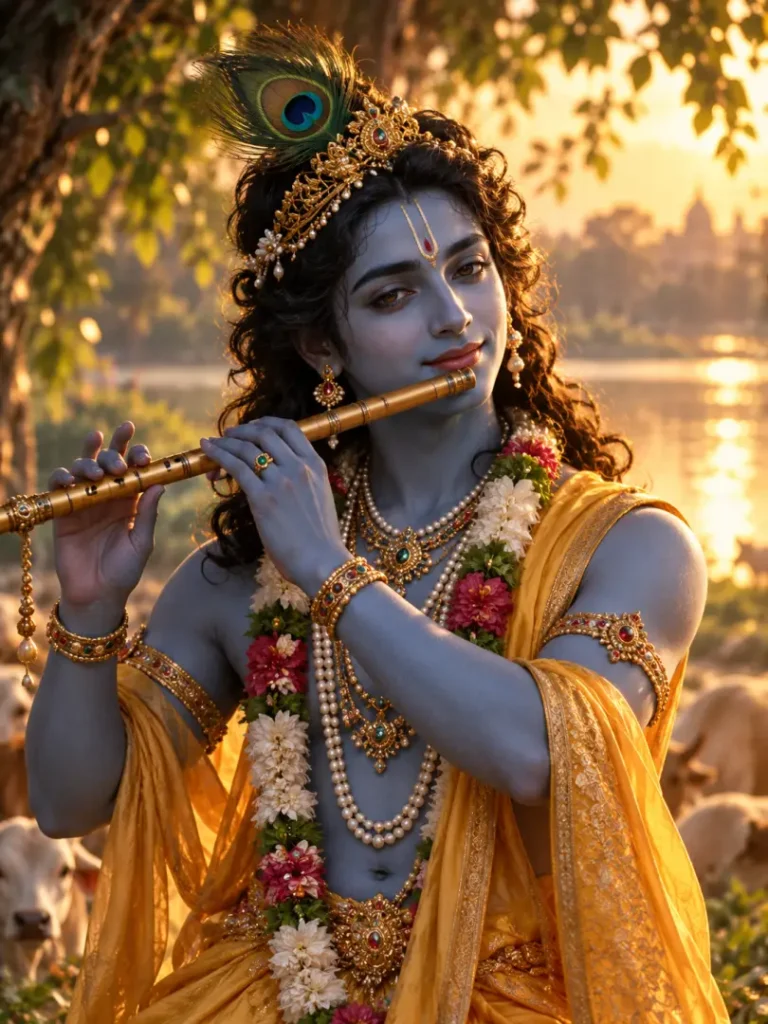
Sahasranama means “a thousand names”. The hymn appears in the Anushasana Parva of the Mahabharata. After the war, Yudhishthira goes to Bhishma, lying on his bed of arrows, and asks six questions: who is the one supreme deity, what is the highest goal, by praising whom does a person attain good, by worshipping whom does a person attain the good, what is the highest dharma, and by reciting what are beings freed from the cycle of birth and death. Bhishma answers by reciting the thousand names of Vishnu, with Krishna standing before them.
How the hymn is structured
- Purva bhaga (introduction): Yudhishthira’s questions and Bhishma’s reply, followed by the invocation naming the sage Vedavyasa, the metre (anushtup) and the deity, Vishnu.
- The thousand names: about 108 verses that string the names together. It opens with “Om vishvam vishnur vashatkaro”, “the universe, the all-pervading one, the one invoked in sacrifice”.
- Phala shruti (benefits): the closing section describing the blessings of reciting the hymn with devotion.
What the names describe
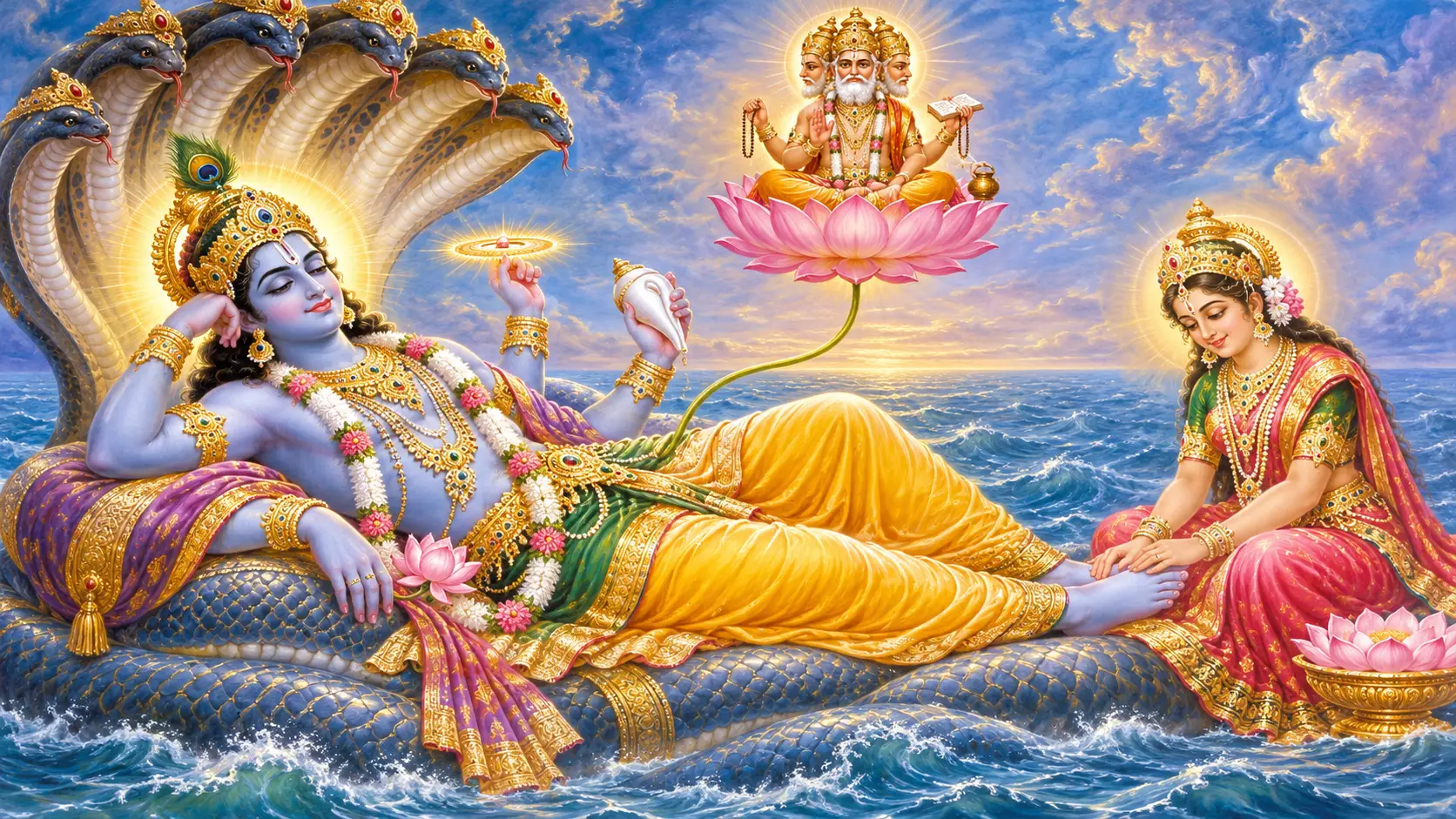
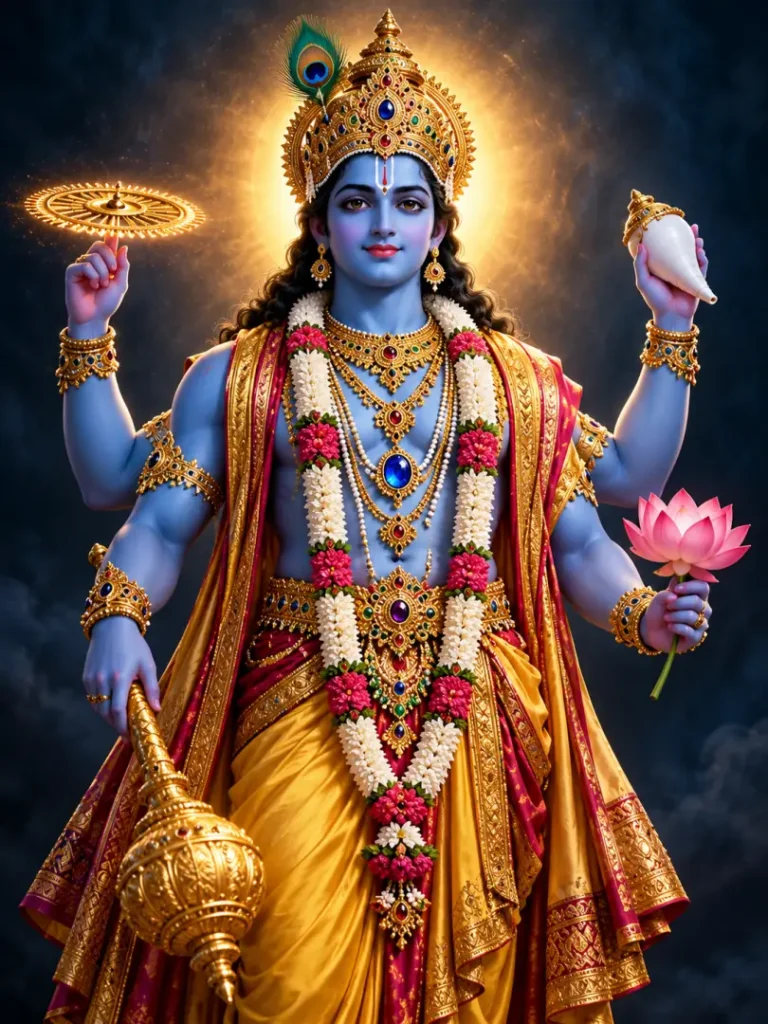
The names describe Vishnu as the source and sustainer of everything, as the protector of the world, as the avatars and as the inner self of all beings. Some names repeat with different meanings in different places, which commentators explain in context. The first known commentary is attributed to Adi Shankaracharya, and the Sri Vaishnava tradition follows the commentary of Parashara Bhatta. Different schools therefore read the same names in different ways.
The “Rama nama” verse
Many printed versions include a verse in which Shiva tells Parvati that reciting the name of Rama three times is equal to reciting all thousand names. This verse belongs to the later closing section found in popular editions, and it is often used as a short form when the whole hymn cannot be recited.
How to recite the Vishnu Sahasranama
- Bathe and sit facing east or north in a clean, quiet place.
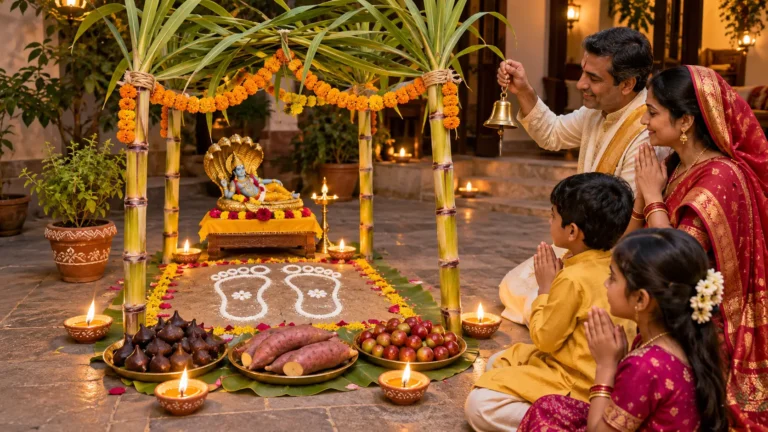
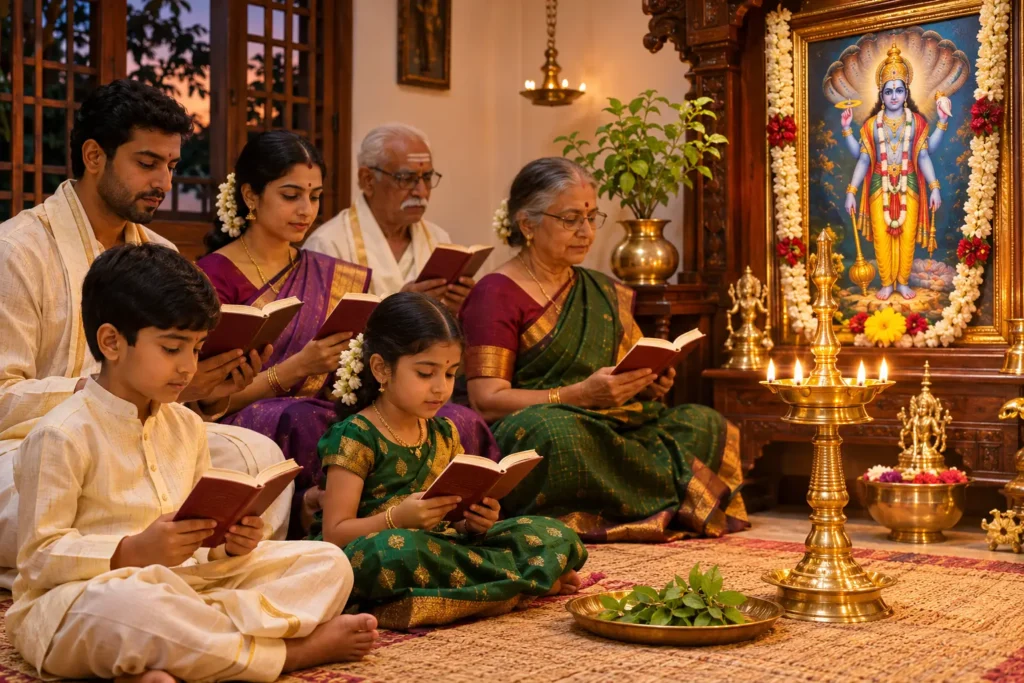
- Light a lamp before an image of Vishnu or Krishna, and offer tulsi if you have it.
- Recite the introduction, then the names, then the closing verses, at a steady pace. A full recitation takes about 20 to 30 minutes.
- If you are learning, listen to a recording and follow the text until the pronunciation becomes natural.
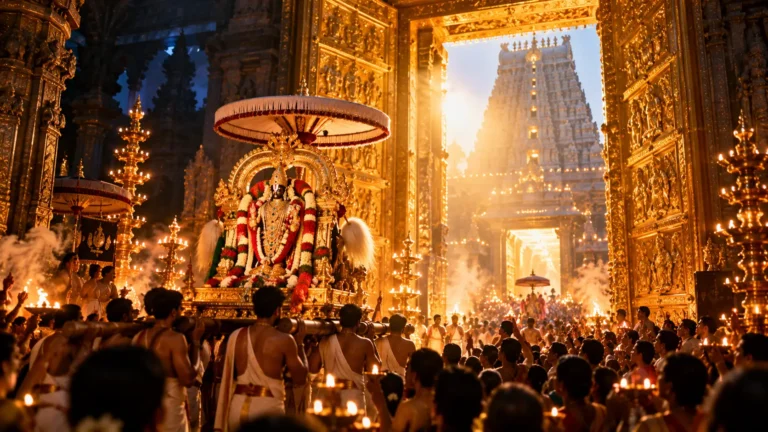
Thursdays, Ekadashis, Vaikuntha Ekadashi and Dev Uthani Ekadashi are favourite days, and during the five days of Bhishma Panchak at the end of Kartik, reciting the hymn honours Bhishma himself.
Why it is so loved
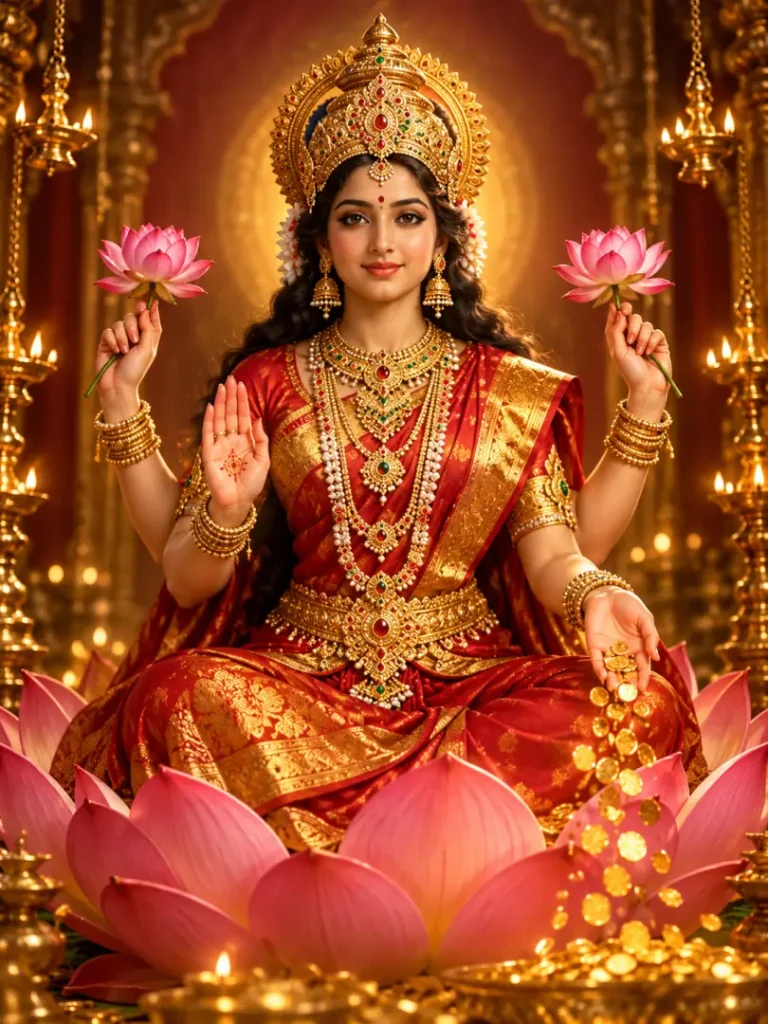
The Vishnu Sahasranama needs no ritual, priest or special material, only attention and devotion. That simplicity, together with Bhishma’s teaching that remembering the divine names is the highest practice, has made it a daily prayer for millions. Read the epic it comes from in the Mahabharata library, and see Lakshmi, who is honoured alongside Vishnu in many households when it is recited.
Frequently asked questions
What is the Vishnu Sahasranama?
It is the hymn of the thousand names of Vishnu, taught by Bhishma to Yudhishthira in the Anushasana Parva of the Mahabharata.
How long does it take to recite the Vishnu Sahasranama?
A full recitation, including the introduction and closing verses, usually takes about 20 to 30 minutes.
When should the Vishnu Sahasranama be recited?
Thursdays, Ekadashis and Vishnu festivals are favourite days, but it can be recited any day.
Sources and further reading
- Hindu texts index, Sacred Texts (Mahabharata)
- Mahabharata, Anushasana Parva (Vishnu Sahasranama); commentaries of Adi Shankaracharya and Parashara Bhatta
Read our editorial policy on how scripture, Purana and folk tradition are labelled.