Quick answer
Varaha avatar story: Vishnu as the boar who killed Hiranyaksha and raised the Earth from the cosmic ocean on his tusks, the Jaya-Vijaya curse behind it, and famous Varaha images in India.
Who is in this story
The story
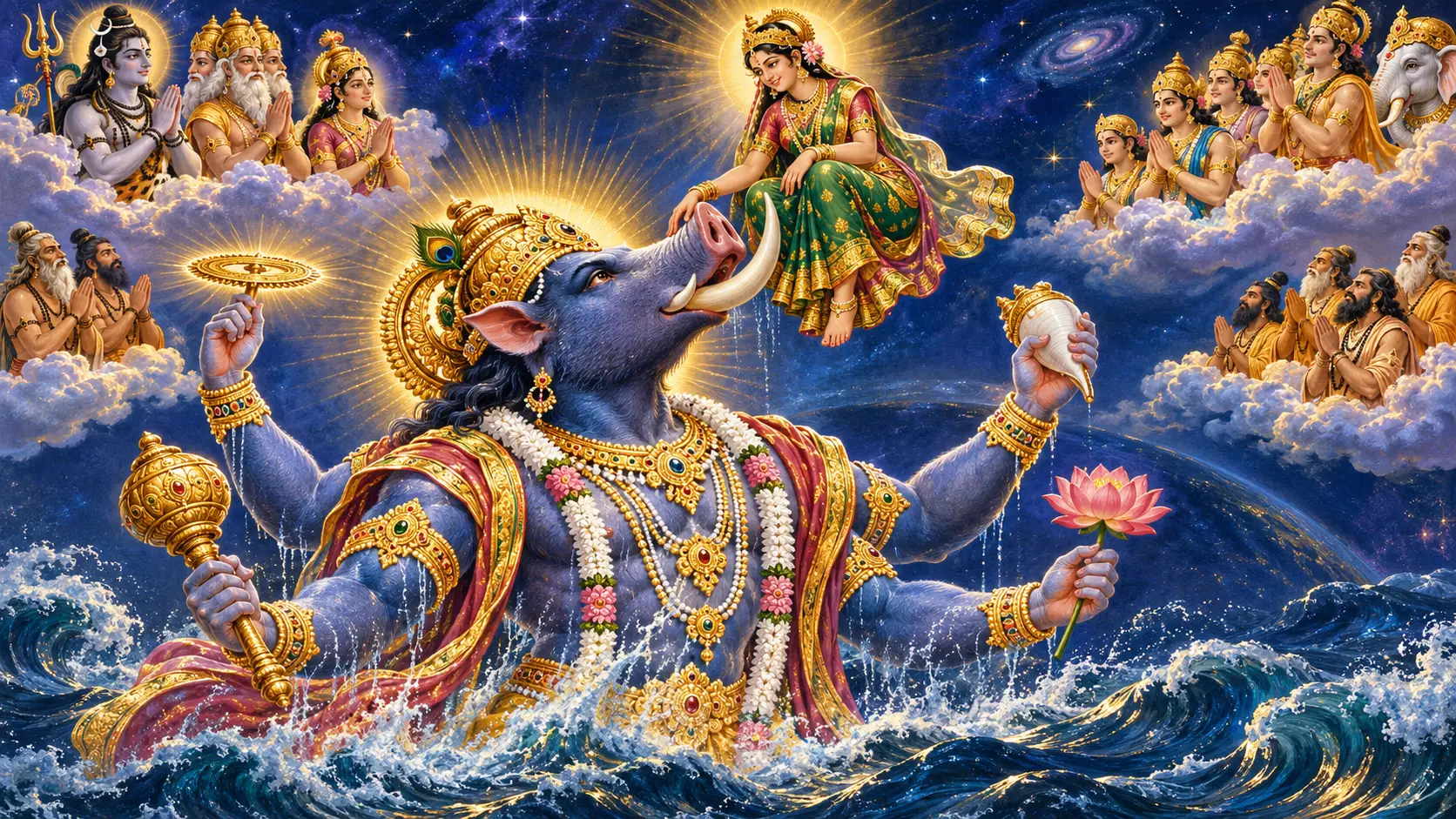
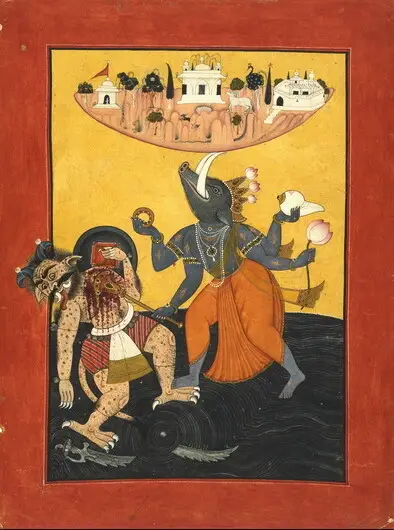
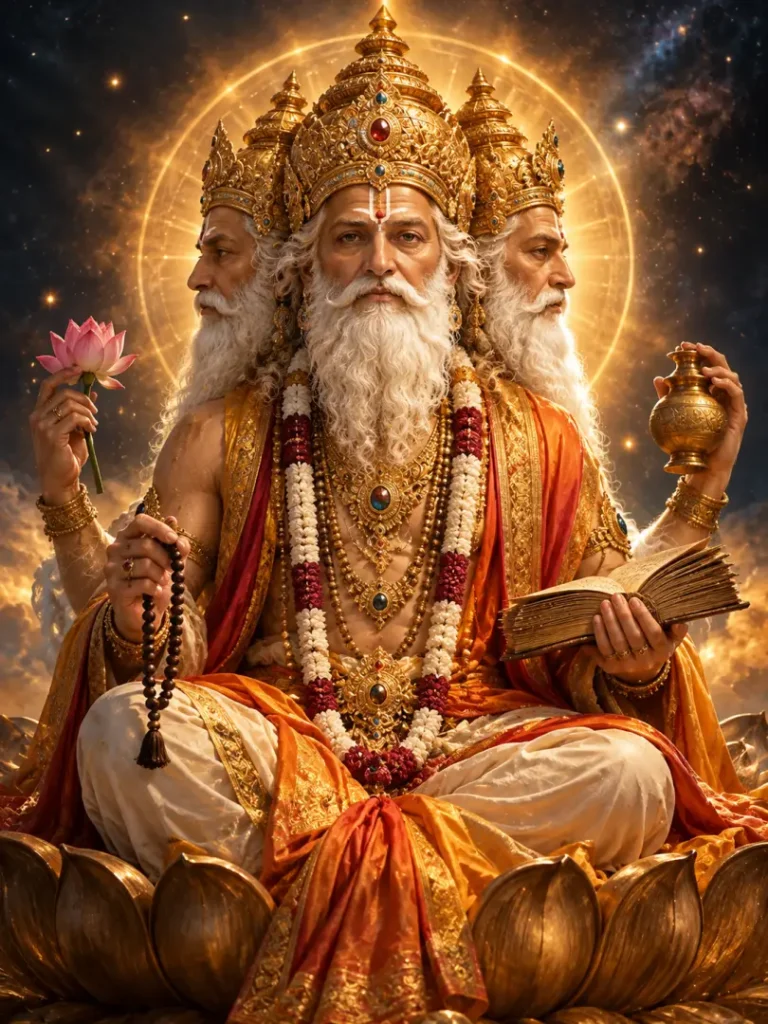
Varaha, the boar, is the third of Vishnu’s ten avatars. When the asura Hiranyaksha dragged the Earth to the bottom of the cosmic ocean, Vishnu appeared as a mighty boar, dived into the depths, killed the demon and raised the Earth on his tusks. This guide tells the Varaha avatar story as the Bhagavata Purana records it, explains its background and points to the great Varaha images still seen across India.
Varaha avatar story: the curse of Jaya and Vijaya
The Bhagavata Purana traces the story to Vaikuntha, Vishnu’s abode. Its gatekeepers, Jaya and Vijaya, once stopped the four child sages, the Kumaras, from entering. The sages cursed them to be born on earth as asuras. Vishnu promised that he himself would free them. In their first birth they became the brothers Hiranyaksha and Hiranyakashipu, sons of the sage Kashyapa and Diti.
Hiranyaksha takes the Earth
Hiranyaksha grew immensely powerful and arrogant. Searching for an opponent worthy of him, he roamed the worlds and, in the Puranic telling, drove the Earth, Bhudevi, down into the waters of the cosmic ocean. Without the Earth, creation could not continue, and Brahma turned to Vishnu in prayer.
The boar rises from Brahma’s nostril
As Brahma meditated, a tiny boar, no bigger than a thumb, emerged from his nostril. Within moments it grew to the size of an elephant and then to a vast cosmic form, roaring so loudly that the sages recognised Vishnu. The boar plunged into the ocean, found the Earth in its depths and lifted her gently on his tusks.
The battle with Hiranyaksha
As Varaha rose with the Earth, Hiranyaksha challenged him. They fought a long and fierce battle with maces and bare strength, and the Bhagavata Purana describes the asura’s illusions failing one after another. At last Varaha struck him down, freeing Jaya from the first of his three births. Varaha then set the Earth back in place on the waters.
Varaha and Bhudevi
Some Puranas say that Varaha and Bhudevi had a son, Naraka, who later became the asura Narakasura, defeated by Krishna and Satyabhama. That victory is remembered on Naraka Chaturdashi, the day before Diwali.
Where Varaha is honoured
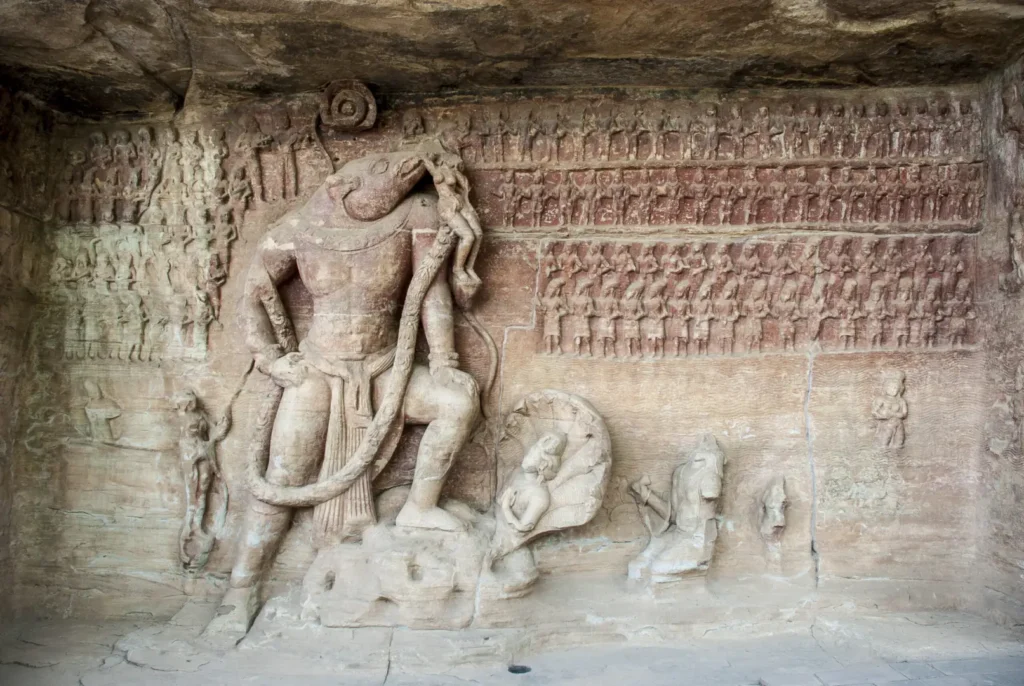
- Udayagiri Caves, Madhya Pradesh: a colossal Gupta-period relief of Varaha lifting the Earth, one of the most famous sculptures of ancient India.
- Varaha Temple, Khajuraho: a shrine housing a large monolithic boar carved with hundreds of small figures.
- Sri Bhu Varaha Swamy Temple, Tirumala: tradition says pilgrims should worship Varaha before visiting Lord Venkateswara.
What the Varaha avatar teaches
Varaha shows Vishnu as the protector of the Earth itself, willing to take the humblest of forms and dive into the deepest darkness to bring her back to light. Many devotees read the story as a reminder of reverence for the Earth, which Hindu tradition honours as a mother.
Frequently asked questions
What is the Varaha avatar?
Varaha is Vishnu’s third avatar, a boar who killed the asura Hiranyaksha and lifted the Earth from the cosmic ocean on his tusks.
Who did Varaha kill?
Hiranyaksha, the brother of Hiranyakashipu, was born from the curse on Vaikuntha’s gatekeeper Jaya.
Where can Varaha be seen in temples?
Famous Varaha images are at the Udayagiri Caves in Madhya Pradesh, the Varaha Temple at Khajuraho and the Bhu Varaha Swamy Temple at Tirumala.
Sources and further reading
- Hindu texts index, Sacred Texts (Bhagavata Purana)
- Bhagavata Purana, Book 3, chapters 13 to 19; Vishnu Purana
Read our editorial policy on how scripture, Purana and folk tradition are labelled.