Quick answer
Narasimha avatar story: Vishnu as the man-lion who emerged from a pillar to protect Prahlada and outwitted Hiranyakashipu's boon at dusk on a threshold, and what the story teaches about devotion.
Who is in this story
The story
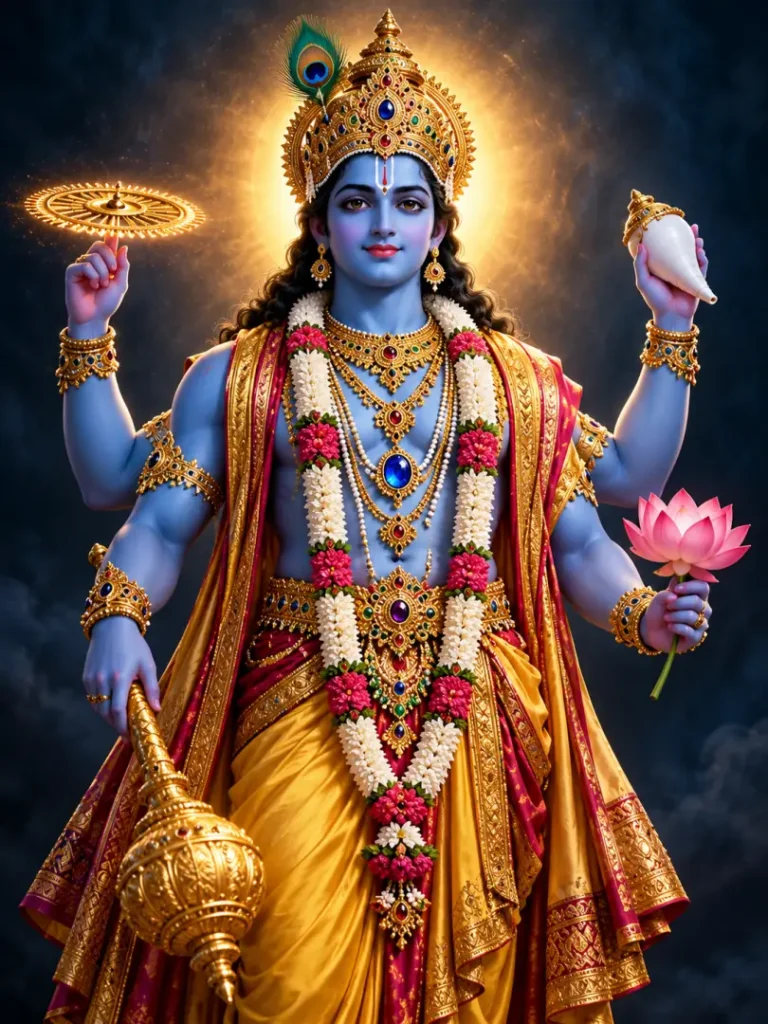
Narasimha, the man-lion, is the fourth of Vishnu’s ten avatars and one of the most dramatic. To protect the child devotee Prahlada from his father, the demon king Hiranyakashipu, Vishnu burst from a stone pillar in a form that was neither man nor beast and ended the tyrant’s reign at dusk on a palace threshold. This guide tells the Narasimha avatar story, explains how it outwitted an “unbreakable” boon and what it teaches about devotion.
Narasimha avatar story: Hiranyakashipu’s boon
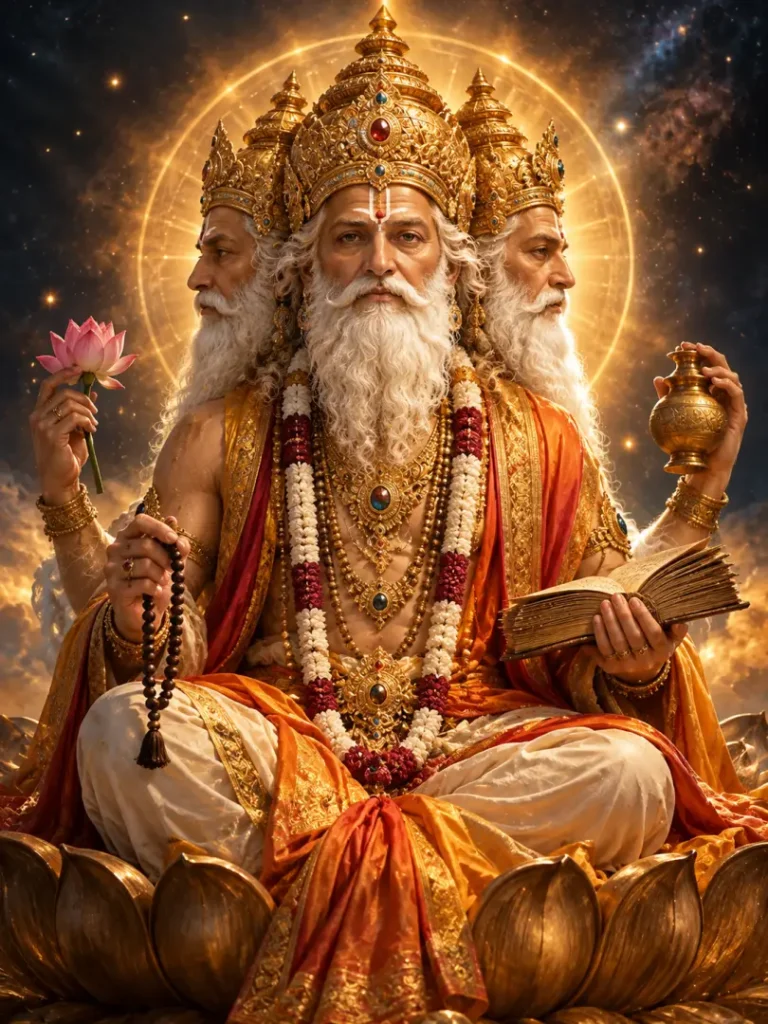
After Varaha killed Hiranyaksha, his brother Hiranyakashipu swore revenge on Vishnu. He performed severe penance until Brahma granted him a boon. The Bhagavata Purana describes its conditions: he could not be killed by any being created by Brahma, neither man nor animal, neither inside nor outside a dwelling, neither by day nor by night, neither on the ground nor in the sky, and by no weapon. Believing himself immortal, he conquered the three worlds and demanded to be worshipped as god.
Prahlada, the devoted son
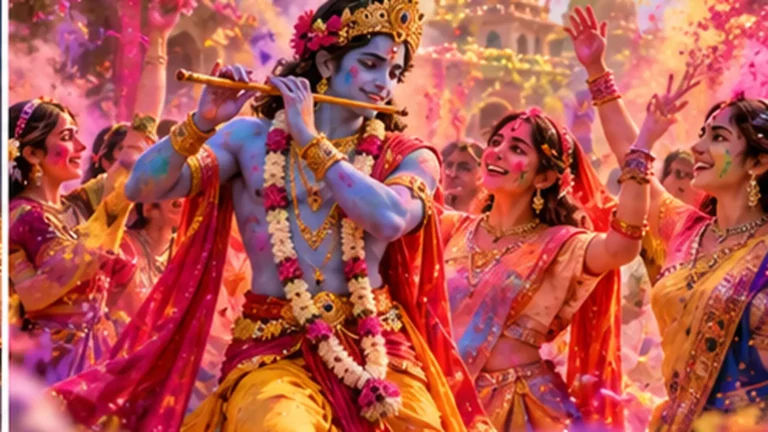
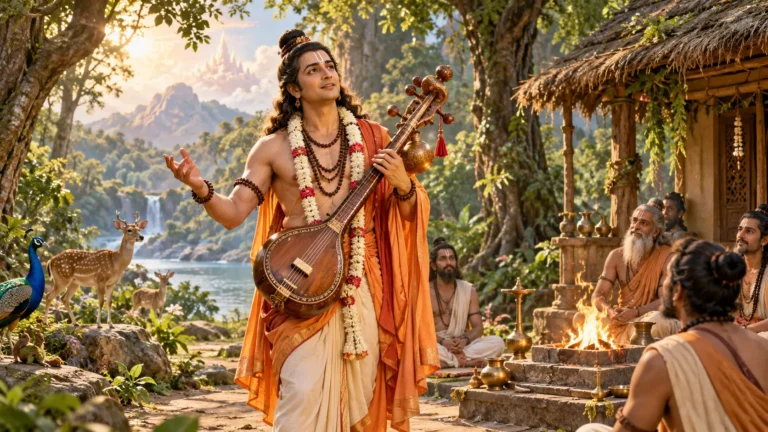
Hiranyakashipu’s own son, Prahlada, grew up devoted to Vishnu, having heard of him while still in his mother’s womb from the sage Narada. Neither teachers nor threats could change his devotion. Enraged, his father tried to kill him: with poison, by trampling elephants, by throwing him from a cliff and by venomous snakes. Each time Prahlada survived, chanting Vishnu’s name. In one famous attempt, Hiranyakashipu’s sister Holika, who could not be burned, sat in a fire with Prahlada on her lap. Holika burned and Prahlada walked out unharmed, the origin of the bonfire on the eve of Holi.
“Is your Vishnu in this pillar?”
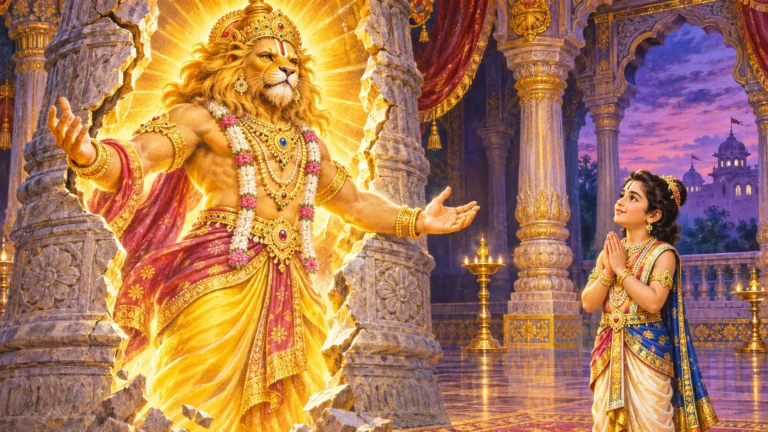
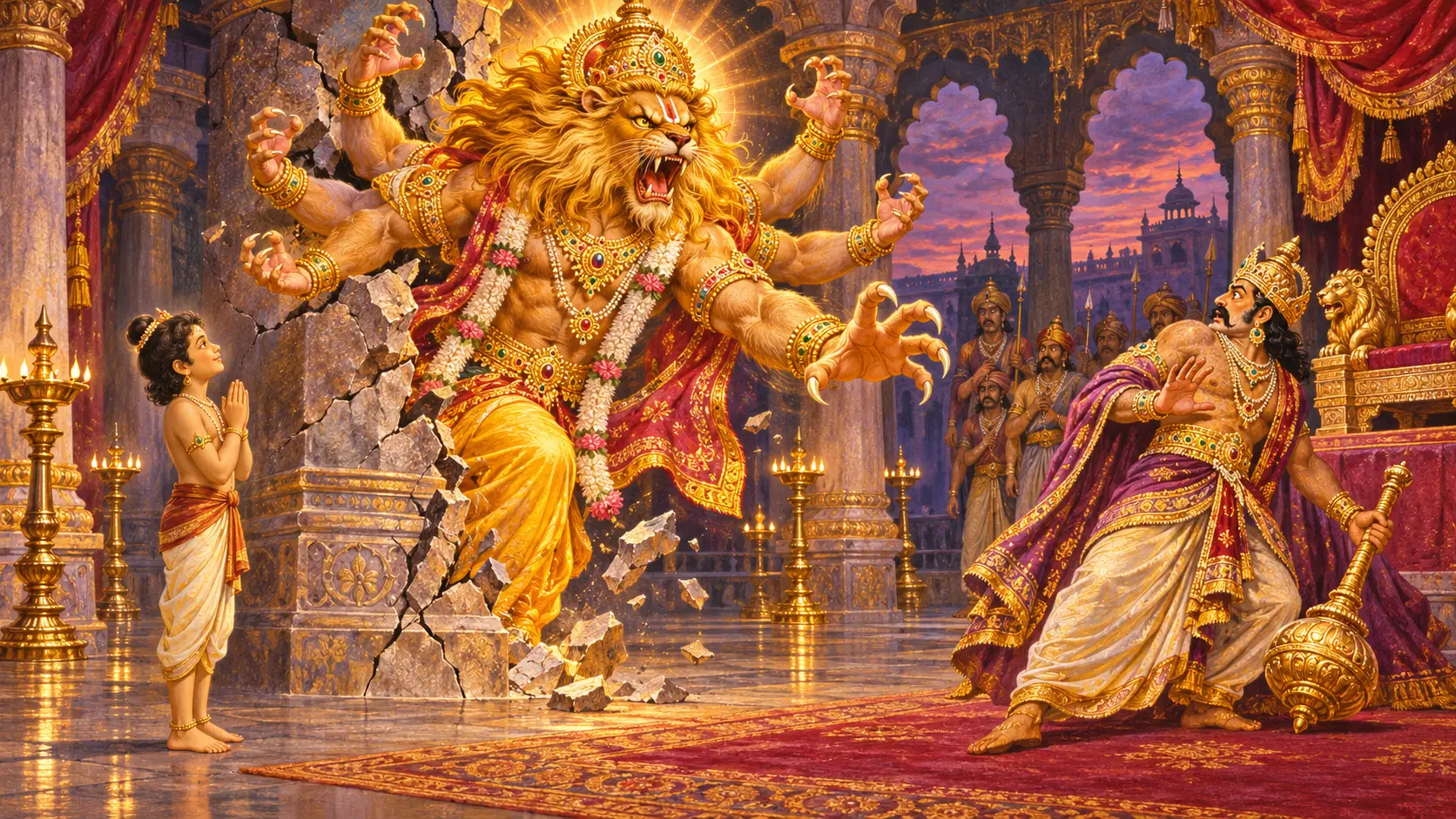
At last Hiranyakashipu asked Prahlada where his god was. Prahlada replied that Vishnu was everywhere. Mocking him, the king pointed to a pillar of his hall and asked if Vishnu was in that too. When Prahlada said yes, Hiranyakashipu struck the pillar with his mace. It split apart with a deafening roar, and Narasimha emerged, with the body of a man and the head and claws of a lion.
How the boon was overcome
Narasimha seized Hiranyakashipu and met every condition of the boon. He was neither man nor beast. It was twilight, neither day nor night. He sat on the threshold, neither inside nor outside, and placed the king on his lap, neither on the ground nor in the sky. He used his claws, which are not weapons. There he ended Hiranyakashipu’s life, freeing Vijaya, the gatekeeper of Vaikuntha, from the second of his three births.
Prahlada calms Narasimha
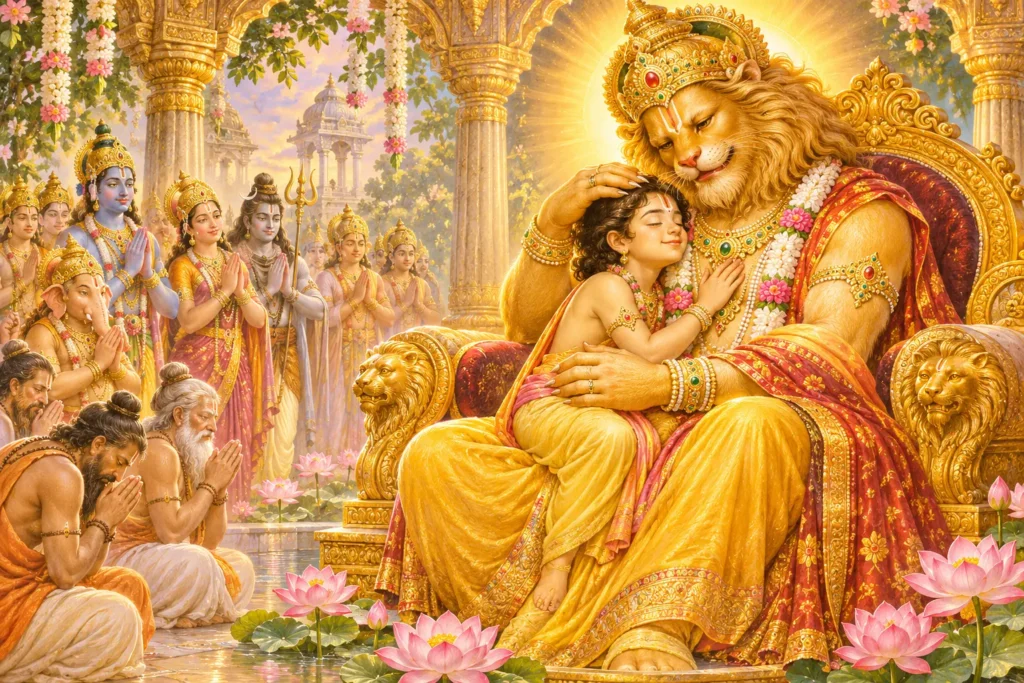
Narasimha’s fury was so great that even the gods were afraid to approach him. It was Prahlada, the small child, who came forward and bowed. Narasimha placed him on his lap, his rage subsiding, and offered him any boon. Prahlada asked only for devotion without desire, and for his father to be forgiven.
Narasimha temples and festival
Narasimha is worshipped widely in South India, especially at Ahobilam and Simhachalam in Andhra Pradesh. Narasimha Jayanti is observed on Vaishakha Shukla Chaturdashi, often with a fast until dusk, the hour of his appearance.
What Narasimha teaches
No power, however carefully protected, stands above dharma, and the divine finds a way to protect those who trust in it. Prahlada shows that devotion does not depend on age or strength, and his calm courage is as much the heart of the story as Narasimha’s might.
Frequently asked questions
What is the Narasimha avatar?
Narasimha is Vishnu’s fourth avatar, half man and half lion, who emerged from a pillar to protect Prahlada and end Hiranyakashipu’s tyranny.
How did Narasimha overcome Hiranyakashipu's boon?
Narasimha was neither man nor beast, acted at twilight, on a threshold, with the king on his lap, using his claws, which met every condition of the boon.
How is Narasimha linked to Holi?
Holika, Hiranyakashipu’s sister, burned in the fire meant for Prahlada, which is remembered on the eve of Holi.
Sources and further reading
- Hindu texts index, Sacred Texts (Bhagavata Purana)
- Bhagavata Purana, Book 7, chapters 1 to 10; Vishnu Purana
Read our editorial policy on how scripture, Purana and folk tradition are labelled.