Holi
होलीHoli, the festival of colours, falls on the full moon of Phalguna in February or March. It begins with the Holika Dahan bonfire, remembering how the child Prahlada was saved by Vishnu, and the next day everyone plays with colours in memory of Krishna and Radha and to welcome spring.
Next: Monday, 22 March 2027
What is it?
Holi is the Hindu festival of colours and of spring, celebrated over two days at the full moon (Purnima) of the month of Phalguna, which usually falls in March. On the first evening, Holika Dahan, bonfires are lit to mark the burning of the demoness Holika. The next day, Dhulandi or Rangwali Holi, people of every age and background throw coloured powder and water at each other, sing, dance and share sweets.
It is also a harvest festival of the rabi crop and a day of forgiveness, when old quarrels are set aside.
Why is it celebrated?
Prahlada and Holika. The demon king Hiranyakashipu had won a boon that made him almost impossible to kill, and he demanded that everyone worship him. His young son Prahlada, a devotee of Vishnu, refused. The king tried again and again to kill the boy: by poison, by elephants, by snakes, by throwing him from a cliff. Each time Prahlada was saved. At last the king's sister Holika, who had a shawl (or a boon) that protected her from fire, sat in a blazing pyre with Prahlada on her lap. The shawl flew from her to cover Prahlada; Holika burned and the boy walked out unharmed, chanting Vishnu's name. Soon after, Vishnu appeared as Narasimha, the man-lion, and killed Hiranyakashipu. The bonfire of Holika Dahan remembers this victory of devotion over tyranny.
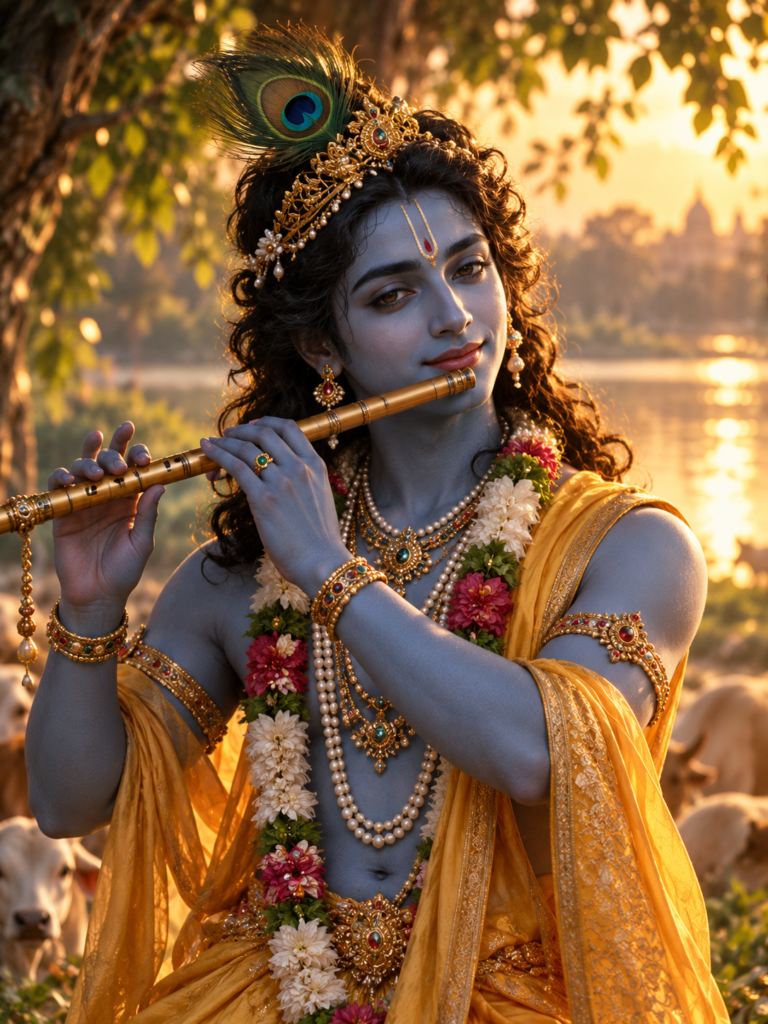
Radha and Krishna. In Braj, Holi celebrates the love of Krishna and Radha. The young Krishna, dark-skinned, complained to his mother Yashoda that Radha was so fair; she laughed and told him to colour Radha's face any colour he liked. He did, and the playful throwing of colours between the cowherd boys and the gopis became Holi.
Kamadeva. In parts of the south, the festival recalls how Shiva, disturbed in his meditation by Kamadeva's arrow of love, burned him to ashes with his third eye, and later restored him at the prayers of his wife Rati.
Spring and harvest. Holi welcomes spring and the ripening of wheat and barley; the new grain is first offered to the fire.
How is it observed?
- 1In the days before Holi, gather wood and cow-dung cakes for the Holika pyre, and set up the pyre at a crossroads or open ground.
- 2On Phalguna Purnima evening, after Bhadra has ended, worship the pyre with water, roli, rice, flowers, raw cotton thread, coconut and new grain.
- 3Light the Holika fire, walk around it three or seven times, and roast new wheat and barley in its flames.
- 4Next morning, play with gulal and coloured water with family, friends and neighbours.
- 5Sing phag and hori songs, and share thandai, gujiya, malpua and other sweets.
- 6In the afternoon, bathe, put on clean clothes and visit relatives and friends to embrace and exchange greetings.
- 7Forgive old quarrels and begin again.
Holika Dahan: the night of the bonfire
Holi begins on the evening of Phalguna Purnima with Holika Dahan, also called Chhoti Holi. In the days before, people collect wood, cow-dung cakes and dry leaves at a crossroads or open ground. After sunset, at the auspicious time (avoiding the period of Bhadra), the family worships the pyre: they tie a raw cotton thread around it three or seven times, offer water, roli, rice, flowers, coconut, new grain and sweets, and then light the fire. People walk around it, roast ears of new wheat and barley and green gram in the flames, and take some home as blessed food. The fire is the burning of Holika, and of the ego, hatred and evil she stands for. In many places the ash is applied to the forehead the next morning for protection.
Dhulandi: the day of colours
The next morning, Rangwali Holi or Dhulandi, everyone pours into the streets. Friends, neighbours and strangers smear each other with gulal (coloured powder) and drench each other with coloured water from pichkaris and balloons. Social distinctions of caste, age, rank and gender are set aside for the day: “bura na mano, Holi hai“, “don’t be offended, it’s Holi”. Drums and folk songs (phag, hori, chautal) fill the air, and people drink thandai and eat gujiya, malpua, dahi vada and puran poli. In the afternoon people bathe, dress in clean clothes and visit friends and relatives to embrace and share sweets. Old quarrels are forgiven.
Holi in Braj: forty days of colour
Holi is nowhere more famous than in Braj, the land of Krishna around Mathura, where the festival begins on Vasant Panchami and lasts for weeks.
- Lathmar Holi at Barsana and Nandgaon: the men of Krishna’s village Nandgaon go to Radha’s village Barsana to tease the women, who drive them off with sticks (lathis) while the men shield themselves; the next day the roles reverse in Nandgaon.
- Laddu Holi at Barsana: laddoos are thrown as prasad in the Shri Radha Rani temple.
- Phoolon wali Holi at Vrindavan: at the Banke Bihari temple, the priests shower devotees with flower petals.
- Widows’ Holi at Vrindavan: in recent years, widows who were once excluded from celebrations have played Holi with petals and gulal at the Gopinath temple.
- Huranga at Dauji: the day after Holi, women tear the shirts off the men and beat them with the wet cloth in fun.
Holi across India
- Bengal and Odisha: Dol Jatra or Dol Purnima, when images of Radha and Krishna are carried on swings; it is also the birthday of Chaitanya Mahaprabhu. At Shantiniketan, Rabindranath Tagore’s Basanta Utsav welcomes spring with songs and dance.
- Punjab: Sikhs celebrate Hola Mohalla at Anandpur Sahib with displays of martial skill, begun by Guru Gobind Singh.
- Manipur: Yaosang, a six-day festival with the Thabal Chongba folk dance.
- Maharashtra: Shimga, and Rang Panchami, five days later, when colours are played.
- Goa: Shigmo, with parades and folk dance.
- Kerala and Karnataka: Kamadahana, remembering Shiva burning Kamadeva to ashes, which some regions link with Holi.
- Kumaon, Uttarakhand: the Baithki Holi and Khadi Holi, musical gatherings that begin weeks before.
- Nepal: Fagu Purnima, a national holiday.
The meaning of the colours
Holi marks the end of winter and the coming of spring, when the rabi crops of wheat and barley ripen; it is a harvest festival, and the new grain is first offered to the fire. Traditionally colours were made from flowers and herbs such as tesu (flame of the forest), turmeric, neem, beetroot and henna, which were believed to protect against the illnesses of the change of season.
Celebrating safely
- Use natural, skin-safe colours, and avoid synthetic dyes, which can contain heavy metals.
- Oil your skin and hair before playing so that colours wash off more easily.
- Protect your eyes, and never force colour on anyone who does not want to play.
- Save water by playing with dry gulal where you can.
- Keep pets indoors; colours and noise frighten animals.
Aartis for the day
Frequently asked questions
When is Holi in 2027?
Why is Holi celebrated?
What is Holika Dahan?
Which god is worshipped on Holi?
What is Lathmar Holi?
What is Hola Mohalla?
How do I make natural Holi colours?
Sources
- Bhagavata Purana 7.1-7.10 (Prahlada and Narasimha)
- Narada Purana and Bhavishya Purana (Holika)
- Wikipedia: Holi
- hindu-blog.com, Hindu Festivals 2027 Calendar
Read our editorial policy on how scripture, Purana and folk tradition are labelled.