Quick answer
Kashi Vishwanath, one of Shiva's twelve Jyotirlingas in Varanasi: the story of Shiva's city, the temple's history from destruction to Ahilyabai Holkar's rebuilding, nearby shrines and visiting tips.
Who is in this story
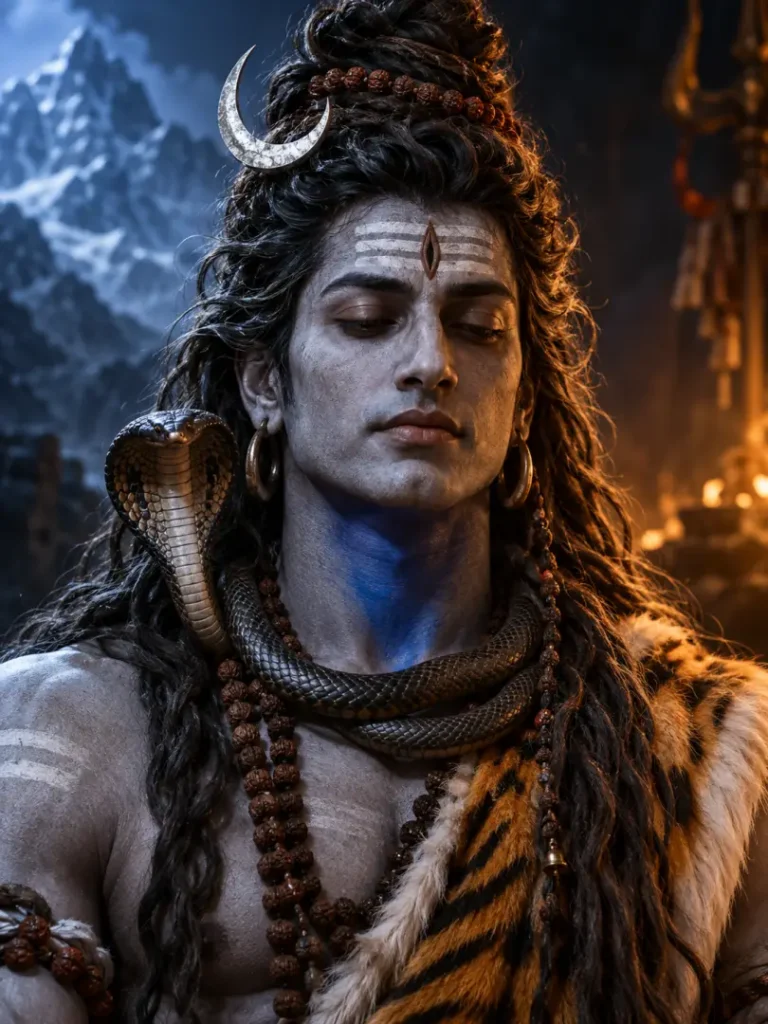
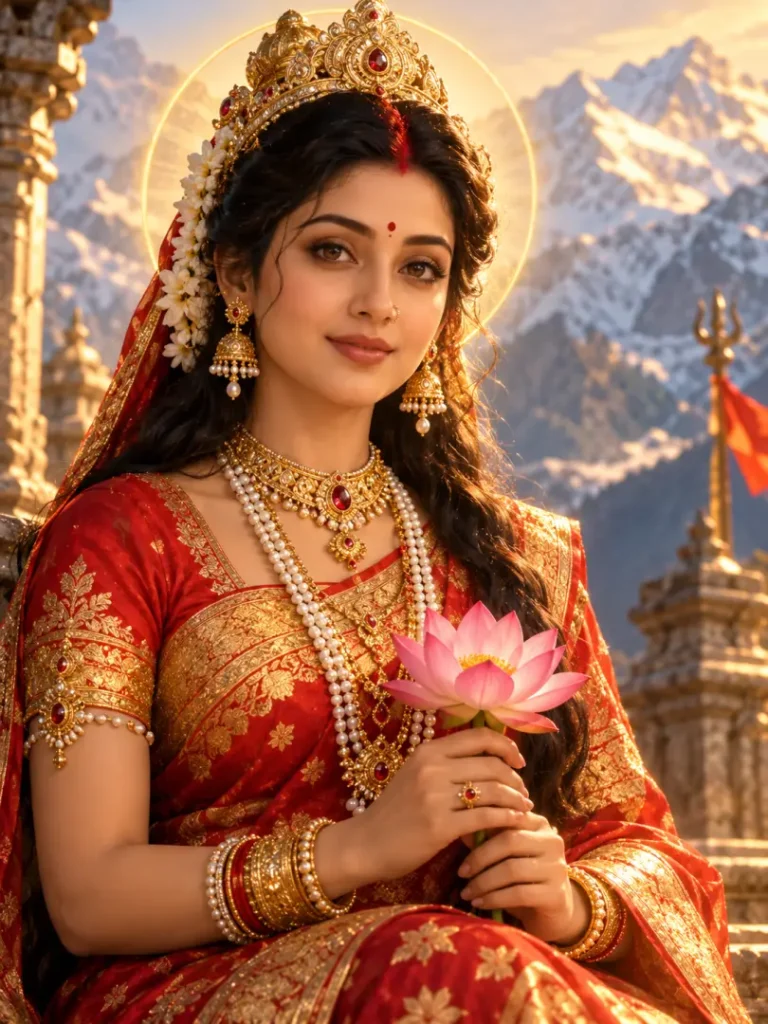
The story
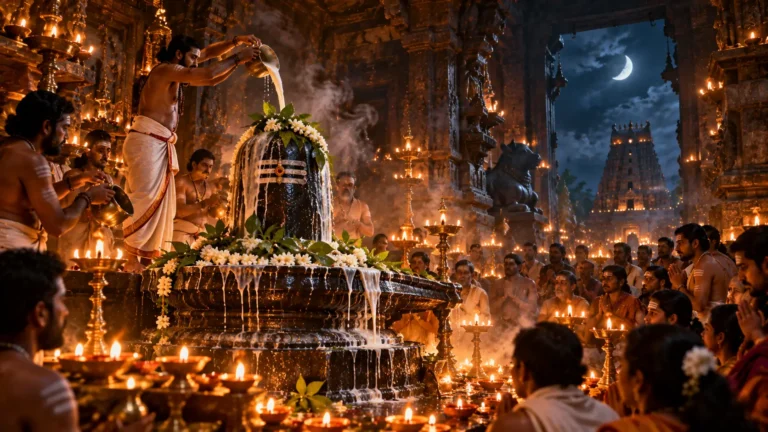
Kashi Vishwanath, in the heart of Varanasi, is one of the twelve Jyotirlingas of Shiva and among the holiest temples in Hinduism. Here Shiva is worshipped as Vishwanath, the Lord of the Universe, in a city believed to be older than history and so sacred that dying within it is said to bring liberation. This guide covers the Kashi Vishwanath story, the temple’s long history, the shrines around it and what to know before a visit.
Kashi Vishwanath story: Shiva’s own city
The Kashi Khanda of the Skanda Purana and other Puranic texts describe Kashi as the city Shiva never leaves, resting on the tip of his trident and spared even at the dissolution of the world. Tradition holds that Shiva and Parvati chose Kashi as their home, and that at the moment of death here Shiva whispers the Taraka mantra into the dying person’s ear, granting moksha. That belief is why pilgrims have come to Kashi for centuries to spend their final days by the Ganga.
The Jyotirlinga of light
The Jyotirlingas are shrines where Shiva is believed to have appeared as an endless column of light. The Shiva Purana tells how Brahma and Vishnu argued over who was greater, and Shiva appeared as a pillar of fire whose top and bottom neither could find. Kashi Vishwanath is counted among the twelve places where that light is worshipped.
A temple rebuilt through history
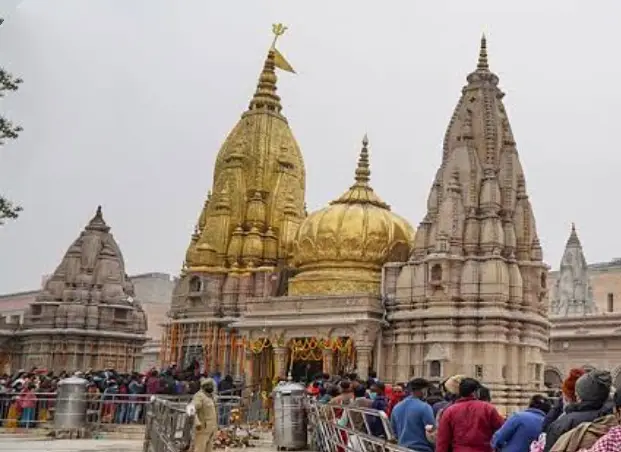
The temple has been destroyed and rebuilt several times. Historical records describe damage in the late twelfth century and later periods, and the temple of that time was demolished in 1669 on the orders of the Mughal emperor Aurangzeb. The present temple was built in 1780 by Ahilyabai Holkar, the queen of Indore. In the nineteenth century, Maharaja Ranjit Singh of Punjab donated gold that was used to plate the temple’s spires, which is why it is often called the Golden Temple of Varanasi.
The Kashi Vishwanath Dham corridor
In December 2021, the Kashi Vishwanath Dham corridor was opened, linking the temple complex directly to the Ganga ghats. It widened the narrow lanes around the shrine, created open courtyards and made it easier for large numbers of pilgrims to reach the temple.
Shrines around Vishwanath
- Annapurna Temple: the goddess of food, a form of Parvati, close to Vishwanath. Devotees visit both.
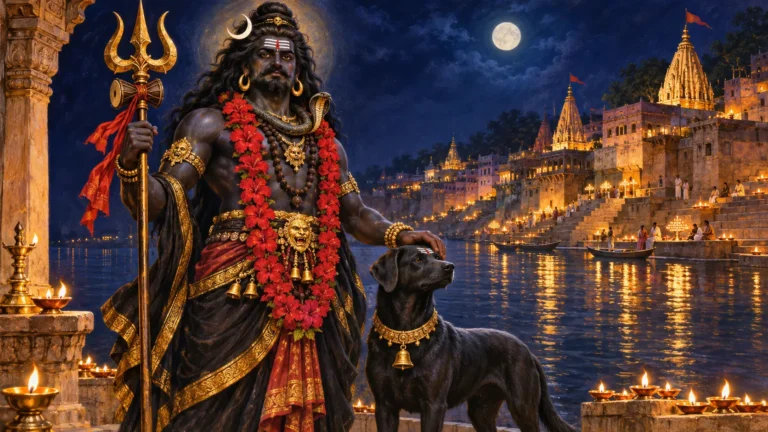
- Kaal Bhairav Temple: Bhairav is called the guardian (kotwal) of Kashi, and many begin or end their pilgrimage with his darshan. His day is Kalabhairav Jayanti.
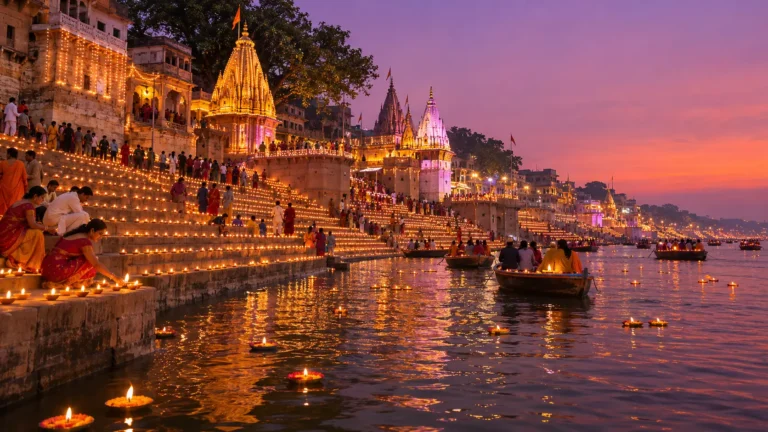
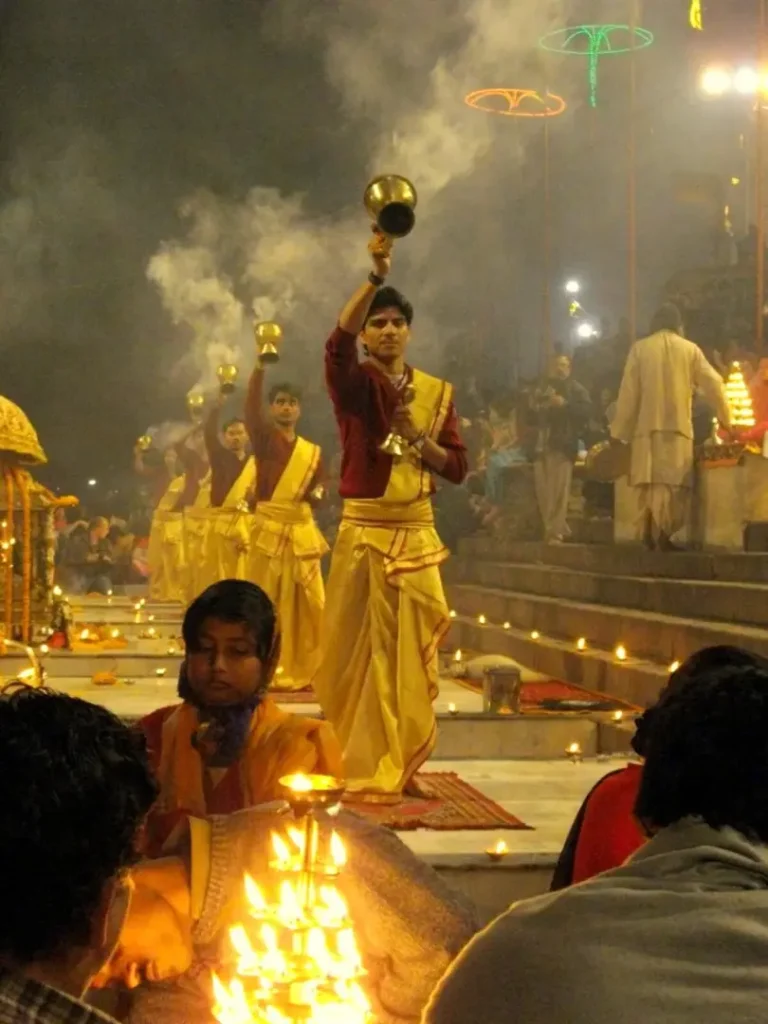
- Manikarnika and Dashashwamedh ghats: Manikarnika is the most sacred cremation ghat, and Dashashwamedh hosts the evening Ganga aarti.
Festivals at Kashi Vishwanath
Maha Shivaratri draws huge crowds and night-long worship, and the month of Shravan brings lines of devotees on Mondays. On Kartik Purnima the ghats glow for Dev Diwali, read more in Dev Diwali and the story of Tripurasura.
Before you visit
Darshan timings, booking options for aarti and rules about phones, bags and footwear change from time to time, so check the temple trust’s official website before you go. Expect long queues on Mondays, festivals and holidays, and plan an early-morning visit for a calmer darshan.
Frequently asked questions
Who built the current Kashi Vishwanath temple?
The present Kashi Vishwanath temple was built in 1780 by Ahilyabai Holkar, the queen of Indore.
Is Kashi Vishwanath a Jyotirlinga?
Yes. Kashi Vishwanath in Varanasi is one of Shiva’s twelve Jyotirlingas.
Why is it called the Golden Temple of Varanasi?
Its spires were plated with gold donated by Maharaja Ranjit Singh of Punjab in the nineteenth century.
Sources and further reading
- Hindu texts index, Sacred Texts (Puranas)
- Skanda Purana, Kashi Khanda; Shiva Purana (Jyotirlinga); temple history records
Read our editorial policy on how scripture, Purana and folk tradition are labelled.