Quick answer
Bhishma Panchak 2026 runs from 20 to 24 November, Dev Uthani Ekadashi to Kartik Purnima. The story behind it, how the five-day fast is kept, and its link to the Vishnu Sahasranama.
Who is in this story
The story
Bhishma Panchak is the five-day observance at the end of the month of Kartik, from Dev Uthani Ekadashi to Kartik Purnima. In 2026 it runs from Friday, 20 November to Tuesday, 24 November. Named after Bhishma, the great elder of the Mahabharata, it is also called Vishnu Panchak, and many treat it as the most important part of the whole Kartik vow. This guide explains the Bhishma Panchak dates, the story behind it and how the five days are observed.
Bhishma Panchak 2026 dates
- Begins: Friday, 20 November 2026, Kartik Shukla Ekadashi (Dev Uthani Ekadashi)
- Ends: Tuesday, 24 November 2026, Kartik Purnima (Dev Diwali)
Tithi timings vary by place, so confirm the start and end with a local panchang.
Why it is named after Bhishma
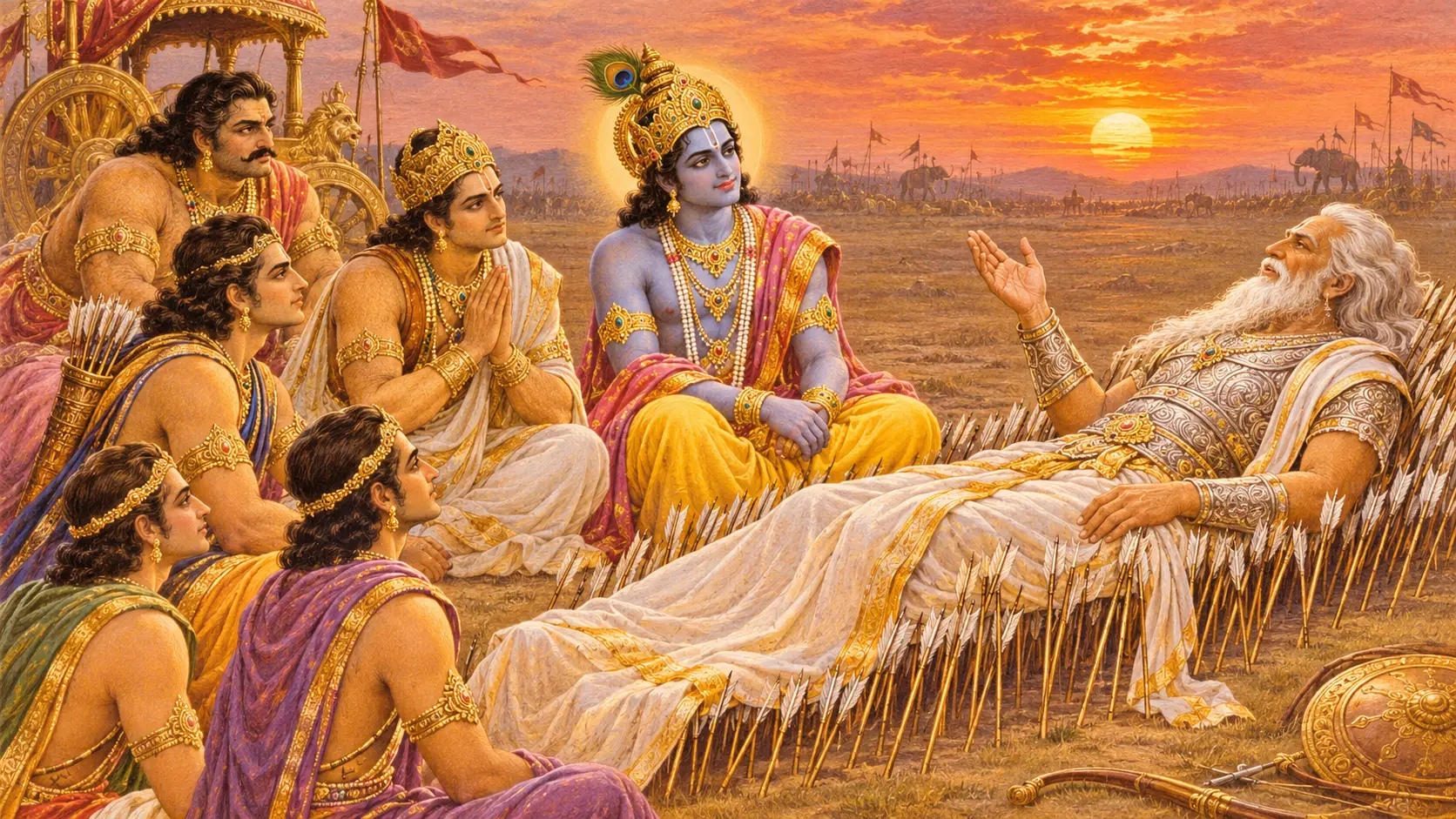
Bhishma, the grandsire of both the Pandavas and the Kauravas, lay on a bed of arrows after the Kurukshetra war, waiting for the auspicious time to leave his body. In the Shanti and Anushasana Parvas of the Mahabharata, he teaches Yudhishthira at length on dharma, kingship and the right way to live, with Krishna present. Popular tradition holds that these teachings were given over five days at the end of Kartik, and that Krishna blessed these days in Bhishma’s name, so that anyone keeping them would earn great merit. The link to these exact five days comes from later tradition, not from the epic itself.
How Bhishma Panchak is observed
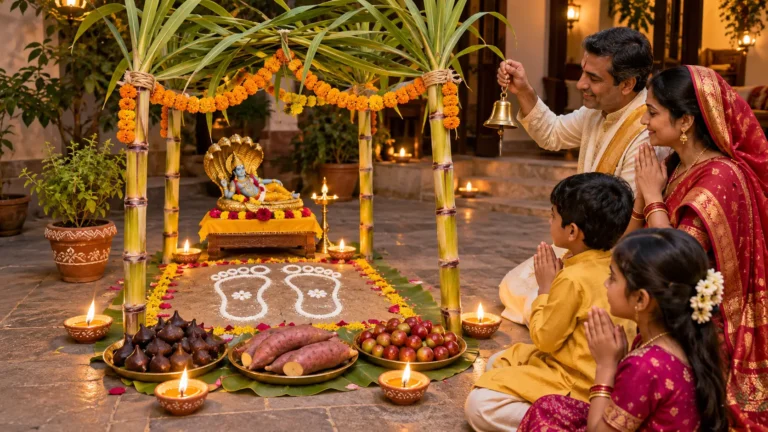
- Fasting: many keep a strict fast through the five days, taking only fruit, milk or simple satvik food. Others fast more lightly according to health.
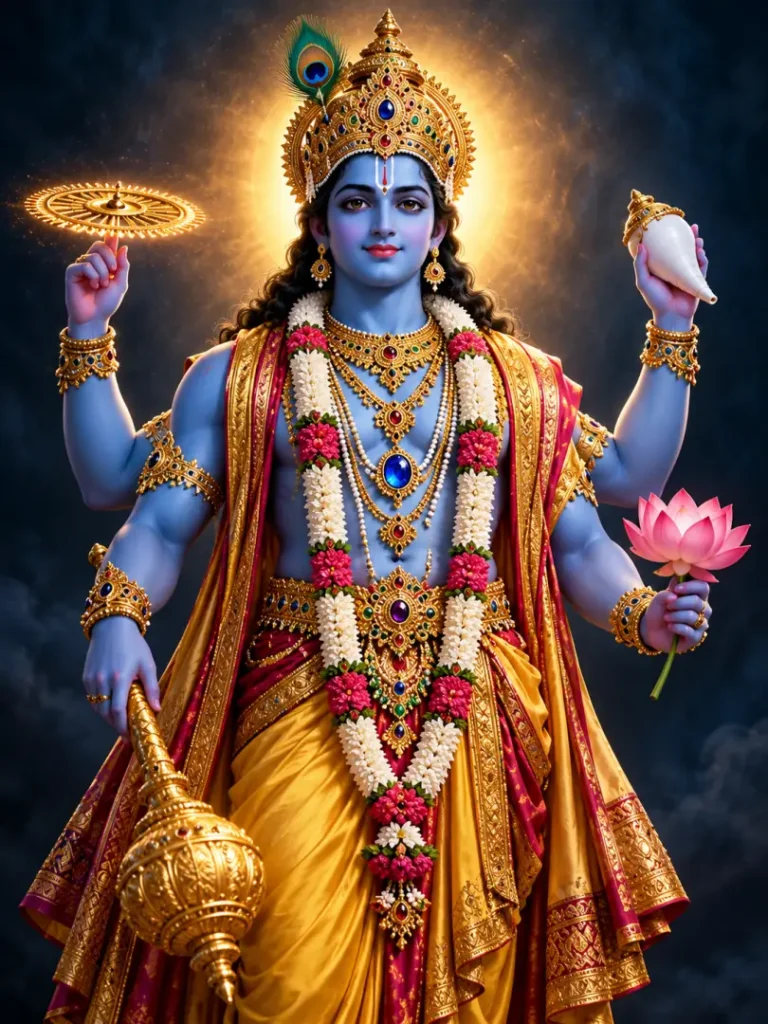
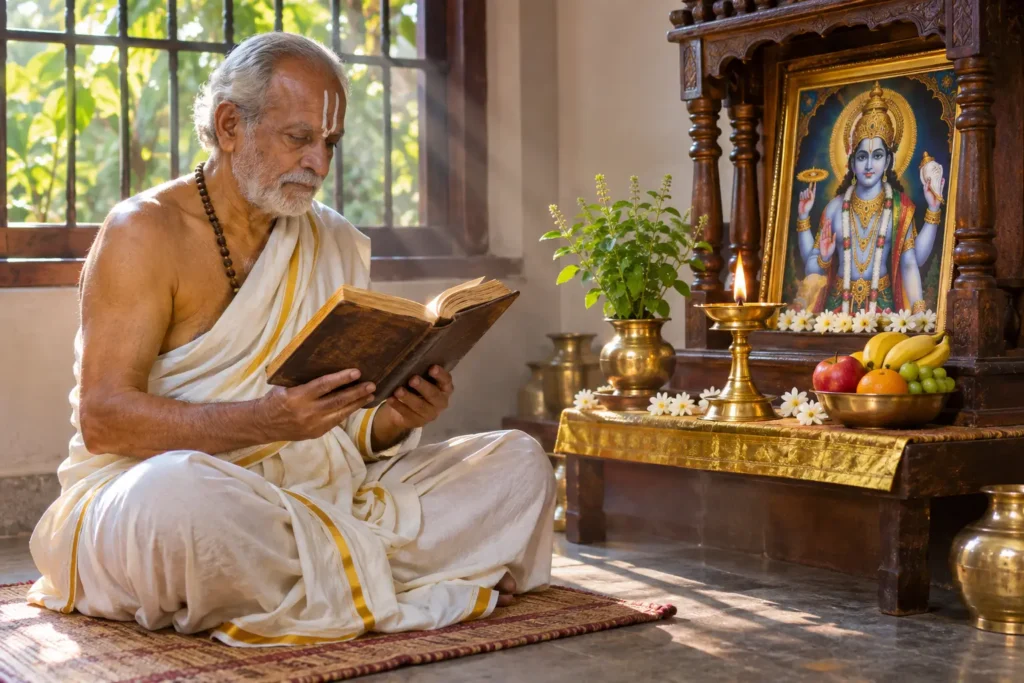
- Vishnu worship: daily puja of Vishnu or Krishna with tulsi, flowers and lamps, and reading of the Vishnu Sahasranama, which Bhishma himself recites in the Anushasana Parva.
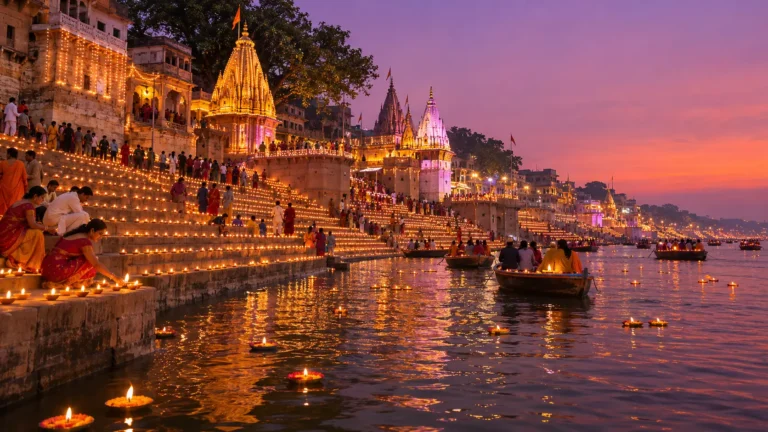
- Kartik Snan and deep daan: the pre-dawn bath and lamp offerings of the Kartik month continue and are considered especially meritorious in these days.
- Remembering Bhishma: some families offer water in Bhishma’s name, honouring him as an elder who died without children of his own.
- Charity: gifts of food, clothing and lamps, particularly on Kartik Purnima.
Customs vary widely by region and family. Follow your own tradition where it differs.
The Vishnu Sahasranama link
The thousand names of Vishnu, the Vishnu Sahasranama, appear in the Anushasana Parva as Bhishma’s answer to Yudhishthira’s question about the highest form of worship. That is why reading or listening to it is a favourite practice during Bhishma Panchak.
A note on health
A five-day fast is demanding. People with diabetes, heart conditions or other medical needs, pregnant women and older people should keep a light fast, such as fruit and milk or one simple meal a day, and speak to a doctor first. Tradition values sincerity over hardship.
Bhishma Panchak and the end of Kartik
The five days connect the waking of Vishnu on Dev Uthani Ekadashi, the wedding of tulsi at Tulsi Vivah and the lamps of Dev Diwali. For the bigger picture, read Dev Diwali and the story of Tripurasura, and explore the epic in the Mahabharata library.
Frequently asked questions
When is Bhishma Panchak in 2026?
Bhishma Panchak 2026 runs from Friday, 20 November (Dev Uthani Ekadashi) to Tuesday, 24 November (Kartik Purnima).
Why is it called Bhishma Panchak?
Tradition holds that Bhishma taught dharma to Yudhishthira on his bed of arrows during these five days, and Krishna blessed them in his name.
How is Bhishma Panchak observed?
Many keep a fruit or milk fast, worship Vishnu, read the Vishnu Sahasranama, continue Kartik Snan and offer lamps.
Sources and further reading
- Hindu festival dates 2026 (Samvat panchang calendar)
- Mahabharata, Shanti and Anushasana Parvas; Kartik Mahatmya tradition
Read our editorial policy on how scripture, Purana and folk tradition are labelled.