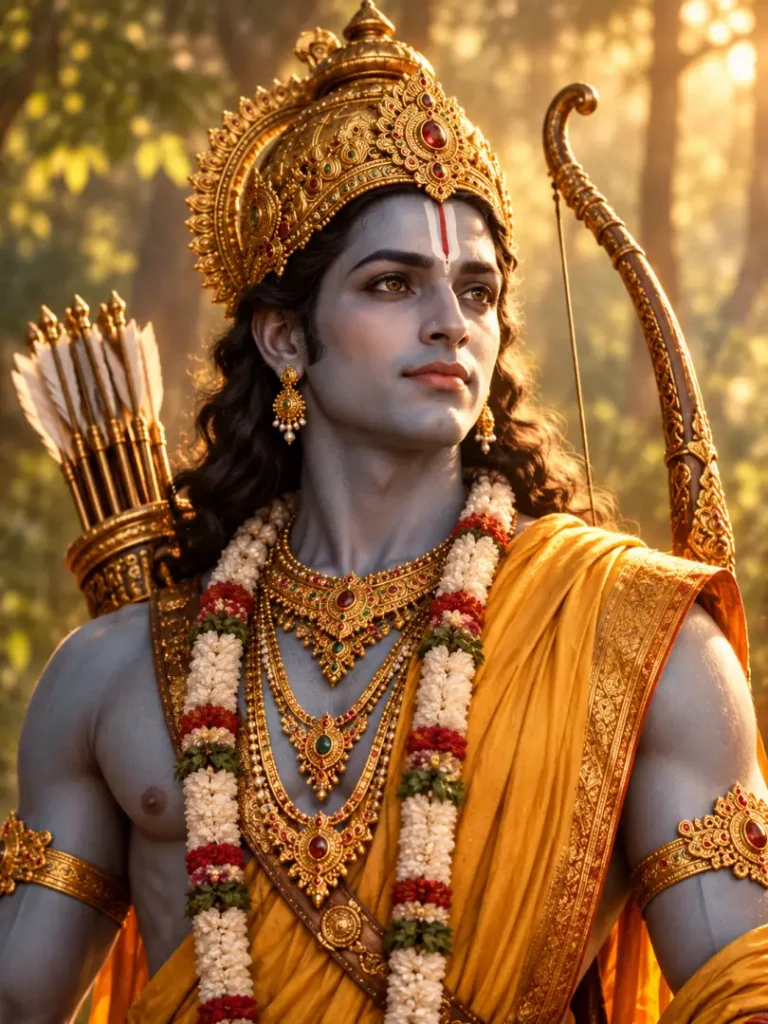
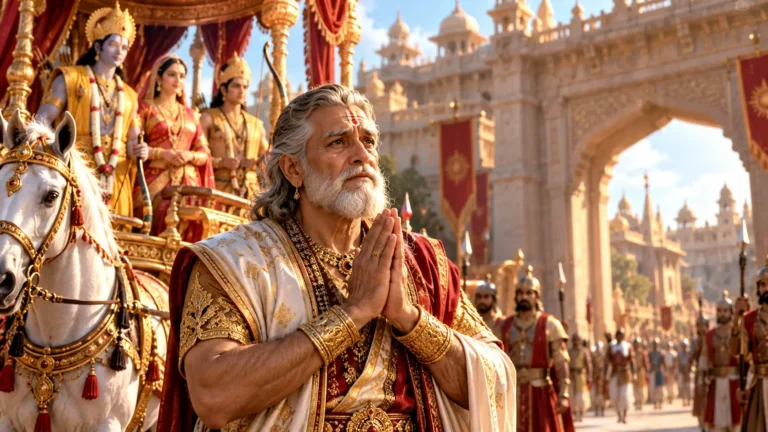
रामोऽपि रात्रिशेषेण तेनैव महदन्तरम् ।
जगाम पुरुषव्याघ्रः पितुराज्ञामनुस्मरन् ॥
rāmo'pi rātriśeṣeṇa tenaiva mahadantaram |
jagāma puruṣavyāghraḥ piturājñāmanusmaran ||
हिंदी अर्थउस पुरुषव्याघ्र राम ने पिता की आज्ञा याद करते हुए रात के बचे भाग में ही बड़ी दूरी तय की।
English meaningRama, that tiger among men, remembering his father's command, travelled a great distance in what was left of that night.
तथैव गच्छतस्तस्य व्यपायाद्रजनी शिवा ।
उपास्य शिवां सन्ध्यां विषयान्तं व्यगाहत ॥
tathaiva gacchatastasya vyapāyādrajanī śivā |
upāsya śivāṃ sandhyāṃ viṣayāntaṃ vyagāhata ||
हिंदी अर्थउनके चलते चलते शुभ रात बीत गई; पवित्र प्रातः संध्या की उपासना करके वे देश की सीमा में पहुँचे।
English meaningAs he went on, the auspicious night ended; having worshipped at the holy dawn twilight, he entered the border of the country.
ग्रामान् विकृष्टसीमान्तान् पुष्पितानि वनानि च ।
पश्यन्नतिययौ शीघ्रं शनैरिव हयोत्तमैः ।
शृण्वन् वचो मनुष्याणां ग्रामसंवासवासिनाम् ॥
grāmān vikṛṣṭasīmāntān puṣpitāni vanāni ca |
paśyannatiyayau śīghraṃ śanairiva hayottamaiḥ |
śṛṇvan vaco manuṣyāṇāṃ grāmasaṃvāsavāsinām ||
हिंदी अर्थसीमा तक जुते खेतों वाले गाँव और फूलों भरे वन देखते हुए वे उत्तम घोड़ों से शीघ्र आगे बढ़े, यद्यपि वे धीमे लगते थे, गाँवों में रहने वाले लोगों की बातें सुनते हुए:
English meaningSeeing villages with fields ploughed to their edges and forests in flower, he passed on quickly with the fine horses, though they seemed to go slowly, hearing the words of the men who lived in the villages:
राजानं धिग्दशरथं कामस्य वशमागतम् ।
हा नृशंसाद्य कैकेयी पापा पापानुबन्धिनी ।
तीक्ष्णा सम्भिन्नमर्यादा तीक्ष्णकर्मणि वर्तते ।
या पुत्रमीदृशं राज्ञः प्रवासयति धार्मिकम् ।
वनवासे महाप्राज्ञं सानुक्रोशं जितेन्द्रियम् ॥
rājānaṃ dhigdaśarathaṃ kāmasya vaśamāgatam |
hā nṛśaṃsādya kaikeyī pāpā pāpānubandhinī |
tīkṣṇā sambhinnamaryādā tīkṣṇakarmaṇi vartate |
yā putramīdṛśaṃ rājñaḥ pravāsayati dhārmikam |
vanavāse mahāprājñaṃ sānukrośaṃ jitendriyam ||
हिंदी अर्थकामवश हुए राजा दशरथ को धिक्कार है! हाय, आज क्रूर कैकेयी, पापिनी और पाप से बँधी, कठोर, सब मर्यादाएँ तोड़कर, कठोर कर्म में लगी है, जो राजा के ऐसे धर्मात्मा, महाप्राज्ञ, दयालु और जितेंद्रिय पुत्र को वनवास भेजती है।
English meaningShame on King Dasharatha, fallen under the sway of desire! Alas, cruel Kaikeyi today, wicked and bound to wickedness, harsh, having broken all bounds, is set on a harsh deed, who exiles to the forest such a righteous son of the king, so wise, compassionate and self controlled.
कथं नाम महाभागा सीता जनकनन्दिनी ।
सदा सुखेष्वभिरता दुःखान्यनुभविष्यति ॥
kathaṃ nāma mahābhāgā sītā janakanandinī |
sadā sukheṣvabhiratā duḥkhānyanubhaviṣyati ||
हिंदी अर्थसदा सुख में रहने वाली भाग्यशाली सीता, जनकनंदिनी, कष्ट कैसे सहेंगी?
English meaningHow will fortunate Sita, joy of Janaka, always used to comfort, endure hardships?
अहो दशरथो राजा निस्नेहः स्वसुतं प्रियम् ।
प्रजानामनघं रामं परित्यक्तुमिहेच्छति ॥
aho daśaratho rājā nisnehaḥ svasutaṃ priyam |
prajānāmanaghaṃ rāmaṃ parityaktumihecchati ||
हिंदी अर्थअहा, राजा दशरथ में स्नेह नहीं, जो अपने प्रिय पुत्र, प्रजा के निष्पाप राम को त्यागना चाहते हैं।
English meaningAh, King Dasharatha has no love, since he wishes to abandon his own dear son Rama, the sinless one of the people.
एता वाचो मनुष्याणां ग्रामसंवासवासिनाम् ।
शृण्वन्नतिययौ वीरः कोसलान् कोसलेश्वरः ॥
etā vāco manuṣyāṇāṃ grāmasaṃvāsavāsinām |
śṛṇvannatiyayau vīraḥ kosalān kosaleśvaraḥ ||
हिंदी अर्थगाँवों में रहने वाले लोगों के ये वचन सुनते हुए वीर कोसलेश्वर कोसल की सीमा पार कर गए।
English meaningHearing these words of the men who lived in the villages, the hero, lord of Kosala, passed beyond Kosala.
ततो वेदश्रुतिं नाम शिववारिवहां नदीम् ।
उत्तीर्याभिमुखः प्रायादगस्त्याध्युषितां दिशम् ॥
tato vedaśrutiṃ nāma śivavārivahāṃ nadīm |
uttīryābhimukhaḥ prāyādagastyādhyuṣitāṃ diśam ||
हिंदी अर्थफिर मंगलमय जल वाली वेदश्रुति नदी पार करके वे अगस्त्य के निवास वाली दिशा की ओर बढ़े।
English meaningThen, crossing the river Vedashruti, which carries auspicious waters, he went on towards the direction where Agastya lives.
गत्वा तु सुचिरं कालं ततः शीतजलां नदीम् ।
गोमतीं गोयुतानूपामतरत्सागरङ्गमाम् ॥
gatvā tu suciraṃ kālaṃ tataḥ śītajalāṃ nadīm |
gomatīṃ goyutānūpāmataratsāgaraṅgamām ||
हिंदी अर्थबहुत समय चलने के बाद उन्होंने समुद्र की ओर बहती, शीतल जल वाली गोमती नदी पार की, जिसके दलदली तट गायों से भरे थे।
English meaningAfter going a long time, he crossed the Gomati, a river of cool water flowing to the sea, its marshes full of cattle.
गोमतीं चाप्यतिक्रम्य राघवः शीघ्रगैर्हयैः ।
मयूरहंसाभिरुतां ततार स्यन्दिकां नदीम् ॥
gomatīṃ cāpyatikramya rāghavaḥ śīghragairhayaiḥ |
mayūrahaṃsābhirutāṃ tatāra syandikāṃ nadīm ||
हिंदी अर्थतेज घोड़ों से गोमती पार करके राघव ने मोरों और हंसों से गूँजती स्यंदिका नदी पार की।
English meaningCrossing the Gomati with his swift horses, Raghava crossed the Syandika river, echoing with peacocks and swans.
स महीं मनुना राज्ञा दत्तामिक्ष्वाकवे पुरा ।
स्फीतां राष्ट्रावृतां रामो वैदेहीमन्वदर्शयत् ॥
sa mahīṃ manunā rājñā dattāmikṣvākave purā |
sphītāṃ rāṣṭrāvṛtāṃ rāmo vaidehīmanvadarśayat ||
हिंदी अर्थराम ने वैदेही को वह समृद्ध, राज्यों से भरी भूमि दिखाई जो राजा मनु ने बहुत पहले इक्ष्वाकु को दी थी।
English meaningRama showed Vaidehi the prosperous land, full of kingdoms, that King Manu long ago gave to Ikshvaku.
सूत इत्येव चाभाष्य सारथिं तमभीक्ष्णशः ।
हंसमत्तस्वरश्श्रीमानुवाच पुरुषर्षभः ॥
sūta ityeva cābhāṣya sārathiṃ tamabhīkṣṇaśaḥ |
haṃsamattasvaraśśrīmānuvāca puruṣarṣabhaḥ ||
हिंदी अर्थसारथि को बार बार सारथि कहकर पुकारते हुए मस्त हंस जैसे स्वर वाले श्रीमान पुरुषश्रेष्ठ ने कहा:
English meaningCalling the charioteer again and again: Charioteer, the glorious bull among men, with a voice like a joyful swan, said:
कदाऽहं पुनरागम्य सरय्वा पुष्पिते वने ।
मृगयां पर्यटिष्यामि मात्रा पित्रा च सङ्गतः ॥
kadā'haṃ punarāgamya sarayvā puṣpite vane |
mṛgayāṃ paryaṭiṣyāmi mātrā pitrā ca saṅgataḥ ||
हिंदी अर्थकब मैं लौटकर माता और पिता के साथ सरयू के फूलों भरे वनों में शिकार करते घूमूँगा?
English meaningWhen shall I come back and roam hunting in the flowering woods of the Sarayu, together with my mother and father?
नात्यर्थमभिकाङ्क्षामि मृगयां सरयूवने ।
रतिर्ह्येषातुला लोके राजर्षिगणसम्मता ॥
nātyarthamabhikāṅkṣāmi mṛgayāṃ sarayūvane |
ratirhyeṣātulā loke rājarṣigaṇasammatā ||
हिंदी अर्थमैं सरयू के वनों में शिकार की बहुत इच्छा नहीं रखता; फिर भी यह संसार में अनुपम आनंद है, राजर्षियों द्वारा मान्य।
English meaningI do not greatly long for hunting in the Sarayu woods; yet this is a delight without equal in the world, approved by royal sages.
राजर्षीणां हि लोकेऽस्मिन् रत्यर्थं मृगया वने ।
काले कृतां तां मनुजैर्घन्विनामभिकाङ्क्षिताम् ॥
rājarṣīṇāṃ hi loke'smin ratyarthaṃ mṛgayā vane |
kāle kṛtāṃ tāṃ manujairghanvināmabhikāṅkṣitām ||
हिंदी अर्थक्योंकि इस संसार में उचित समय पर वन में शिकार राजर्षियों का आनंद है, धनुर्धर मनुष्यों द्वारा वांछित।
English meaningFor in this world hunting in the forest at the proper time is a pleasure for royal sages, desired by men who are archers.
स तमध्वानमैक्ष्वाकस्सूतं मधुरया गिरा ।
तं तमर्थमभिप्रेत्य ययौ वाक्यमुदीरयन् ॥
sa tamadhvānamaikṣvākassūtaṃ madhurayā girā |
taṃ tamarthamabhipretya yayau vākyamudīrayan ||
हिंदी अर्थइस प्रकार इक्ष्वाकु राजकुमार मधुर वाणी से सारथि से एक के बाद एक विषय पर बात करते हुए उस मार्ग पर चले।
English meaningSo the Ikshvaku prince went along that road, speaking sweetly to the charioteer on one subject after another.