Pinaka
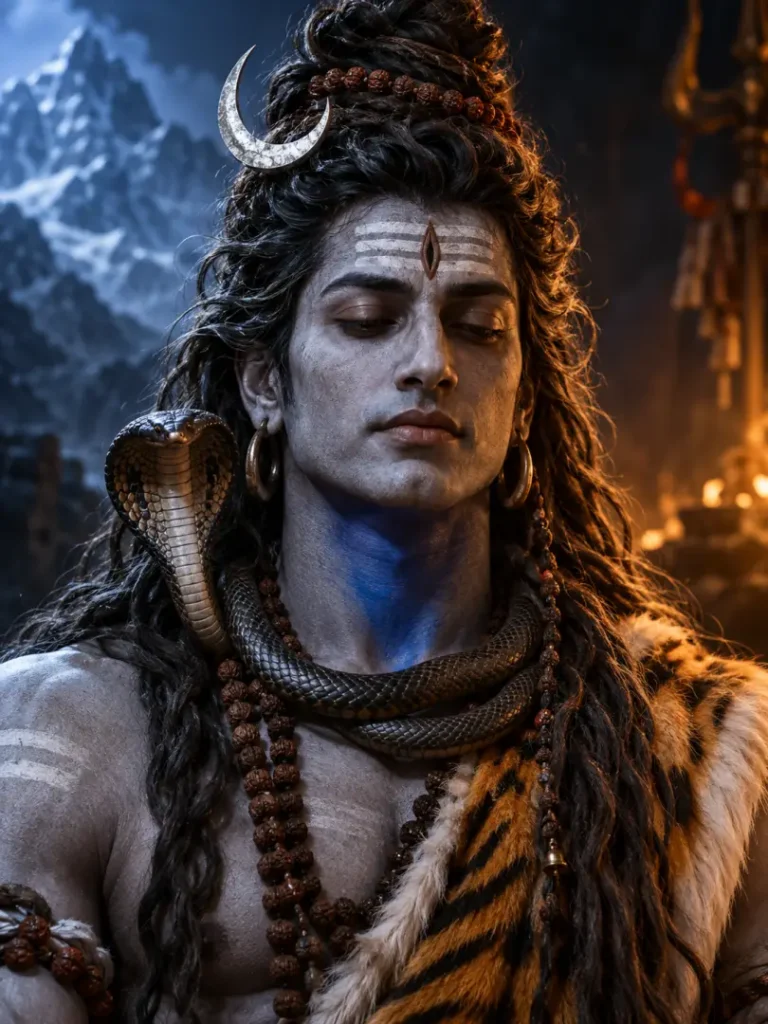
पिनाकPinaka is the mighty bow of Shiva, who is therefore called Pinakin and Pinakapani. With it he destroyed the three flying cities of the asuras as Tripurantaka. In the Ramayana the same bow was kept by King Janaka, and the young Rama broke it while stringing it to win Sita.
What is the Pinaka?
Pinaka is the celestial bow of Shiva, described as immense, unbreakable by any ordinary hand, and terrible in battle. It gives Shiva the names Pinakin and Pinakapani, the one with Pinaka in hand.
The bow is not usually shown in his peaceful images, but appears in his warrior forms, above all as Tripurantaka.
The bow of Tripurantaka
The most famous use of the bow is the destruction of Tripura, three flying cities of gold, silver and iron built for the asura sons of Taraka. They could be destroyed only when they came into a single line, and only by a single arrow. The Shiva Purana and the Mahabharata describe how the gods built Shiva a chariot of the whole cosmos: the earth as its body, the Sun and Moon as its wheels and Brahma as its charioteer. Shiva drew his bow, with Vishnu as the arrow, and at the moment the three cities aligned he burned them with one shot. From this he is called Tripurantaka, the destroyer of the three cities.
From Daksha’s sacrifice to Mithila
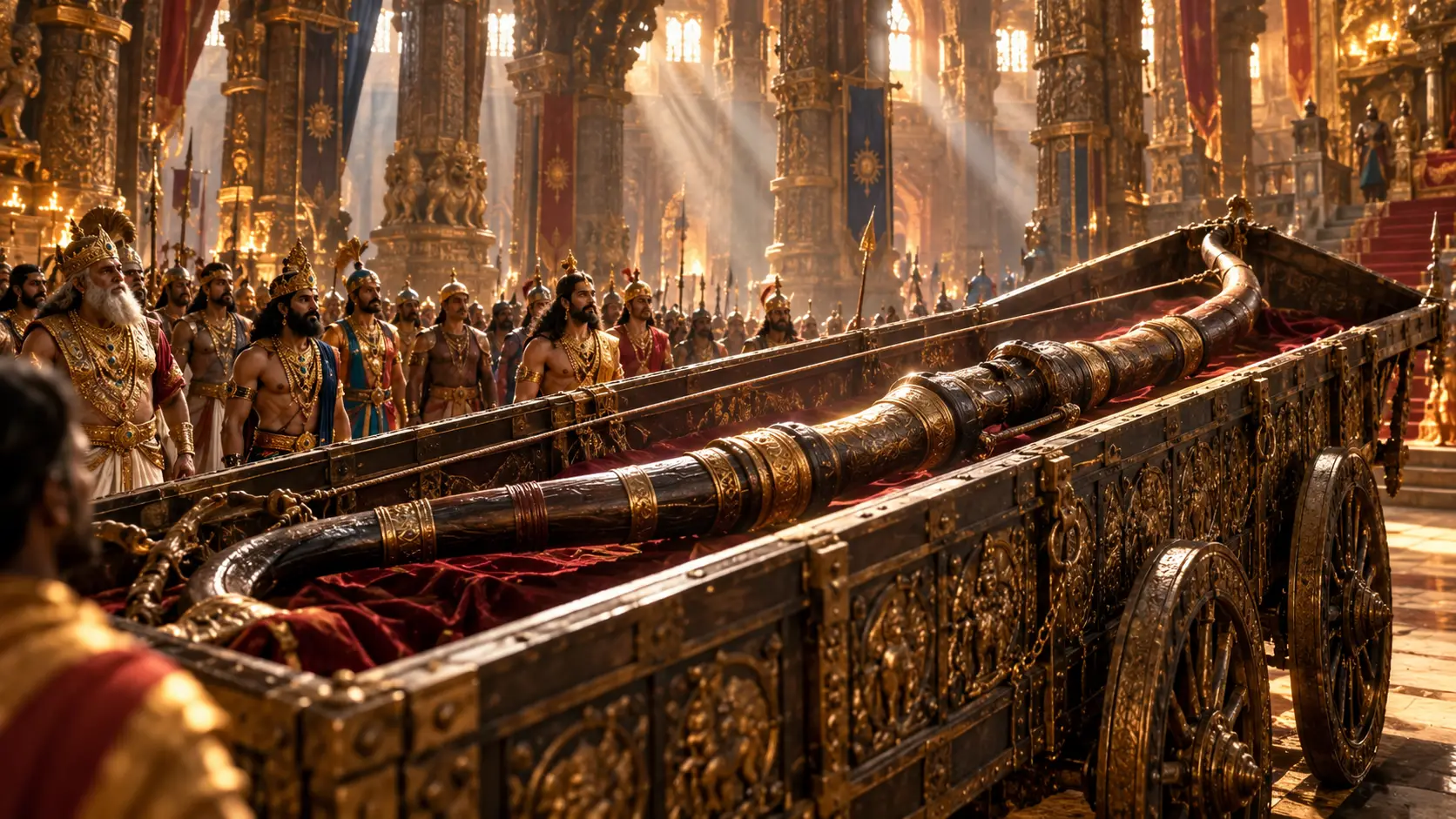
The Ramayana says that after the destruction of Daksha’s sacrifice, Shiva gave his bow to the gods, who left it in the keeping of King Devarata, an ancestor of Janaka of Mithila. No king could even lift it. Janaka declared that whoever could string the bow would marry his daughter Sita. The young Rama, who had come to Mithila with the sage Vishwamitra, lifted it easily and, as he drew the string, the bow broke in two with a sound like thunder. Rama won Sita, and the sound brought Parashurama to confront him.
The twin bow
Parashurama tells Rama that Vishwakarma made two bows: Pinaka for Shiva and Sharanga for Vishnu. In some accounts a contest between the two gods showed Vishnu’s bow to be the stronger, after which Shiva gave his bow away.
What does it symbolise?
Tradition reads Shiva's bow as the power that ends illusion: the three cities of Tripura are often explained as the three impurities, or the three bodies, gross, subtle and causal, burned away in one moment of grace. In the Ramayana the breaking of Pinaka marks…