Padma (Lotus)
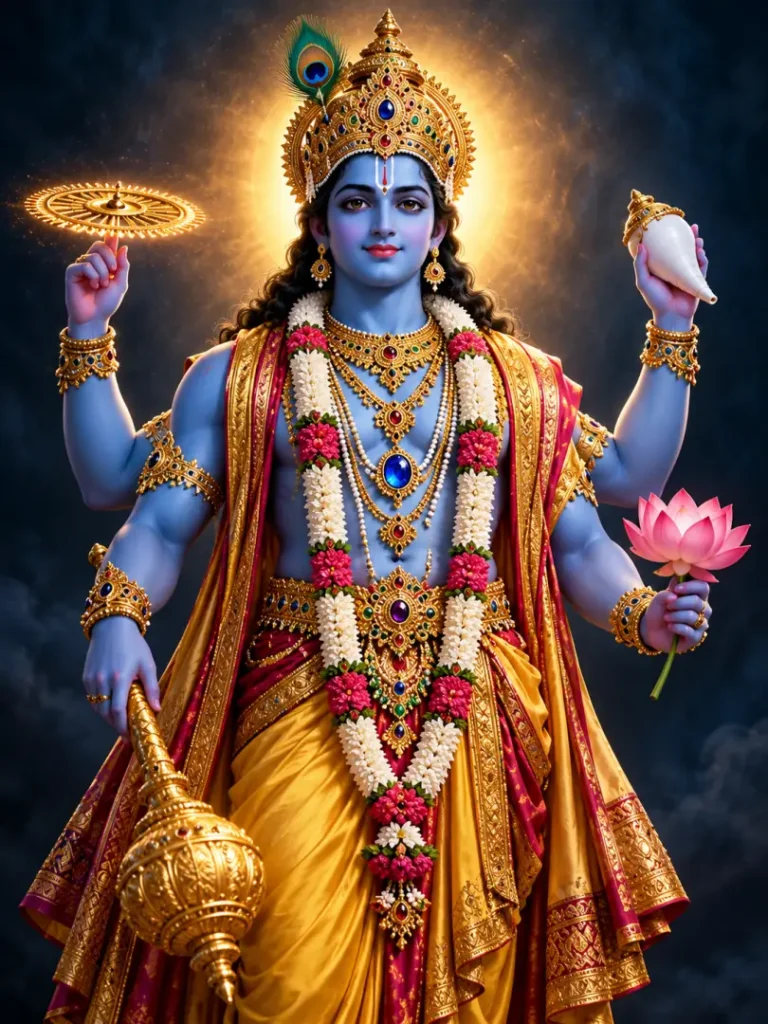
पद्म (कमल)Padma, the lotus, is one of the four emblems of Vishnu, usually held in a lower hand. It stands for purity, beauty and the unfolding of creation: in the Puranas a lotus rises from Vishnu's navel and Brahma is born upon it. It also signals the presence of Lakshmi, the lotus goddess.
What is the Padma (Lotus)?
The padma is the lotus flower that Vishnu holds in one of his four hands, usually a lower hand, alongside the conch, discus and mace. It is not a weapon but an object of grace.
The lotus also appears at Vishnu's navel in his reclining form as Padmanabha, under his feet as a pedestal, and in the hands of his consort Lakshmi.
The lotus of creation
In the best-known Puranic image of creation, Vishnu lies asleep on the serpent Shesha in the cosmic ocean between two ages. A lotus grows from his navel, and on it Brahma appears and begins to create the world. This is why Vishnu is called Padmanabha, the one with a lotus at his navel, the name of the deity at the Padmanabhaswamy temple in Thiruvananthapuram. The lotus here is the bridge between the sleeping god and the living universe.
Lotus-eyed, lotus-handed
Hymns praise nearly every part of Vishnu through the lotus: he is Pundarikaksha and Kamalanayana, the lotus-eyed; his feet are lotus feet, the refuge of devotees; and his consort Lakshmi, born of the churning of the ocean, is Padma and Kamala, the lotus goddess, who stands or sits on a lotus herself. In many images the lotus he holds is a sign that Lakshmi, prosperity and grace, is never far from him.
In worship
Lotus flowers are among the most valued offerings to Vishnu and Lakshmi, especially on Diwali, and the lotus is the seat on which most deities are shown standing or seated.
What does it symbolise?
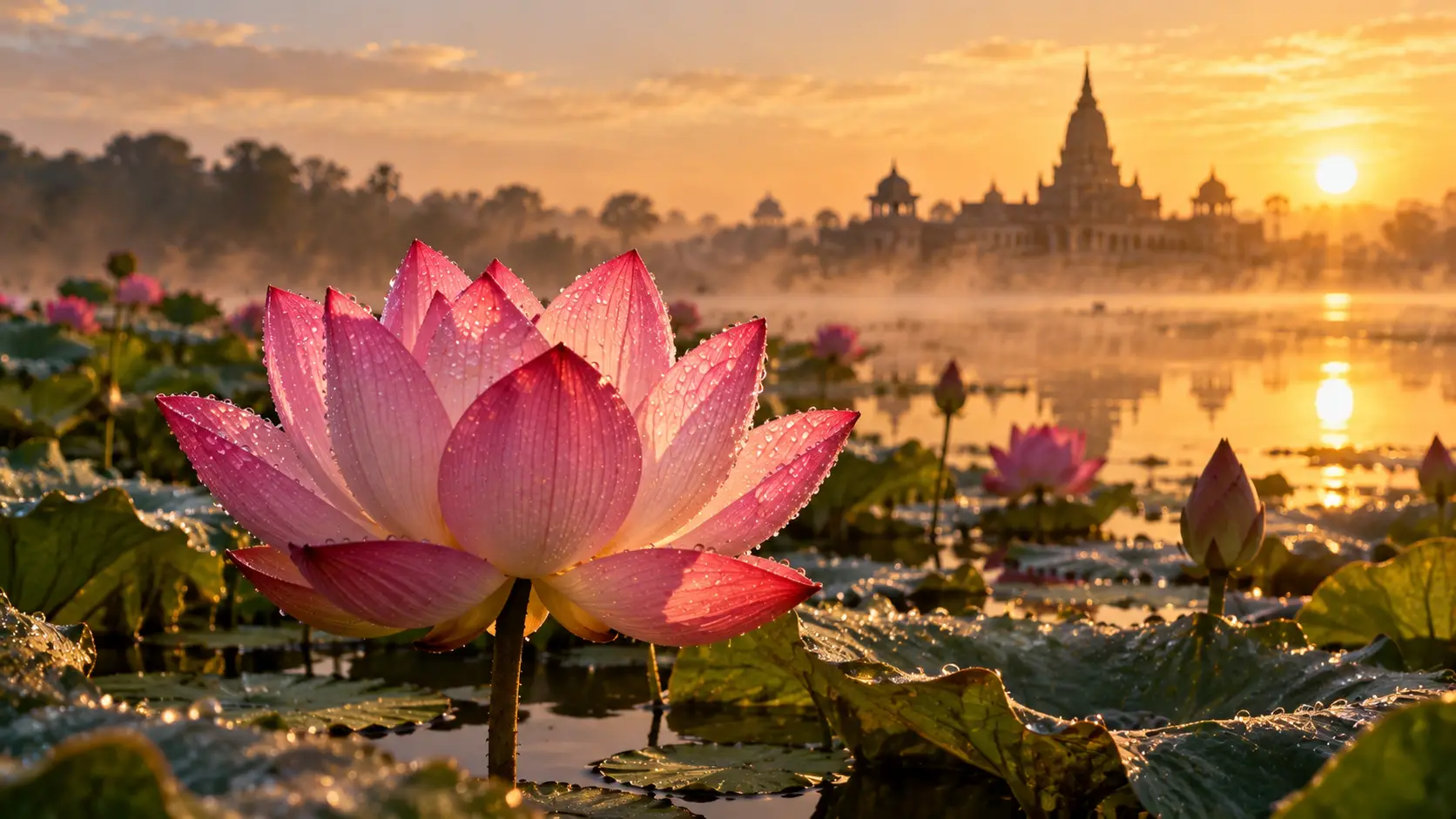
The lotus grows from mud yet blooms clean and untouched above the water. Tradition reads it as the soul that lives in the world without being stained by it, an image the Bhagavad Gita (5.10) uses directly: one who acts without attachment is untouched by…