Jatayu, the aged vulture king and son of Aruna, was an old friend of King Dasharatha. He fought Ravana in the sky to save Sita, broke his chariot and lost his wings, and lived only long enough to tell Rama which way Sita had been taken. Rama performed his last rites himself.
Who was Jatayu?
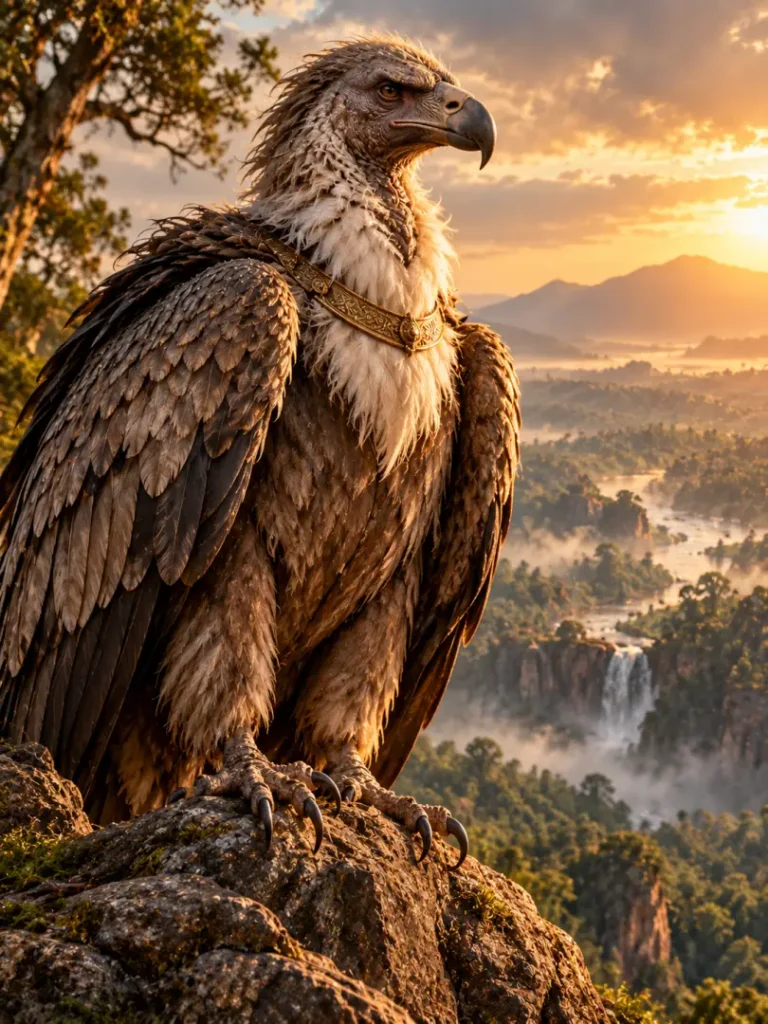
Jatayu (जटायु) is the aged king of vultures who fought Ravana in the sky to rescue Sita and died in the attempt. His courage and loyalty, a frail old bird against the mightiest of rakshasas, make him one of the most loved figures in the Ramayana.
Family and friendship
Jatayu is the son of Aruna, the charioteer of the Sun and elder brother of Garuda, and the younger brother of Sampati. In their youth the two brothers raced towards the Sun; Sampati spread his wings to shield Jatayu and had his own burned, so that he fell to earth and could never fly again. Jatayu was an old friend of King Dasharatha, and when Rama met him in the Panchavati forest he promised to watch over Sita.
The fight with Ravana
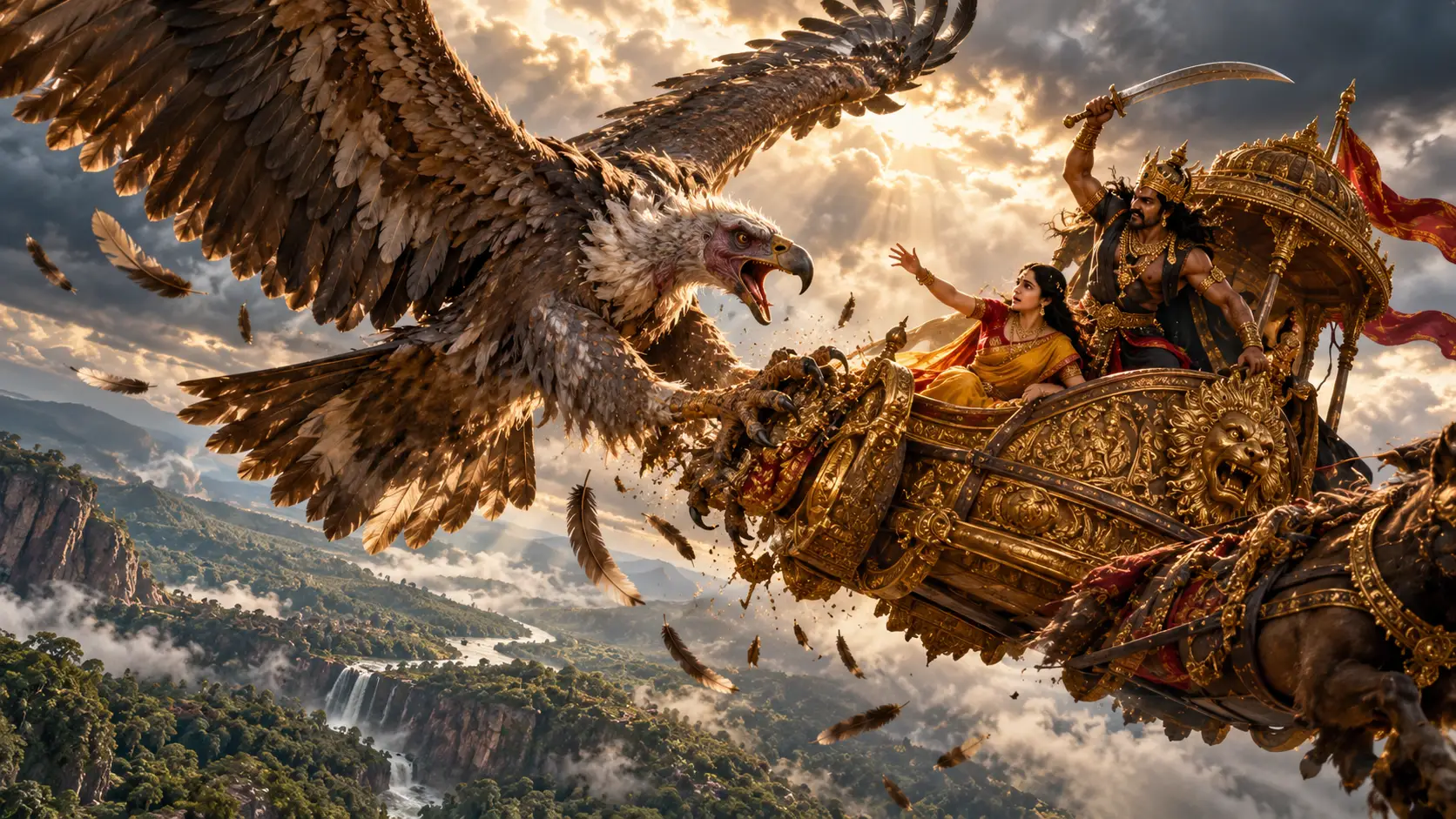
When Ravana carried Sita away in his flying chariot, Jatayu heard her cries and flew at him. He broke Ravana’s bow, smashed his chariot and killed his charioteer and mules, but he was old, and Ravana cut off his wings with his sword. Jatayu fell, mortally wounded. When Rama and Lakshmana found him, he told them that Ravana had taken Sita south, and died in Rama’s arms. Rama performed his funeral rites himself, as he would have done for his own father.
Sampati’s help
Later, in the Kishkindha Kanda, the vanara search party led by Angada reached the southern sea in despair and spoke of Jatayu’s death. The wingless Sampati overheard them, mourned his brother, and with his far-seeing eyes told them that Sita was held in Lanka across the sea. As he spoke, his wings grew back.
Where is Jatayu remembered?
Several places claim the spot where Jatayu fell. At Jatayupara in Chadayamangalam, Kerala, a giant sculpture of the bird has been carved on the rock. At Lepakshi in Andhra Pradesh, tradition says Rama called out to the fallen bird “le pakshi” (“rise, bird”), giving the town its name.