Who is in this story
The story
Why Lakshmi, and why now?
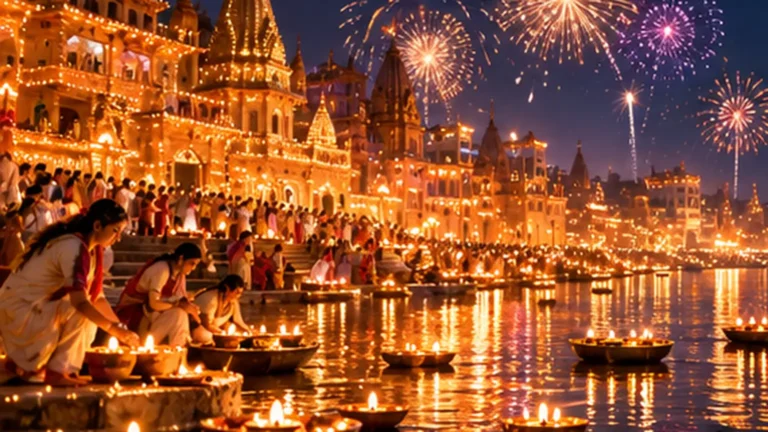
On the main night of Diwali, it is Lakshmi, goddess of fortune, who is worshipped above all. One reason reaches back to the greatest of cosmic events: the Samudra Manthan, the churning of the ocean of milk, from which Lakshmi herself was born. Many traditions hold that she arose, or that her worship was established, on the night that became Diwali.
Gods and demons at the churning
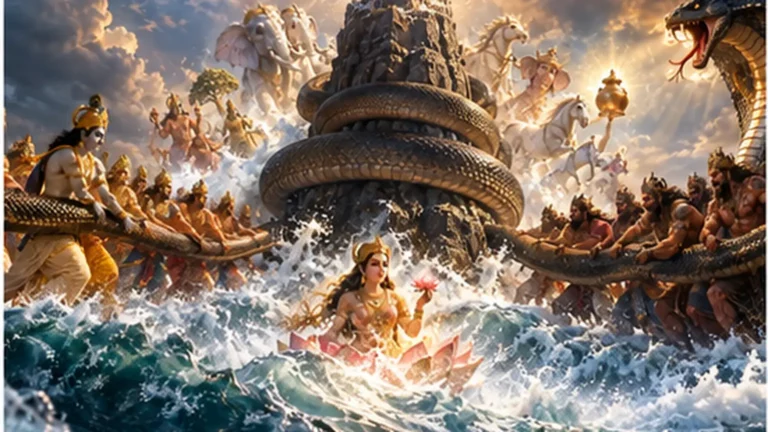
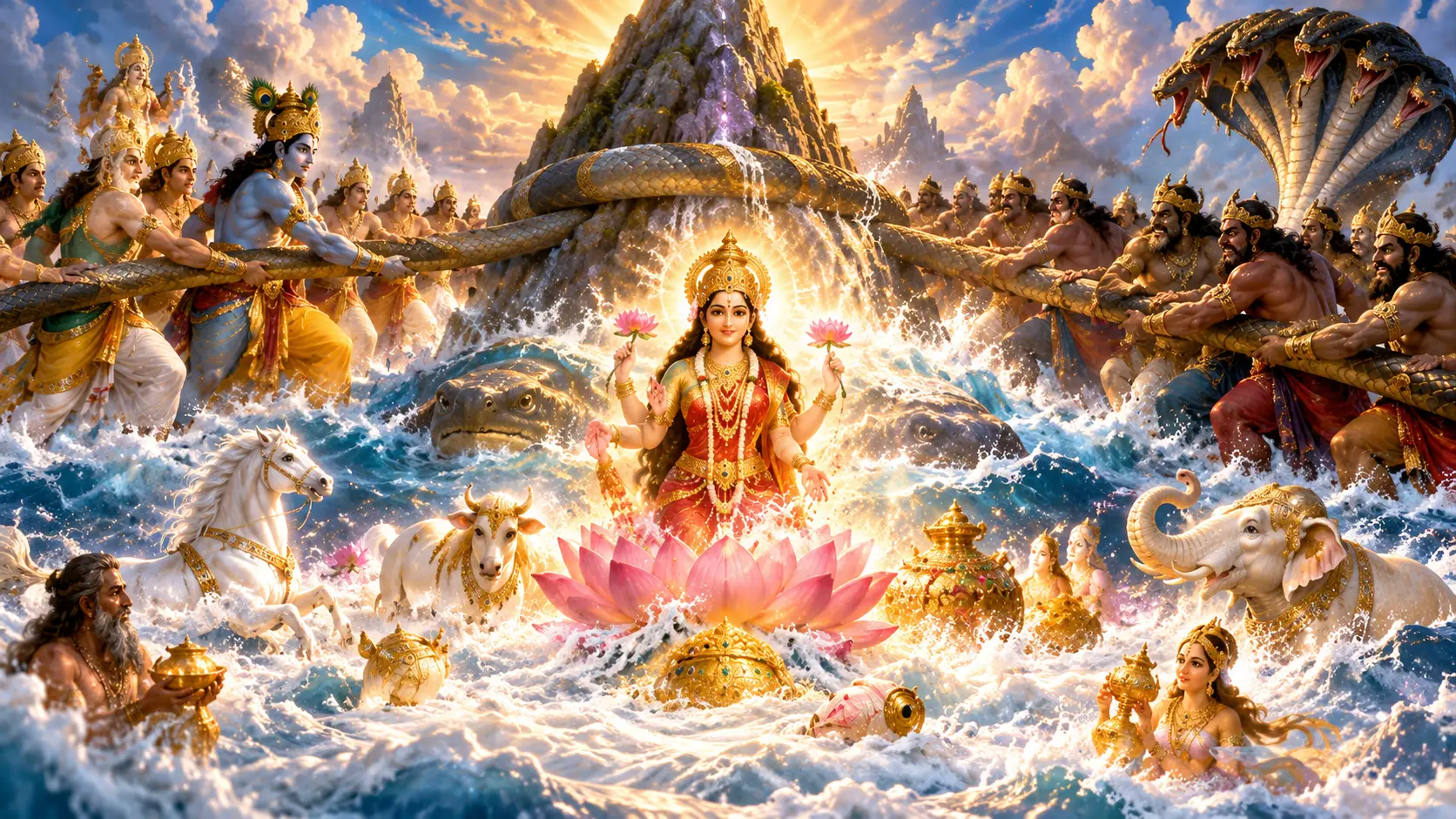
Weakened by a sage’s curse, the devas had lost their fortune and strength. On the advice of Vishnu, they made an uneasy alliance with the asuras to churn the ocean of milk and draw out the nectar of immortality. They used Mount Mandara as the churning-rod and the serpent Vasuki as the rope. Vishnu, as the tortoise Kurma, bore the sinking mountain on his back.
The treasures of the deep
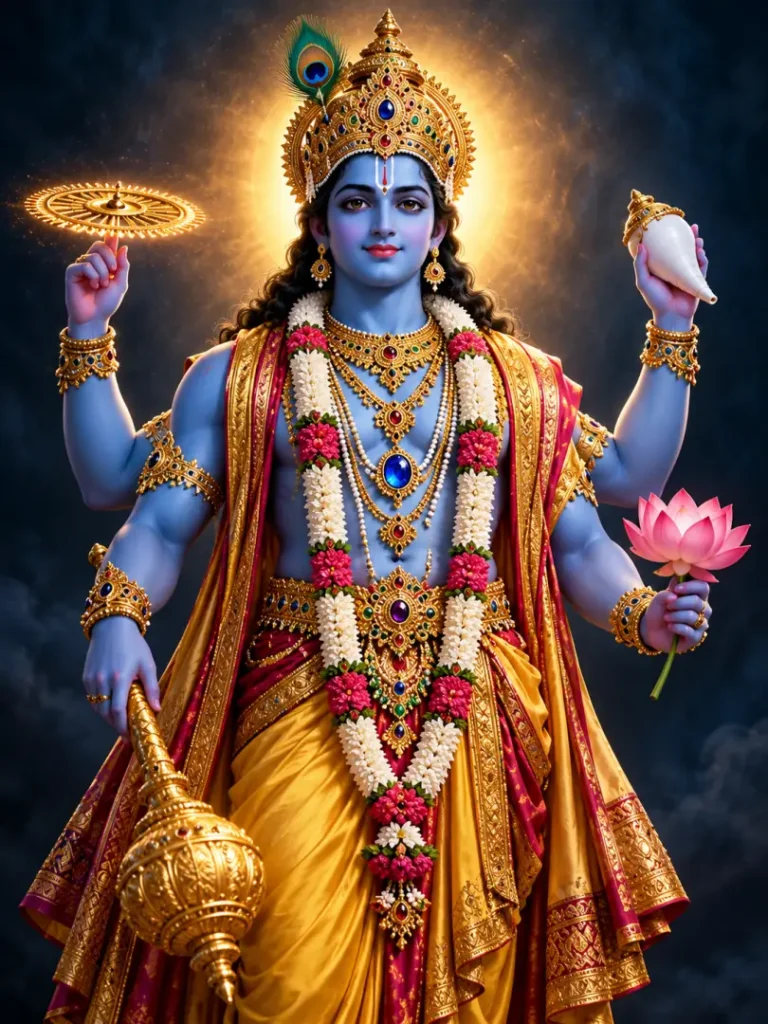
As the ocean churned, it gave up one marvel after another: the deadly halahala poison, which Shiva drank to save creation; the wish-cow Kamadhenu; the moon; the divine tree Parijata; Dhanvantari with the pot of nectar — and then, radiant on a full-blown lotus, Lakshmi herself, Shri, the goddess of beauty and fortune. Of all the beings present, she chose Vishnu as her eternal consort and placed her garland around his neck.
Fortune rises from effort
The meaning is not lost on those who tell it at Diwali: Lakshmi did not fall from the sky but rose from a churning — from patient, difficult, shared effort, even between rivals. Fortune, the story says, is drawn up out of the depths by work, and it settles where there is both strength and virtue.
The lotus and the lamp
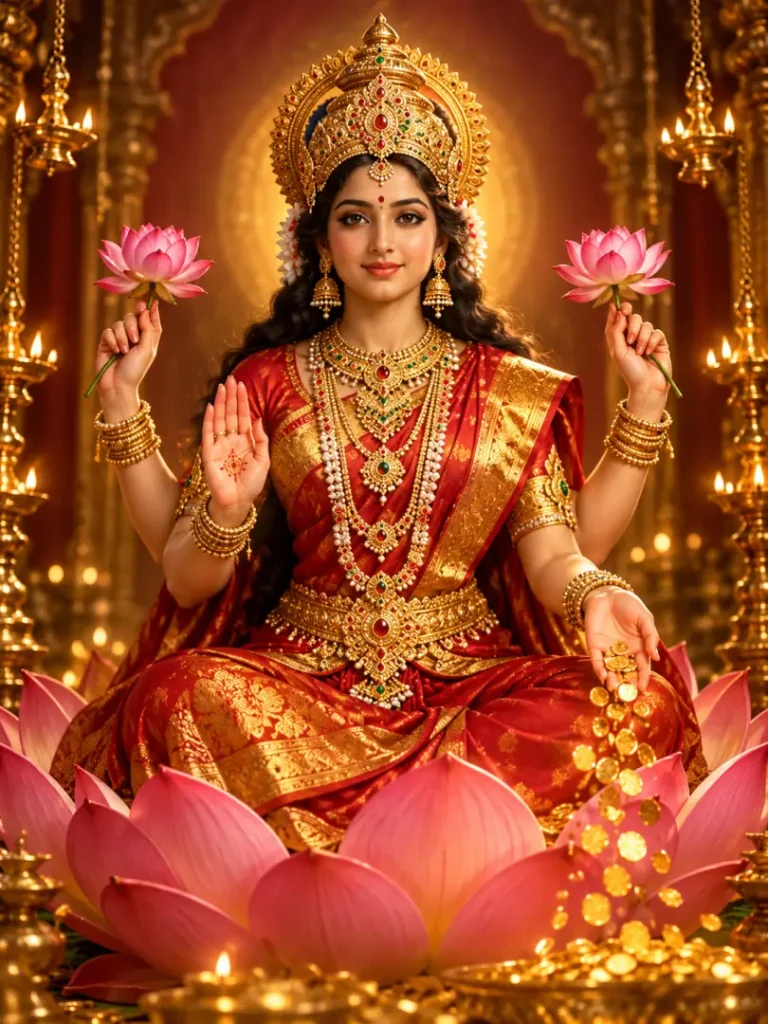
This is why Lakshmi is shown seated on a lotus, risen from water yet unstained by it, and why her image presides over Diwali. To light a lamp for her is to pray not only for wealth but for the shri — the grace, radiance and wellbeing — that the gods themselves had to churn an ocean to win.
Meaning and lessons
Lakshmi did not fall from the sky but rose from a churning — from patient, difficult, shared effort, even between rivals. Fortune is drawn up out of the depths by work, and settles where there is both strength and virtue.
Frequently asked questions
Why is Lakshmi worshipped on Diwali?
What is the Samudra Manthan?
How was Lakshmi born?
What else came from the churning of the ocean?
Why is Lakshmi shown on a lotus?
Sources
- Bhagavata Purana, Canto 8 (Samudra Manthan)
- Vishnu Purana
- Mahabharata, Adi Parva
Read our editorial policy on how scripture, Purana and folk tradition are labelled.