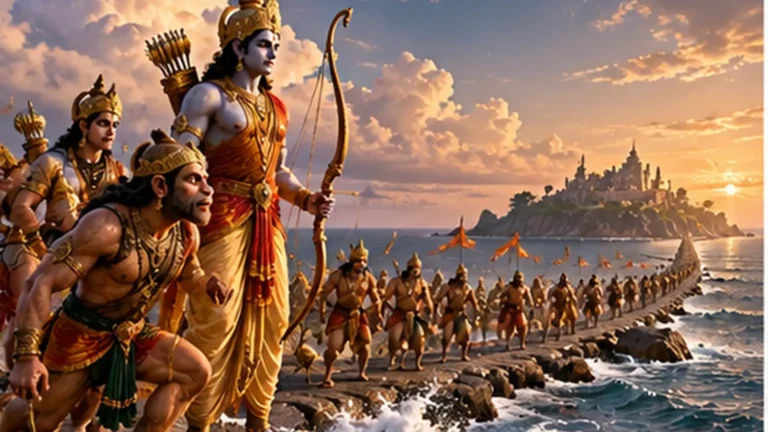
Who is in this story
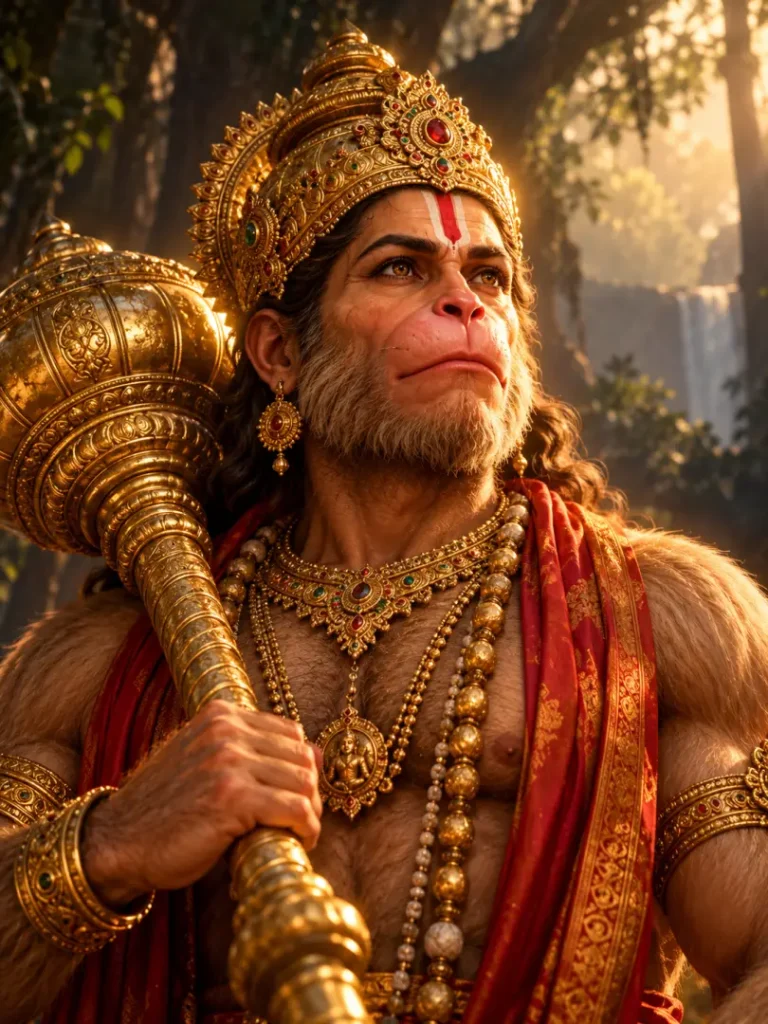

The story
The Sundara Kanda, the “beautiful book” of the Ramayana, belongs to Hanuman. It is so loved that many recite it on its own, especially on Tuesdays and Saturdays, as a prayer for courage and success.
Remembering his strength
The southern search party of vanaras, led by Angada, reached the shore of the ocean and learned from the vulture Sampati that Sita was in Lanka, a hundred yojanas across the sea. One by one the vanaras said how far they could leap; none could reach so far and return. The old bear-king Jambavan then turned to Hanuman, who sat silent. As a child, he reminded him, Hanuman had leapt at the rising Sun thinking it a fruit, and had been made to forget his powers by a sage’s curse until someone reminded him. Hearing his own story, Hanuman began to grow, until he stood like a mountain on the shore.
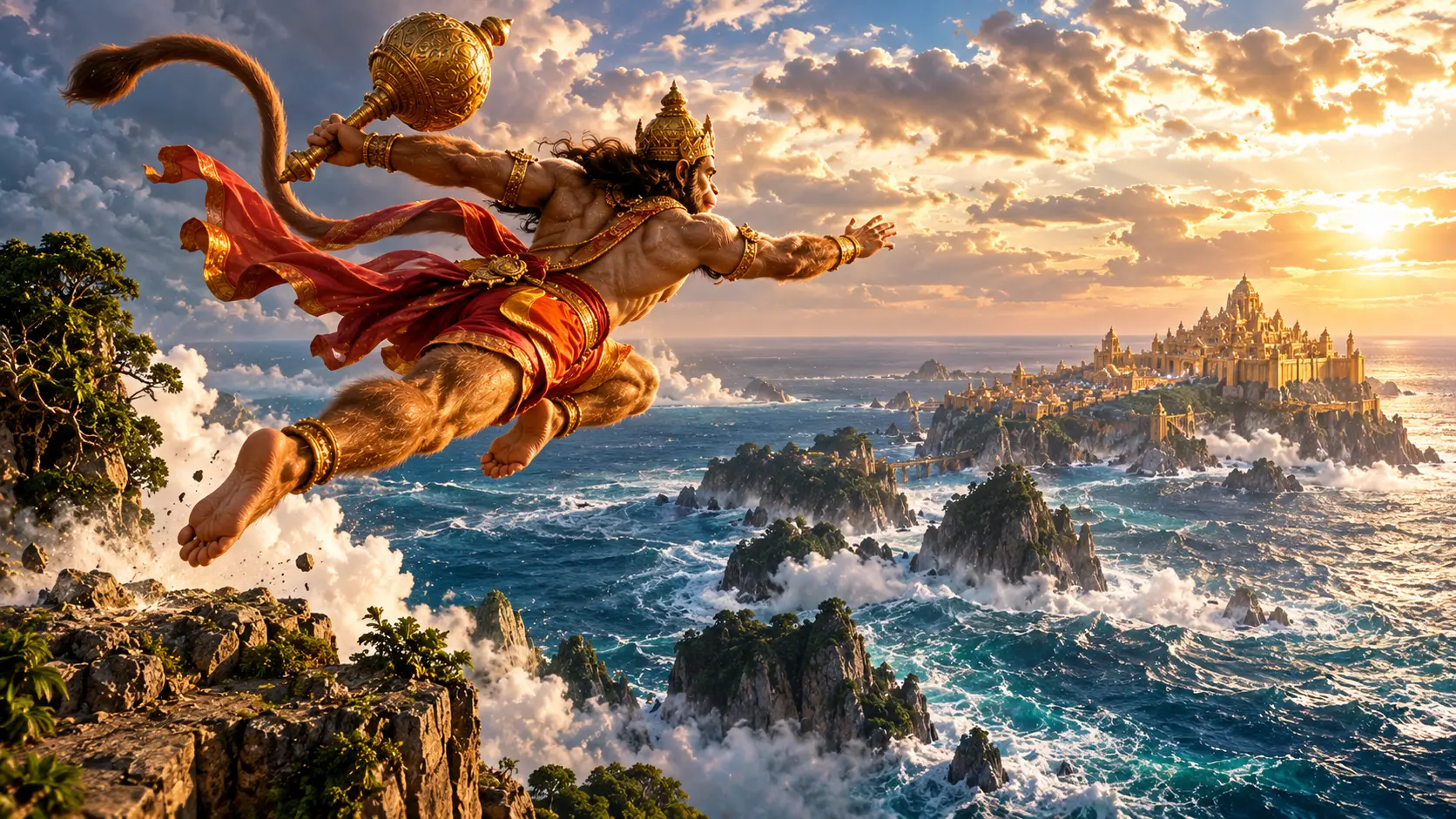
The crossing
Hanuman climbed Mount Mahendra and sprang into the sky, pressing the mountain so hard that springs burst from its sides. Over the sea he met three tests. The mountain Mainaka rose from the waves to offer him rest; he touched it in thanks and flew on. Surasa, mother of serpents, sent by the gods to test him, opened her mouth to swallow him; he grew larger, and as she widened her jaws he suddenly became tiny, flew in and out of her mouth, and bowed to her. The demoness Simhika seized his shadow to drag him down; he dived into her mouth and tore her apart from within.
The search in Lanka
Landing on Mount Trikuta, Hanuman shrank to the size of a cat and slipped into the golden city at night, overcoming its guardian goddess Lankini at the gate. He searched palace after palace, saw Ravana’s queens asleep, and despaired. Then he came to the Ashoka grove and saw a woman in a faded garment under a shimshapa tree, thin with grief and guarded by rakshasis. It was Sita. He watched as Ravana came to threaten her with death if she did not yield within two months, and heard her refuse him again.
When the guards slept, Hanuman sang softly of Rama’s story from the branches. He came down, gave Sita Rama‘s signet ring, and told her that Rama would come. He offered to carry her back on his shoulders; she refused, saying Rama himself must free her and win back his honour. She gave him her hair jewel, the chudamani, and told him of a moment only Rama would know, as a sign.
Lanka on fire
Before leaving, Hanuman decided to test the enemy’s strength. He tore up the Ashoka grove, killed the warriors sent against him and Ravana’s son Akshayakumara, and at last let himself be bound by Indrajit’s Brahmastra. Brought before Ravana, he warned him to return Sita. Ravana ordered him killed, but Vibhishana pleaded that envoys must not be put to death, so instead the rakshasas wrapped Hanuman’s tail in oiled cloth and set it alight. Hanuman shrank free of his bonds, grew huge, and leapt from roof to roof, setting all of Lanka ablaze except the grove where Sita sat. He doused his tail in the sea, bowed to Sita once more, and flew back across the ocean with the news: “I have seen Sita.”
Meaning and lessons
Hanuman's leap begins only when he remembers who he is: tradition reads this as the soul forgetting and then recalling its own strength through devotion. Each test over the sea teaches a different virtue: gratitude to Mainaka, wit and humility with Surasa, courage against Simhika. And Sita's refusal to be carried away shows that rescue must come in the right way, from the right hand.
Frequently asked questions
Why is it called the Sundara Kanda?
Who reminded Hanuman of his strength?
What did Hanuman give Sita?
Why did Hanuman burn Lanka?
Sources
- Valmiki Ramayana, Kishkindha Kanda, sargas 65-67
- Valmiki Ramayana, Sundara Kanda, sargas 1-68
- Tulsidas, Ramcharitmanas, Sundar Kand
Read our editorial policy on how scripture, Purana and folk tradition are labelled.