Quick answer
Gajendra Moksha story from the Bhagavata Purana: the elephant king trapped by a crocodile, his prayer of surrender, Vishnu's rescue on Garuda, and the meaning of the Gajendra Stuti.
Who is in this story
The story
Gajendra Moksha, the liberation of the elephant king, is one of the most loved stories of the Bhagavata Purana. Trapped by a crocodile in a lake, the mighty elephant Gajendra fought until his strength was gone, then lifted a lotus to Vishnu and called for help, and Vishnu came at once. The prayer he offered, the Gajendra Stuti, is still recited by devotees in times of trouble. This guide tells the Gajendra Moksha story, its past-life background and its meaning.
Gajendra Moksha story: the elephant and the crocodile
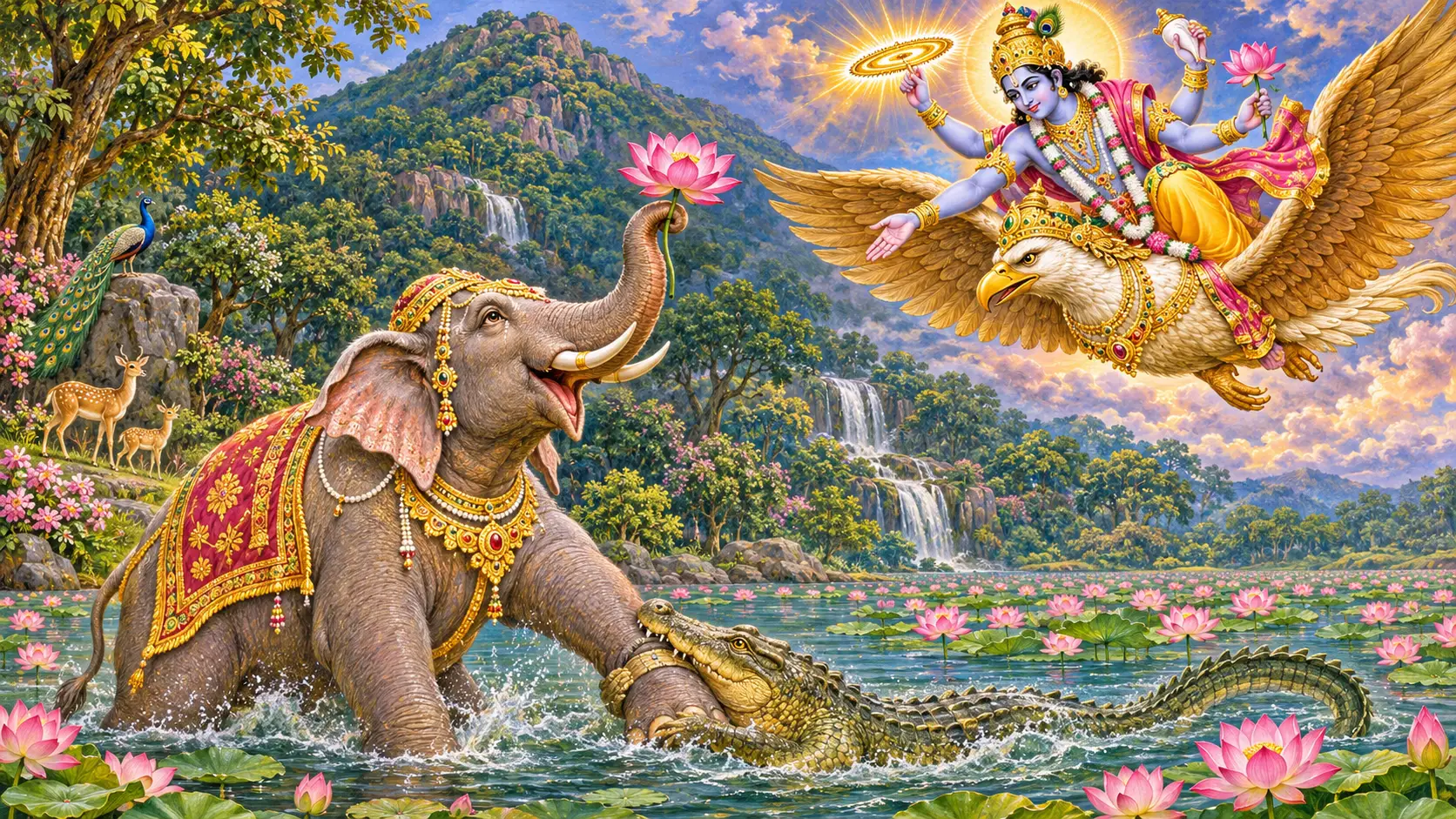
The Bhagavata Purana, in its eighth book, describes Mount Trikuta, rising from the ocean of milk, with forests, rivers and a beautiful lake. Gajendra, the king of elephants, lived there with his herd. One hot day he led them to the lake to drink and play in the water. A powerful crocodile seized his leg and began dragging him in.
Gajendra fought back with all his strength, and the herd tried to help, but the struggle went on, the Purana says, for a thousand years. Slowly the elephant weakened, while the crocodile, in its own element, grew stronger. His companions could do nothing.
The prayer of surrender
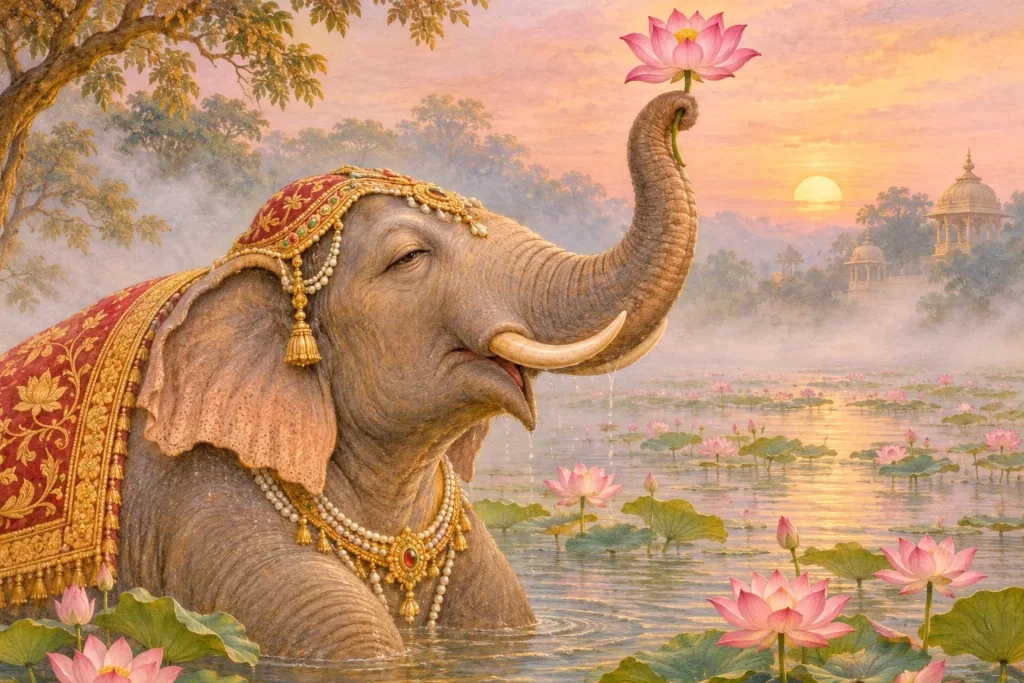
At last, realising that no strength of his own could save him, Gajendra turned his mind to the Supreme. He plucked a lotus from the water, raised it in his trunk and prayed to the one who is the cause of all causes, beyond name and form. This prayer, the Gajendra Stuti, is a hymn of pure surrender, offered without asking any particular god by name.
Vishnu comes on Garuda
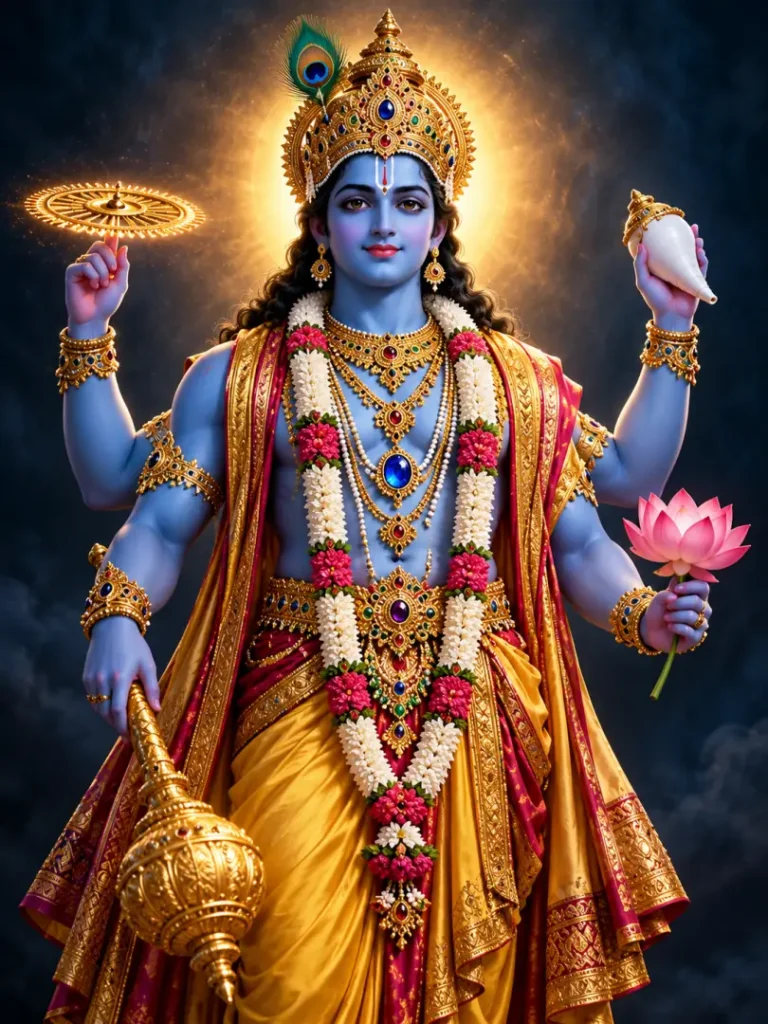
Hearing the prayer, Vishnu rushed to the lake on Garuda, so quickly that Garuda could hardly keep pace. He pulled Gajendra and the crocodile out of the water together and, with his discus Sudarshana, cut open the crocodile’s jaws and freed the elephant. Gajendra was released, and touched by Vishnu, he attained liberation.
The past lives behind the story
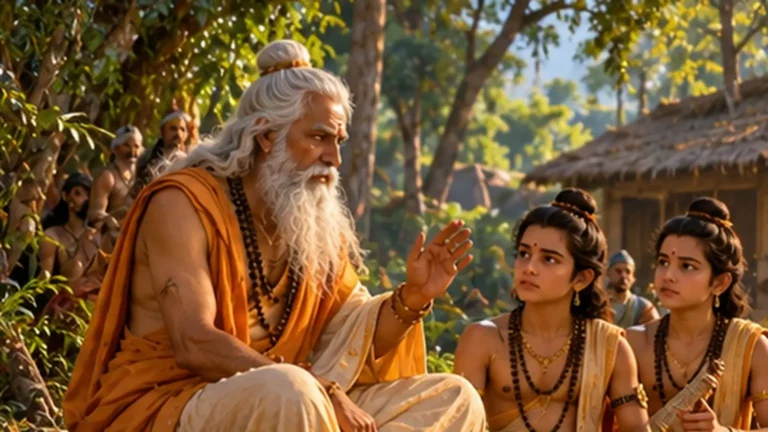
The Bhagavata Purana explains that both had been cursed in earlier lives. Gajendra had been Indradyumna, a king devoted to Vishnu, who failed to rise to greet the sage Agastya because he was absorbed in worship, and was cursed to become an elephant. The crocodile had been a gandharva named Huhu, cursed by the sage Devala for a prank. Vishnu’s touch freed both of them.
What Gajendra Moksha teaches
- Surrender: when strength, pride and relatives fail, sincere prayer is still possible.
- The divine responds: Vishnu comes at once to a devotee who calls with a pure heart, whatever their form.
- Freedom from bondage: the crocodile is often read as the grip of worldly attachment or time itself, and the lotus as the devotee’s offering of the heart.
Reciting the Gajendra Stuti
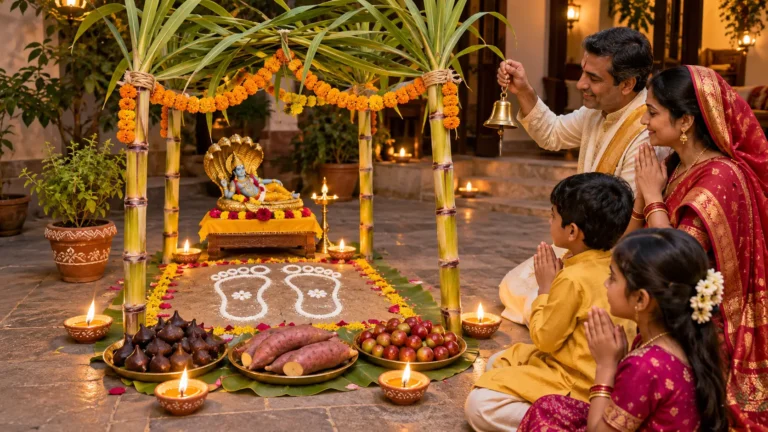
Many devotees read the Gajendra Stuti in difficult times, and some recite it in the early morning or on Ekadashi, including Vaikuntha Ekadashi. Today, Friday, 20 November 2026, is Dev Uthani Ekadashi, when Vishnu is believed to wake from his four-month rest, and stories of his protection are especially remembered.
Where to read it
The story appears in the Bhagavata Purana, Book 8, chapters 2 to 4. It is also illustrated in temple art across India and depicted in sculpture at Deogarh and many other sites.
Frequently asked questions
What is the Gajendra Moksha story?
It is the Bhagavata Purana story of the elephant king Gajendra, seized by a crocodile, who prayed to Vishnu in surrender and was rescued and liberated.
Where is Gajendra Moksha told?
In the Bhagavata Purana, Book 8, chapters 2 to 4.
Who were Gajendra and the crocodile in past lives?
Gajendra had been King Indradyumna, cursed by the sage Agastya, and the crocodile was the gandharva Huhu, cursed by the sage Devala.
Sources and further reading
Read our editorial policy on how scripture, Purana and folk tradition are labelled.