Quick answer
Chitragupta Puja explained: who Chitragupta is, the story of Yama's divine record-keeper, and the kalam-dawat puja vidhi done on Yama Dwitiya.
Who is in this story
The story
Chitragupta Puja is observed on Kartik Shukla Dwitiya, the same day as Bhai Dooj, and honours Chitragupta, the divine record-keeper who notes the deeds of every being for Yama, the god of death. In 2026 it falls on Wednesday, 11 November by the Delhi panchang. The day is especially important to Kayastha families, and it is also called Kalam-Dawat Puja because pens and inkpots are worshipped. This guide explains who Chitragupta is, the story behind the day, and a simple puja vidhi.
Who is Chitragupta?
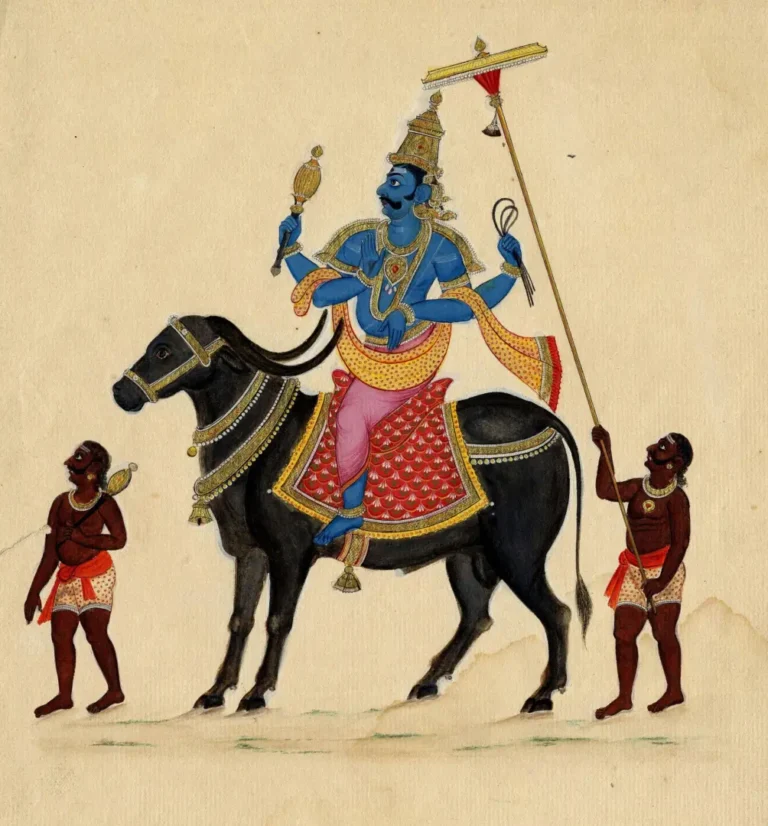
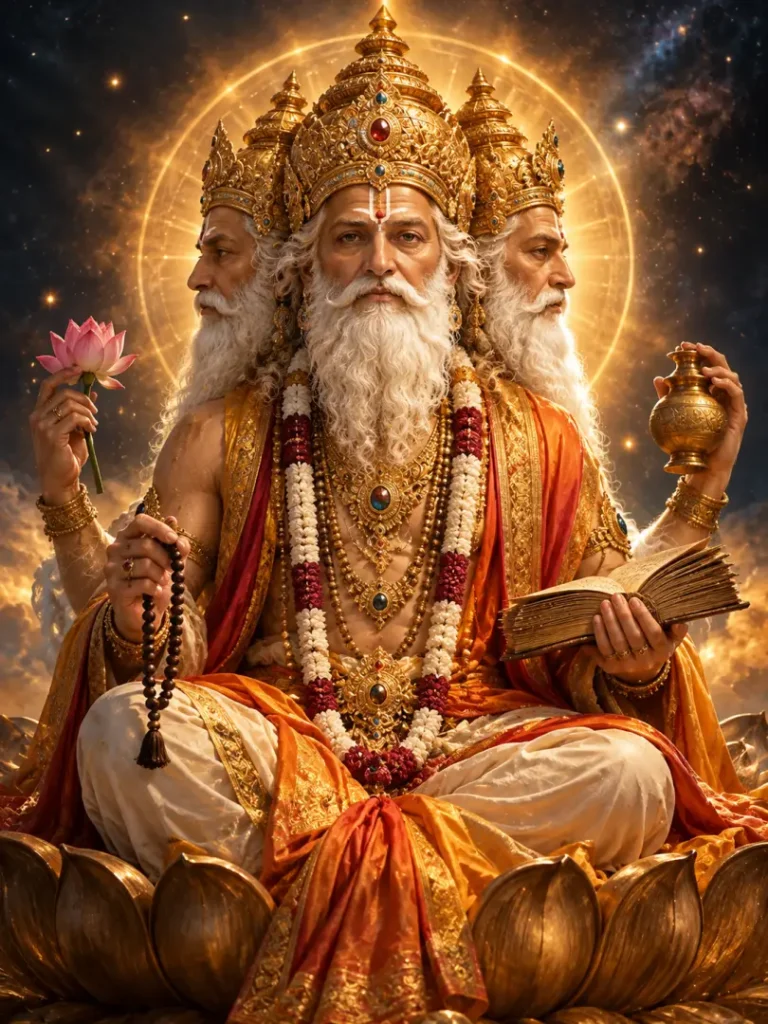
Chitragupta is the scribe of Yama. Tradition says he keeps a perfect account of every person’s good and bad deeds, and that Yama uses his record to decide each soul’s fate after death. The name is often explained as “hidden picture” or “secret image”, since he holds an unseen record of each life. Popular tradition holds that Chitragupta was born from the body of Brahma after a long meditation, which is why the Kayastha community, whose name is traditionally read as “one who dwells in the body”, honours him as their divine ancestor.
Chitragupta Puja 2026 date
Chitragupta Puja 2026 is on Wednesday, 11 November 2026 (Kartik Shukla Dwitiya), the same tithi as Bhai Dooj. Some calendars list 10 November, so confirm with a local panchang. The puja is usually done in the afternoon.
The story of the day
A well-known account told on this day describes a king named Sudas, a man of poor deeds who lived without virtue. When he died, Yama’s court held him to account and his record was heavy with wrongdoing. According to the tale, Chitragupta’s record also showed that Sudas had once, even if unknowingly, honoured Chitragupta on this day, and that act brought him relief. The lesson drawn is that every deed is recorded and that sincere worship and repentance count. The story belongs to Puranic and devotional tradition, and versions differ.
The day shares its tithi with Yama Dwitiya, when sisters welcome their brothers. Read that account in Bhai Dooj: the story of Yama and Yamuna.
Chitragupta Puja vidhi
- Clean and set up. Bathe, clean the puja area and place an image or idol of Chitragupta on a clean cloth. Place a new pen, an inkpot, paper or an account book beside it.
- Light a lamp. Light a ghee lamp and incense, and place a kalash of water.
- Worship the pen and inkpot. Offer roli, rice, flowers and sandal paste to the pen, inkpot and paper, because they represent the record-keeper’s tools.
- Write on paper. On a sheet of paper, many families draw a swastika or write “Shri” and “Om”, then write their name, address and a short prayer, and offer it before the image.
- Offer bhog. Offer sweets, fruit, curd, honey and panchamrit.
- Read the katha and do aarti. Listen to the Chitragupta story and perform aarti.
- Rest from writing. Traditionally, people do not use the pen, books or accounts after the puja that day. Businesses may open new account books on this day.
- Give charity. Food, clothes, and writing materials to students or the needy are given in the spirit of the day.
Why it matters
Chitragupta Puja reminds devotees that every action carries a record, and it dignifies the pen and the word. It is also a quiet end to Diwali week, which began at Dhanteras and closes with Bhai Dooj. See the festival cycle on the Diwali page.
Frequently asked questions
When is Chitragupta Puja in 2026?
Chitragupta Puja 2026 is on Wednesday, 11 November, the same day as Bhai Dooj. Some calendars list 10 November, so check a local panchang.
Who is Chitragupta?
Chitragupta is the divine scribe of Yama who records the good and bad deeds of every being.
Why are pens and inkpots worshipped on this day?
Pens, inkpots and paper are worshipped as the tools of the record-keeper, and the day is also called Kalam-Dawat Puja.
Sources and further reading
- Hindu festival dates 2026 (Samvat panchang calendar)
- Puranic and devotional tradition (Yama Dwitiya, Chitragupta)
Read our editorial policy on how scripture, Purana and folk tradition are labelled.