Quick answer
Bhai Dooj tilak vidhi step by step: the thali samagri list, how sisters apply tilak, aarti and gifts, plus regional customs like Bhau Beej and Bhai Phonta.
Who is in this story
The story
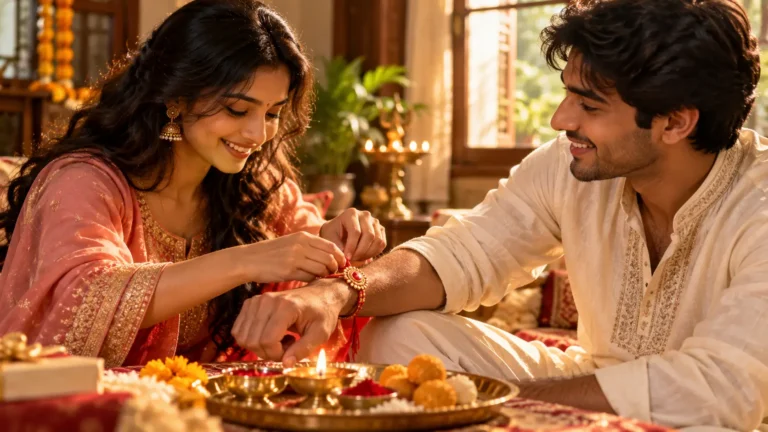
Bhai Dooj is the last day of the Diwali cycle, when sisters apply a tilak on their brothers’ foreheads and pray for their long life. In 2026 it falls on Wednesday, 11 November by the Delhi panchang, and some calendars in western India list 10 November, so check your local panchang. This guide gives the Bhai Dooj tilak vidhi in simple steps, the thali items you need, and how the day is kept in different regions.
When to apply the tilak
The tilak is traditionally applied in the afternoon (aparahna kaal) on Kartik Shukla Dwitiya. Exact timings differ by city, so use a local panchang rather than a fixed clock time. If the day is busy, many families choose the afternoon window and simply keep the meal and gifts for after the puja.
Bhai Dooj thali: what you need
- A clean plate or thali and a small diya with ghee
- Roli (kumkum) or sandalwood paste, and akshat (unbroken rice)
- A dry coconut (gola) or a whole coconut
- Sweets, fruit, betel leaf and supari
- Kalawa (red sacred thread) and a few flowers
- A small kalash or bowl of water, and a clean cloth or handkerchief
- A gift for the brother, and money or a sweet box to give in return
Bhai Dooj tilak vidhi step by step
- Prepare the seat. Clean a spot and make a small square with rice paste or flour. Seat your brother there, facing the direction your family follows.
- Light the diya. Place the lit lamp on the thali beside the roli, rice and sweets.
- Apply the tilak. Put a tilak of roli on his forehead and press a few grains of akshat on it.
- Tie the kalawa. Tie the red thread on his right wrist, and give him a coconut or gola to hold.
- Perform aarti. Circle the thali before his face a few times and pray for his long life, health and success.
- Offer sweets. Feed him something sweet. Many sisters fast until the tilak is done, and brothers traditionally eat the meal at the sister’s home.
- Exchange gifts. The brother gives a gift and pledges to protect and support his sister, and may touch the feet of elder sisters.
The story behind the day
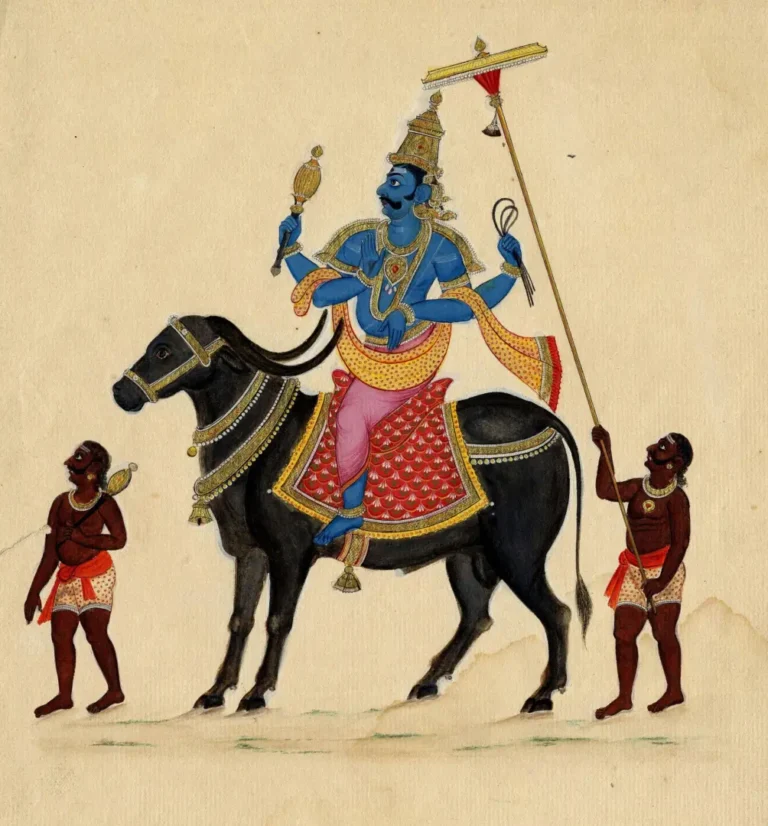
Popular tradition links Bhai Dooj to Yama, the god of death, and his sister Yamuna, who welcomed him with a tilak and a meal on this day. Pleased, Yama blessed every brother who visits his sister on Dwitiya. Read the full account in Bhai Dooj: the story of Yama and Yamuna. For the day’s date and place in the festival cycle, see the Bhai Dooj page.
Regional customs
- Bhau Beej (Maharashtra, Goa): sisters do the aarti and apply the tilak, and brothers give gifts.
- Bhai Phonta (Bengal): sisters apply a dot of sandalwood paste (phonta) and say a rhyme asking that thorns block Yama’s door, then serve a feast.
- Bhai Tika (Nepal): sisters apply a seven-colour tika and place garlands on their brothers.
- Chitragupta Puja: on the same day, many Kayastha families worship Chitragupta, Yama’s record-keeper.
If you cannot meet your brother
Send the tilak and sweets by post or courier, or hold the puja on a video call, with both of you holding a plate and lamp at the same time. The sincerity of the prayer matters more than being in the same room. Bhai Dooj also pairs with Raksha Bandhan, the other festival of siblings, and closes the cycle that began on Dhanteras and runs through Diwali.
Frequently asked questions
When is Bhai Dooj in 2026?
Bhai Dooj 2026 is on Wednesday, 11 November by the Delhi panchang, and some western Indian calendars list 10 November. The tilak is traditionally applied in the afternoon.
What items are needed for the Bhai Dooj thali?
Roli or sandalwood paste, akshat, a diya, a coconut, sweets, a kalawa thread, water and a gift for the brother.
What is Bhai Dooj called in other regions?
It is called Bhau Beej in Maharashtra, Bhai Phonta in Bengal and Bhai Tika in Nepal, and the day is also known as Yama Dwitiya.
Sources and further reading
- Hindu festival dates 2026 (Samvat panchang calendar)
- Popular Hindu tradition and regional custom (Yama Dwitiya, Bhau Beej, Bhai Phonta, Bhai Tika)
Read our editorial policy on how scripture, Purana and folk tradition are labelled.