सुमन्त्रश्चोदितो राज्ञा प्रोवाचेदं वचस्तदा ।
यथर्श्यशृङ्गस्त्वानीत श्श्रुणु मे मन्त्रिभिस्सह ॥
sumantraścodito rājñā provācedaṃ vacastadā |
yatharśyaśṛṅgastvānīta śśruṇu me mantribhissaha ||
हिंदी अर्थराजा के कहने पर सुमंत्र बोले: मंत्रियों के साथ मुझसे सुनिए कि ऋष्यशृंग को कैसे लाया गया।
English meaningUrged by the king, Sumantra then said: Hear from me, with your ministers, how Rishyashringa was brought.
रोमपादमुवाचेदं सहामात्यः पुरोहितः ।
उपायो निरपायोऽयमस्माभिरभिचिन्तितः ॥
romapādamuvācedaṃ sahāmātyaḥ purohitaḥ |
upāyo nirapāyo'yamasmābhirabhicintitaḥ ||
हिंदी अर्थपुरोहित ने मंत्रियों के साथ रोमपाद से कहा: हमने एक ऐसा उपाय सोचा है जिसमें कोई हानि नहीं है।
English meaningThe priest, with the ministers, said to Romapada: We have thought of a plan that carries no risk.
ऋश्यशृङ्गो वनचरस्तपस्स्वाध्ययने रतः ।
अनभिज्ञस्स नारीणां विषयाणां सुखस्य च ॥
ṛśyaśṛṅgo vanacarastapassvādhyayane rataḥ |
anabhijñassa nārīṇāṃ viṣayāṇāṃ sukhasya ca ||
हिंदी अर्थऋष्यशृंग वन में रहते हैं, तप और स्वाध्याय में लगे रहते हैं। वे स्त्रियों, विषयों और सुख के बारे में कुछ नहीं जानते।
English meaningRishyashringa lives in the forest, devoted to penance and study. He knows nothing of women, of the pleasures of the senses or of comfort.
इन्द्रियार्थैरभिमतैर्नरचित्तप्रमाथिभिः ।
पुरमानाययिष्यामः क्षिप्रं चाध्यवसीयताम् ॥
indriyārthairabhimatairnaracittapramāthibhiḥ |
puramānāyayiṣyāmaḥ kṣipraṃ cādhyavasīyatām ||
हिंदी अर्थहम मनुष्य के मन को मोहने वाले प्रिय विषयों से उन्हें नगर में ले आएँगे। इसका शीघ्र निश्चय किया जाए।
English meaningWe shall bring him to the city with pleasing things of the senses that stir a man's heart. Let this be decided quickly.
गणिकास्तत्र गच्छन्तु रूपवत्यस्स्वलङ्कृताः ।
प्रलोभ्य विविधोपायैरानेष्यन्तीह सत्कृताः ॥
gaṇikāstatra gacchantu rūpavatyassvalaṅkṛtāḥ |
pralobhya vividhopāyairāneṣyantīha satkṛtāḥ ||
हिंदी अर्थसुंदर और सुसज्जित गणिकाएँ वहाँ जाएँ। हमसे सम्मानित होकर वे अनेक उपायों से उन्हें लुभाकर यहाँ ले आएँगी।
English meaningLet beautiful courtesans, finely adorned, go there. Honoured by us, they will charm him in various ways and bring him here.
श्रुत्वा तथेति राजा च प्रत्युवाच पुरोहितम् ।
पुरोहितो मन्त्रिणश्च तथा चक्रुश्च ते तदा ॥
śrutvā tatheti rājā ca pratyuvāca purohitam |
purohito mantriṇaśca tathā cakruśca te tadā ||
हिंदी अर्थयह सुनकर राजा ने स्वीकार कर पुरोहित को उत्तर दिया, और पुरोहित तथा मंत्रियों ने वैसा ही किया।
English meaningHearing this, the king agreed and answered the priest, and the priest and ministers did as planned.
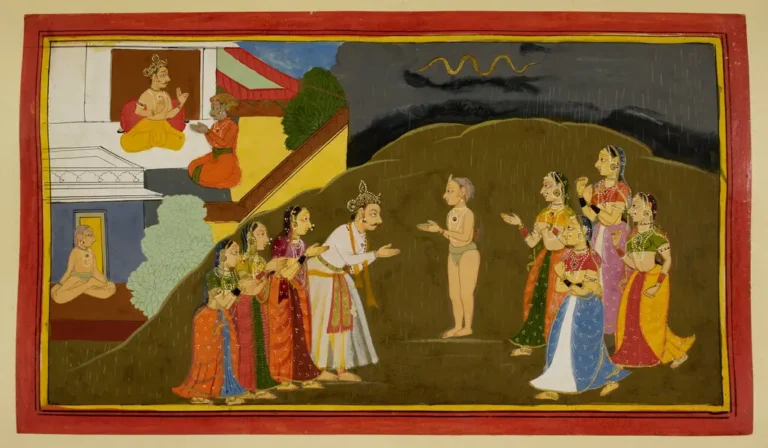
वारमुख्याश्च तच्छ्रुत्वा वनं प्रविविशुर्महत् ।
आश्रमस्याविदूरेऽस्मिन् यत्नं कुर्वन्ति दर्शने ।
ऋषिपुत्रस्य धीरस्य नित्यमाश्रमवासिनः ॥
vāramukhyāśca tacchrutvā vanaṃ praviviśurmahat |
āśramasyāvidūre'smin yatnaṃ kurvanti darśane |
ṛṣiputrasya dhīrasya nityamāśramavāsinaḥ ||
हिंदी अर्थयह सुनकर प्रमुख गणिकाएँ विशाल वन में गईं। आश्रम से थोड़ी दूर वे सदा आश्रम में रहने वाले धीर ऋषिपुत्र को दिखाई देने का प्रयत्न करने लगीं।
English meaningHearing this, the chief courtesans entered the great forest. Not far from the hermitage they tried to be seen by the steadfast son of the sage, who always lived in the hermitage.
पितुस्सनित्यसन्तुष्टो नातिचक्राम चाश्रमात् ।
न तेन जन्मप्रभृति दृष्टपूर्वं तपस्विना ।
स्त्री वा पुमान्वा यच्चान्यत्सर्वं नगरराष्ट्रजम् ॥
pitussanityasantuṣṭo nāticakrāma cāśramāt |
na tena janmaprabhṛti dṛṣṭapūrvaṃ tapasvinā |
strī vā pumānvā yaccānyatsarvaṃ nagararāṣṭrajam ||
हिंदी अर्थसदा पिता से संतुष्ट वे आश्रम से बाहर नहीं जाते थे। जन्म से उस तपस्वी ने कभी कोई स्त्री या पुरुष नहीं देखा था, न नगर या राष्ट्र की कोई और वस्तु।
English meaningAlways content with his father, he never went beyond the hermitage. From his birth that ascetic had never seen a woman or a man, nor anything else of town or country.
ततः कदाचित्तं देशमाजगाम यदृच्छया ।
विभण्डकसुतस्तत्र ताश्चापश्यद्वराङ्गनाः ॥
tataḥ kadācittaṃ deśamājagāma yadṛcchayā |
vibhaṇḍakasutastatra tāścāpaśyadvarāṅganāḥ ||
हिंदी अर्थफिर एक दिन विभांडक के पुत्र संयोग से उस स्थान पर आए और वहाँ उन सुंदर स्त्रियों को देखा।
English meaningThen one day the son of Vibhandaka came to that spot by chance and saw those lovely women there.
ताश्चित्रवेषाः प्रमदा गायन्त्यो मधुरस्वराः ।
ऋषिपुत्रमुपागम्य सर्वा वचनमब्रुवन् ॥
tāścitraveṣāḥ pramadā gāyantyo madhurasvarāḥ |
ṛṣiputramupāgamya sarvā vacanamabruvan ||
हिंदी अर्थरंगीन वेश वाली और मधुर स्वर में गाती वे युवतियाँ ऋषिपुत्र के पास आईं और सब बोलीं:
English meaningThose young women, in colourful dress and singing in sweet voices, came up to the sage's son and all said to him:
कस्त्वं किं वर्तसे ब्रह्मन् ज्ञातुमिच्छामहे वयम् ।
एकस्त्वं विजने घोरे वने चरसि शंस नः ॥
kastvaṃ kiṃ vartase brahman jñātumicchāmahe vayam |
ekastvaṃ vijane ghore vane carasi śaṃsa naḥ ||
हिंदी अर्थहे ब्राह्मण, आप कौन हैं और कैसे रहते हैं? हम जानना चाहती हैं। बताइए, आप इस निर्जन, भयानक वन में अकेले क्यों घूमते हैं।
English meaningWho are you, brahmin, and how do you live? We wish to know. Tell us why you wander alone in this lonely, fearsome forest.
अदृष्टरूपास्तास्तेन काम्यरूपा वने स्त्रियः ।
हार्दात्तस्य मतिर्जाता व्याख्यातुं पितरं स्वकम् ॥
adṛṣṭarūpāstāstena kāmyarūpā vane striyaḥ |
hārdāttasya matirjātā vyākhyātuṃ pitaraṃ svakam ||
हिंदी अर्थउन्होंने ऐसे रूप पहले कभी नहीं देखे थे, और वन में उन सुंदर स्त्रियों से उनका मन प्रभावित हुआ, इसलिए उन्होंने अपने पिता के बारे में बताना चाहा।
English meaningHe had never before seen such forms, and these lovely women in the forest moved his heart, so he wished to tell them about his father.
पिता विभण्डकोऽस्माकं तस्याहं सुत औरसः ।
ऋश्यशृङ्ग इति ख्यातं नाम कर्म च मे भुवि ॥
pitā vibhaṇḍako'smākaṃ tasyāhaṃ suta aurasaḥ |
ṛśyaśṛṅga iti khyātaṃ nāma karma ca me bhuvi ||
हिंदी अर्थहमारे पिता विभांडक हैं, और मैं उनका औरस पुत्र हूँ। पृथ्वी पर मेरा नाम ऋष्यशृंग है, और मेरा कर्म भी इसी नाम से प्रसिद्ध है।
English meaningOur father is Vibhandaka, and I am his own son. My name on earth is Rishyashringa, and so is my work known.
इहाश्रमपदोऽस्माकं समीपे शुभदर्शनाः ।
करिष्ये वोऽत्र पूजां वै सर्वेषां विधिपूर्वकम् ॥
ihāśramapado'smākaṃ samīpe śubhadarśanāḥ |
kariṣye vo'tra pūjāṃ vai sarveṣāṃ vidhipūrvakam ||
हिंदी अर्थहे सुंदर दिखने वालियो, हमारा आश्रम यहीं पास में है। मैं वहाँ आप सबका विधिपूर्वक सत्कार करूँगा।
English meaningOur hermitage is near here, you who are lovely to see. I will honour all of you there according to the rites.
ऋषिपुत्रवचश्श्रुत्वा सर्वासां मतिरास वै ।
तदाश्रमपदं द्रष्टुं जग्मुस्सर्वाश्च तेन ताः ॥
ṛṣiputravacaśśrutvā sarvāsāṃ matirāsa vai |
tadāśramapadaṃ draṣṭuṃ jagmussarvāśca tena tāḥ ||
हिंदी अर्थऋषिपुत्र की बात सुनकर सबने आश्रम देखने का निश्चय किया, और सब उनके साथ वहाँ गईं।
English meaningHearing the sage's son, they all decided to see the hermitage, and all went there with him.
आगतानां ततः पूजामृषिपुत्रश्चकार ह ।
इदमर्घ्यमिदं पाद्यमिदं मूलमिदं फलं च नः ॥
āgatānāṃ tataḥ pūjāmṛṣiputraścakāra ha |
idamarghyamidaṃ pādyamidaṃ mūlamidaṃ phalaṃ ca naḥ ||
हिंदी अर्थउनके आने पर ऋषिपुत्र ने उनका सत्कार किया और कहा: यह अर्घ्य है, यह पाद्य है, ये हमारे कंद मूल और फल हैं।
English meaningWhen they had come, the sage's son honoured them, saying: Here is water for your hands, here is water for your feet, here are our roots and fruits.
प्रतिगृह्य च तां पूजां सर्वा एव समुत्सुकाः ।
ऋषेर्भीताश्च शीघ्रं ता गमनाय मतिं दधुः ॥
pratigṛhya ca tāṃ pūjāṃ sarvā eva samutsukāḥ |
ṛṣerbhītāśca śīghraṃ tā gamanāya matiṃ dadhuḥ ||
हिंदी अर्थउन्होंने उत्सुकता से उनका सत्कार स्वीकार किया, पर ऋषि से डरकर उन्होंने शीघ्र जाने का निश्चय किया।
English meaningThey accepted his hospitality eagerly, but fearing the sage they soon made up their minds to leave.
अस्माकमपि मुख्यानि फलानीमानि वै द्विज ।
गृहाण प्रति भद्रं ते भक्षयस्व च मा चिरम् ॥
asmākamapi mukhyāni phalānīmāni vai dvija |
gṛhāṇa prati bhadraṃ te bhakṣayasva ca mā ciram ||
हिंदी अर्थहे ब्राह्मण, ये हमारे भी उत्तम फल हैं। इन्हें लीजिए, आपका कल्याण हो, और देर न करके खाइए।
English meaningBrahmin, here are our own choice fruits. Take them, bless you, and eat them without delay.
ततस्तास्तं समालिङ्ग्य सर्वा हर्षसमन्विताः ।
मोदकान्प्रददुस्तस्मै भक्ष्यांश्च विविधान् बहून् ॥
tatastāstaṃ samāliṅgya sarvā harṣasamanvitāḥ |
modakānpradadustasmai bhakṣyāṃśca vividhān bahūn ||
हिंदी अर्थफिर हर्ष से भरी उन सबने उन्हें गले लगाया और उन्हें लड्डू और अनेक प्रकार के पकवान दिए।
English meaningThen, full of joy, they all embraced him and gave him sweets and many kinds of delicacies.
तानि चास्वाद्य तेजस्वी फलानीति स्म मन्यते ।
अनास्वादितपूर्वाणि वने नित्यनिवासिनाम् ॥
tāni cāsvādya tejasvī phalānīti sma manyate |
anāsvāditapūrvāṇi vane nityanivāsinām ||
हिंदी अर्थउस तेजस्वी युवक ने उन्हें चखा और फल समझा, क्योंकि सदा वन में रहने वालों ने ऐसी वस्तुएँ कभी नहीं चखी थीं।
English meaningThe radiant youth tasted them and took them to be fruits, for those who always live in the forest had never tasted such things.
आपृच्छ्य च तदा विप्रं व्रतचर्यां निवेद्य च ।
गच्छन्ति स्मापदेशात्ता भीतास्तस्य पितुस्स्त्रियः ॥
āpṛcchya ca tadā vipraṃ vratacaryāṃ nivedya ca |
gacchanti smāpadeśāttā bhītāstasya pitusstriyaḥ ||
हिंदी अर्थफिर उन स्त्रियों ने किसी व्रत का बहाना बनाकर ब्राह्मण से विदा ली, और उनके पिता से डरकर चली गईं।
English meaningThen the women took leave of the brahmin, pleading a vow they had to keep, and left, afraid of his father.
गतासु तासु सर्वासु काश्यपस्यात्मजो द्विजः ।
अस्वस्थहृदयश्चासीद्दुःखं स्म परिवर्तते ॥
gatāsu tāsu sarvāsu kāśyapasyātmajo dvijaḥ |
asvasthahṛdayaścāsīdduḥkhaṃ sma parivartate ||
हिंदी अर्थउन सबके चले जाने पर काश्यप वंशी वह ब्राह्मण अशांत हृदय हो गए, और उन्हें बार बार दुख होने लगा।
English meaningWhen they had all gone, the brahmin son of Kashyapa's line became restless at heart, and sorrow kept returning to him.
ततोऽपरेद्युस्तं देशमाजगाम स वीर्यवान् ।
मनोज्ञा यत्र ता दृष्टा वारमुख्यास्स्वलङ्कृताः ॥
tato'paredyustaṃ deśamājagāma sa vīryavān |
manojñā yatra tā dṛṣṭā vāramukhyāssvalaṅkṛtāḥ ||
हिंदी अर्थअगले दिन वह शक्तिशाली युवक फिर उसी स्थान पर आए जहाँ उन्होंने उन मनोहर, सुसज्जित स्त्रियों को देखा था।
English meaningThe next day the powerful youth came back to the place where he had seen those charming, finely adorned women.
दृष्ट्वैव च तास्तदा विप्रमायान्तं हृष्टमानसाः ।
उपसृत्य ततस्सर्वास्तास्तमूचुरिदं वचः ॥
dṛṣṭvaiva ca tāstadā vipramāyāntaṃ hṛṣṭamānasāḥ |
upasṛtya tatassarvāstāstamūcuridaṃ vacaḥ ||
हिंदी अर्थब्राह्मण को आते देखते ही वे मन में प्रसन्न हुईं, और सब उनके पास जाकर बोलीं:
English meaningAs soon as they saw the brahmin coming, they were glad at heart, and they all went up to him and said:
एह्याश्रमपदं सौम्य ह्यस्माकमिति चाब्रुवन् ।
तत्राप्येष विधिश्श्रीमान् विशेषेण भविष्यति ॥
ehyāśramapadaṃ saumya hyasmākamiti cābruvan |
tatrāpyeṣa vidhiśśrīmān viśeṣeṇa bhaviṣyati ||
हिंदी अर्थहे सौम्य, हमारे आश्रम चलिए। वहाँ यही सत्कार और भी विशेष रूप से होगा।
English meaningCome to our hermitage, gentle one. There this same hospitality will be offered in an even finer way.
श्रुत्वा तु वचनं तासां सर्वासां हृदयङ्गमम् ।
गमनाय मतिं चक्रे तं च निन्युस्तदा स्त्रियः ॥
śrutvā tu vacanaṃ tāsāṃ sarvāsāṃ hṛdayaṅgamam |
gamanāya matiṃ cakre taṃ ca ninyustadā striyaḥ ||
हिंदी अर्थउन सब स्त्रियों के हृदयस्पर्शी वचन सुनकर उन्होंने चलने का निश्चय किया, और स्त्रियाँ उन्हें ले चलीं।
English meaningHearing the words of all those women, which touched his heart, he resolved to go, and the women then led him away.
तत्र चानीयमाने तु विप्रे तस्मिन्महात्मनि ।
ववर्ष सहसा देवो जगत्प्रह्लादयंस्तदा ॥
tatra cānīyamāne tu vipre tasminmahātmani |
vavarṣa sahasā devo jagatprahlādayaṃstadā ||
हिंदी अर्थजब उस महात्मा ब्राह्मण को वहाँ लाया जा रहा था, तभी इंद्र ने अचानक वर्षा की और संसार को आनंदित कर दिया।
English meaningAs that great souled brahmin was being brought there, the god suddenly sent rain, gladdening the world.
वर्षेणैवागतं विप्रं विषयं स्वं नराधिपः ।
प्रत्युद्गम्य मुनिं प्रह्वश्शिरसा च महीं गतः ॥
varṣeṇaivāgataṃ vipraṃ viṣayaṃ svaṃ narādhipaḥ |
pratyudgamya muniṃ prahvaśśirasā ca mahīṃ gataḥ ||
हिंदी अर्थजब ब्राह्मण वर्षा के साथ उनके राज्य में आए, तो राजा मुनि की अगवानी करने गए, झुके और सिर से भूमि छुई।
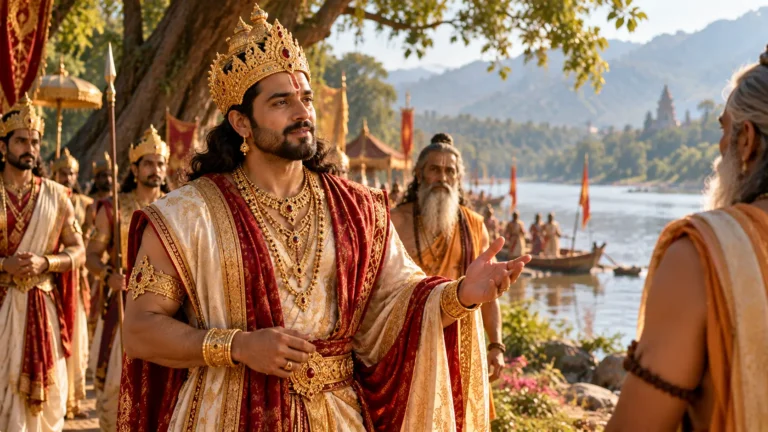
English meaningAs the brahmin arrived in his country with the rain, the king went out to meet the sage, bowed, and touched the ground with his head.
अर्घ्यं च प्रददौ तस्मै न्यायतस्सुसमाहितः ।
वव्रे प्रसादं विप्रेन्द्रान्मा विप्रं मन्युराविशेत् ॥
arghyaṃ ca pradadau tasmai nyāyatassusamāhitaḥ |
vavre prasādaṃ viprendrānmā vipraṃ manyurāviśet ||
हिंदी अर्थउन्होंने पूरी सावधानी से विधिपूर्वक उन्हें अर्घ्य दिया, और उस श्रेष्ठ ब्राह्मण से कृपा की याचना की, ताकि मुनि के मन में क्रोध न आए।
English meaningWith full attention he offered him water of welcome as the rules prescribe, and begged the best of brahmins for his grace, so that anger would not enter the sage.
अन्तःपुरं प्रविश्यास्मै कन्यां दत्त्वा यथाविधि ।
शान्तां शान्तेन मनसा राजा हर्षमवाप सः ।
एवं स न्यवसत्तत्र सर्वकामैस्सुपूजितः ॥
antaḥpuraṃ praviśyāsmai kanyāṃ dattvā yathāvidhi |
śāntāṃ śāntena manasā rājā harṣamavāpa saḥ |
evaṃ sa nyavasattatra sarvakāmaissupūjitaḥ ||
हिंदी अर्थउन्हें अंतःपुर में ले जाकर राजा ने विधिपूर्वक अपनी पुत्री शांता का विवाह उनसे किया, और शांत मन से आनंदित हुए। इस प्रकार ऋष्यशृंग वहाँ हर इच्छित सुख से सम्मानित होकर रहने लगे।
English meaningTaking him into the inner palace, the king gave him his daughter Shanta in marriage according to the rites, and with a peaceful mind he rejoiced. And so Rishyashringa lived there, honoured with every comfort he could wish.