तं तु राम स्समाश्वास्य भ्रातरं गुरवत्सलम् ।
लक्ष्मणेन सह भ्रात्रा प्रष्टुं समुपचक्रमे ॥
taṃ tu rāma ssamāśvāsya bhrātaraṃ guravatsalam |
lakṣmaṇena saha bhrātrā praṣṭuṃ samupacakrame ||
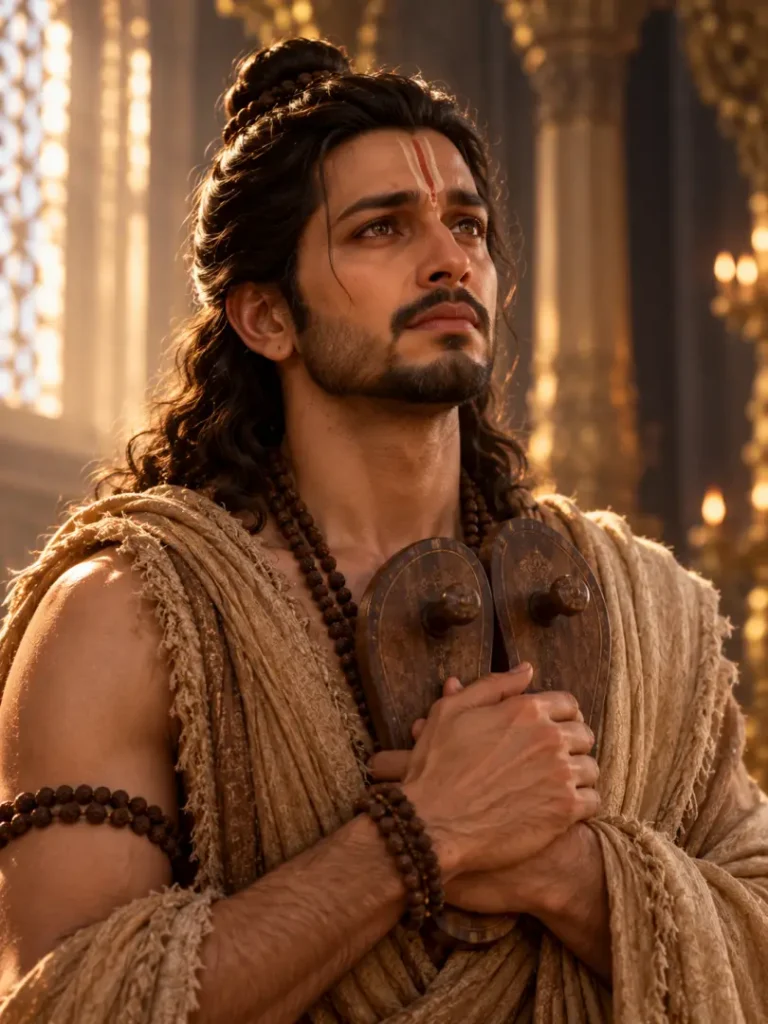
हिंदी अर्थगुरुजनों के प्रिय भाई भरत को सांत्वना देकर राम ने भाई लक्ष्मण के साथ उनसे पूछना आरंभ किया:
English meaningHaving comforted his brother Bharata, devoted to his elders, Rama, together with his brother Lakshmana, began to question him:
किमेतदिच्छेयमहं श्रोतुं प्रव्याहृतं त्वया ।
यस्मात्त्वमागतो देशमिमं चीरजटाजिनः ॥
kimetadiccheyamahaṃ śrotuṃ pravyāhṛtaṃ tvayā |
yasmāttvamāgato deśamimaṃ cīrajaṭājinaḥ ||
हिंदी अर्थ'मैं तुमसे सुनना चाहता हूँ कि तुम चीर, जटा और मृगचर्म धारण करके इस स्थान पर क्यों आए हो।'
English meaning'I wish to hear you tell me why you have come to this place wearing bark, matted hair and deerskin.'
यन्निमित्तमिमं देशं कृष्णाजिनजटाधरः ।
हित्वा राज्यं प्रविष्टस्त्वं तत्सर्वं वक्तुमर्हसि ॥
yannimittamimaṃ deśaṃ kṛṣṇājinajaṭādharaḥ |
hitvā rājyaṃ praviṣṭastvaṃ tatsarvaṃ vaktumarhasi ||
हिंदी अर्थ'तुम्हें सब कुछ बताना चाहिए कि किस कारण तुम राज्य छोड़कर काला मृगचर्म और जटा धारण किए इस प्रदेश में आए हो।'
English meaning'You should tell me everything: why you have left the kingdom and entered this region wearing a black deerskin and matted hair.'
इत्युक्तः कैकयीपुत्रः काकुत्स्थेन महात्मना ।
प्रगृह्य बलवद्भूयः प्राञ्जलिर्वाक्यमब्रवीत् ॥
ityuktaḥ kaikayīputraḥ kākutsthena mahātmanā |
pragṛhya balavadbhūyaḥ prāñjalirvākyamabravīt ||
हिंदी अर्थमहात्मा काकुत्स्थ के ऐसा कहने पर कैकेयीपुत्र ने फिर से स्वयं को दृढ़ता से सँभालकर हाथ जोड़कर कहा:
English meaningAddressed thus by the great-souled Kakutstha, Kaikeyi's son, mastering himself firmly again, said with folded hands:
आर्यं तातः परित्यज्य कृत्वा कर्म सुदुष्करम् ।
गतः स्वर्ग महाबाहुः पुत्रशोकाभिपीडितः ॥
āryaṃ tātaḥ parityajya kṛtvā karma suduṣkaram |
gataḥ svarga mahābāhuḥ putraśokābhipīḍitaḥ ||
हिंदी अर्थ'आर्य, हमारे महाबाहु पिता अत्यंत कठिन कार्य करके और आपको त्यागकर पुत्रशोक से पीड़ित होकर स्वर्ग चले गए।'
English meaning'Noble one, our mighty-armed father, having done a deed most hard to do and abandoning you, went to heaven, tormented by grief for his son.'
स्त्रिया नियुक्तः कैकेय्या मम मात्रा परन्तप ।
चकार सा महत्पापमिदमात्मयशोहरम् ॥
striyā niyuktaḥ kaikeyyā mama mātrā parantapa |
cakāra sā mahatpāpamidamātmayaśoharam ||
हिंदी अर्थ'परंतप, उन्हें एक स्त्री, मेरी माता कैकेयी ने विवश किया; उसने यह महान पाप किया जिसने उसका अपना यश नष्ट कर दिया।'
English meaning'Scorcher of foes, he was compelled by a woman, Kaikeyi, my mother; she committed this great sin that has destroyed her own good name.'
सा राज्यफलमप्राप्य विधवा शोककर्शिता ।
पतिष्यति महाघोरे निरये जननी मम ॥
sā rājyaphalamaprāpya vidhavā śokakarśitā |
patiṣyati mahāghore niraye jananī mama ||
हिंदी अर्थ'राज्य का फल पाए बिना, विधवा और शोक से दुर्बल मेरी माता अत्यंत भयानक नरक में गिरेगी।'
English meaning'Without gaining the fruit of the kingdom, widowed and wasted with grief, my mother will fall into a most terrible hell.'
तस्य मे दासभूतस्य प्रसादं कर्तुमर्हसि ।
अभिषिञ्चस्व चाद्येव राज्येन मघवानिव ॥
tasya me dāsabhūtasya prasādaṃ kartumarhasi |
abhiṣiñcasva cādyeva rājyena maghavāniva ||
हिंदी अर्थ'मुझ सेवक पर कृपा कीजिए और आज ही इंद्र की तरह अपना राज्याभिषेक कराइए।'
English meaning'Be gracious to me, who am your servant, and have yourself crowned king this very day, as Indra was.'
इमाः प्रकृतय स्सर्वा विधवा मातरश्च याः ।
त्वत्सकाशमनुप्राप्ता प्रसादं कर्तुमर्हसि ॥
imāḥ prakṛtaya ssarvā vidhavā mātaraśca yāḥ |
tvatsakāśamanuprāptā prasādaṃ kartumarhasi ||
हिंदी अर्थ'ये सब प्रजाजन और विधवा माताएँ आपके पास आई हैं; आप इन पर कृपा कीजिए।'
English meaning'All these subjects and the widowed mothers have come to you; you should show them your grace.'
तदानुपूर्व्या युक्तं च युक्तं चात्मनि मानद ।
राज्यं प्राप्नुहि धर्मेण सकामान्सुहृदः कुरु ॥
tadānupūrvyā yuktaṃ ca yuktaṃ cātmani mānada |
rājyaṃ prāpnuhi dharmeṇa sakāmānsuhṛdaḥ kuru ||
हिंदी अर्थ'मान देने वाले, क्रम के अनुसार उचित और आपके योग्य राज्य को धर्म से ग्रहण कीजिए और मित्रों की कामना पूरी कीजिए।'
English meaning'Giver of honour, take the kingdom by dharma, as is right by succession and fitting for you, and fulfil the wishes of your friends.'
भवत्वविधवा भूमि स्समग्रा पतिना त्वया ।
शशिना विमलेनेव शारदी रजनी यथा ॥
bhavatvavidhavā bhūmi ssamagrā patinā tvayā |
śaśinā vimaleneva śāradī rajanī yathā ||
हिंदी अर्थ'आपको पति रूप में पाकर पूरी पृथ्वी वैसे ही सधवा हो जाए जैसे निर्मल चंद्रमा से शरद की रात।'
English meaning'Let the whole earth be no longer widowed, having you as its lord, like an autumn night with the spotless moon.'
एभिश्च सचिवैस्सार्धं शिरसा याचितो मया ।
भ्रातु शिष्यस्य दासस्य प्रसादं कर्तुमर्हसि ॥
ebhiśca sacivaissārdhaṃ śirasā yācito mayā |
bhrātu śiṣyasya dāsasya prasādaṃ kartumarhasi ||
हिंदी अर्थ'इन मंत्रियों के साथ मैं सिर झुकाकर याचना करता हूँ: अपने भाई, शिष्य और सेवक पर कृपा कीजिए।'
English meaning'I beg you with bowed head, together with these ministers: be gracious to me, your brother, disciple and servant.'
तदिदं शाश्वतं पित्र्यं सर्वं प्रकृतिमण्डलम् ।
पूजितं पुरुषव्याघ्र नातिक्रमितुमर्हसि ॥
tadidaṃ śāśvataṃ pitryaṃ sarvaṃ prakṛtimaṇḍalam |
pūjitaṃ puruṣavyāghra nātikramitumarhasi ||
हिंदी अर्थ'पुरुषसिंह, आपको यह सनातन, पैतृक और आपका सम्मान करने वाला पूरा प्रजा-मंडल नहीं ठुकराना चाहिए।'
English meaning'Tiger among men, you should not disregard this whole circle of subjects, ancient and ancestral, who honour you.'
एवमुक्त्वा महाबाहु स्सबाष्पः कैकयीसुतः ।
रामस्य शिरसा पादौ जग्राह भरतः पुनः ॥
evamuktvā mahābāhu ssabāṣpaḥ kaikayīsutaḥ |
rāmasya śirasā pādau jagrāha bharataḥ punaḥ ||
हिंदी अर्थऐसा कहकर महाबाहु कैकेयीपुत्र भरत ने आँसू भरी आँखों से फिर राम के चरणों पर सिर रख दिया।
English meaningHaving spoken thus, the mighty-armed Bharata, son of Kaikeyi, his eyes full of tears, again clasped Rama's feet with his head.
तं मत्तमिव मातङ्गं निःश्वसन्तं पुन पुनः ।
भ्रातरं भरतं रामः परिष्वज्येदमब्रवीत् ॥
taṃ mattamiva mātaṅgaṃ niḥśvasantaṃ puna punaḥ |
bhrātaraṃ bharataṃ rāmaḥ pariṣvajyedamabravīt ||
हिंदी अर्थमतवाले हाथी की तरह बार-बार साँस लेते भाई भरत को गले लगाकर राम ने कहा:
English meaningRama embraced his brother Bharata, who was sighing again and again like an elephant in rut, and said:
कुलीनःसत्त्वसम्पन्नस्तेजस्वी चरितव्रतः ।
राज्यहेतोः कथं पापमाचरेत्त्वद्विधो जनः ॥
kulīnaḥsattvasampannastejasvī caritavrataḥ |
rājyahetoḥ kathaṃ pāpamācarettvadvidho janaḥ ||
हिंदी अर्थ'तुम्हारे जैसा कुलीन, सत्त्वगुण से युक्त, तेजस्वी और व्रत का पालन करने वाला व्यक्ति राज्य के लिए पाप कैसे कर सकता है?'
English meaning'How could a man like you, of noble birth, full of goodness, radiant and true to his vows, commit a sin for the sake of a kingdom?'
न दोषं त्वयि पश्यामि सूक्ष्ममप्यरिसूदन ।
न चापि जननीं बाल्यात्त्वं विगर्हितुमर्हसि ॥
na doṣaṃ tvayi paśyāmi sūkṣmamapyarisūdana |
na cāpi jananīṃ bālyāttvaṃ vigarhitumarhasi ||
हिंदी अर्थ'शत्रुसूदन, मुझे तुममें ज़रा भी दोष नहीं दिखता। और तुम्हें बचपने में अपनी माता की निंदा भी नहीं करनी चाहिए।'
English meaning'Destroyer of foes, I see not even the slightest fault in you. Nor should you, out of youthfulness, blame your mother.'
कामकारो महाप्राज्ञ गुरूणां सर्वदाऽनघ ।
उपपन्नेषु दारेषु पुत्रेषु च विधीयते ॥
kāmakāro mahāprājña gurūṇāṃ sarvadā'nagha |
upapanneṣu dāreṣu putreṣu ca vidhīyate ||
हिंदी अर्थ'महाप्राज्ञ, निष्पाप भरत, बड़ों को अपनी पत्नियों और पुत्रों के प्रति सदा अपनी इच्छा के अनुसार व्यवहार का अधिकार होता है।'
English meaning'Wise and sinless one, elders always have the right to act as they wish towards their wives and sons.'
वयमस्य यथा लोके सङ्ख्याताः सौम्य साधुभिः ।
भार्याः पुत्राश्च शिष्याश्च त्वमनुज्ञातुमर्हसि ॥
vayamasya yathā loke saṅkhyātāḥ saumya sādhubhiḥ |
bhāryāḥ putrāśca śiṣyāśca tvamanujñātumarhasi ||
हिंदी अर्थ'सौम्य, जैसे सज्जन लोग संसार में हमें उनकी पत्नियाँ, पुत्र और शिष्य मानते हैं, वैसे ही तुम्हें उनकी आज्ञा स्वीकार करनी चाहिए।'
English meaning'Gentle one, as the virtuous count us in the world as his wives, sons and disciples, you should accept his command.'
वने वा चीरवसनं सौम्य कृष्णाजिनाम्बरम् ।
राज्ये वाऽपि महाराजो मां वासयितुमीश्वरः ॥
vane vā cīravasanaṃ saumya kṛṣṇājināmbaram |
rājye vā'pi mahārājo māṃ vāsayitumīśvaraḥ ||
हिंदी अर्थ'सौम्य, महाराज मुझे चीर और मृगचर्म पहनाकर वन में रखने या राज्य में रखने, दोनों के लिए समर्थ थे।'
English meaning'Gentle one, the great king had the power to make me live in the forest wearing bark and deerskin, or in the kingdom.'
यावत पितरि धर्मज्ञे गौरवं लोकसत्कृतम् ।
तावद्धर्मभृतां श्रेष्ठ जनन्यामपि गौरवम् ॥
yāvata pitari dharmajñe gauravaṃ lokasatkṛtam |
tāvaddharmabhṛtāṃ śreṣṭha jananyāmapi gauravam ||
हिंदी अर्थ'धर्मधारियों में श्रेष्ठ, धर्मज्ञ पिता के प्रति संसार जितना आदर करता है, उतना ही आदर माता के प्रति भी होना चाहिए।'
English meaning'Best of the upholders of dharma, as much reverence as the world gives to a righteous father, so much is due to one's mother too.'
एताभ्यां धर्मशीलाभ्यां वनं गच्छेति राघव ।
मातापितृभ्यामुक्तोऽहं कथमन्यत्समाचरे ॥
etābhyāṃ dharmaśīlābhyāṃ vanaṃ gaccheti rāghava |
mātāpitṛbhyāmukto'haṃ kathamanyatsamācare ||
हिंदी अर्थ'राघव, जब धर्मपरायण माता और पिता दोनों ने मुझसे "वन जाओ" कहा है, तो मैं कुछ और कैसे करूँ?'
English meaning'Raghava, when my father and mother, both devoted to dharma, have told me "Go to the forest", how can I do otherwise?'
त्वया राज्यमयोध्यायां प्राप्तव्यं लोकसत्कृतम् ।
वस्तव्यं दण्डकारण्ये मया वल्कलवाससा ॥
tvayā rājyamayodhyāyāṃ prāptavyaṃ lokasatkṛtam |
vastavyaṃ daṇḍakāraṇye mayā valkalavāsasā ||
हिंदी अर्थ'तुम्हें अयोध्या में लोक-सम्मानित राज्य प्राप्त करना है, और मुझे वल्कल पहनकर दंडकारण्य में रहना है।'
English meaning'You are to receive the kingdom in Ayodhya, honoured by the world; I am to live in the Dandaka forest clad in bark.'
एवं कृत्वा महाराजो विभागं लोकसन्निधौ ।
व्यादिश्य च महातेजा दिवं दशरथो गतः ॥
evaṃ kṛtvā mahārājo vibhāgaṃ lokasannidhau |
vyādiśya ca mahātejā divaṃ daśaratho gataḥ ||
हिंदी अर्थ'लोगों के सामने यह बँटवारा करके और आज्ञा देकर महातेजस्वी महाराज दशरथ स्वर्ग चले गए।'
English meaning'Having made this division in the presence of the people and given his command, the greatly radiant King Dasharatha went to heaven.'
स च प्रमाणं धर्मात्मा राजा लोकगुरुस्तव ।
पित्रा दत्तं यथाभागमुपभोक्तुं त्वमर्हसि ॥
sa ca pramāṇaṃ dharmātmā rājā lokagurustava |
pitrā dattaṃ yathābhāgamupabhoktuṃ tvamarhasi ||
हिंदी अर्थ'वे धर्मात्मा राजा, जो संसार के गुरु हैं, तुम्हारे लिए प्रमाण हैं। तुम्हें पिता द्वारा दिए गए भाग का उपभोग करना चाहिए।'
English meaning'That righteous king, the guide of the world, is your authority. You should enjoy the share given to you by our father.'
चतुर्दश समास्सौम्य दण्डकारण्यमाश्रितः ।
उपभोक्ष्ये त्वहं दत्तं भागं पित्रा महात्मना ॥
caturdaśa samāssaumya daṇḍakāraṇyamāśritaḥ |
upabhokṣye tvahaṃ dattaṃ bhāgaṃ pitrā mahātmanā ||
हिंदी अर्थ'सौम्य, मैं चौदह वर्ष दंडकारण्य में रहकर महात्मा पिता द्वारा दिए गए अपने भाग का उपभोग करूँगा।'
English meaning'Gentle one, for fourteen years I will live in the Dandaka forest and enjoy the share given to me by our great-souled father.'
यदब्रवीन्मां नरलोकसत्कृतः पिता महात्मा विबुधाधिपोपमः ।
तदेव मन्ये परमात्मनो हितं न सर्वलोकेश्वर भावमप्ययम् ॥
yadabravīnmāṃ naralokasatkṛtaḥ pitā mahātmā vibudhādhipopamaḥ |
tadeva manye paramātmano hitaṃ na sarvalokeśvara bhāvamapyayam ||
हिंदी अर्थ'मनुष्यलोक में सम्मानित, देवराज के समान महात्मा पिता ने मुझसे जो कहा, उसी को मैं अपना परम हित मानता हूँ, सब लोकों के स्वामित्व को भी नहीं।'
English meaning'What our great-souled father, honoured in the world of men and equal to the lord of the gods, told me, that alone I consider my highest good, not even lordship over all the worlds.'