
Quick answer
Usha Arghya 2026 on 16 November: the sunrise Arghya vidhi at the ghat, how parana ends the 36-hour Chhath fast, and how to break a long fast safely.
Who is in this story
The story
Usha Arghya is the offering to the rising Sun on the fourth and final morning of Chhath Puja, and it ends the vratin’s 36-hour waterless fast. In 2026 it falls on Monday, 16 November. Families leave for the ghat in the dark, wait in the water for the first light, offer Arghya, and then the vratin breaks the fast, a step called parana. This guide covers the Usha Arghya vidhi, how parana is done, and how to break a long fast safely.
What Usha Arghya means
Usha is the dawn. After honouring the setting Sun the evening before, the vratin now greets the rising Sun, completing the circle of gratitude for night and day. Folk tradition links the morning offering to Usha, the Sun’s first light, and many families see the morning Arghya as the moment the prayers of the four days are accepted.
Usha Arghya vidhi: step by step
- Prepare fresh offerings. Before leaving, the soop and dala are refilled with fresh fruit, thekua and other prasad, and new lamps are lit.
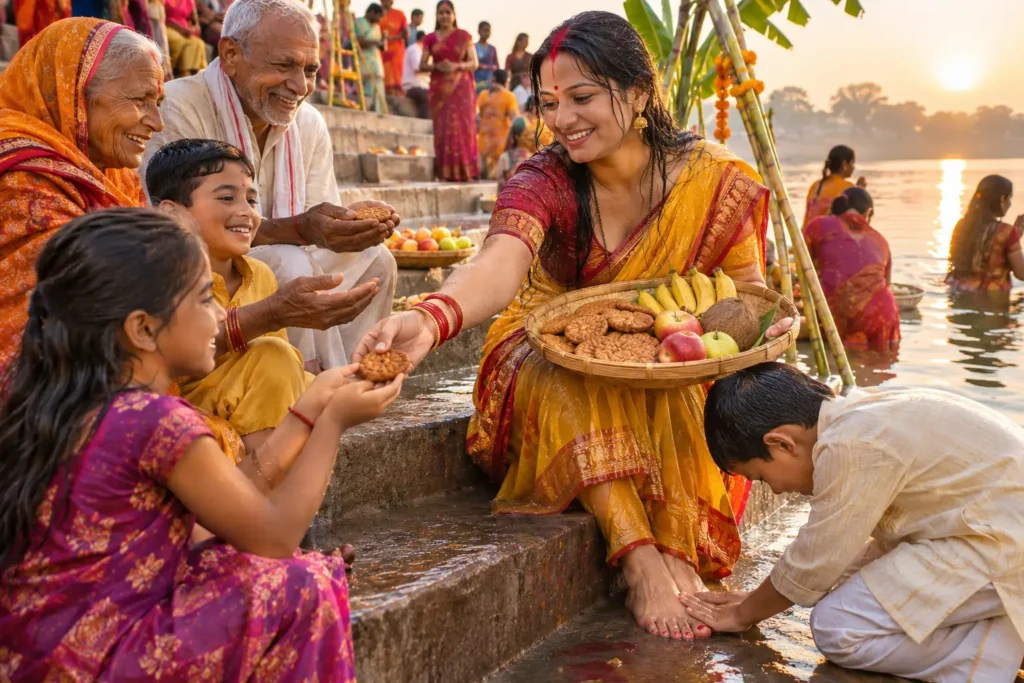
- Reach the ghat before dawn. The family walks to the ghat in the dark, singing, and sets up the soop at the same spot as the evening before.
- Stand in the water. The vratin bathes and stands in the water facing east, waiting with folded hands for the Sun to rise.
- Offer Arghya at sunrise. When the first light appears, the vratin lifts each soop towards the Sun as relatives pour milk and water, just as at Sandhya Arghya.
- Pray to Chhathi Maiya. The vratin prays for the family and children, and many families offer a final prayer to the river or pond itself.
- Distribute prasad. At the ghat, the vratin gives prasad to family, neighbours and passers-by, and elders and children touch her feet for blessings.
Sunrise time varies by city, so check a local panchang for your town.
Parana: breaking the fast
After the Arghya and prasad, the vratin breaks the fast. In most families she first takes a little prasad, such as thekua or fruit, and a sip of water or a sweet drink, then returns home to eat a simple meal. The exact first food differs from family to family, so follow your household custom.
Breaking a long fast safely
- Start with water and something light. Sip water slowly, then take fruit or a small amount of prasad before a full meal.
- Avoid a heavy or oily meal at once. A plain meal of rice, dal and vegetables is easier after 36 hours without food or water.
- Watch for dizziness. Keep a family member close at the ghat in case of weakness, especially in the cold morning air.
- Medical conditions: anyone with diabetes, a heart condition or regular medicines should follow their doctor’s advice on breaking the fast.
After Chhath ends
The home returns to normal food after parana, and the prasad is shared widely with relatives and neighbours, since sharing it is considered a blessing. Many families keep a few thekua and a coconut as a token of the vrat. Before leaving the ghat, collect the used items so that the water and banks stay clean.
Read more about Chhath
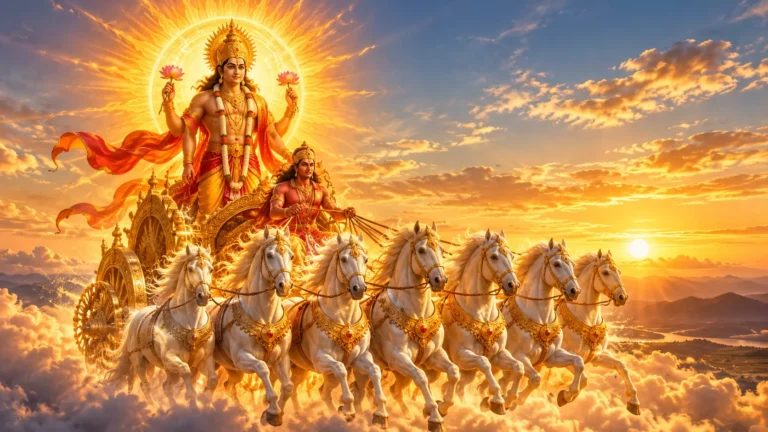
For the complete four-day order, see the Chhath Puja 2026 guide, and read Chhath Vrat Katha for the story behind the festival. The offering is made to Surya, and the Chhath Puja page lists dates for 2027.
Frequently asked questions
When is Usha Arghya in 2026?
Usha Arghya 2026 is on Monday, 16 November, at sunrise, the fourth and final day of Chhath Puja.
What is parana in Chhath?
Parana is the breaking of the 36-hour Chhath fast after the sunrise Arghya, usually with a little prasad and water before a simple meal.
How should the Chhath fast be broken safely?
Sip water slowly, eat fruit or light prasad first, then a plain meal, and follow a doctor’s advice if you have a medical condition.
Sources and further reading
- Hindu festival dates 2026 (Samvat panchang calendar)
- Chhath Puja tradition of Bihar, Jharkhand and eastern Uttar Pradesh
Read our editorial policy on how scripture, Purana and folk tradition are labelled.