Quick answer
Sandhya Arghya 2026 on 15 November: why Chhath honours the setting Sun, what to prepare, the evening Arghya vidhi at the ghat, kosi bharna and safety tips.
Who is in this story
The story
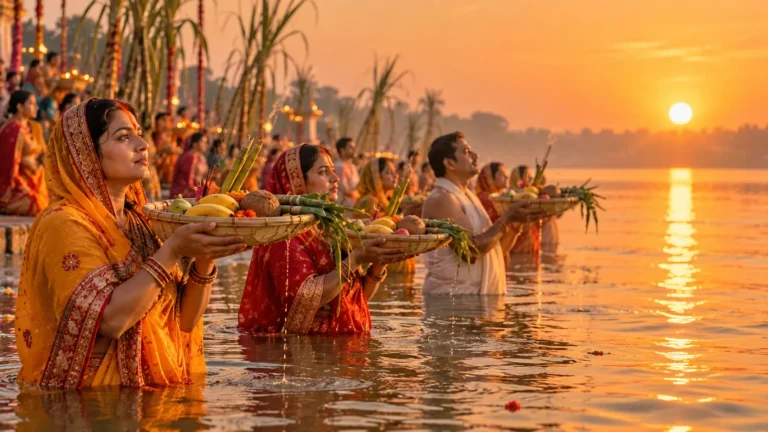
Sandhya Arghya is the evening offering to the setting Sun on the third day of Chhath Puja, and it is the moment most people picture when they think of Chhath: thousands of vratins standing in rivers and ponds at dusk with bamboo soop held up to the Sun. In 2026 Sandhya Arghya falls on Sunday, 15 November. This guide explains why the setting Sun is honoured, what to prepare, and the Sandhya Arghya vidhi step by step.
Why the setting Sun is worshipped
Most Hindu rituals greet the rising Sun. Chhath is unusual because it honours the Sun at both ends of the day, beginning with the setting Sun. Many families explain this as gratitude for the whole day’s light and for the full cycle of life, and folk tradition links the evening offering to Pratyusha, the Sun’s last light. The next morning’s Usha Arghya to the rising Sun completes the pair.
Sandhya Arghya vidhi: what to prepare
- Soop and dala filled with thekua, bananas, coconut, sugarcane, seasonal fruits, ginger and turmeric plants, sweet potato and rice laddus.
- Diyas, ghee and wicks, enough to keep a lamp burning in each soop.
- Milk and clean water in a brass or copper vessel, and a glass for the Arghya.
- Roli, sindoor, akshat and a red cloth.
- Sugarcane stalks and clay lamps if your family fills the kosi at night.
Step by step at the ghat
- Carry the offerings. In the afternoon the family carries the dala to the ghat, traditionally on the head of a male member, while the women sing Chhath songs on the way.
- Set up the puja spot. Clean a small area on the bank, place the soop on a cloth and light the lamps.
- Enter the water. Shortly before sunset the vratin bathes and stands in the water facing west, with folded hands.
- Offer the soop. Family members hand the soop one by one. The vratin lifts each soop towards the Sun and turns slowly while praying.
- Offer milk and water. Relatives pour milk and water over the soop or into the river as the vratin holds it, as the Arghya.
- Return quietly. After the Sun has set, the family packs the offerings and walks home. The vratin does not eat or drink, as the waterless fast continues.
Sunset time varies by city, so check a local panchang for your town rather than relying on a fixed clock time.
Kosi bharna at night
In many homes, especially where a vow has been fulfilled, the family fills the kosi that night. Five or seven sugarcane stalks are tied together into a canopy, with a clay elephant or pot beneath, and clay lamps are lit around it while women sing late into the night. Families who do not have this custom skip it.
Safety at the ghat
Ghats are crowded at sunset. Keep children close to an adult, avoid deep water and slippery steps, and follow the barricades and instructions of local volunteers. Do not leave plastic, ash or offerings in the water where collection points are provided. The vratin has fasted since the Kharna meal, so a family member should stay close in case of dizziness.
What comes next
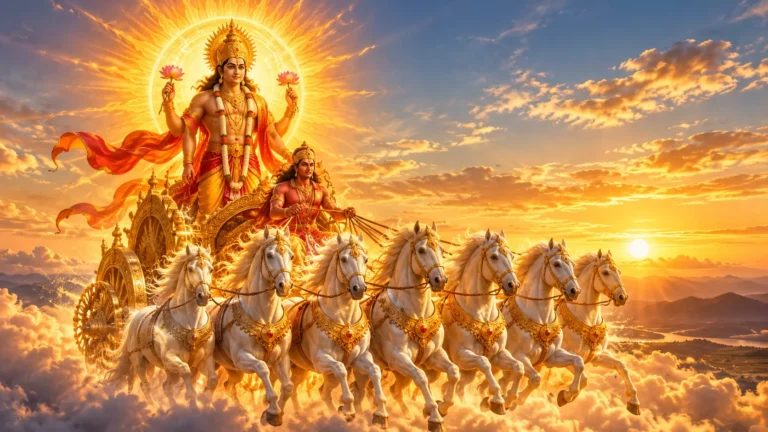
Before dawn the next day, the family returns to the ghat for Usha Arghya to the rising Sun, after which the vratin breaks the fast. For the full ritual order read the Chhath Puja 2026 guide, the story in Chhath Vrat Katha, and see the Chhath Puja page. The offering honours Surya, the giver of light.
Frequently asked questions
When is Sandhya Arghya in 2026?
Sandhya Arghya 2026 is on Sunday, 15 November, the third day of Chhath Puja, offered at sunset.
Why is the setting Sun worshipped in Chhath?
Chhath honours the Sun at both ends of the day, and the evening offering is seen as thanks for the whole day’s light and the full cycle of life.
What is kosi bharna?
A canopy of sugarcane stalks with clay lamps lit around it on the night of Sandhya Arghya, kept by families who have made a vow.
Sources and further reading
- Hindu festival dates 2026 (Samvat panchang calendar)
- Chhath Puja tradition of Bihar, Jharkhand and eastern Uttar Pradesh
Read our editorial policy on how scripture, Purana and folk tradition are labelled.